When you hear the phrase "the oldest profession," you probably think of modern street corners or online platforms. But the truth is, one of the first documented jobs in human history wasn’t farming, weaving, or even trading-it was sex work. And it started in Mesopotamia, around 2400 BCE, in the same mud-brick cities where writing, law, and the wheel were born.
Where It All Began: The Word kar.kid
The earliest clear evidence of prostitution comes not from a temple carving or a law tablet, but from a word: kar.kid a Sumerian term meaning "female prostitute," appearing in cuneiform records from 2400 BCE. This isn’t just a vague reference-it’s a legal and social label. People back then didn’t just have sex for money; they had a word for it, a role for it, and a place for it in their society. That’s how deeply embedded it was.
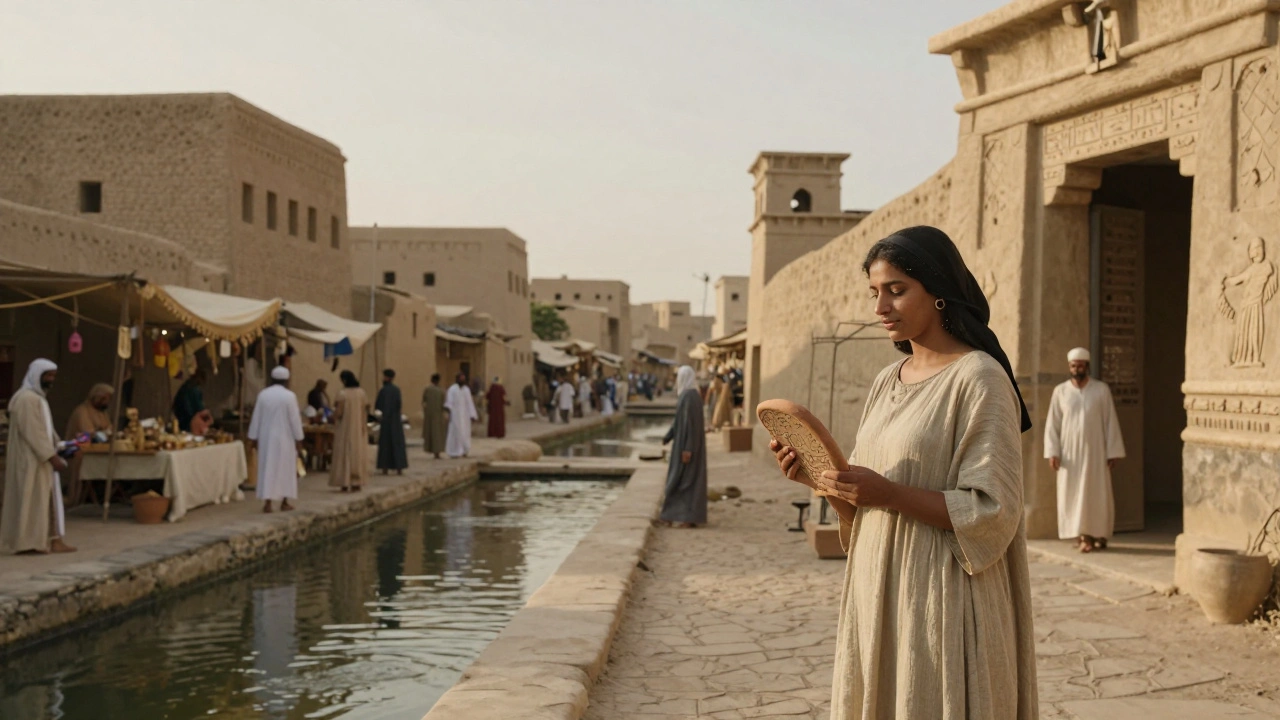
These records come from the city-states of Sumer, the earliest urban civilization in southern Mesopotamia. Cities like Uruk and Ur were bustling with trade, temples, and bureaucracy. And along with scribes, brewers, and weavers, there were women listed as kar.kid. They weren’t hidden away. They were part of the economic landscape.
Sacred or Secular? The Big Debate
Here’s where things get messy. For over a century, Western historians repeated a story: that in ancient Mesopotamia, women served as priestesses in temples of the goddess Inanna (later called Ishtar), and their sexual acts were sacred rituals meant to ensure fertility. This became known as "sacred prostitution." It sounded romantic, exotic, even spiritual.
But here’s the catch: there’s no solid archaeological proof that this happened.
The idea mostly comes from Greek writers-Herodotus, Strabo, and others-who visited Babylon centuries later and wrote down what they were told. Herodotus claimed every Babylonian woman had to sit in the temple of Aphrodite (Ishtar) once in her life and have sex with a stranger, collecting silver as an offering. He even described how beautiful women got out of it fast, while others waited years.
But no Mesopotamian text from 2400 BCE to 1000 BCE mentions this ritual. No temple records list women as "sacred prostitutes." No legal codes require it. The only images we have are votive plaques-small clay tablets showing naked women or genital symbols-left as offerings. That doesn’t mean sex happened there. It just means people were praying for fertility, health, or protection. That’s not prostitution. That’s religion.
Modern scholars now think "sacred prostitution" was a myth created by Greeks who misunderstood Mesopotamian rituals. They saw nudity, sex symbols, and temple women, and assumed sex was part of worship. But the evidence suggests temple women were likely priestesses, singers, or administrators-not sexual service providers.
Prostitution as a Real Job: The Code of Hammurabi
By 2000 BCE, prostitution was no longer just a vague social role. It was a legal occupation.
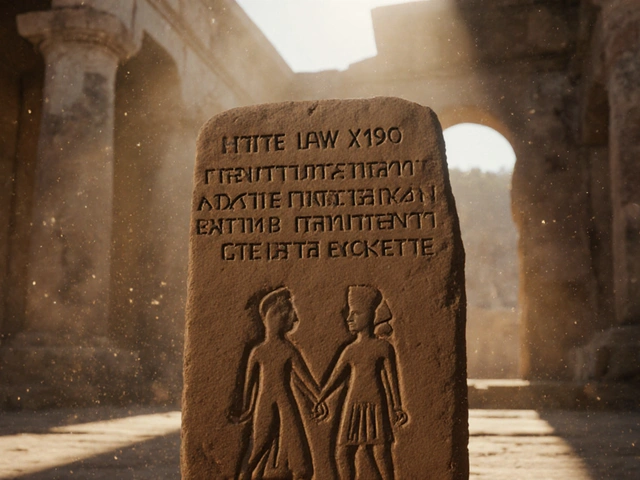
The Code of Hammurabi a Babylonian legal code from around 1750 BCE that included specific laws regulating prostitutes, granting them property rights and legal protections is one of the oldest surviving law books in the world. And it doesn’t ban prostitution-it regulates it.
One law says if a prostitute’s husband leaves her, she can keep her earnings and live off them. Another says if a man falsely accuses a priestess of prostitution, he can be punished. A third says if a woman opens a brothel and doesn’t pay taxes, she’ll be fined.
This isn’t a society trying to erase sex work. This is a society trying to manage it. Prostitutes could own property, run businesses, and even inherit land. They weren’t slaves. They weren’t criminals. They were businesswomen.
Brothels existed in urban centers, often run by women who hired others. Some women entered the trade because they were poor. Others were sold by their families. A few may have chosen it because it offered more independence than marriage. In a world where women couldn’t own land or run shops easily, prostitution gave some a way to earn money and survive.
The Epic of Gilgamesh and the Power of Shamhat
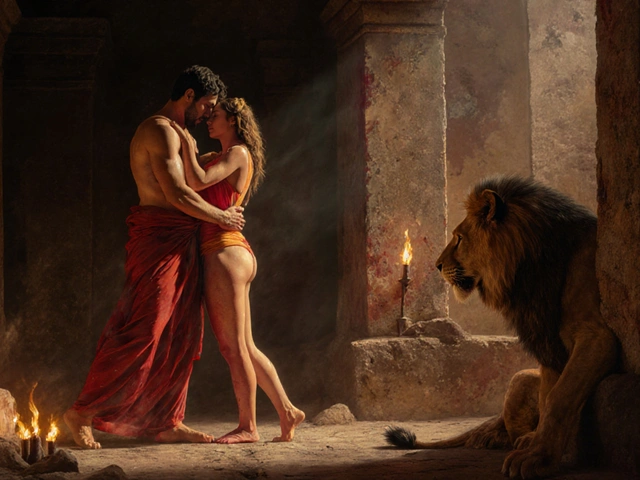
One of the earliest stories ever written-the Epic of Gilgamesh an ancient Mesopotamian poem from around 2100 BCE featuring Shamhat, a temple prostitute who civilizes the wild man Enkidu-tells us something important: sex workers weren’t just seen as low-class. They were seen as transformative.
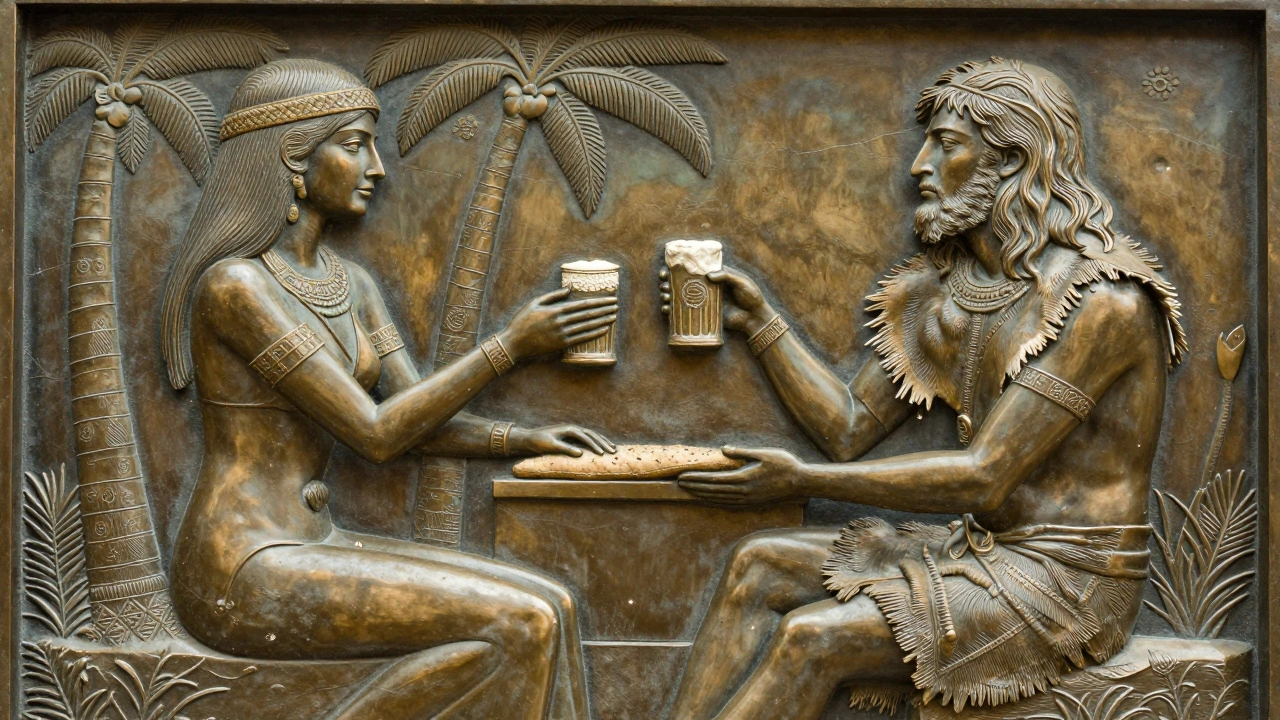
In the epic, Enkidu is a wild man who lives with animals. He’s brought to the city and meets Shamhat, a temple woman. She spends six days and seven nights with him. When it’s over, Enkidu doesn’t become a lover-he becomes human. He learns to eat bread, drink beer, wear clothes, and speak with people.
Shamhat doesn’t just have sex with him. She introduces him to civilization. She’s not a victim. She’s a teacher. A gatekeeper between the wild and the urban. This isn’t just a story. It’s a cultural statement: sex work wasn’t just about money. It was about connection, transition, and social order.
From Temple to Tavern: The Shift Over Time
Over the next thousand years, the nature of prostitution changed. As Mesopotamia went from Sumer to Akkad to Babylon to Assyria, the religious ties weakened. The temples lost power. The state took over.
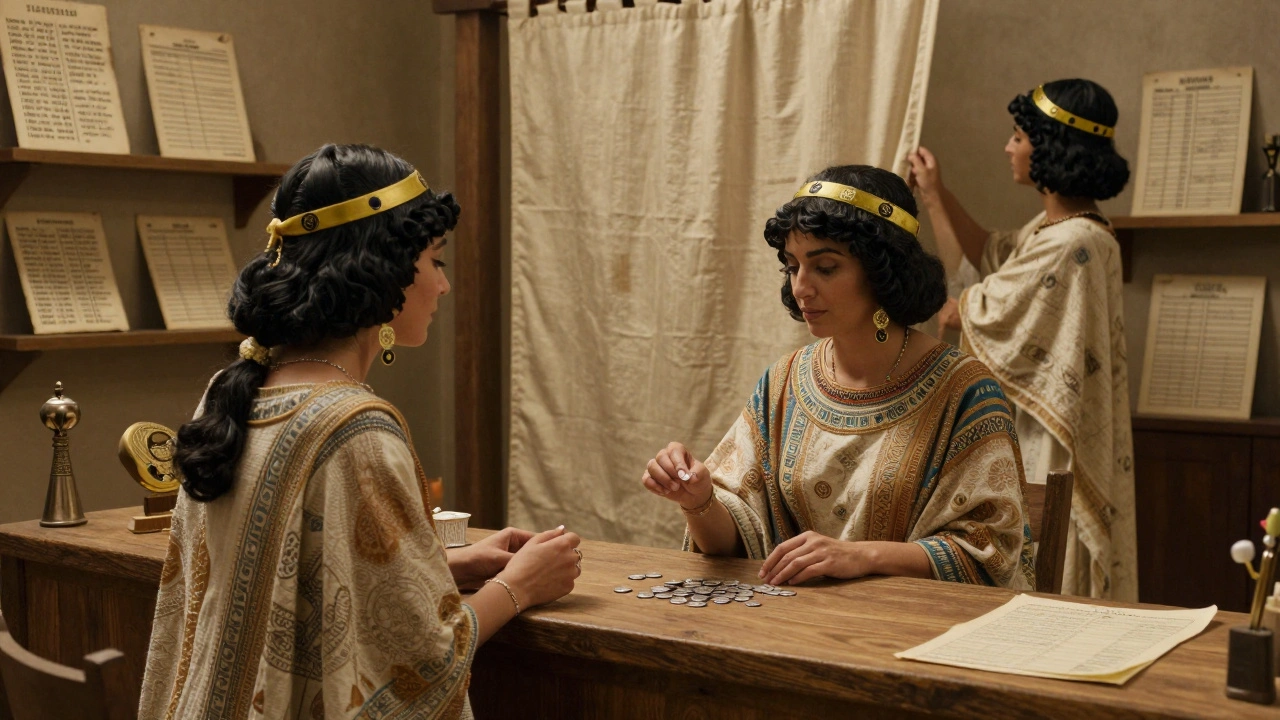
By 1000 BCE, most prostitution was secular. Women worked in taverns, markets, and private homes. They were taxed. They were regulated. They were visible. But the sacred layer faded. The goddesses still had temples, but the women who served them weren’t having sex as part of worship.
By the time Persians, Greeks, and later Romans took over the region, attitudes shifted again. New religions-Zoroastrianism, Christianity, Islam-saw sex outside marriage as sin. Prostitution didn’t disappear, but it lost its legitimacy. It went from being a regulated job to something hidden, stigmatized, and eventually criminalized.
Why This Matters Today
When we talk about prostitution as "the oldest profession," we often romanticize it or judge it. But Mesopotamia shows us something deeper: that sex work has always been part of human society-not because people are immoral, but because societies are complex.
It wasn’t about sin or salvation. It was about survival, economics, and social structure. Women in Mesopotamia didn’t have many options. Prostitution gave some of them a way to earn, own, and live with dignity-even if society looked down on them.
The Code of Hammurabi didn’t protect women because it was progressive. It protected them because they were part of the economy. And that’s the lesson: when a society treats sex work as a real job, with rules and rights, it’s not about morality. It’s about practicality.
Today, we still argue over whether sex work should be legal, regulated, or banned. Ancient Mesopotamia didn’t have those debates. They just wrote it into their laws. And for over 2,000 years, it worked.