Child Witnessing & Privacy Context Explorer
Adjust the child's age and choose a historical setting. The tool estimates the perceived shock level and likely outcome based on developmental research and anthropological norms.
Open-plan homes, shared sleeping areas, and flexible modesty codes made witnessing statistically common and culturally non-scandalous.
—
Imagine a young child in an ancient household, sitting close to their parents during a meal. In modern Western culture, we might feel awkward if the conversation turned too personal, but in many historical contexts, privacy was a luxury few could afford. The concept of child witnessing of parental sexuality challenges our modern assumptions about childhood innocence and private life. Anthropologists and historians have long debated whether seeing parents in intimate moments was traumatic, normal, or even beneficial for a child’s development in pre-modern societies.
This discussion often brings up the Etruscans, an Italic civilization that flourished in central Italy from roughly 900 BCE to 27 BCE. Unlike their Roman neighbors, who valued modesty and strict social boundaries, Etruscan art and burial practices suggest a more open attitude toward bodily expression and gender roles. By examining how children interacted with adult intimacy in these cultures, we can better understand how society shapes our perception of sex and family.
The Myth of Universal Childhood Innocence
We tend to view childhood as a time of pure innocence, shielded from the complexities of adult life. However, this idea is largely a product of the last two centuries, heavily influenced by industrialization and the rise of the nuclear family. Before the 18th century, children were often integrated into adult labor and social spheres. They worked alongside parents, ate at the same tables, and slept in shared spaces. Privacy, as we know it today, did not exist in most households.
Anthropologist Margaret Mead argued in her seminal work on Samoa that cultural norms dictate how much exposure children have to sexuality. In some Pacific Islander societies, nudity and sexual activity were considered mundane parts of daily life, visible to all ages. This does not mean there was no shame or structure, but rather that the "taboo" around sex was not universal. When a child sees a parent engaged in intimacy, the reaction depends entirely on the cultural script they have been taught to follow.
- Pre-industrial societies: Shared sleeping arrangements made accidental witnessing common.
- Industrial era: Separate bedrooms created the first real barriers to observation.
- Modern era: Digital privacy and individualism reinforced the idea that sex is strictly private.
Etruscan Family Dynamics and Social Norms
To understand why the Etruscans are frequently cited in discussions of ancient sexuality, we need to look at their unique social structure. The Etruscan family unit, known as the clan or gens, placed significant value on female status. Women participated in public life, held property, and were depicted in art wearing jewelry and attending banquets alongside men. This visibility extended to their bodies and relationships.
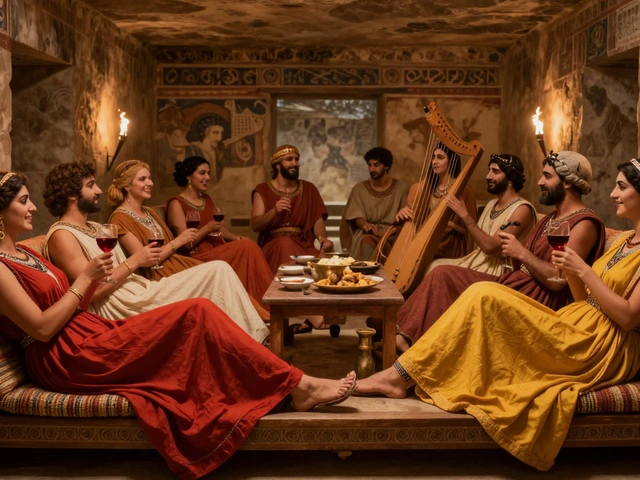
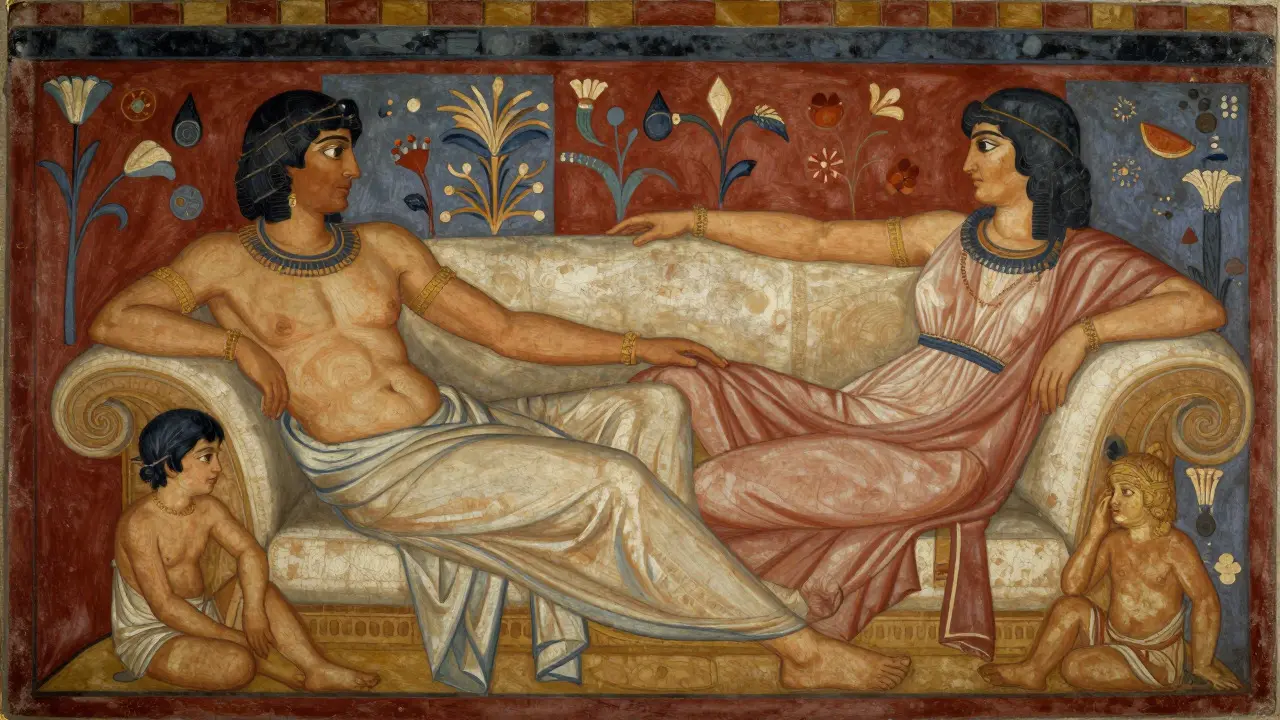
Etruscan tombs, such as those found in Tarquinia and Cerveteri, contain frescoes showing couples dining together. These scenes often depict relaxed postures, minimal clothing, and direct eye contact. While these are funerary art pieces meant to represent an idealized afterlife, they reflect contemporary values. There is little evidence of the rigid modesty codes that later defined Roman society. If a child were present in such a setting, the atmosphere would likely be one of familial unity rather than hidden secrecy.
| Aspect | Etruscan Culture (c. 500 BCE) | Roman Culture (c. 100 CE) |
|---|---|---|
| Female Public Presence | High; women attended banquets and games | Limited; women expected to stay indoors |
| Attitude Toward Nudity | Acceptable in domestic and funerary art | Increasingly associated with slavery or vice |
| Child-Parent Interaction | Integrated into adult social spaces | Gradual separation into age-based groups |
| Sexual Modesty Codes | Flexible; focus on ritual purity over visual modesty | Strict; emphasis on pudor (modesty) and decorum |
Psychological Implications of Accidental Witnessing
When a child accidentally sees a parent having sex, the immediate psychological impact is rarely trauma in the clinical sense, provided the parents react calmly. Research in developmental psychology suggests that children under the age of five have a limited understanding of abstract concepts like shame or exclusivity. To them, physical closeness is just another form of affection, similar to hugging or playing.
The key factor is the parental response. If parents panic, hide, or show embarrassment, the child may interpret the act as something "wrong" or "forbidden." Conversely, if parents treat the moment with neutrality or gentle humor, the child learns that sexuality is a natural part of human connection. This aligns with findings from cross-cultural studies where high levels of parental openness correlate with lower rates of adolescent anxiety regarding body image and relationships.
- Immediate Reaction: Parents remain calm and do not force the child away abruptly.
- Contextual Explanation: A simple, age-appropriate explanation is offered if asked.
- Normalization: The event is not treated as a major disruption to the day's routine.
The Role of Space and Architecture
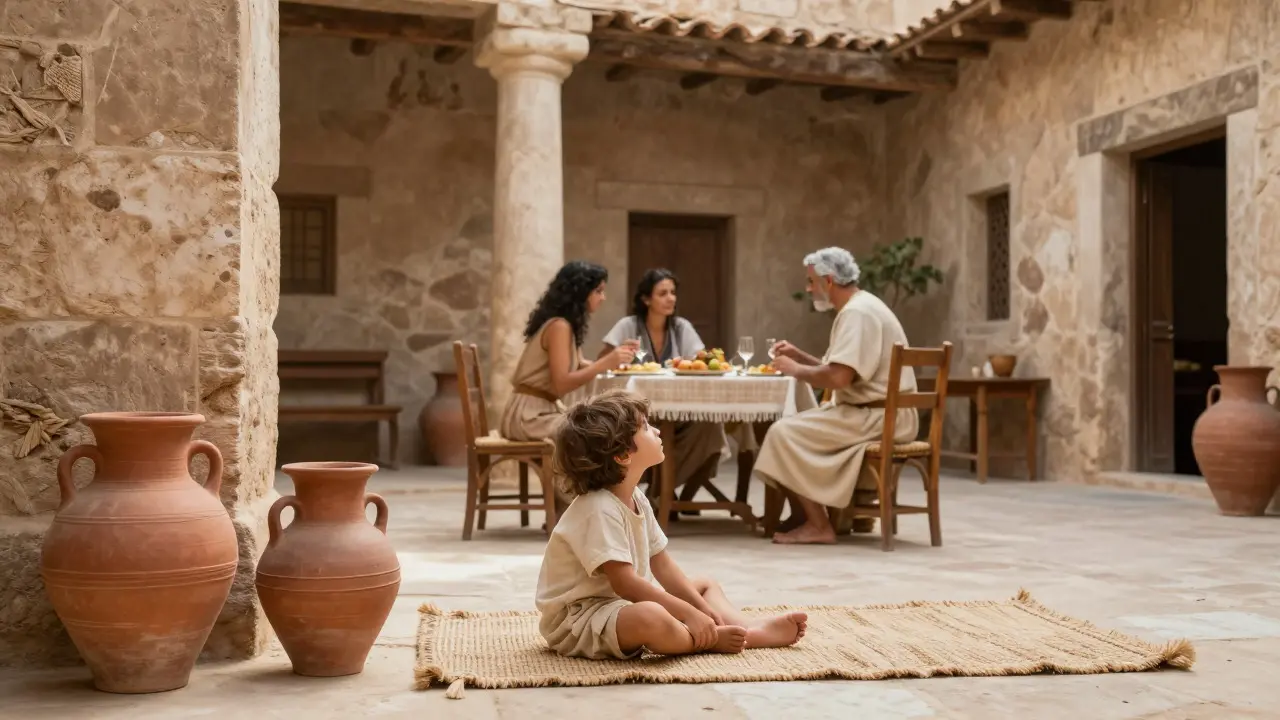
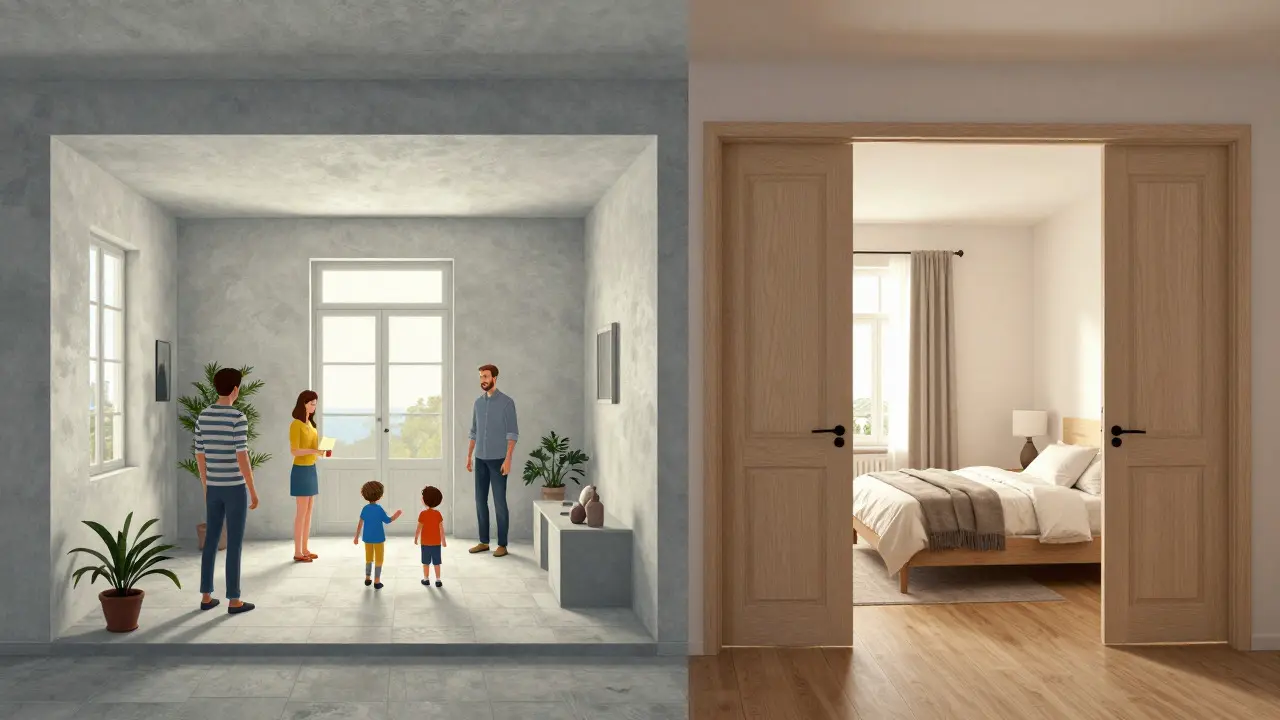
Architecture plays a massive role in determining how often children witness adult intimacy. In ancient Mediterranean homes, the atrium served as the central hub for family life. It was open to the sky, used for cooking, eating, and receiving guests. Because space was shared, sound and sight traveled easily. Walls were thin, and doors often lacked locks.
In contrast, the modern suburban home is designed for compartmentalization. Bedrooms have solid doors, bathrooms have locks, and living areas are separated from sleeping quarters. This architectural shift mirrors the psychological shift toward viewing sex as a private, exclusive domain. For anthropologists, studying the layout of ancient houses helps reconstruct the daily reality of family interactions. It reveals that "witnessing" was not an exception but a frequent occurrence in pre-modern life.
Cultural Variations Across History
While the Etruscans provide a specific example, other cultures offer different perspectives. In traditional Japanese households, the concept of shaku-shaku (shared bathing) meant that families, including children, bathed together naked. This normalized the human body and reduced the mystery surrounding genitalia. Similarly, in many Indigenous Australian communities, knowledge about sex was passed down through stories and rituals that included children, ensuring they understood reproductive processes without stigma.
These examples highlight that the "shock" of seeing a parent in a sexual context is culturally constructed. In societies where the body is viewed as a tool for survival, community, and reproduction, it is less likely to be seen as inherently shameful. The transition to a model where sex is purely romantic and private is a relatively recent phenomenon, driven by religious doctrines and urbanization.
Modern Misconceptions and Stigmas
Today, many parents worry that a child seeing them in bed will cause lasting psychological harm. This fear is often rooted in Victorian-era morality, which emphasized strict separation between the sacred (marriage) and the profane (sex). However, contemporary therapists note that most adults who recall such incidents from childhood report neutral or positive memories. They remember the warmth of their parents' relationship, not the specific details of the act.
The stigma persists because we lack a vocabulary for discussing sex openly with children. We teach them about hygiene and safety, but rarely about emotional intimacy. As a result, any accidental exposure feels like a breach of trust. By looking at anthropological data, we can see that this anxiety is not biologically inherent but socially learned. Understanding this history allows us to approach parenting with more flexibility and less fear.
Frequently Asked Questions
Did Etruscan children actually see their parents having sex?
There is no direct written record of every daily interaction, but archaeological evidence suggests that living spaces were highly communal. With shared sleeping areas and open-plan homes, accidental witnessing was statistically probable. The cultural norm did not treat the body as taboo, so such events would not have been considered scandalous.
Is it psychologically harmful for a child to witness parental intimacy?
Generally, no. Psychological research indicates that the impact depends on the parents' reaction. If parents remain calm and do not impose shame, the child typically views the event as neutral. Trauma usually arises from parental anxiety or punishment, not from the act itself.
How did Etruscan women differ from Roman women in public life?
Etruscan women had greater freedom of movement and property rights. They attended public festivals, owned land, and were depicted in art as equal partners in social settings. Roman women, especially after the Republic, faced stricter legal and social restrictions on their public presence and autonomy.
Why is privacy considered important in modern families?
Privacy became valued with the rise of the nuclear family and industrial housing standards. It allows individuals to separate their professional, social, and intimate lives. This separation supports individual identity formation, which is a core value in modern Western societies.
What role does architecture play in family intimacy?
Architecture dictates the frequency of overlap between different family members. Open-plan designs encourage interaction and reduce the barrier between adult and child spaces, while compartmentalized designs increase privacy. Historical homes were generally more open, leading to higher visibility of adult activities.