Medieval Brothel Placement Calculator
City Characteristics
Medieval Brothel Placement Strategy
Visual Placement
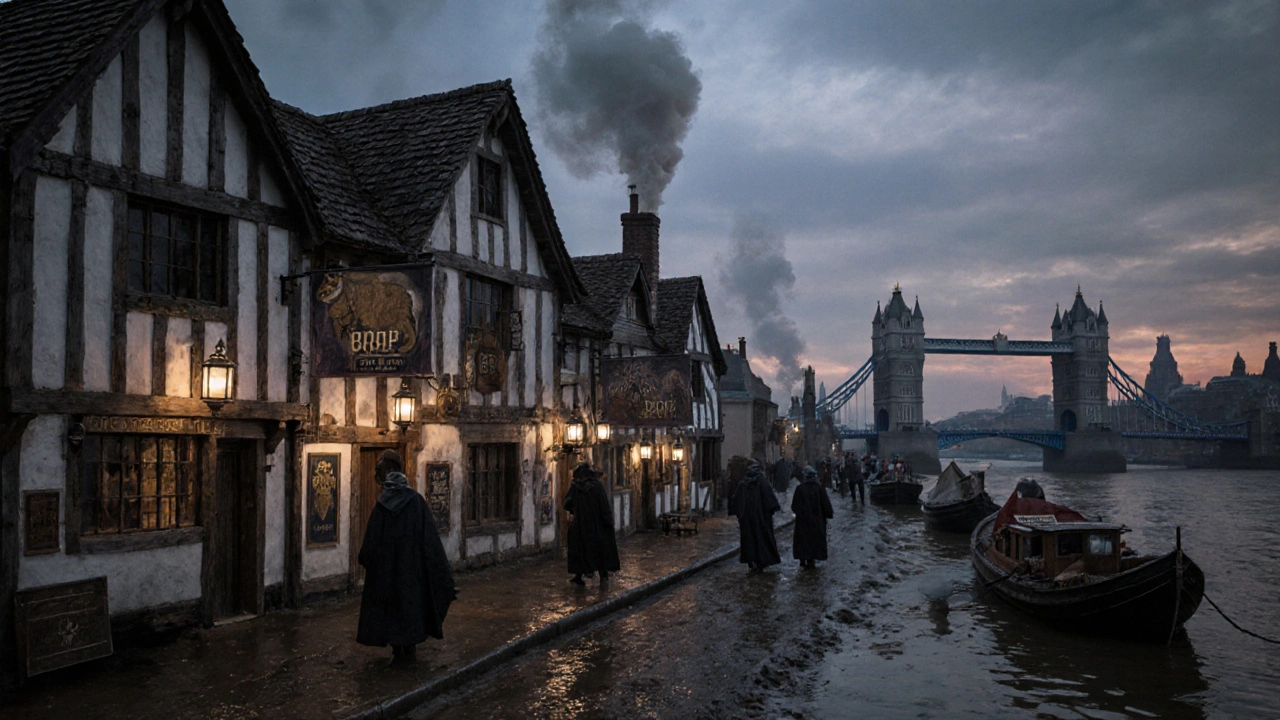
For centuries, medieval cities across Europe didn’t try to erase prostitution-they just moved it. Outside the gates. Past the moat. Behind the river. If you were a man looking for sex in 14th-century London, you didn’t go to the market square or the cathedral. You took a boat across the Thames to Southwark, where brothels had signs painted on white walls: the Bear’s Head, the Swan, the Cardinal’s Hat. These weren’t hidden dens. They were licensed, taxed, and officially tolerated. And they were medieval brothels-a system so deliberate, it looks more like urban planning than moral failure.
Why Put Brothels Outside the Walls?
Cities didn’t ban sex work because they thought it was evil. They did it because they thought it was inevitable. Church leaders preached against lust, but town councils knew men would still go looking. So instead of fighting it, they contained it. Placing brothels beyond the city walls served three purposes: control, cleanliness, and convenience. Control meant keeping sex work away from churches, schools, and noble homes. Cleanliness wasn’t just about hygiene-it was about social order. If a woman was caught selling sex inside the walls, her door might be ripped off, her windows boarded up, or she’d be dragged out of town. Convenience? Brothels clustered near gates, ports, and river landings. That’s where travelers arrived. Where merchants docked. Where soldiers passed through. They weren’t hidden in the slums-they were positioned where demand was highest. In Buda, Hungary, a 1437 record lists 322 houses on Castle Hill, many of them brothels on a street called Rose Street. In Nuremberg, the city government owned the brothel outright. They hired the madam, set the hours, collected the fees, and even used the money to fix bridges and repair city walls. This wasn’t corruption. It was budgeting.Who Ran These Places?
The operators weren’t always criminals. In London, the Bishop of Winchester ran the brothels in Southwark. He didn’t just tolerate them-he collected rent. While he preached chastity on Sunday, his office collected payments every Monday. The bishop’s jurisdiction was separate from the City of London’s, which meant he could run brothels without breaking city laws. It was a legal loophole wrapped in religious authority. In Nuremberg, the city council directly managed the brothel. Women working there paid a weekly fee to the town. If they didn’t pay, they got kicked out. If they broke rules-like working on Sundays or refusing to wear a specific dress-they were fined or expelled. Some brothels even had chaperones to make sure women didn’t wander into "respectable" neighborhoods. The system had rules. And people followed them, because breaking them meant losing your income. In Florence, entire neighborhoods were zoned for sex work, right next to the market and the river. Merchants could stop by after trading wool or grain. No need to sneak. No need to lie. It was just part of the city’s rhythm.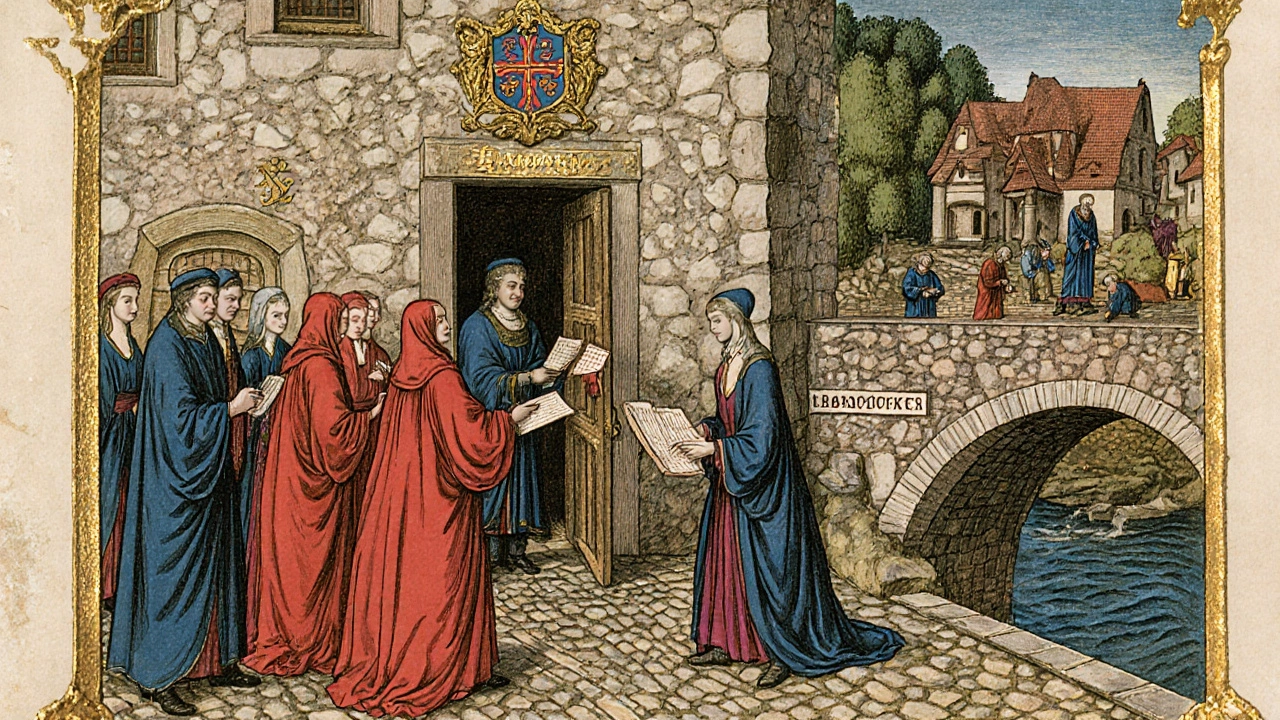
How Did They Enforce the Rules?
Enforcement wasn’t perfect, but it was consistent. In England, the most common punishment for unlicensed sex work was architectural. A bailiff would come, remove the door, smash the windows, and leave the house uninhabitable. No door. No privacy. No business. That was often enough. For repeat offenders or pimps, punishments got harsher: public humiliation, fines, or prison. Women who broke rules were sometimes dragged outside the city walls and forced to leave. But here’s the twist: if you were licensed, you were protected. Pay your weekly fee, follow the rules, and you could work without fear of random beatings or arrest. That’s why so many women stayed within the system. In Southwark, brothels had to close on Sundays and religious holidays. No exceptions. Even during the Black Death in 1349, when half the city was dying, the brothels stayed open. Chronicler Henry Knighton wrote that they were busier than ever. People were scared. They wanted comfort. And the city didn’t shut them down.Was This Really Tolerance?
Yes-and no. It was tolerance with conditions. The authorities didn’t celebrate sex work. They didn’t think it was noble. They called it a "necessary evil." But they also knew that banning it didn’t stop it. It just made it more dangerous. Historians like Dr. Eleanor Janega point out that medieval officials believed: "Remove prostitution from human affairs and you will destroy everything with lust." That’s not a moral stance. It’s a practical one. They weren’t trying to save souls. They were trying to keep the peace. The system worked because it created boundaries. Men knew where to go. Women knew how to stay safe. The city knew where to collect taxes. And the Church? They looked away. They preached against sin, but they didn’t shut down the brothels. That’s the contradiction of medieval life: deep religious piety, paired with cold, hard pragmatism.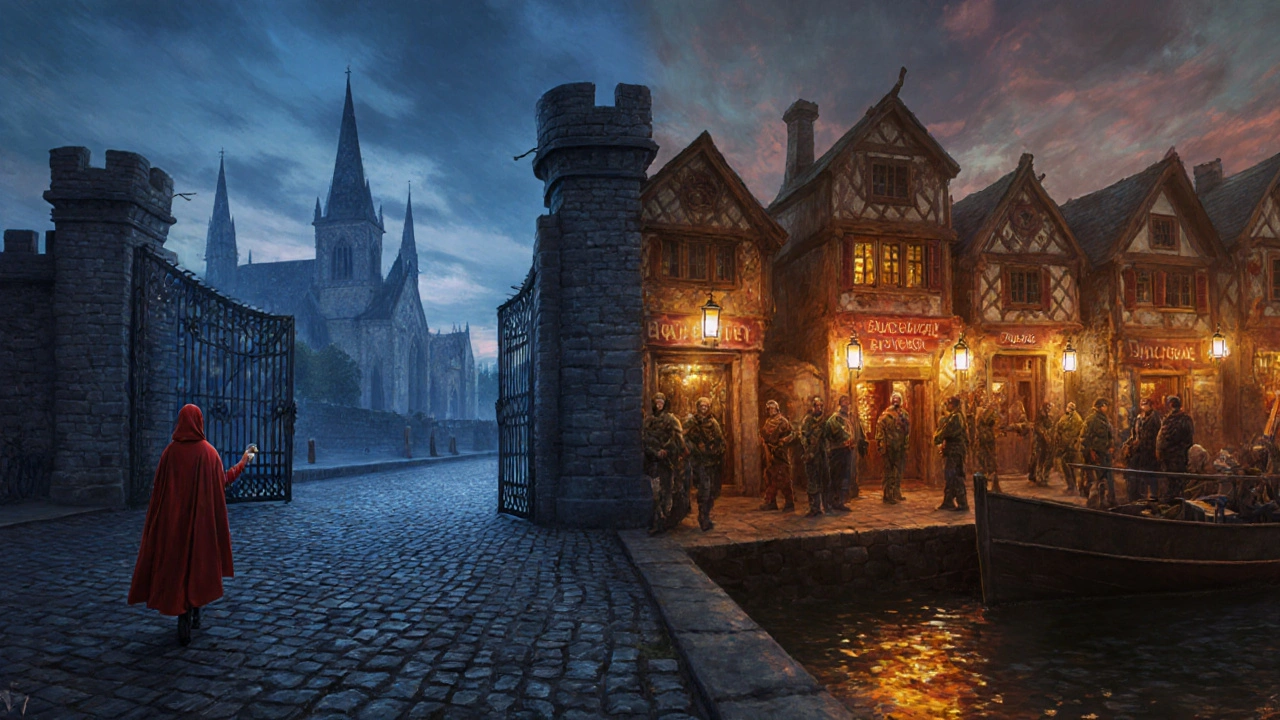
What Happened When It Ended?
The system didn’t collapse because people suddenly became moral. It fell apart because religion got louder. In the 1500s, the Protestant Reformation and Catholic Counter-Reformation brought a new wave of moral panic. Cities that once taxed brothels now banned them. Amsterdam shut its last municipal brothel in 1625. London followed soon after. The idea that sex work could be regulated, not eradicated, was seen as sinful. But the legacy didn’t disappear. Modern zoning laws, red-light districts, and even today’s debates about decriminalization all echo the same logic: isolate the problem, control the space, collect the revenue. The medieval system wasn’t perfect. Women still suffered. Violence still happened. But the fact that cities built entire structures around managing sex work-not hiding it-tells us something important. They didn’t pretend it didn’t exist. They faced it. And they built rules around it.Why This Matters Today
We still argue about sex work. Should it be legal? Should it be hidden? Should it be punished? Medieval cities didn’t have the same language we do. But they had something we’ve forgotten: the courage to manage reality instead of pretending it didn’t exist. They didn’t ban brothels because they were afraid of the women who worked in them. They banned them from the center of town because they were afraid of what the presence of sex work might do to their image. The real question isn’t whether sex work should exist. It’s whether we’re willing to regulate it honestly-or just push it into the shadows and call it justice.When you walk through a modern city and see a red-light district, remember: you’re not seeing something new. You’re seeing the last echo of a system that lasted 400 years.