Ancient Gender Roles Comparator
Explore Ancient Societies
Select a civilization to see how gender roles compared in antiquity
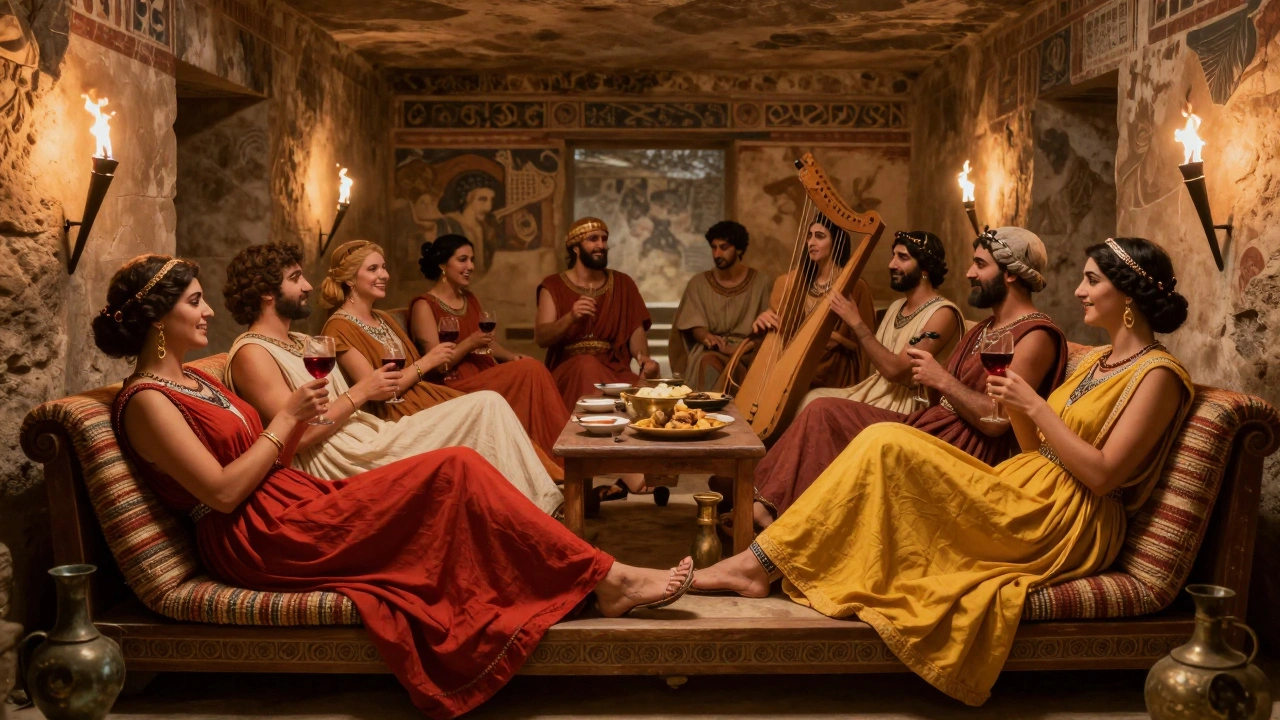
Imagine walking into a banquet in 500 BCE central Italy. You see men and women reclining side by side on couches, sharing wine, laughing, and even dancing together. Now imagine the same scene in Athens or Rome at that exact time. The result? Shock, horror, and accusations of moral decay from your neighbors. This wasn't just a difference in party etiquette; it was a fundamental clash of civilizations regarding who held power, visibility, and autonomy.
The Etruscans were an ancient civilization in what is now Tuscany and northern Lazio. Unlike their famous neighbors, the Greeks and Romans, they spoke a non-Indo-European language and operated under a social code that seemed radically open to outside observers. While Greek and Roman societies were deeply patriarchal-keeping respectable women largely confined to the home-the Etruscans allowed their women significant public presence. But how real was this freedom? And why did it vanish when Rome eventually swallowed up Etruria?
The Visual Evidence: Banquets and Burials
We don't have diaries written by Etruscan housewives to tell us exactly how they felt about their lives. Instead, we have to look at what they left behind: art, tombs, and inscriptions. These artifacts paint a picture that contradicts the strict gender segregation of the Mediterranean world at the time.
In Etruscan tomb paintings from sites like Tarquinia and Cerveteri, women are not hidden away. They are depicted prominently at banquets. In Greece, the symposium was a strictly male-only drinking party where only elite prostitutes (hetairai) were allowed. Respectable wives stayed in the gynaeceum, the women's quarters of the house. In contrast, Etruscan frescoes show named women reclining next to men, playing musical instruments, and participating in games. They aren't just background decoration; they are active participants in elite social life.
Burial practices offer another window. When people die, society decides who is worth remembering. In many Greek and early Roman contexts, female names appear rarely in funerary records, usually defined only by their relationship to a father or husband. In Etruscan cities like Chiusi and Volterra, the numbers tell a different story. Studies of Latin epitaphs from these areas during the period of Romanization show that women are named in approximately 25% to 29% of inscriptions. While men still dominate numerically (around 67-70%), this level of individual commemoration for women is significantly higher than in contemporary Indo-European cultures.
| Society | Public Banquet Participation | Funerary Inscription Rate (Women) | Legal Guardianship |
|---|---|---|---|
| Etruscan | Mixed-gender, women recline with men | ~25-29% | Unclear, but high personal autonomy suggested |
| Classical Greek (Athens) | Male-only symposia; women excluded | Low; often unnamed or relational | Strict kyrios (male guardian) system |
| Early Republican Rome | Gendered separation; limited public role | Low; focused on male lineage | Paterfamilias (father's absolute power) |
The Greek and Roman Reaction: Scandal or Reality?
If you want to know how shocking something looked to an outsider, listen to their complaints. The Greek historian Theopompus of Chios, writing in the 4th century BCE, was horrified by Etruscan customs. He claimed that Etruscans shared wives, exercised naked in public, and raised children without knowing who the fathers were. Later Roman authors echoed these sentiments, linking Etruscan "luxury" and loose morals to societal decay.
Modern historians view these accounts as heavily biased propaganda. Theopompus was using Etruscan culture as a foil to criticize his own society's changing norms. However, the fact that he chose to highlight these specific behaviors tells us something important: Etruscan women were visible, were drinking with men, and were exercising independence. Even if Theopompus exaggerated the promiscuity, the core observation-that Etruscan gender norms were far more relaxed than Greek ones-holds true against the archaeological record.
Naming, Lineage, and Identity
Names matter. In Indo-European traditions like those of the Greeks and Romans, identity was primarily patrilineal. You were your father's son. Your name reflected your male ancestor. Etruscan naming conventions were more complex and inclusive of maternal lines. Inscriptions often identify individuals with both their father's and mother's names. This suggests that maternal descent held formal importance and that women maintained a recognized individual identity within the family structure.
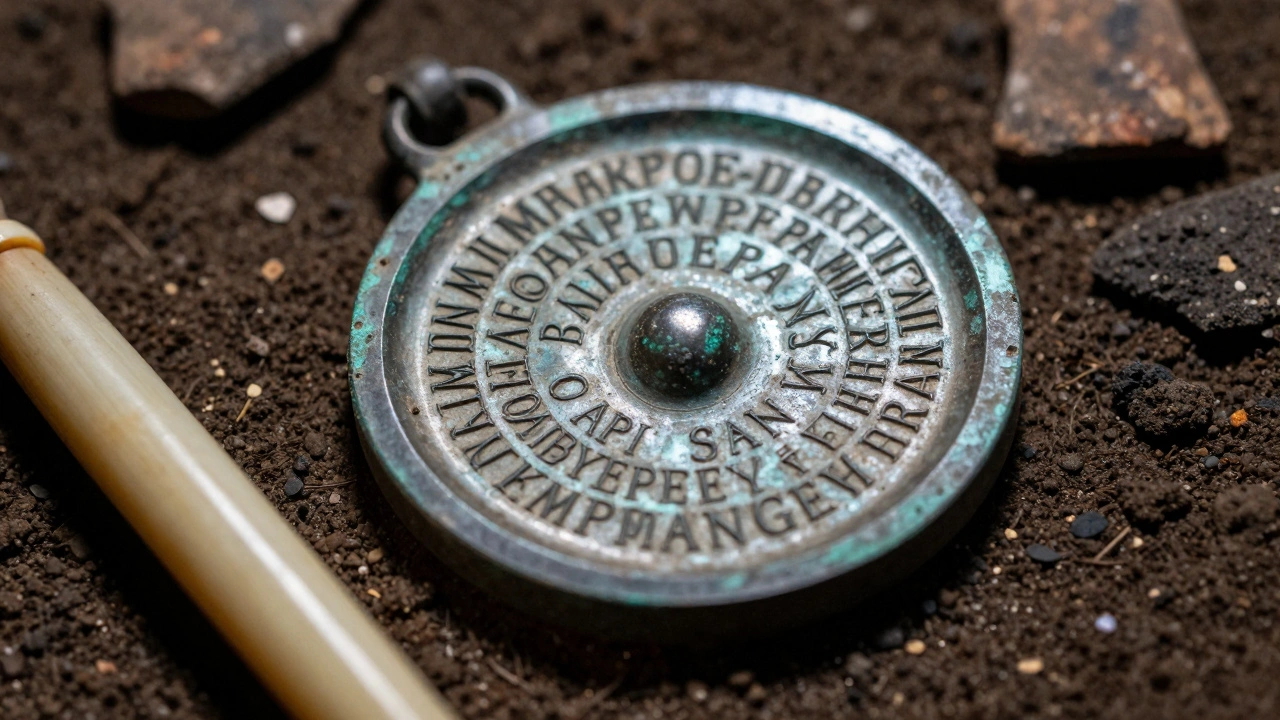
Consider the objects they owned. Etruscan weaving implements, such as spools, frequently bear female names. This implies that while women still engaged in traditional domestic tasks like textile work, they possessed personal ownership of these tools. They weren't just anonymous laborers; they were individuals whose names were carved into the very objects they used daily. This contrasts sharply with the Greek ideal, where a woman's virtue was tied to her invisibility and silence.
The Genetic and Linguistic Puzzle
So, where did this different approach to gender come from? The answer lies in a tangled web of language, genetics, and culture. Linguistically, Etruscan is a isolate-it is not related to Greek, Latin, or Sanskrit. It belongs to the Tyrrhenian family, along with Raetic and Lemnian. This places it outside the Indo-European language tree that connects most of Europe and India.
However, recent archaeogenetic studies have complicated the picture. DNA analysis of Etruscan remains reveals substantial Steppe ancestry, which is associated with Indo-European migrations. This creates a mismatch: the Etruscans had genetic ties to Indo-European populations but spoke a pre-Indo-European language. Some scholars argue this means Etruscan culture was a hybrid formation. Others suggest that their gender roles might be a survival of older, pre-Indo-European Mediterranean patterns that valued different social structures than the patriarchal warrior-kings emerging in the north.
This linguistic and genetic tension makes it difficult to label Etruscan society simply as "egalitarian." It was likely a unique regional variant, shaped by local history rather than a direct rejection of patriarchy. They didn't necessarily believe in modern equality; they just had a different definition of how men and women should interact in public spaces.
Was It True Equality?
We need to be careful not to romanticize the past. Just because Etruscan women had more visibility than Athenians doesn't mean they lived in a utopia. Scholars warn against the "add women and stir" approach, which simply lists female achievements without analyzing the broader power dynamics. Etruscan society was still hierarchical and aristocratic. Wealth and status mattered immensely.
The women we see in the frescoes and inscriptions are almost exclusively elites. We have little evidence for the lives of poor Etruscan women. Furthermore, traditional gendered divisions of labor persisted. Women wove, managed households, and raised children. Their increased public presence did not erase their domestic responsibilities; it expanded their sphere of influence. They navigated a world where they could be seen and heard, but still operated within a framework controlled by wealthy families.
The Roman Takeover and Cultural Erasure
By the 1st century BCE, Rome had absorbed the Etruscan cities. What happened to these distinctive gender roles? They largely disappeared. As Etruria became Romanized, the legal and social structures shifted to align with Roman patriarchy. The paterfamilias model took over, granting the male head of household absolute authority. Public political life remained a male monopoly.
This shift highlights how fragile cultural norms can be. The Etruscan model of gender interaction survived for centuries, but once the political center of gravity moved to Rome, the dominant Indo-European tradition reasserted itself. The memory of Etruscan women's freedom survived only in the hostile gossip of Greek and Roman writers, who continued to use them as a cautionary tale about what happens when women step out of line.
Why This Comparison Matters Today
Comparing Etruscan gender roles to Indo-European traditions isn't just an academic exercise. It challenges the assumption that patriarchy is a universal constant in ancient history. It shows us that alternative social structures existed right next door to the civilizations we typically study. By looking at how the Etruscans balanced public visibility with private duty, we gain a more nuanced understanding of how gender has been constructed, negotiated, and enforced across different cultures.
It also reminds us that history is often written by the winners. If we only read Greek and Roman sources, we would think Etruscan women were scandalous degenerates. By combining those texts with archaeology, linguistics, and genetics, we recover a richer, more human story of a society that dared to do things differently.
Were Etruscan women truly equal to men?
Not in the modern sense of full legal and political equality. Etruscan society was still hierarchical and aristocratic. However, compared to their Greek and Roman contemporaries, Etruscan women enjoyed significantly greater public visibility, social autonomy, and recognition in religious and funerary contexts. They participated in mixed-gender banquets and were commemorated by name more frequently than women in neighboring Indo-European cultures.
Why were Greek historians so critical of Etruscan women?
Greek historians like Theopompus viewed Etruscan customs through the lens of their own strict gender norms. In Athens, respectable women were expected to remain secluded. Seeing Etruscan women drink, dance, and recline with men in public violated Greek ideals of modesty and male dominance. These criticisms were often exaggerated polemics used to reinforce Greek cultural superiority and moral anxiety.
Did Etruscan women have property rights?
Direct legal documents are scarce, but archaeological evidence suggests yes. Elite Etruscan women are buried with rich goods comparable to men, including jewelry and furniture. Personal items like weaving spools often bear female names, indicating personal ownership. This implies that women could hold and transmit wealth within kin groups, a level of economic agency less common in early Roman law.
How does Etruscan language relate to their gender roles?
Etruscan is a non-Indo-European language, which sets it apart from Greek and Latin. Some scholars argue that this linguistic isolation correlates with distinct social structures, possibly preserving pre-Indo-European Mediterranean traditions that allowed for different gender dynamics. Naming conventions in Etruscan inscriptions often include both paternal and maternal lineages, highlighting the importance of female identity in a way that differs from strictly patrilineal Indo-European systems.
What happened to Etruscan gender norms after Rome conquered them?
As Rome absorbed Etruria between the 4th and 1st centuries BCE, Etruscan social customs gradually faded. Roman patriarchal laws, centered on the paterfamilias, replaced earlier local traditions. The public visibility of Etruscan women diminished as society aligned with Roman norms, which restricted women's roles to the private sphere and excluded them from political life.