Roman Prostitution Tax Calculator
How the Tax Worked
From 37 CE to 498 CE, Roman emperors taxed sex workers at rates between 17-75% of their income. The tax was collected monthly and applied to all workers, even after retirement. Failure to pay resulted in a 25% penalty on top of the original debt.
Enter your income and income level to see the tax calculation.
Historical Context
During the Roman Empire, sex workers paid taxes ranging from 17% to 75% of their earnings. The rate depended on their client base: street workers paid less than high-end courtesans. This tax lasted 461 years (37-498 CE) and generated 1.2% of imperial revenue.
Failure to pay resulted in a 25% penalty on top of the original amount. This was collected by soldiers or provincial tax officials, who often demanded extra "voluntary" payments.
When you think of ancient Rome, you might picture emperors, gladiators, or aqueducts. But one of the most enduring, yet overlooked, parts of Roman life was the state’s direct tax on sex workers - a system that lasted nearly five centuries and changed how the empire viewed commerce, morality, and power.
The Birth of a Tax: Caligula’s Revenue Grab
In 37 CE, Emperor Caligula didn’t just inherit a throne - he inherited a nearly empty treasury. His predecessor, Tiberius, had saved every sesterce, leaving Caligula with little room for his grand ambitions: lavish games, new buildings, and a military that needed paying. So he looked where others wouldn’t: the margins of society. He targeted prostitutes. According to Suetonius, Caligula’s tax required each sex worker to pay “as much as each received for one embrace.” That sounds vague, but it wasn’t. It meant a percentage of their income - anywhere from 17% to 75%, depending on how much they charged. A high-end courtesan serving senators paid more than a street-level worker in the Subura. The tax wasn’t a flat fee. It was an income tax - rare in antiquity, and almost unheard of for women. And here’s the twist: it wasn’t just active workers. Anyone who had ever been a prostitute, or even worked as a pimp, had to keep paying. Marriage didn’t erase the debt. Once registered, your name was permanently on the aediles’ ledger - a legal scar that followed you for life.How the System Worked
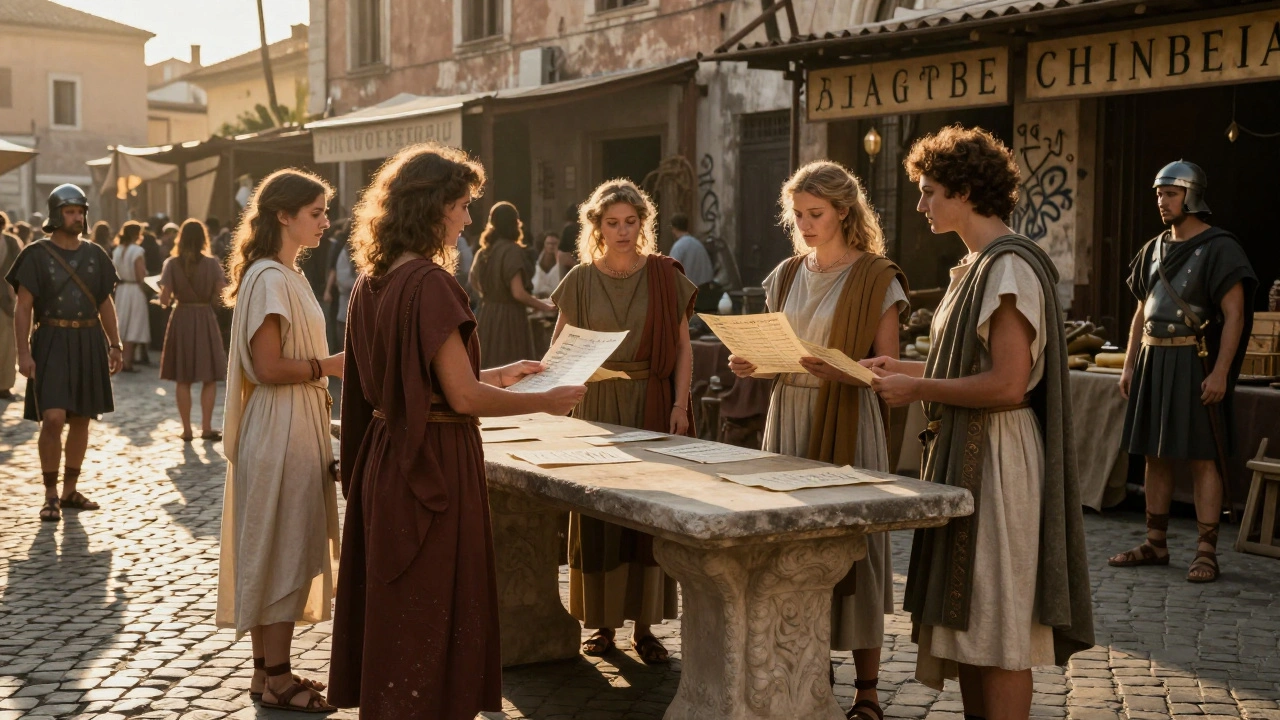
Registration wasn’t optional. To work legally, a woman had to appear before the aediles - city magistrates who handled markets, public order, and now, prostitution. She had to give her real name, her pseudonym (many used aliases), and list her prices. That list became public record. Her earnings were tracked monthly. Underreporting? That meant flogging or jail, according to papyrus records from Roman Egypt. Collection started with the military. Soldiers were sent to brothels, alleys, and taverns to collect the tax. It was messy. Suetonius and later historians note that soldiers often demanded extra payments - “voluntary” tips that weren’t on the books. If you couldn’t pay, you were fined 25% of what you owed, plus the original amount. That’s a 125% total penalty for falling behind. By the 2nd century CE, the system got more bureaucratic. Provincial tax officials replaced soldiers in most areas. The tax became less about intimidation and more about accounting. The state had a spreadsheet - on parchment - tracking income from sex work across the empire.Who Paid, and Who Didn’t
Roman law classified prostitutes as infamia - infamous persons. They couldn’t marry freeborn citizens. They couldn’t testify in court. They were legally invisible in most ways. But the tax made them visible in one crucial way: as revenue generators. This contradiction was central to Rome’s approach. The state didn’t legalize prostitution because it approved of it. It taxed it because it was profitable - and impossible to eliminate. Brothels were everywhere: in Pompeii, Ostia, Ephesus. They lined the roads outside city gates. The tax didn’t stop them. It monetized them. Even more telling: the tax applied to former sex workers. If you left the trade, you still owed. If you married a former prostitute, your children could inherit the stigma - and sometimes, the debt. This wasn’t just about money. It was about control. The state marked women as permanently tainted, even after they’d left the trade.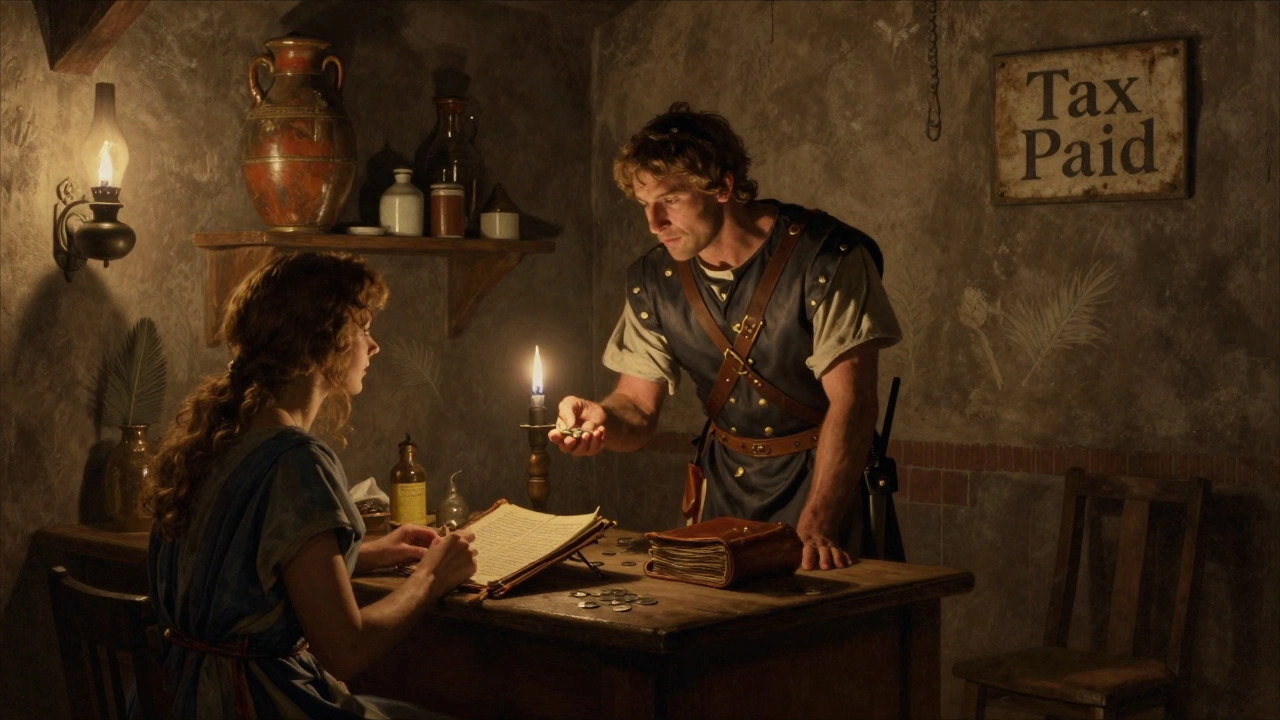
Where the Money Went
Caligula’s original plan was simple: fill the imperial coffers. But under Emperor Alexander Severus (222-235 CE), the money got a new purpose. Instead of going into the general treasury, it was funneled into public buildings - the Colosseum, the Circus Maximus, theaters, and stadiums. That shift mattered. It wasn’t just about funding. It was about framing. The state began saying: “This isn’t sin money. It’s civic money.” Prostitution funded entertainment. The same women who were denied basic rights helped pay for the games that kept the mob quiet. By the 3rd century, historians estimate the tax brought in 1.2% of total imperial revenue - more than taxes on taverns, artisans, or even some provincial trade routes. When Claudius abolished most of Caligula’s new taxes, he kept this one. Why? Because it worked. It was reliable. It didn’t depend on harvests or trade wars.The Christian Empire and the Tax That Wouldn’t Die
By the 4th century, Rome had become Christian. Emperors like Constantine preached against immorality. The Church condemned prostitution as sinful. Yet the tax stayed. Christian emperors didn’t abolish it. They kept collecting. Why? Because the state still needed the money. And because the system was too embedded to dismantle. The tax survived the fall of the Western Empire, the rise of Constantinople, and the shift from paganism to Christianity. It lasted until 498 CE - 461 years after Caligula introduced it. That’s longer than the United States has existed. It outlasted 27 emperors. It survived invasions, plagues, and religious revolutions. The person who finally ended it? Emperor Anastasius I. Not Theodosius, as some websites claim. Theodosius died in 395 CE. The tax lived on for another 100 years.