Consent Spectrum Calculator
Rate Your Scenario
Describe a situation where you or someone you know felt pressured to consent. We'll assess it on the consent spectrum (0-10 where 10 is enthusiastic, unpressured agreement).
When someone says "yes," does that always mean they really wanted it? The answer isn’t as simple as it seems. Many people assume consent is a yes-or-no moment - a clear verbal agreement or a nod of the head. But in reality, consent exists on a spectrum of pressure, where "yes" can be given under conditions that strip away true choice. This isn’t about violent assault - it’s about the quiet, everyday pressures that make saying no feel impossible.
What Coercion Really Looks Like
Coercion doesn’t always come with raised voices or physical force. More often, it’s whispered: "If you loved me, you’d do this," or "Everyone else is doing it," or "I’ve been waiting so long." These aren’t threats - they’re emotional traps. According to Denver Family Counseling Services (2024), coercion includes emotional manipulation, persistent pressure, guilt-tripping, and exploiting power imbalances. It’s when someone feels they have no real alternative, even if no one is holding them down. A 2023 analysis by Salty World mapped consent on a 0-10 scale, where 0 is no consent at all and 10 is enthusiastic, unpressured agreement. Most people assume anything above a 5 is fine. But research shows that even a 6 or 7 can be coerced. For example, a younger woman in a relationship with an older man might agree to sex because she’s been told she’s "mature for her age" - and now she feels obligated to live up to that image. She says yes, but not because she wants to. She says yes because saying no feels like losing his approval.The Myth of "Just Saying Yes"
The legal system often treats consent as binary: either you said yes, or you didn’t. But psychology and trauma research tell a different story. Dr. Jennifer Fraser, a clinical psychologist specializing in coercive control, explains that "compliance is not consent." People under pressure don’t say yes because they want to - they say yes because they’re afraid, exhausted, or feel trapped. In one NIH study, 38.7% of sexual coercion cases involved no physical force at all. Instead, perpetrators created psychological dependency, making submission feel like safety. This isn’t rare. The 2020 National Intimate Partner and Sexual Violence Survey found that 28.3% of victims were pressured through emotional manipulation. Another 19.7% were threatened with relationship endings. These aren’t outliers. They’re everyday experiences. And yet, most people don’t recognize them as coercion. Why? Because the pressure is subtle. It’s wrapped in care, affection, or even humor. "Come on, don’t be shy," or "I thought you were into this."Power Isn’t Just About Age or Gender
Coercion thrives where power is uneven. That doesn’t just mean an older person pressuring a younger one. It can be a boss pressuring an intern, a teacher pressuring a student, or even a friend using social influence to get what they want. Case Western Reserve University’s Office of Equity defines coercion as "unreasonable pressure for sexual activity," and stresses that consent can’t be given when there’s a "significant age or perceived power differential." Dr. Jennifer Cobbina’s 2024 study at Michigan State University found that women of color experience coercion through racialized power dynamics in 41.3% of non-consensual encounters - compared to 27.8% for white women. This shows coercion isn’t just about individual behavior. It’s shaped by systemic inequalities - race, class, gender, and even social status. In one case, a college student was pressured into sex by a senior athlete who told her, "You’re lucky I’m interested in you." She didn’t say no because she believed he was doing her a favor. That’s not romance - that’s control disguised as attention.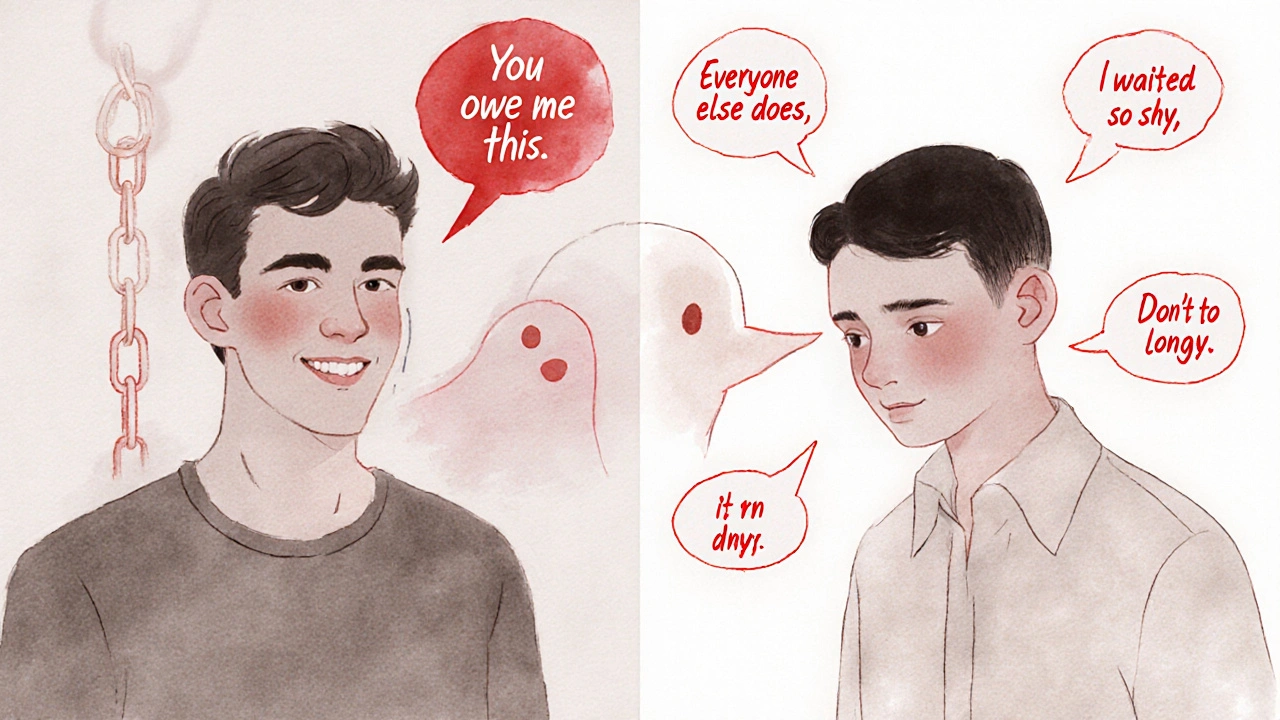
How Coercion Sabotages Consent
True consent requires three things: freedom, clarity, and the ability to change your mind. Coercion breaks all three.- Freedom: You can’t consent if you’re afraid of consequences - emotional, social, or economic.
- Clarity: If someone says yes because they’re tired of arguing, or because they don’t know how to say no, that’s not clear consent.
- Revocability: Coercive environments make people afraid to withdraw consent later. They worry about being called "fickle," "cold," or "overreacting."
What Consent Education Gets Wrong
Most campus programs teach consent as a checklist: "Ask before you touch," "Get a verbal yes," "Respect a no." But these rules don’t prepare people for the gray areas. They don’t teach you how to spot emotional manipulation. They don’t train you to recognize when someone’s silence means "I’m too scared to say no." A 2023 study from the Association of American Universities found that while 67.2% of colleges include consent education in orientation, only 28.5% address coercion beyond physical force. That’s a massive gap. If you’re taught that consent is only violated when someone is pinned down or drugged, you’ll miss the 70% of cases where the harm is psychological. The University of Michigan’s "Consent is Everything" program is one of the few that works. It uses 12-16 hours of interactive training, role-playing real-life scenarios like a partner saying, "You’re overreacting," or "I didn’t think you meant it when you said you were tired." Students learn to read body language, tone, and context - not just words. After six months, 68.4% of participants still correctly identified coercive behavior.The Legal System Is Catching Up - Slowly
California’s 2014 "Yes Means Yes" law was the first to require affirmative consent in higher education. Since then, 14 other states adopted similar standards. But only five - California, New York, Illinois, Virginia, and Colorado - explicitly recognize psychological coercion as invalidating consent in criminal law. In 2024, the American Law Institute proposed updating the Model Penal Code to include "psychological manipulation that substantially impairs the victim’s capacity to exercise free will." If adopted, this could reshape how courts handle coercion cases nationwide. Meanwhile, the Biden administration’s 2023 Executive Order 14077 directed the Department of Education to revise Title IX rules to include pressure, manipulation, and threats as forms of sexual misconduct. But policy doesn’t fix culture. A 2024 survey by the National Sexual Violence Resource Center found that 63.7% of sexual assault service providers say they haven’t received adequate training to recognize coercion without physical force. That means victims are still being dismissed - not because they’re lying, but because the system doesn’t know how to see the harm.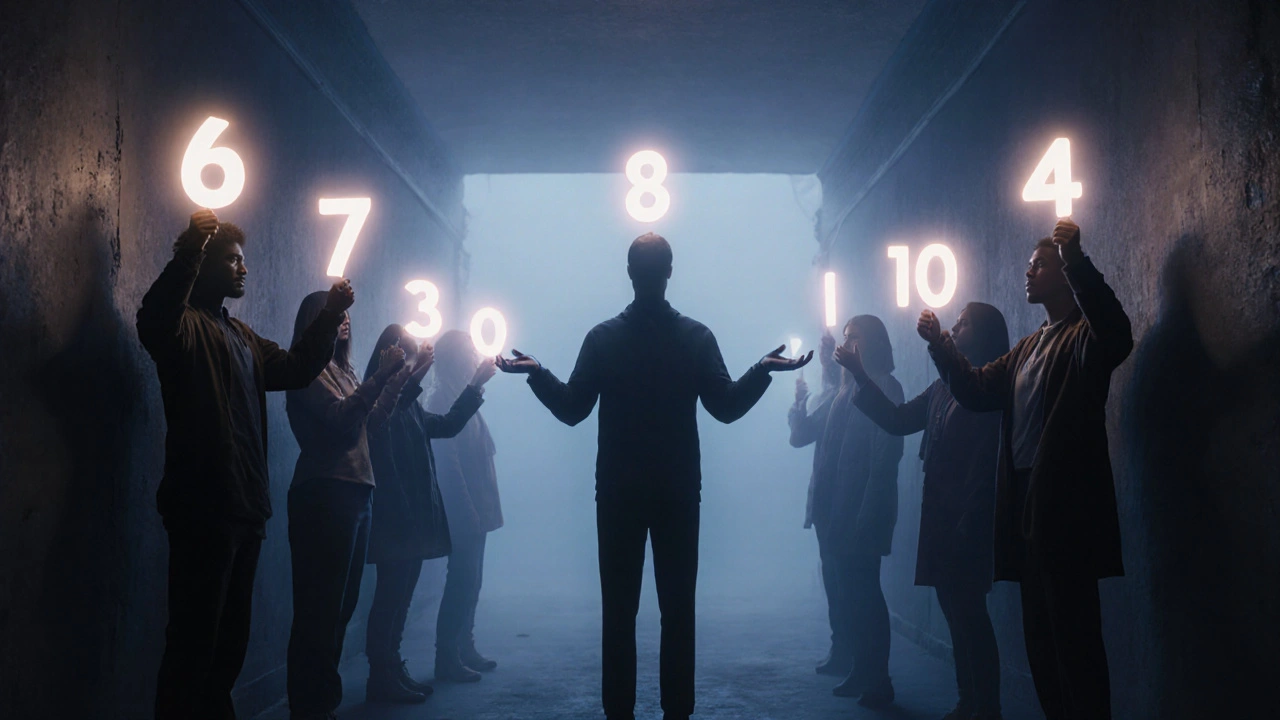
How to Recognize Coercion in Real Life
Here are six signs of coercion you might not realize are red flags:- You’re told you "owe" them sex because they bought you dinner, gave you a gift, or "waited so long."
- They use guilt: "If you really loved me, you’d do this."
- They threaten to end the relationship if you say no.
- You’re pressured after drinking - even if you "agreed" while drunk.
- You feel like you can’t say no because you’re afraid of how they’ll react.
- You say yes because it’s easier than arguing, even though you don’t want to.
What You Can Do
If you’re in a situation where you feel pressured:- Your "no" doesn’t need to be loud. It just needs to be clear.
- If someone doesn’t respect your boundary, that’s not a relationship - it’s manipulation.
- You don’t owe anyone your body, your time, or your silence.
- It’s okay to walk away - even from someone you care about.
- Don’t assume "yes" means yes. Ask: "Are you sure you want this?" and listen to the answer.
- Don’t laugh off pressure as "just being playful."
- Learn to recognize emotional manipulation, not just physical force.
- Support people who say they felt pressured - don’t question their story.
It’s Not About Perfect Consent - It’s About Real Respect
The goal isn’t to turn every interaction into a legal contract. The goal is to create a culture where people feel safe saying no - without fear, without guilt, without consequences. Where "yes" means yes - not because you were worn down, but because you wanted it. The spectrum of consent isn’t just a tool for survivors. It’s a mirror for all of us. It asks: When you ask for someone’s body, are you asking - or demanding? When you hear "yes," are you hearing freedom - or fear? This isn’t about policing behavior. It’s about building trust. And trust starts when we stop assuming that silence is consent - and start listening to what’s left unsaid.Can someone consent if they’re tired or emotionally drained?
No. Consent requires the ability to make a free, informed choice. When someone is exhausted, overwhelmed, or emotionally drained, their capacity to give meaningful consent is compromised. Saying "yes" under those conditions is often a way to end discomfort, not an expression of desire. Real consent requires energy, clarity, and the freedom to say no - without fear of backlash.
Is it coercion if someone keeps asking after I say no?
Yes. Repeatedly asking after someone says no is a form of pressure. It signals that their boundaries don’t matter. Consent isn’t a negotiation - it’s a gift that must be freely given. If someone won’t accept "no," they’re not seeking consent. They’re seeking compliance.
Can you be coerced by someone you love?
Absolutely. Coercion often happens in relationships because trust makes people vulnerable. Someone you care about might use emotional intimacy to manipulate you - saying things like, "You’re the only one who understands me," or "I’d die without you." These aren’t romantic - they’re controlling. Love doesn’t justify pressure.
What’s the difference between persuasion and coercion?
Persuasion invites. Coercion demands. Persuasion respects boundaries - if you say no, the person backs off. Coercion ignores your "no" and replaces it with guilt, threats, or emotional blackmail. Persuasion leaves space for choice. Coercion takes it away.
Does alcohol always invalidate consent?
Not always - but it often does. If someone is too drunk to understand what’s happening, remember where they are, or make a rational decision, then they cannot consent. Even if they said "yes" while intoxicated, that’s not valid consent. The key question isn’t whether they drank - it’s whether they were capable of giving informed, enthusiastic agreement.
Why do so many people not realize they were coerced?
Because coercion is designed to feel normal. It hides in romance, friendship, and care. People are taught to value being "nice," "easygoing," or "not making a scene." So when someone pressures them, they blame themselves: "Maybe I should’ve said no louder," or "I didn’t really mean it." Coercion doesn’t scream - it whispers. And by the time you realize it’s happening, you’ve already been trained to believe you’re at fault.