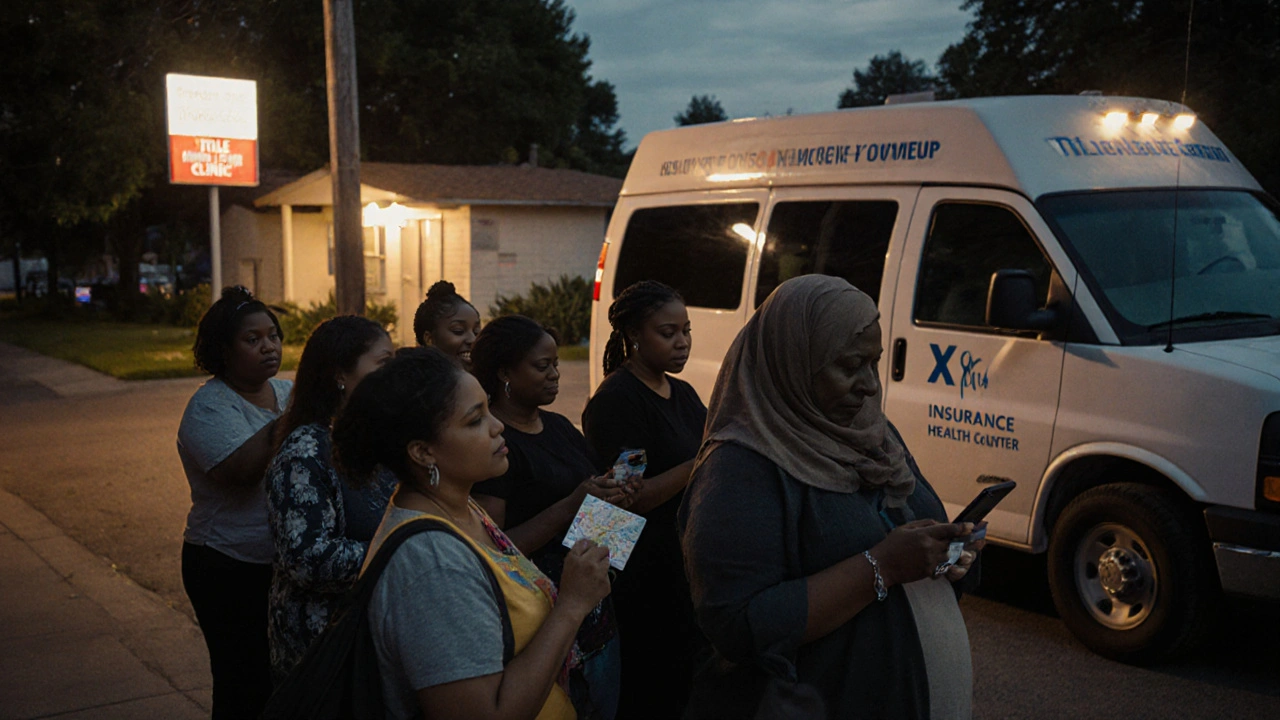
Every year, nearly 19.5 million women in the U.S. need affordable contraceptive care but can’t get it. They live in places where the nearest clinic is hours away, or their insurance won’t cover the method they need, or the provider won’t listen to them because of their race or income. This isn’t about choice-it’s about access. And access isn’t equal.
How Insurance Shapes Who Gets Care
The Affordable Care Act changed everything in 2012 when it required most private insurance plans to cover birth control without a copay. For many women, that meant going from paying $50 a month for pills to paying nothing. But that rule didn’t apply to everyone. In 2020, the Trump administration let employers and insurers deny coverage based on religious or moral beliefs. Today, 1 in 5 women with private insurance still face hurdles-prior authorizations, denied prescriptions, or out-of-pocket costs for IUDs or implants. Medicaid covers 75% of publicly funded contraceptive care in the U.S. But even then, it’s not simple. In states that didn’t expand Medicaid, low-income women fall through the cracks. In Illinois, despite Medicaid expansion, 32.7% of women using contraception still don’t have coverage for it. And when Medicaid eligibility lapses-even for a month-women are left paying hundreds for an IUD insertion. One woman in Texas reported a $300 bill after losing her coverage. That’s not a mistake. It’s a system failure.Clinics Are the Lifeline, But They’re Disappearing
When people think of birth control, they imagine a doctor’s office. But for low-income women, uninsured women, and those in rural areas, clinics are the only option. Community health centers and Title X-funded providers serve 21% of low-income women and 28% of uninsured women. These clinics offer more than pills-they offer counseling, STI testing, and referrals. They’re the backbone of reproductive care for millions. But they’re under threat. Title X, the federal program created in 1970, served 2.8 million people in 2023. That’s a 7% increase from the year before. Yet funding hasn’t kept up. Clinic closures are rising, especially in the South and Midwest. In Alabama, 57% of counties have no provider offering contraception. In rural areas, the problem is worse: 38% of rural counties are contraceptive deserts-places with no clinic, no pharmacy, no telehealth option within 10 miles. In Illinois, the ICAN! initiative is trying to fix this. They’re building 20 quality hubs by 2025, training providers to offer 12 evidence-based methods, and hiring navigators to help women deal with insurance paperwork. One clinic in Chicago’s South Side cut prior authorization delays from two weeks to three days. That’s not just efficiency-it’s dignity.Who Gets Left Behind? Race, Income, and Geography
Access isn’t just about money or distance. It’s about who you are. Black women in rural Illinois are 23% less likely to get contraceptive care than white women in the same area. Hispanic women report higher rates of provider dismissal and cultural insensitivity. Young women aged 18-24 are twice as likely as women over 40 to say they can’t access birth control. And uninsured women are 23% more likely to describe access as “difficult” than insured women. One Reddit user in Texas wrote: “I asked for the implant. They told me I needed to get a Pap smear first. I didn’t have insurance. They didn’t tell me where to get it for free.” That’s not care. That’s gatekeeping. Transportation is a silent barrier. In rural areas, 41% of women say getting to a clinic is the biggest problem. Clinic hours matter too-29% of women say they can’t go during work hours. And provider shortages? In 68% of rural counties, there’s not a single OB-GYN. When your only option is a nurse practitioner who’s overworked and underpaid, care suffers.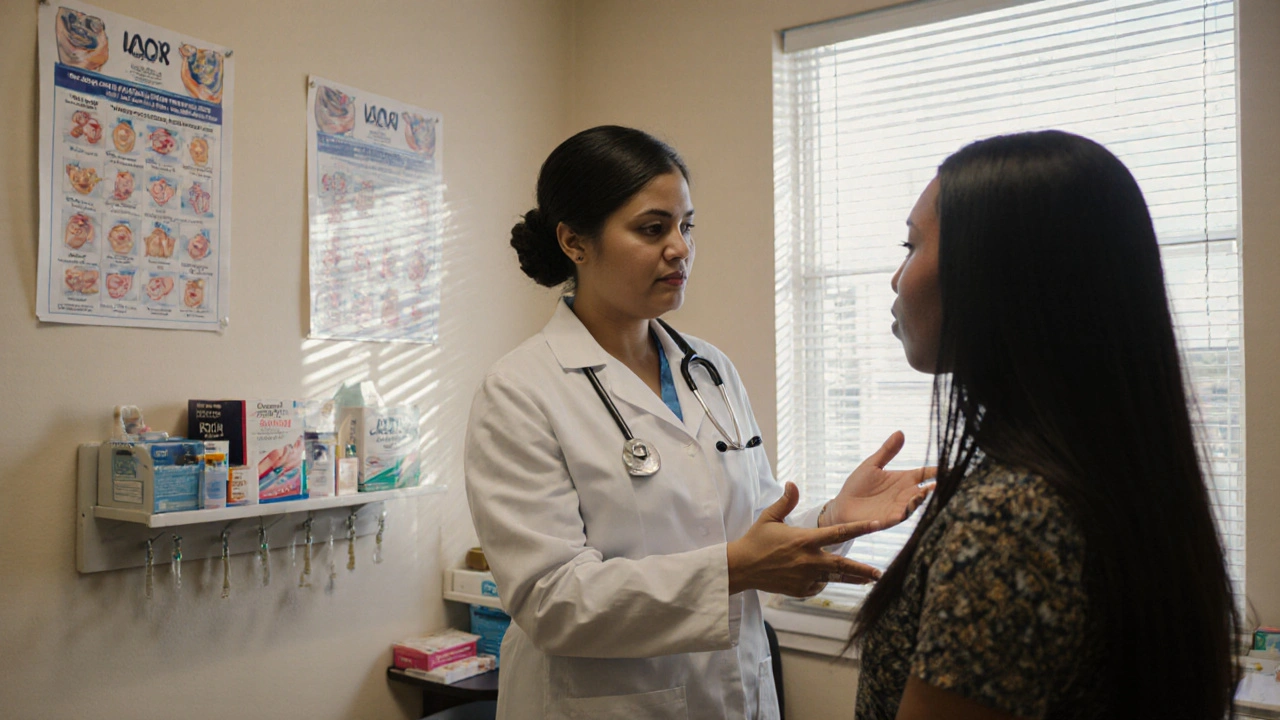
Policy Gaps and the Post-Dobbs Reality
After the Supreme Court overturned Roe v. Wade in 2022, contraceptive demand jumped 22%. More people wanted to prevent pregnancy because abortion was no longer an option. But clinics didn’t get more funding. In Texas, 32% of Title X clinics closed after 2021 restrictions. In states with abortion bans, providers fear offering any reproductive care-even condoms or pills-because of vague laws. The federal government still doesn’t require states to cover contraception beyond the 60-day postpartum window. But the American College of Obstetricians and Gynecologists says that’s not enough. They’re pushing for 12 months of coverage after birth. So far, only 36 states have adopted that. In the other 14, women are being forced to pay out of pocket right after giving birth-when they’re most vulnerable. Meanwhile, the Guttmacher Institute warns: if current trends continue, unintended pregnancies among low-income women will rise by 15% in the next five years. That’s not speculation. It’s a projection based on data. And every unintended pregnancy costs Medicaid an average of $14,000 in delivery and infant care. Every dollar spent on family planning saves $7.09.What’s Working? Real Solutions in Action
Not all hope is lost. The ICAN! program in Illinois is one of the few models proving that equity is possible with intentional design. They don’t just hand out pills. They train providers in patient-centered counseling. They hire bilingual staff. They partner with community organizations to reach women in churches, schools, and food pantries. They offer telehealth options for people without cars. And they track outcomes-not just how many IUDs they insert, but whether women feel heard, respected, and supported. Other states are watching. Oregon now covers all contraceptive methods without prior authorization. California funds free contraception through pharmacies. New York allows pharmacists to prescribe birth control directly. These aren’t radical ideas-they’re practical ones. And they’re working.
The Road Ahead: What Needs to Change
We can’t fix this with patchwork solutions. We need policy that reflects reality:- Expand Title X funding to match demand. The program serves 2.8 million people. The need is closer to 5 million.
- Mandate nationwide Medicaid coverage for 12 months postpartum, with no gaps.
- Eliminate prior authorizations for all FDA-approved contraceptives in all insurance plans.
- Invest in community health centers in contraceptive deserts-especially in rural and minority neighborhoods.
- Require cultural competency training for all providers receiving public funds.
- Pass federal legislation to codify contraceptive access as a legal right, not a policy that can be undone by an executive order.
Why This Matters Beyond Birth Control
This isn’t just about preventing pregnancy. It’s about whether a woman can finish school, keep her job, plan her family, or leave an abusive relationship. Contraceptive access is tied to economic mobility, maternal health, racial justice, and personal freedom. When a woman can’t get birth control, it doesn’t just affect her. It affects her children, her community, and the public health system. The data is clear. The solutions exist. What’s missing is the political will.Can I get free birth control if I don’t have insurance?
Yes. Title X-funded clinics offer contraception for free or on a sliding scale based on income. These clinics are often community health centers, Planned Parenthood affiliates, or public health departments. You don’t need insurance. You don’t need proof of citizenship. You just need to walk in. Find one near you through the Title X clinic locator or by calling 1-800-230-PLAN.
Why is it so hard to get an IUD even with insurance?
Many insurers still require prior authorization for IUDs, even though the ACA says they should be covered without cost-sharing. Some plans only cover certain brands. Others delay approval for weeks. In 35% of cases, women report being denied or delayed. If this happens, ask your provider to file an appeal. Many clinics now have insurance navigators who handle this for you.
Are emergency contraceptives covered by insurance?
Yes, if you have insurance. Plan B and ella are covered without a copay under the ACA. But many women don’t know this. Even worse, some pharmacies refuse to stock them or make you ask for them behind the counter. If you’re denied, call your insurer. You have a legal right to access it. You can also get emergency contraception for free at Title X clinics or through online programs like HeyJane or Nurx.
What if I live in a rural area with no clinics?
Telehealth is an option. Services like Nurx, HeyJane, and Carafem can mail you birth control pills, patches, or rings after a virtual consultation. For IUDs or implants, you’ll still need an in-person visit-but some states now allow pharmacists to insert them. Check if your state allows this. You can also contact your local public health department-they may have mobile clinics or partnerships with traveling providers.
Why are Black women less likely to get contraceptive care?
Historical mistreatment, like forced sterilizations and unethical trials, created deep distrust in the medical system. Today, Black women report being dismissed, not listened to, or pressured into certain methods. Providers often assume they don’t want birth control or don’t understand it. Studies show they’re 37% less likely to receive high-quality counseling. Community-led programs like ICAN! are working to fix this by training providers in cultural humility and hiring staff who reflect the communities they serve.
If you’re struggling to get birth control, you’re not alone. And you’re not broken. The system is. But change is possible-and it’s already happening in clinics, statehouses, and living rooms across the country. The question isn’t whether we can fix this. It’s whether we’ll choose to.