The Eve & Mary Lens: A Historical Gendered-Sin Explorer
Explore the historical machinery behind one of Christianity's most enduring stereotypes. Compare the two poles of female iconography, follow the idea across time, or test what you know.
Select a figure to see how traditional Christian iconography framed her — and what that framing did to real women. The gap between them was the space where no ordinary woman was allowed to exist.
Seducer / First Sinner — the template for female danger.
Obedient Mother / New Eve — the reward for compliance.
Trace how a single story became a social weapon, generation by generation. Click any entry to read its significance.
Why does a single fruit bite define half of humanity for two millennia? In Western Christian thought, Eve is the first human woman who ate the forbidden fruit in the Garden of Eden, leading to the Fall of Man. Her story isn't just a creation myth; it’s the foundational narrative that constructed the concept of the "fallen woman"-a label that has shaped laws, art, and social expectations for centuries. This article unpacks how theological interpretations turned one biblical character into a universal symbol of female danger, linking her directly to issues of medieval sexuality and moral control.
The Theological Roots of Female Blame
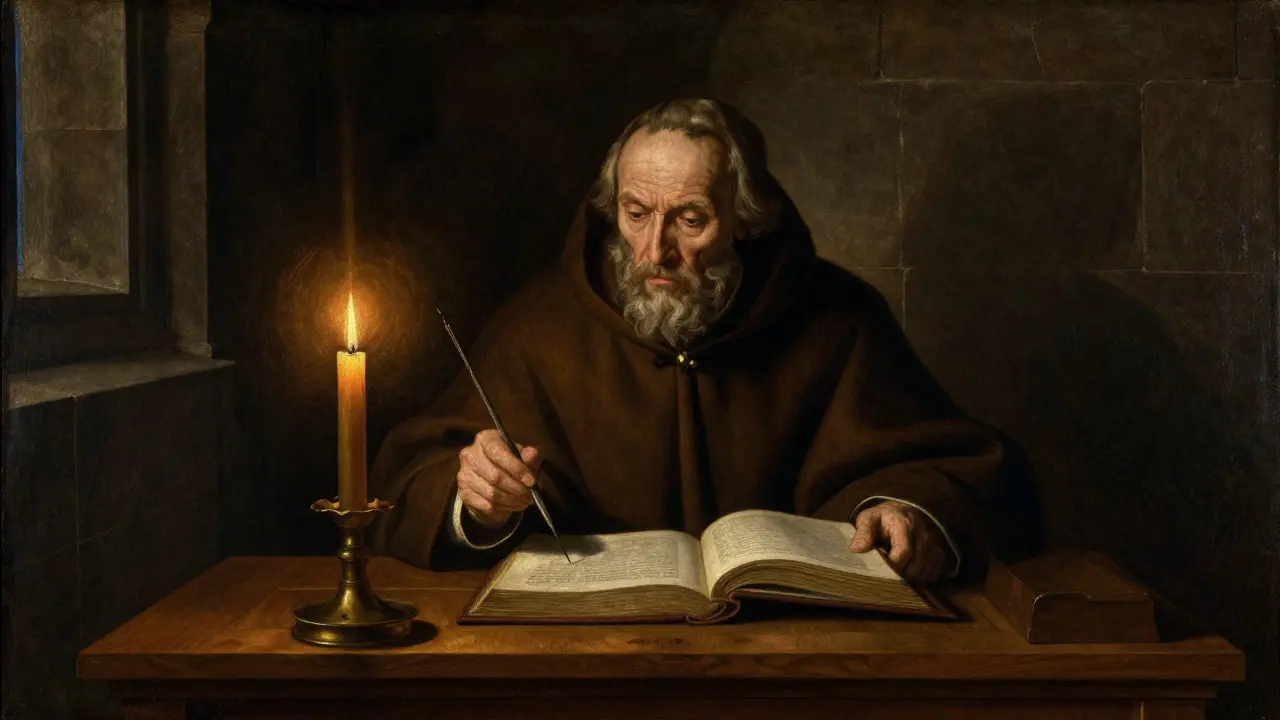
To understand why women were held responsible for original sin, we have to look at how early Church Fathers read the Bible. While Genesis describes both Adam and Eve eating the fruit, later interpreters often singled out Eve as the primary agent of deception. St. Augustine, writing in the 4th and 5th centuries, argued that Eve was created from Adam's rib, making her his helper but also his subordinate. He suggested that because she listened to the serpent, she bore the greater share of the blame. This wasn't just about theology; it was about hierarchy. If men were made in God's image more directly, then women's role was secondary, and their errors were more consequential.
This idea stuck. It moved from academic sermons into popular culture, creating a lasting association between femininity and weakness. The core argument was simple: women are naturally more susceptible to temptation because they lack the rational strength attributed to men. This set the stage for centuries of legal and social restrictions designed to keep women under close watch.
Medieval Views on Desire and Control
In the Middle Ages, these theological ideas collided with practical concerns about population, property, and order. Medieval sexuality was heavily regulated by the Church, which viewed sex primarily as a duty for procreation rather than pleasure. Any deviation from this norm was seen as a threat to social stability. Women, particularly those outside the protection of marriage or convent life, became targets of suspicion. A woman who spoke freely, dressed boldly, or worked independently was often labeled as loose or promiscuous, echoing the archetype of Eve's disobedience.
Monastic texts and courtly romances reinforced this duality. On one hand, the Virgin Mary represented the perfect, obedient woman who reversed Eve's curse. On the other, the "demoness" or the seductress embodied Eve's legacy. This binary meant there was no middle ground for real women. You were either pure like Mary or dangerous like Eve. This lack of nuance made it easy for communities to police behavior, using shame as a tool to enforce conformity.

The 'Fallen Woman' Label in Practice
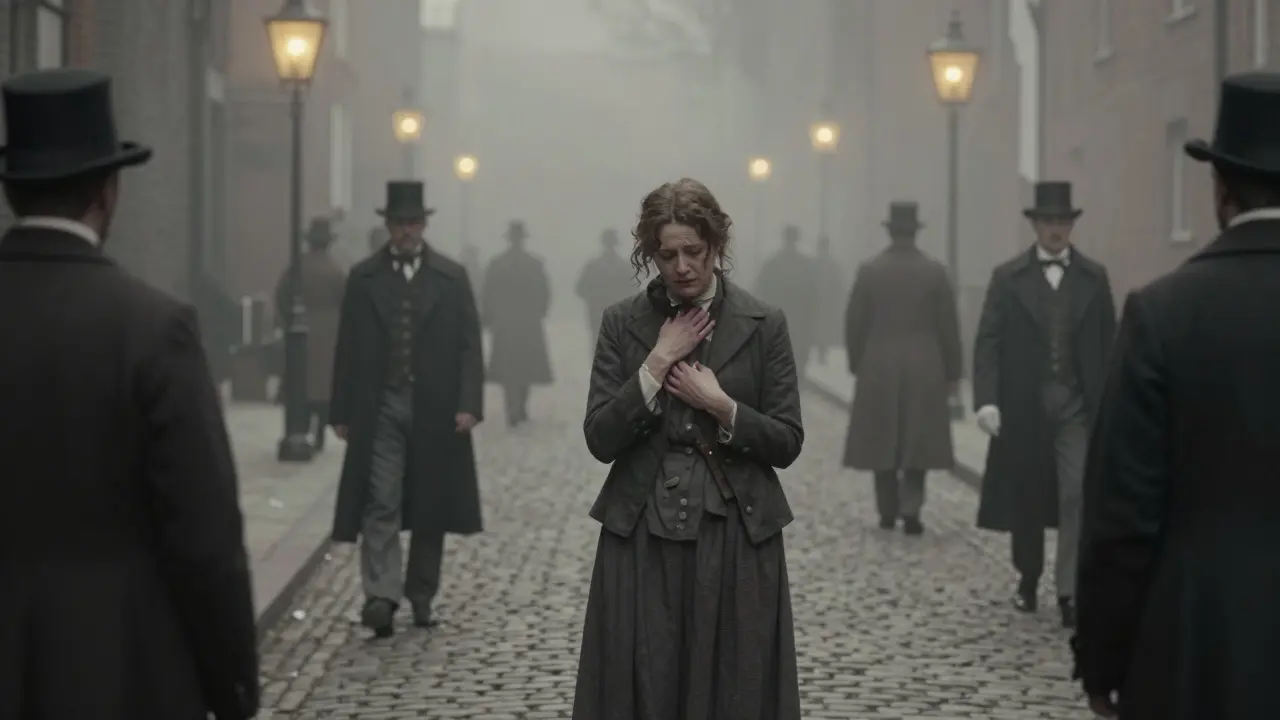
The term "fallen woman" didn't appear in the Bible, but it emerged strongly in the 19th century, though its roots go back to medieval concepts of spiritual fall. By the Victorian era, the label had become a specific social category for women who worked as prostitutes or lived outside traditional domestic roles. These women were seen as living proof of Eve's enduring curse. They were pitied but also feared, believed to be inherently corrupt and likely to drag others down with them.
This stigma had tangible consequences. Laws like the Contagious Diseases Acts in Britain targeted women specifically for medical examinations, assuming they were the vectors of disease. Men could visit brothels with relative impunity, but women faced arrest, public shaming, and forced quarantine. The logic was circular: because women were tempted by nature (like Eve), they were responsible for spreading sin (and disease). This gendered view of morality persisted well into the modern era, affecting everything from hiring practices to social acceptance.
Comparing Biblical Figures: Eve vs. Mary
To fully grasp the weight of the "Eve" label, it helps to compare her with her theological opposite, the Virgin Mary. Both figures are central to Christian iconography, but they represent polar opposites in terms of agency and outcome. Here is how their attributes contrast in traditional Christian thought:
| Attribute | Eve | Mary |
|---|---|---|
| Role in Narrative | Seducer / First Sinner | Obedient Mother / New Eve |
| Association with Sin | Source of Original Sin | Free from Original Sin (Immaculate Conception) |
| Symbolic Function | Warning against female autonomy | Model of female submission |
| Impact on Society | Justified restriction of women's rights | Reinforced ideal of domestic purity |
Notice how the table highlights a clear trade-off: Eve represents the risk of female independence, while Mary rewards female compliance. For centuries, women were encouraged to emulate Mary to escape the shadow of Eve. This dynamic kept the focus on female behavior rather than questioning the system itself.
How Art and Literature Reinforced the Stereotype
You don't need to read theology to see this bias; you just need to look at art. From medieval stained glass to Renaissance paintings, artists repeatedly depicted Eve with exaggerated features-long hair covering her face, a seductive posture, and eyes locked on the snake. In contrast, Adam is often shown as passive or merely surprised. These visual cues communicated a powerful message: the danger came from within the woman.
Literature followed suit. Chaucer’s *The Wife of Bath* challenges some of these norms, but she is an exception that proves the rule. Most medieval and early modern stories featured female characters who were either saints or harlots. There was little room for complex, flawed, or independent women. This cultural reinforcement ensured that even people who never studied scripture internalized the idea that female desire was a problem to be managed.
Modern Implications and Lasting Shadows
Do these old ideas still matter? Absolutely. While most modern Christians accept that both Adam and Eve shared responsibility for the Fall, the cultural residue remains. Today, when we discuss topics like reproductive rights, workplace equality, or sexual double standards, we often hear echoes of the "fallen woman" trope. Women who exercise bodily autonomy are sometimes framed as risky or immoral, mirroring the ancient fear of Eve's choice.
Understanding this history helps us recognize where biases come from. It shows that the "natural