Consent Education Grade Selector
Select Your Child's Grade Level
Explore age-appropriate consent education scenarios based on current school curriculum standards.
Select a grade level to see examples
This tool demonstrates real scenarios used in schools that teach affirmative consent education.
When a fifth grader asks if they can hug a classmate, that’s not just about politeness. It’s the first real lesson in affirmative consent. Schools across the U.S. are starting to teach kids that consent isn’t just about sex-it’s about respect, boundaries, and saying yes when you mean it. And it’s not optional anymore. In 18 states and Washington, D.C., it’s required by law.
What Affirmative Consent Really Means
Affirmative consent means getting a clear, enthusiastic, and voluntary yes before any physical contact. It’s not just the absence of a no. It’s not a shrug, a silence, or a nervous laugh. It’s a clear, confident yes. And it applies to everything-from hugging someone to sending a naked photo. This isn’t new thinking. It’s based on research from the CDC showing that kids who learn about boundaries early are more likely to speak up if something feels wrong. They’re also more likely to build healthy relationships later in life. The goal isn’t to scare kids. It’s to give them tools. In Washington State, where this approach started gaining real traction, schools began teaching this in 2020. The law doesn’t just say “teach consent.” It says teach it right. That means age-appropriate lessons, starting as early as fourth grade. For younger kids, it’s about hugs, hand-holding, and asking before taking a photo. For teens, it’s about texting, social media, and saying no to pressure.How It’s Taught by Grade Level
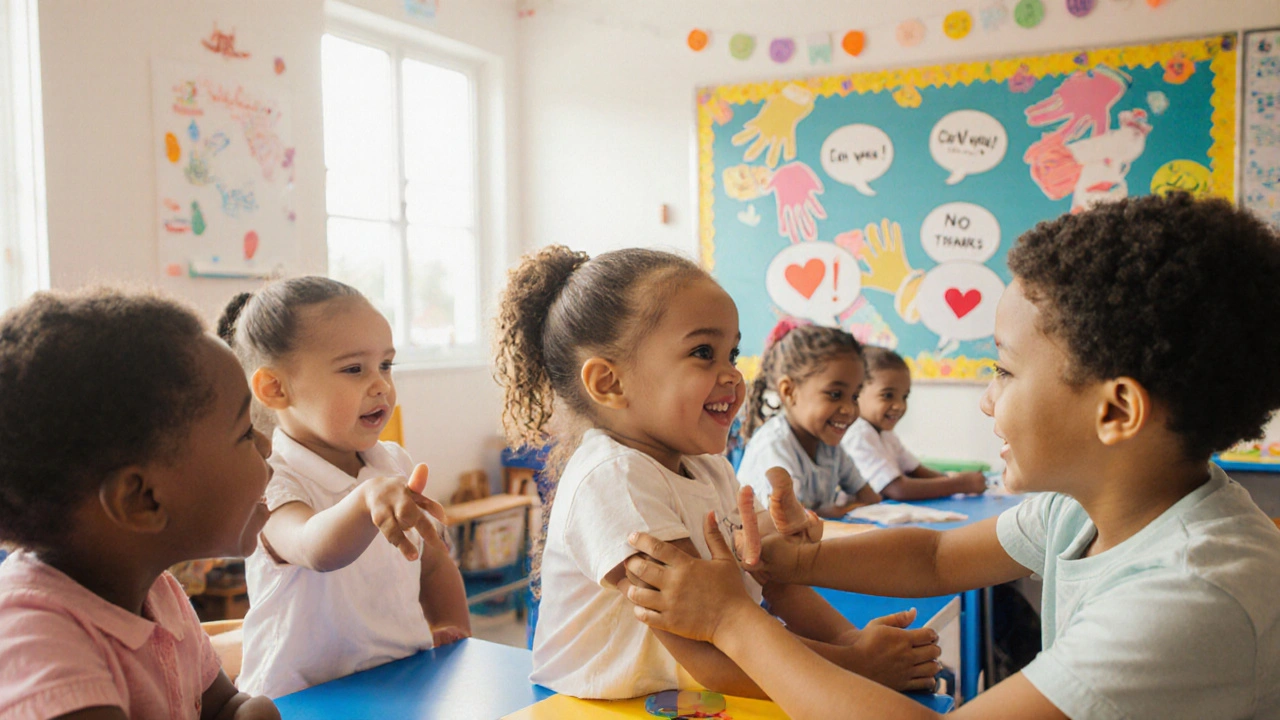
There’s no one-size-fits-all lesson. What works for a third grader won’t work for a twelfth grader. That’s why states like Washington and Maryland broke it down by age.- PreK-2: Learning that your body belongs to you. No one gets to touch you without asking. It’s taught through stories, role-playing, and simple phrases like “Can I hug you?”
- Grades 3-5: Understanding personal space, digital boundaries, and what counts as a “no.” Kids learn that saying “maybe” isn’t yes. That ignoring someone who says no is wrong-even if it’s just a game.
- Grades 6-8: Introducing dating, peer pressure, and digital consent. What happens if someone sends a photo and then asks for it back? What if someone pressures you into sexting? These aren’t hypotheticals anymore. They’re real issues kids face daily.
- Grades 9-12: Deep dives into rape culture, bystander intervention, and how alcohol or drugs affect consent. Students learn that consent can be withdrawn at any time-even in the middle of a date. They also learn how to safely step in if they see someone being pressured.
It’s Not Just About Sex
A lot of parents worry this is about sex. It’s not. It’s about power, control, and respect. The SafeBAE 360 Schools Consent Curriculum includes a module called “Rape Culture.” It doesn’t use scary language. It asks: “Why do we laugh at jokes about sexual assault? Why do we say ‘she asked for it’ when someone’s clothes are revealing?” Kids start noticing patterns. They realize that the same people who say “no means no” often say “boys will be boys” when someone crosses a line. They start asking: “Why is it okay to pressure someone into a kiss but not okay to pressure them into homework?” The shift is subtle but powerful. Consent education doesn’t just teach kids what not to do. It teaches them how to build trust. How to listen. How to be safe-and how to make others feel safe.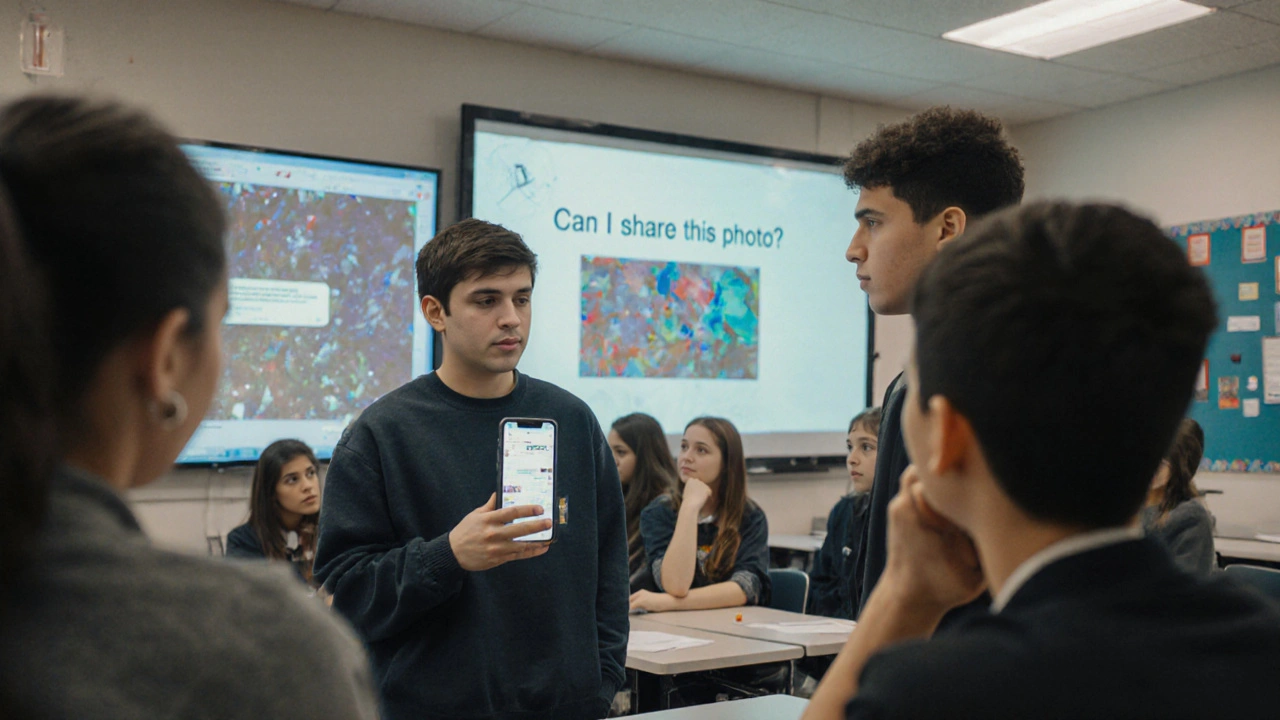
What Schools Are Actually Using
Schools don’t just wing it. They use structured programs with lesson plans, slides, posters, and activities. One of the most widely adopted is SafeBAE. It’s used in over 200 schools across 15 states. Teachers get full kits: discussion guides, videos, printable worksheets, even icebreakers. In Washington, teachers must complete at least three hours of training before they teach consent. Some districts bring in outside experts-like advocates from the Harborview Abuse and Trauma Center-to lead sessions. Others train peer educators: older students who help lead discussions in younger grades. The materials are designed to be inclusive. They don’t assume all students are straight. They don’t assume all students are cisgender. They talk about relationships in all forms. That’s important. If a student doesn’t see themselves in the lesson, they tune out.What Parents Think
Not everyone’s on board. Some parents worry it’s too early. Others think it’s inappropriate. In Yelm Community Schools, about 5% of families opted out in 2022. In Ephrata, some parents complained about “age-appropriateness,” even though the lessons matched state law. But here’s what’s telling: districts that offer opt-outs also provide alternatives. Kids who don’t participate in consent lessons still get lessons on kindness, empathy, and healthy choices. They’re not left out. They’re just learning a different version of the same thing. And the teachers? Most of them say it works. In a Reddit survey of Washington educators, 67% said students engaged deeply when lessons were tied to everyday situations-like asking before taking someone’s hoodie or sharing a meme.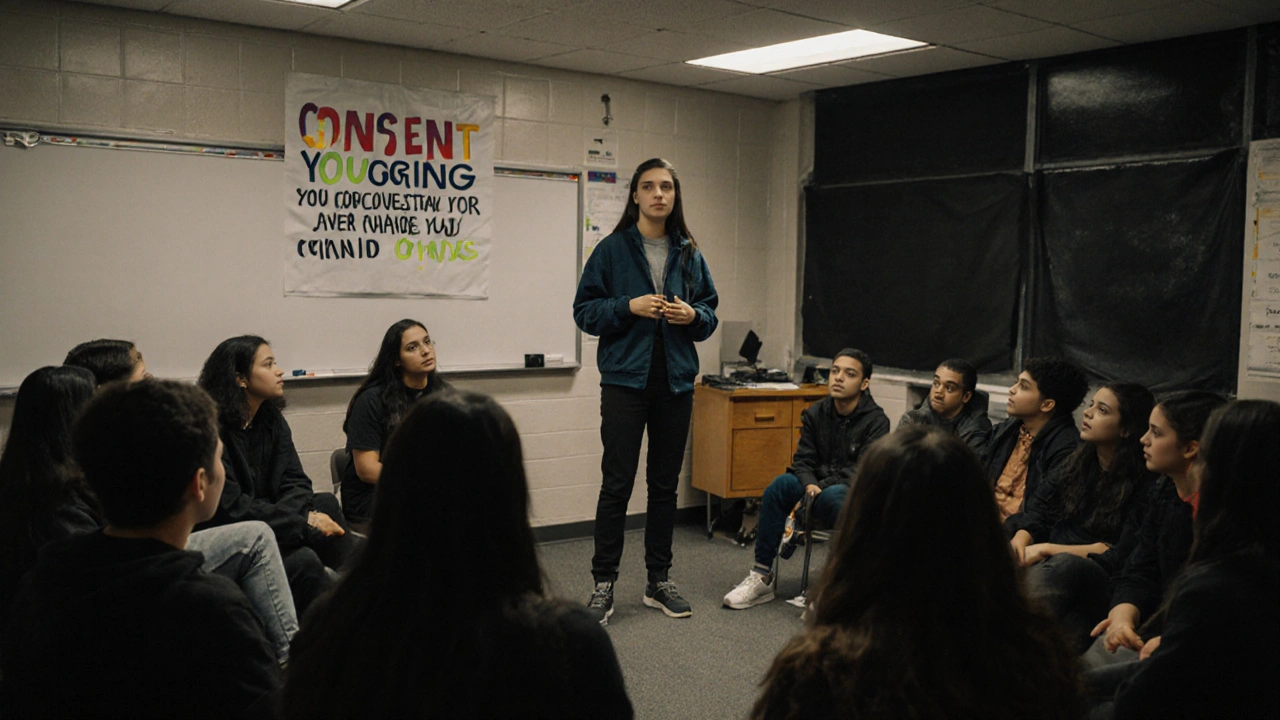
The Big Gap: No One’s Measuring Results
Here’s the problem: no state requires schools to track whether this actually reduces sexual violence. There’s no test. No survey. No data collection. That’s a huge blind spot. We’re spending millions-Washington allocated $2.3 million in 2023 just for this-and we don’t know if it’s working. Some schools track student feedback. Others notice fewer reports of harassment. But there’s no statewide system to measure long-term outcomes. Did a student who learned consent in fifth grade report assault differently at 18? Did they leave an abusive relationship sooner? We don’t know. Experts say that’s the next step. Without data, we’re teaching from hope, not evidence.What’s Next?
By 2025, experts predict 25 to 30 states will have mandatory consent education. Washington is already expanding. They’re piloting a new curriculum for middle schoolers in 2023-2024. New Mexico launched a state-run resource portal. Maryland is rolling out lessons from PreK to 12th grade. The biggest challenge? Consistency. In Washington, only 62% of schools met all the requirements in 2021-2022. Some districts have great training. Others just read from a PowerPoint. But the direction is clear. Consent isn’t a topic you wait until college to teach. It’s a skill you build over years. Like reading. Like math. Like how to cross the street safely. The goal isn’t to turn kids into experts on sexual law. It’s to turn them into people who know how to ask, how to listen, and how to say no without shame.What You Can Do
If you’re a parent, ask your school: Do you teach affirmative consent? What does it look like in my child’s grade? If you’re a teacher, look into SafeBAE or Healthy Connections. If you’re a student, speak up. If a lesson feels off, say so. This isn’t about politics. It’s about safety. About dignity. About teaching the next generation that no one owns your body-not your partner, not your friend, not your crush, not your ex. And that’s a lesson worth learning early.Is consent education only for older students?
No. Affirmative consent education starts as early as fourth grade, focusing on simple concepts like asking before hugging or taking a photo. The lessons build over time, becoming more detailed as students get older. Younger kids learn about personal space and bodily autonomy; teens learn about digital consent and relationship dynamics.
Does teaching consent lead to more sexual activity among teens?
No. Research from the CDC and other public health groups shows that comprehensive sex education-including consent-does not increase sexual activity. Instead, it delays first sexual encounters and increases use of protection. The goal is not to encourage sex, but to ensure that if and when it happens, it’s safe, respectful, and consensual.
Can parents opt out of consent lessons?
Yes, in most states with consent education laws, parents can opt their children out. Schools typically require a written form submitted in advance. Students who opt out often receive alternative lessons on kindness, empathy, or healthy decision-making to ensure they’re still learning core social skills.
Is digital consent really part of this?
Absolutely. Digital consent is now a core part of the curriculum in states like Washington and Maryland. Students learn that sharing a photo without permission-even if it was sent privately-is a violation. They learn how to respond if someone pressures them to sext, and how to report non-consensual sharing of images.
How do teachers get trained to teach consent?
In Washington State, teachers must complete at least three hours of professional development before delivering consent education. Many districts use outside organizations like SafeBAE or the University of Washington’s Harborview Center, which provide full training packages, including role-playing scenarios and trauma-informed approaches. Some schools even train peer educators to help lead discussions.
Why don’t all schools teach this well?
Funding, training, and district priorities vary widely. In Washington, only 62% of schools met all state requirements in 2021-2022. Some teachers feel unprepared. Others lack time or resources. Without standardized assessments or state oversight, quality varies. But the trend is moving toward better support, with more states investing in curriculum development and teacher training.