Ancient Female Agency Simulator
Select a civilization to visualize the specific constraints and opportunities available to women in that society. The scores represent relative agency based on historical consensus regarding legal personhood, property rights, and public visibility.
Ancient Rome
Republican & Imperial EraClassical Athens
5th Century BCEPtolemaic Egypt
Hellenistic PeriodAgency Profile: Ancient Rome
5.0 / 10
Historical Context
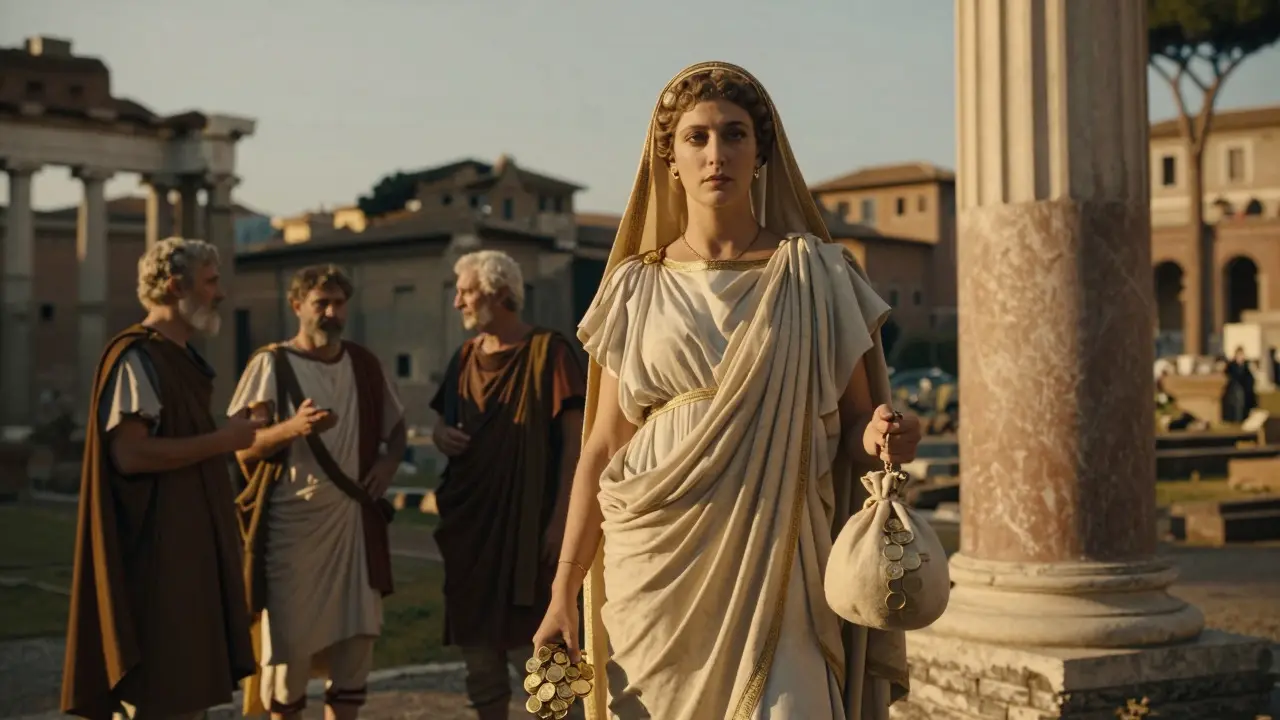
The Paradox of Control: Roman law treated adult women as perpetual minors requiring guardians. However, social reality was fluid. As husbands traveled for war or politics, wives became de facto managers of estates. This gap between statute and practice allowed elite women to wield considerable economic leverage without technically breaking the law.
- Key Figure Livia Drusilla: Empress who maintained power through dynastic manipulation.
- Unique Role Vestal Virgins: Exempt from guardianship due to religious importance.
- Limitation No voting rights or formal office-holding.
When we picture ancient societies, we often imagine rigid hierarchies where men held all the power and women were passive observers. But that picture is too simple. In reality, female agency was a complex mix of strict legal limits, economic necessity, and cultural contradictions that allowed women to exert significant influence in specific contexts. Whether in Rome, Egypt, or Greece, women navigated a world where their status depended heavily on class, region, and local customs. Understanding these dynamics helps us see antiquity not as a monolith of oppression, but as a diverse landscape of shifting power structures.
The Legal Framework: What the Laws Said vs. What Happened
To understand how women operated in the ancient world, we have to look at the laws first. In most classical civilizations, the law treated women as dependents. In Ancient Rome, for instance, adult women remained under the legal guardianship (*tutela*) of a father, husband, or male relative. This meant they couldn't sign contracts or manage large estates without permission. Similarly, in Classical Athens, women were largely confined to the *oikos* (household) and had no vote or public office.
However, laws are only as strong as their enforcement. Historical records show that wealthy Roman women frequently bypassed these restrictions through informal arrangements or by acting as de facto managers of family wealth while their husbands were away at war or on political tours. The gap between legal theory and daily practice is where true agency lived. If a woman controlled the purse strings, she controlled the household’s social and economic leverage, regardless of what the statute book said.
Economic Power: The Hidden Currency of Influence
Money talks, even in antiquity. While men dominated public commerce, women played crucial roles in managing family assets, particularly among the elite. In Egypt, the position of women was notably different from their Greek or Roman counterparts. Egyptian women could own property, initiate divorce, and serve as witnesses in court. This legal autonomy translated into real economic power. A wife who brought a substantial dowry into a marriage effectively became a co-owner of the marital estate. If the marriage ended, she took her assets back. This financial independence gave Egyptian women a level of security and bargaining power rarely seen elsewhere in the ancient Mediterranean.
In contrast, Greek city-states like Sparta offered a different model. Spartan women owned land and ran businesses because their husbands spent most of their time in military barracks. While this didn’t grant them political rights, it made them economically essential. They managed the agricultural output that sustained the state. So, while Athenian women were legally invisible, Spartan women were economic pillars. Both systems restricted political voice, but both granted different forms of practical control over resources.
Religious Roles: Priestesses and Public Voice
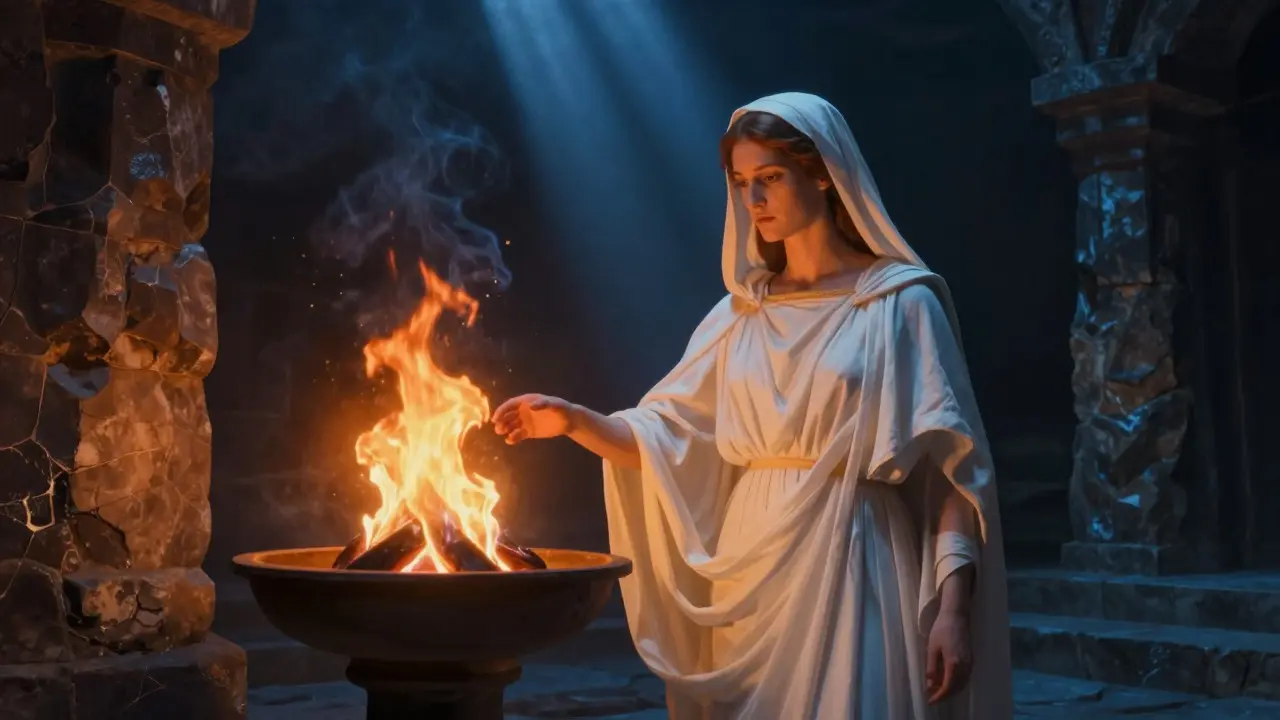
One area where women consistently found public space was religion. Serving as a priestess was one of the few socially acceptable ways for a woman to hold a public title. In Rome, the Vestal Virgins held immense prestige and legal privileges, including the right to free themselves from guardianship. Their role wasn’t just ceremonial; they maintained the sacred fire, which was believed to protect the city. If the fire went out, it was considered a bad omen for the Republic. This spiritual responsibility gave them a unique form of authority that transcended typical gender norms.
Similarly, in Greece, women served as priestesses at major sanctuaries like Delphi and Olympia. These positions required education and public visibility. They interacted with politicians, diplomats, and other elites. By controlling access to the gods, these women influenced social networks and diplomatic relations. Religion provided a legitimate cover for female leadership, allowing women to speak in public spaces where ordinary citizens might be silenced.
Regional Differences: Why Geography Mattered
You can’t talk about ancient women without acknowledging regional variation. The experience of a woman in the Hellenistic East differed vastly from that of a woman in Republican Rome. After Alexander the Great’s conquests, the fusion of Greek and Eastern cultures created new opportunities. In Ptolemaic Egypt, royal women like Cleopatra VII wielded absolute power, ruling kingdoms in their own right. This was an exception, yes, but it reflected a broader cultural acceptance of female rulership in some Near Eastern traditions that Greeks initially struggled to understand.
Even within Rome, agency varied by class. A slave woman had almost no legal personhood, yet many gained freedom and integrated into society as free citizens. Conversely, a noblewoman might be legally bound but socially powerful. The key takeaway is that "antiquity" isn’t a single story. It’s a patchwork of local customs, imperial edicts, and personal strategies. When historians generalize, they risk erasing the specific realities of millions of individuals.
Cultural Contradictions: Respect vs. Control
Ancient societies often praised certain feminine virtues while simultaneously restricting women’s autonomy. For example, Roman culture celebrated *pietas* (duty) and *modesty*, but these traits were used to justify keeping women out of public life. Yet, the same culture produced empresses like Livia and Agrippina the Younger, who manipulated politics from behind the throne. This contradiction reveals a tension: society wanted women to be morally upright and supportive, but feared them if they became too ambitious or visible.
This dynamic created a paradox. Women who stayed within traditional roles were respected but powerless. Those who stepped outside those roles faced social stigma but could achieve extraordinary influence. Many navigated this tightrope by using their relationships with powerful men-fathers, husbands, sons-as leverage. It wasn’t pure independence, but it was effective. They leveraged existing social structures to expand their reach, proving that agency doesn’t always look like revolution. Sometimes, it looks like strategic compliance.
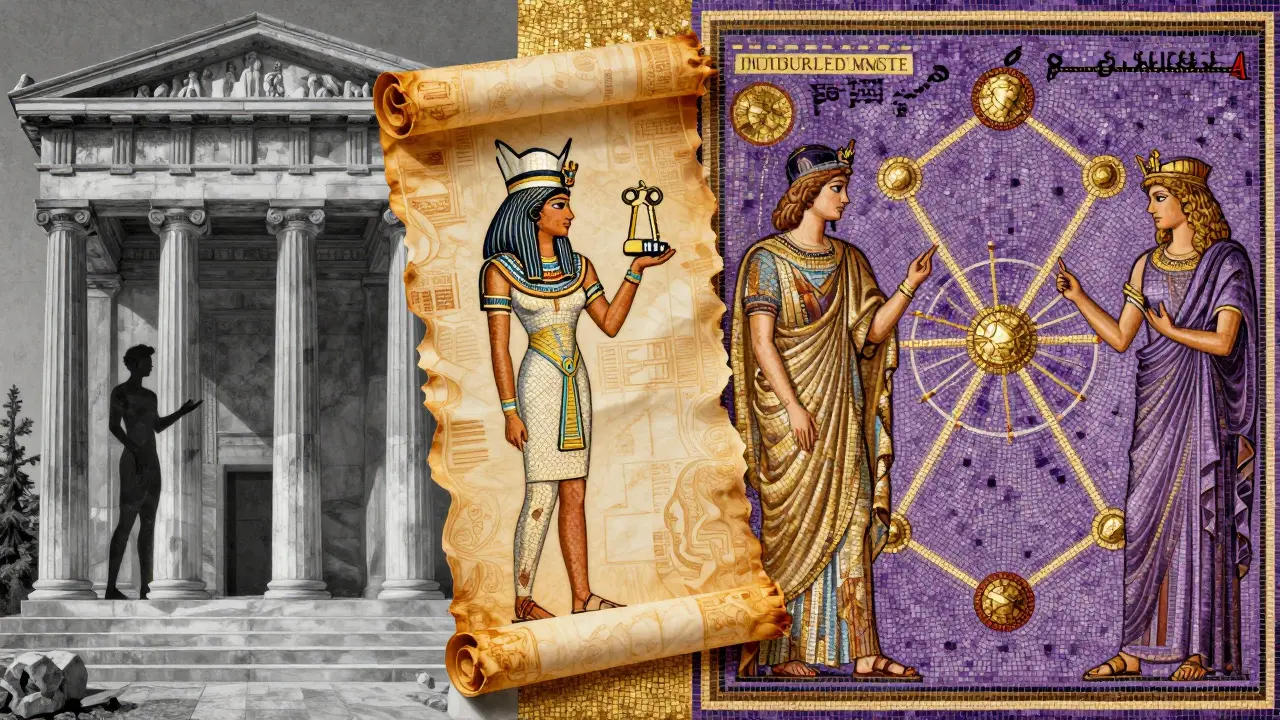
Comparing Key Ancient Societies
To clarify these differences, let’s look at a direct comparison of three major ancient civilizations. Each had distinct approaches to gender, law, and public life.
| Society | Legal Status | Economic Rights | Public Role |
|---|---|---|---|
| Ancient Rome | Under guardianship (*tutela*) until late Empire | Could own property; managed household finances | Priestesses; informal political influence via family ties |
| Classical Athens | No citizenship; confined to *oikos* | Limited to managing household goods | Very limited; mostly religious festivals |
| Ptolemaic Egypt | Full legal personhood; could sue and be sued | Owned land and businesses; initiated divorce | Rulers; high-ranking officials; priests |
What This Means for Our Understanding of History
Studying female agency in antiquity forces us to rethink how we measure power. We tend to focus on formal institutions like voting rights or office-holding. But in pre-modern societies, power was often diffuse and relational. A woman’s influence came from her network, her wealth, her religious role, and her ability to navigate social expectations. Ignoring these dimensions gives us a distorted view of the past. It makes the ancient world seem more static and oppressive than it actually was.
Moreover, recognizing these exceptions and contradictions helps us understand how social change happens. It rarely comes from a single breakthrough. Instead, it emerges from countless small negotiations, legal loopholes, and cultural shifts over centuries. The seeds of later gender equality were planted in these ancient contradictions, where the gap between ideal and reality created space for action.
Frequently Asked Questions
Did ancient women have any legal rights?
Yes, but it varied by region. In Egypt, women had full legal personhood, including the right to own property and initiate divorce. In Rome, they were under guardianship but could still own property and manage finances. In Athens, legal rights were minimal, confining them mostly to the household.
How did class affect a woman's agency in antiquity?
Class was the biggest factor. Elite women had access to education, wealth, and influential networks, allowing them to bypass legal restrictions. Slave women had the least agency, as they were considered property. Middle-class women fell in between, often relying on trade or domestic management to gain some independence.
Were there any famous female rulers in the ancient world?
Yes. Cleopatra VII of Egypt is the most well-known, ruling her kingdom in her own right. Other examples include Queen Hatshepsut of Egypt, Empress Wu Zetian of China (though slightly later), and various Hellenistic queens who acted as regents or co-rulers.
How did religion help women gain public influence?
Religion provided a socially accepted space for women to hold public titles. Priestesses like the Vestal Virgins in Rome or oracle figures in Greece had high status and interacted with political elites. This religious role allowed them to exercise influence without violating norms about female modesty or seclusion.
Why is it important to study female agency in history?
It provides a more accurate picture of the past. Focusing only on men’s experiences misses half the population and the complex social dynamics that shaped history. Understanding how women navigated constraints helps us see the full scope of human behavior and social evolution.