Enlightenment Gender Shift Timeline
Click on the timeline nodes or use the navigation buttons to explore how reason replaced revelation in defining gender roles.
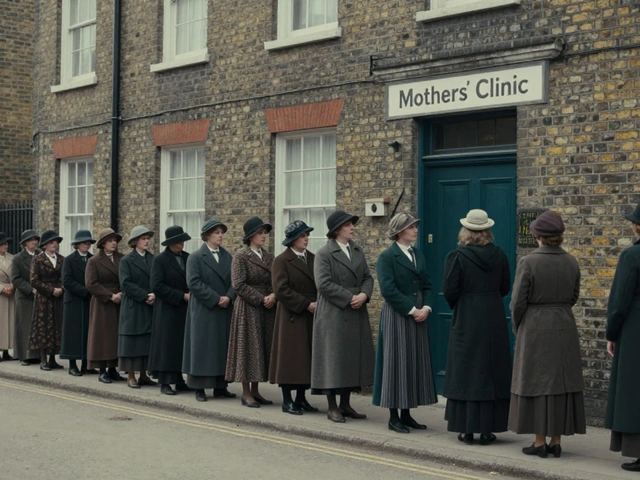
Divine Order
John Locke
Rousseau
Wollstonecraft
Modern Debate
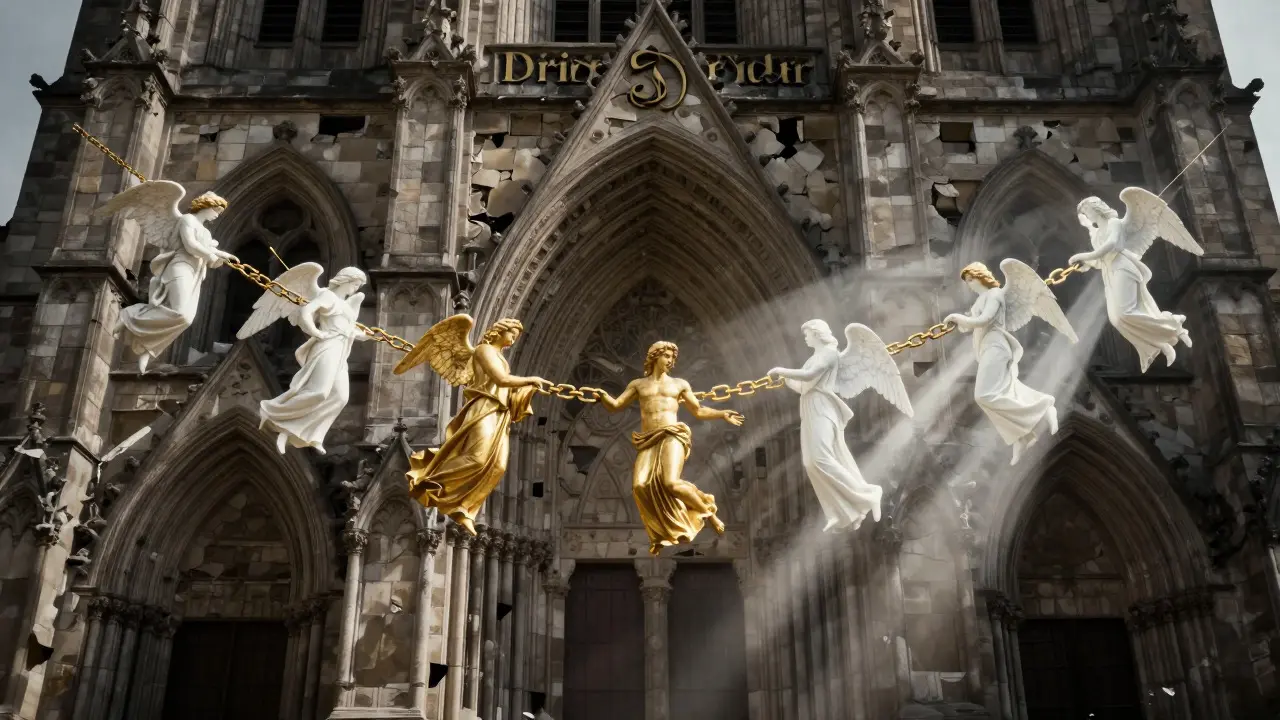
Divine Order & The Great Chain of Being
Before 1650, gender hierarchy was viewed as a cosmic fact ordained by God. St. Augustine argued that Eve’s sin made women naturally weaker, establishing male authority as a moral duty rather than just a social norm. This system relied entirely on faith and religious doctrine.
- Basis: Religious doctrine / Biblical interpretation
- Authority: Church / God
- Change Potential: None (Eternal truth)
For centuries, the hierarchy of men and women wasn't just a social norm; it was a cosmic fact. You didn't question why men ruled the household or held political power because God had written it into the fabric of the universe. Then came the Enlightenment is an intellectual movement in the 17th and 18th centuries that emphasized reason, individualism, and skepticism of traditional authority. Suddenly, the sky cracked open. The idea that gender roles were divinely ordained began to crumble under the weight of logic, science, and the new concept of natural rights.
The Old Guard: Why 'Divine Order' Held Up
To understand how much changed, you have to look at what actually existed before 1650. In most pre-modern societies, gender wasn't seen as a matter of personal preference or even biological capacity. It was a moral duty. If a man failed to lead, he was failing God. If a woman tried to lead, she was disrupting the creation itself.
This view, often called the Great Chain of Being is a hierarchical structure of all matter and life, categorized by a spiritual, political, and natural scale, placed angels above humans, men above women, and adults above children. There was no middle ground. This wasn't just about politics; it shaped everything from who could own property to who could speak in church. The Church Fathers, particularly St. Augustine, argued that Eve’s sin made her naturally weaker and more prone to error. Therefore, male authority was a mercy, not a tyranny.
But here’s the thing: this system relied on faith, not evidence. As long as everyone accepted the premise, the conclusion followed logically. But once people started asking for proof, the whole house of cards wobbled.
The Shift: Reason Replaces Revelation
The turning point wasn't a single event but a slow accumulation of ideas. Thinkers like John Locke argued that humans are born with natural rights to life, liberty, and property. Notice what’s missing? No mention of gender. Locke’s theory applied to "mankind," which, in his time, meant men. But the logic was dangerous. If rights come from being human, not from being created by God in a specific role, then the basis for female subordination evaporates.
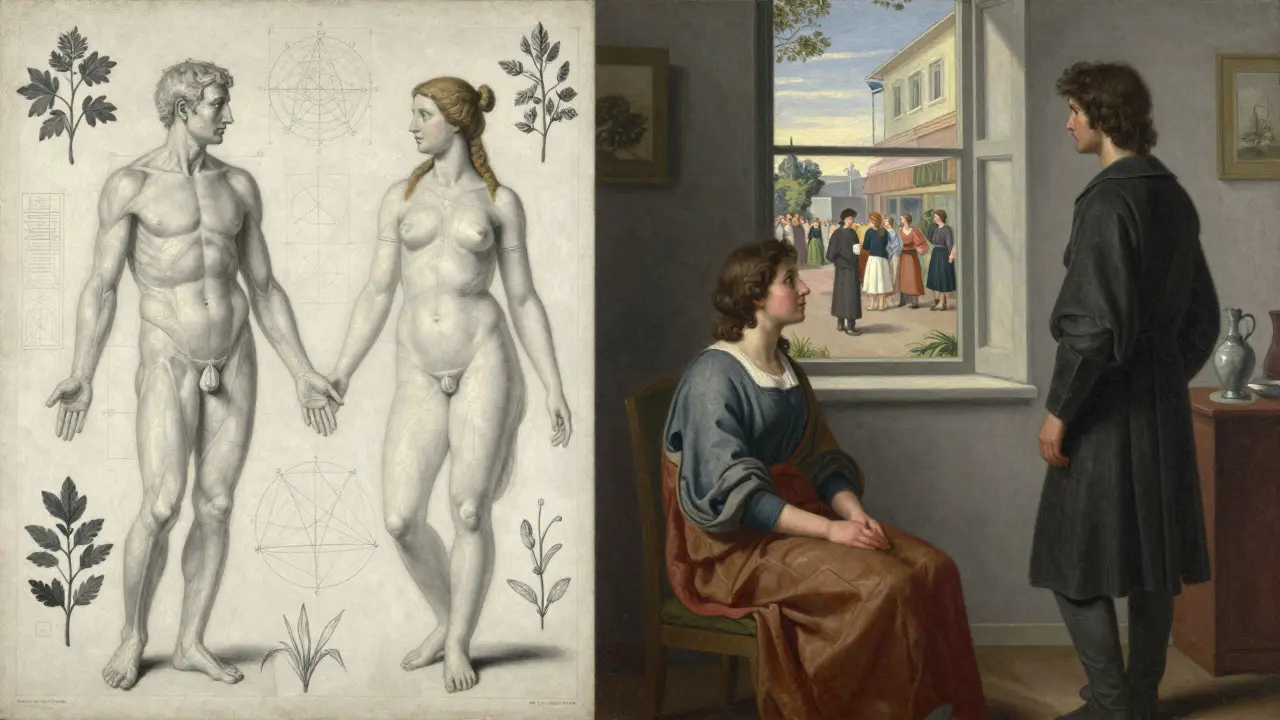
Enter Jean-Jacques Rousseau is a French philosopher whose works, including 'Emile,' influenced educational theory and views on childhood and gender. In his book *Emile*, Rousseau argued that men and women are different by nature, not just by law. He believed women were naturally suited for domesticity and emotional care, while men were built for public life and reason. This sounds progressive compared to divine mandate, right? Wrong. It just swapped the source of authority. Instead of "God says so," it became "Nature says so." This is where the phrase natural difference comes in. It replaced the supernatural with the biological, but kept the hierarchy intact.
Sexuality Under the Microscope
How did this affect sexuality? Before the Enlightenment, sex was primarily procreative. You had sex to make babies, preferably within marriage. Pleasure was secondary, and female pleasure was often ignored or considered suspicious. But as the focus shifted to individual experience and reason, sexuality began to be viewed through a different lens.
Medical science started to categorize bodies. Doctors began to study anatomy in detail, separating male and female physiology into distinct categories. This led to the idea of sexual dimorphism-the physical differences between sexes. While accurate in many ways, this medicalization also reinforced stereotypes. Women were described as "softer," "more emotional," and "less rational" based on their smaller stature and reproductive organs. Men were "rational," "strong," and "public." Sexuality became a private, domestic affair, tied to the home rather than the community or the church.
This shift also gave rise to the concept of the "separate spheres." Public life (politics, business, war) belonged to men. Private life (home, family, emotion) belonged to women. It was a neat, logical division that seemed to fit the new scientific worldview. But it also locked women out of the public sphere, making it harder for them to claim equal citizenship.
The Double-Edged Sword of 'Natural Difference'
So, was the move from divine order to natural difference a win for women? It depends on whom you ask. On one hand, it removed the theological barrier. If your inferiority isn't a sin, maybe it can be challenged. If it's just biology, maybe education can change things. This opened the door for early feminists like Mary Wollstonecraft, who argued in *A Vindication of the Rights of Woman* (1792) that women aren't naturally inferior-they’re just uneducated. She used the same Enlightenment tools of reason and rights to argue for equality.
On the other hand, "natural difference" became a powerful tool for exclusion. If women are naturally emotional, they can’t be trusted with laws. If they are naturally weak, they can’t vote. The argument shifted from "you are lesser because God made you so" to "you are different because nature made you so." Both arguments excluded women, but the second one felt more objective and harder to refute without challenging science itself.
| Aspect | Pre-Enlightenment (Divine Order) | Enlightenment (Natural Difference) |
|---|---|---|
| Basis of Hierarchy | Religious doctrine / Biblical interpretation | Biological essentialism / Rational philosophy |
| Source of Authority | Church / God | Science / Nature / Reason |
| View of Female Capacity | Morally weaker due to original sin | Naturally suited for domestic/emotional roles |
| Path to Change | None (eternal truth) | Possible via education/reform (but limited by nature) |
| Key Figure | St. Augustine | Jean-Jacques Rousseau |

Why It Still Matters Today
You might think this history is ancient. But the language we use today still echoes these shifts. When someone argues that men and women should have different roles because of "biology" or "nature," they are standing on the shoulders of 18th-century philosophers. The debate over whether gender is a fixed biological reality or a social construct is essentially the same fight that started with the Enlightenment.
The shift from divine order to natural difference didn't solve the problem of gender inequality. It just changed the rules of the game. It moved the conversation from theology to science, from faith to reason. And that move allowed for the possibility of change. Because if gender roles are based on nature, and nature can be understood, then perhaps it can be reinterpreted. That’s the legacy of the Enlightenment: it didn’t free women overnight, but it gave them the tools to argue for their freedom.
Frequently Asked Questions
Did the Enlightenment completely end religious views on gender?
No, it didn't end them, but it reduced their dominance in public policy. Religious views persisted in private life and among conservative groups, but the state increasingly separated church and state, allowing secular arguments about gender to gain traction.
What is the main difference between 'divine order' and 'natural difference'?
Divine order bases gender roles on religious commandment and eternal truth, making them immutable. Natural difference bases them on observed biological traits and philosophical reasoning, suggesting they are inherent but potentially subject to interpretation or reform.
How did Mary Wollstonecraft contribute to this shift?
Mary Wollstonecraft used Enlightenment ideals of reason and natural rights to argue that women’s apparent inferiority was due to lack of education, not nature. She challenged the notion that women were naturally unfit for public life.
Why was the concept of 'separate spheres' significant?
Separate spheres defined public life as masculine and private life as feminine. This justified excluding women from politics and economics while praising them as moral guardians of the home, reinforcing gender roles under the guise of natural complementarity.
Is the debate about natural vs. social gender still relevant?
Yes. Modern discussions on gender identity, workplace equality, and reproductive rights often revolve around whether differences are biologically fixed (natural) or socially constructed (cultural), a direct continuation of Enlightenment-era debates.