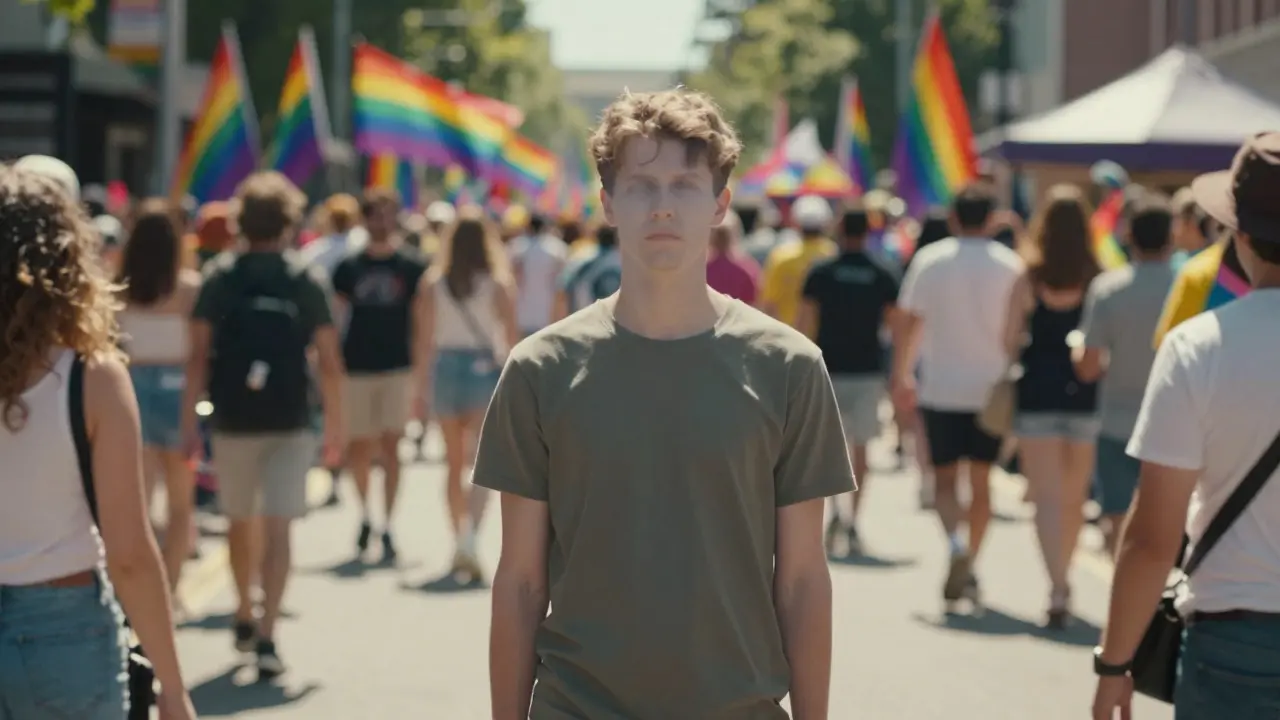
Bisexual Erasure & Visibility Self-Assessment
Answer five short scenarios about how bisexuality is treated in real life. At the end you'll see your erasure-awareness score, what it means, and practical ways to champion bi visibility.
Imagine walking into a room full of people who claim to support your community, only to feel invisible the moment you mention that you date both men and women. For many bisexual individuals is a sexual orientation characterized by attraction to more than one gender, yet this reality often vanishes in public discourse. This phenomenon, known as bisexual erasure is the systematic denial or dismissal of bisexual identity within social, political, and cultural contexts, remains one of the most persistent challenges in modern queer history. It isn't just about being ignored; it's about having your existence questioned until you fit a neat binary box.
The struggle for bi visibility is the active effort to make bisexual experiences recognized, validated, and represented in media and society has intensified over the last two decades. While gay and lesbian rights gained significant traction in the late 20th century, bisexuality was frequently treated as a transitional phase rather than a stable identity. This article explores how bisexual erasure persists, why it matters, and what we can do to change the narrative.
What Is Bisexual Erasure?
To understand the problem, we first need to define it clearly. Bisexual erasure isn't always malicious. Sometimes, it stems from a deep-seated belief in heteronormativity is the assumption that heterosexuality is the default or normal sexual orientation. In a world that views relationships as strictly male-female pairings, a person attracted to multiple genders becomes confusing. The easiest way to resolve that confusion? Ignore them or categorize them based on their current partner.
This erasure takes several forms:
- Monosexism: The belief that you must be exclusively gay or exclusively straight. If you are with a man today, you are gay. If you are with a woman tomorrow, you are straight. There is no middle ground.
- Invisibility in Media: For years, mainstream TV shows featured gay characters and straight characters, but rarely bisexual ones. When they did appear, they were often portrayed as confused, promiscuous, or tragic.
- Political Exclusion: In early LGBTQ+ activism, some groups argued that including bisexuals would dilute the message. They feared that acknowledging bisexuality would undermine the fight for gay and lesbian rights.
This historical context explains why so many bisexual people still feel like second-class citizens in their own movement. It’s not just about prejudice from straight people; it’s about internal friction within the community itself.
The Historical Roots of Exclusion
You might think this is a modern issue, but the roots go back further. In the mid-20th century, psychologists classified bisexuality as a disorder or a symptom of instability. The American Psychiatric Association removed homosexuality from its list of mental disorders in 1973, but bisexuality remained in a gray area for decades. It wasn't until the 1980s and 90s that distinct bisexual organizations began to form, such as the National Bisexual Task Force, which worked to integrate bisexual voices into broader AIDS activism.
Even then, progress was slow. During the HIV/AIDS crisis, funding and attention flowed primarily toward gay men and lesbians. Bisexual women, in particular, faced a double stigma: they were dismissed by the gay community as "not queer enough" and by the straight community as "just playing around." This left a generation of bisexual activists feeling isolated and unrepresented.
Today, while legal protections have expanded, cultural attitudes lag behind. A 2023 survey by the Williams Institute found that bisexual adults reported higher rates of depression and anxiety compared to their gay and lesbian peers. Why? Because they face discrimination from three directions: straight society, gay culture, and sometimes even their own families.
Visibility in Media and Pop Culture
Pop culture plays a massive role in shaping how we see ourselves. For a long time, if you wanted to see a bisexual character, you had to look hard. Think of Buffy the Vampire Slayer in the late 90s. Willow Rosenberg’s brief romance with Tara was groundbreaking, but many fans debated whether she was "really" bisexual or just experimenting. That debate mirrors real-life conversations where people question the validity of someone’s identity based on their recent behavior.
Things are improving, but slowly. Recent series like Euphoria and Camp feature bisexual characters who aren’t defined solely by their trauma or sexuality. However, representation is still uneven. Studies show that when bisexual characters do appear, they are often written as hypersexual or unstable. This reinforces the stereotype that bisexuality is a phase or a lack of commitment.
True bi visibility means showing bisexual people living full, complex lives. It means depicting their friendships, careers, and family dynamics without making their orientation the sole source of conflict. It also means casting actual bisexual actors in these roles, rather than relying on stereotypes played by monosexual performers.
Challenges Within LGBTQ+ Communities
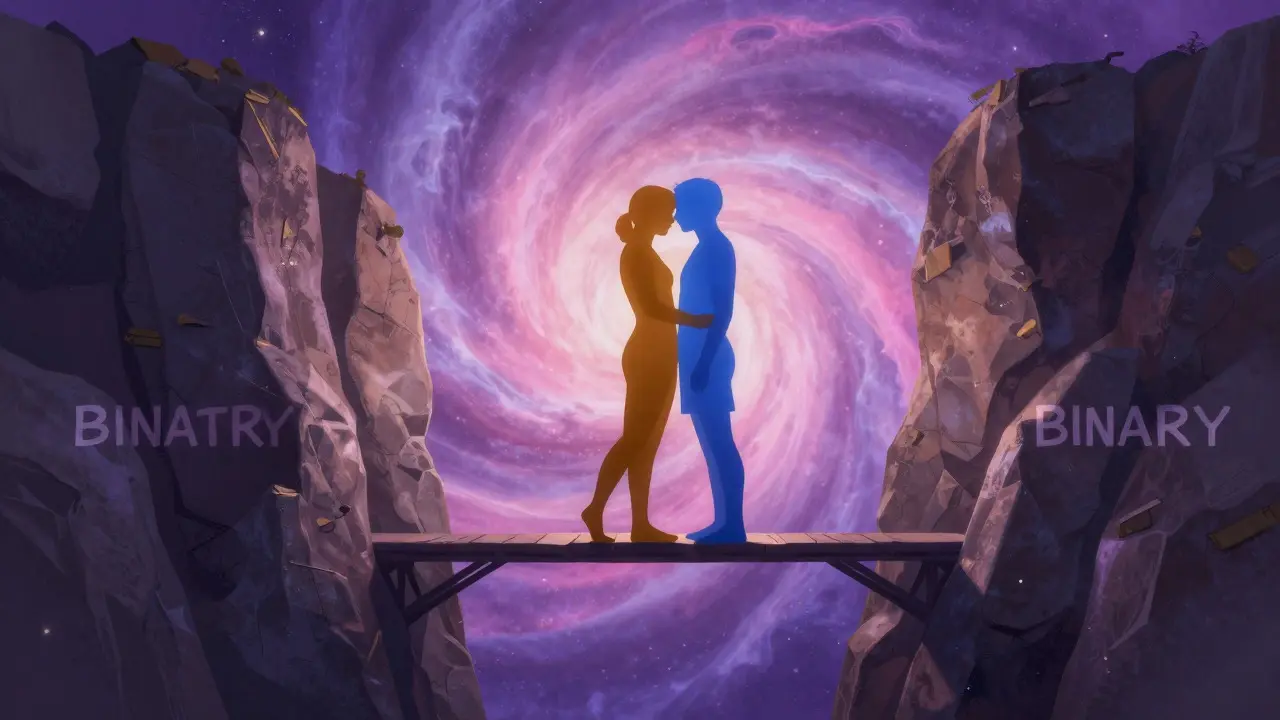
Let’s be honest: the hardest battles often come from within. Many bisexual people report feeling unwelcome at Pride parades or in local queer centers. Why? Because the infrastructure of LGBTQ+ spaces was built around a binary model. Gay bars cater to men looking for men. Lesbian bookstores cater to women looking for women. Where does the bisexual person fit? Often, nowhere comfortably.
This creates a sense of perpetual migration. You’re never fully "in." You’re always on the border. This can lead to what researchers call minority stress is the chronic stress experienced by marginalized groups due to social stigma and discrimination. For bisexuals, this stress is compounded because they don’t have a single, unified community to turn to for support. They have to build bridges between different groups, which is exhausting work.
There is also the issue of dating. In online dating apps, bisexual users often report receiving fewer matches than their gay or straight counterparts. Some apps even hide bisexual profiles from certain users, effectively erasing them from the pool. This technological bias reinforces the idea that bisexuality is less valid or less desirable.
How to Combat Erasure: Practical Steps
So, what can we do? Change doesn’t happen overnight, but small actions add up. Here are some practical ways to support bi visibility:
- Use Inclusive Language: Stop assuming someone’s orientation based on their partner. Ask questions if you’re curious, but respect the answer. Use terms like "queer" or "LGBTQ+" instead of just "gay" when referring to the whole community.
- Support Bi-Friendly Businesses: Look for bookstores, cafes, and events that explicitly welcome all orientations. Your patronage signals that you value inclusive spaces.
- Challenge Stereotypes: If a friend says, "You’re only with her because you’re going through a phase," gently correct them. Explain that bisexuality is a stable orientation, not a transition.
- Amplify Bi Voices: Follow bisexual creators, writers, and activists on social media. Share their content. Make sure they are part of the conversation, not just the topic of it.
For institutions, the steps are bigger but necessary. Schools should include bisexual history in their curricula. Healthcare providers should ask about sexual orientation in a way that includes non-binary options. Employers should ensure that benefits cover same-sex partners regardless of gender, removing the administrative hurdles that disproportionately affect bisexual couples.
The Future of Bisexual Identity
We are seeing a shift. Younger generations are more likely to identify as fluid, pansexual, or non-binary. This expansion of language helps. It acknowledges that attraction isn’t always rigid. As society becomes more comfortable with complexity, the pressure to fit into a binary box will loosen.
However, vigilance is key. Just because we have more words doesn’t mean we have more acceptance. Bisexual erasure is subtle. It hides in jokes, in assumptions, and in the quiet moments when you’re left out of the loop. Recognizing it is the first step. Fighting it requires consistent, daily effort.
Ultimately, bisexual erasure is a failure of imagination. It asks us to believe that human love is simpler than it actually is. By embracing the full spectrum of human connection, we don’t just help bisexual people; we make space for everyone to be seen, valued, and understood.
Is bisexuality a phase?
No. Research consistently shows that bisexuality is a stable sexual orientation for many people. While some individuals may discover new aspects of their identity later in life, being bisexual is not inherently temporary. It is a valid, lifelong orientation for those who identify as such.
What is the difference between bisexual and pansexual?
The terms are often used interchangeably, but there are nuances. Bisexual typically refers to attraction to more than one gender, often implying an awareness of gender categories. Pansexual refers to attraction to people regardless of gender, emphasizing that gender is irrelevant to attraction. Both identities are valid, and individuals choose the term that best fits their experience.
Why is bisexual erasure harmful?
Erasure leads to isolation, mental health issues, and a lack of access to resources. When people feel invisible, they are less likely to seek support or advocate for their rights. It also perpetuates the myth that bisexuality is invalid, which harms future generations trying to understand themselves.
How can allies support bisexual people?
Allies can start by listening without judgment. Avoid making assumptions about their partners. Use inclusive language, challenge stereotypes when you hear them, and support organizations that focus on bisexual inclusion. Simple acts of acknowledgment go a long way.
Are bisexual people more likely to cheat?
This is a common stereotype with little scientific backing. Infidelity rates among bisexual people are similar to those of gay and straight individuals. The stereotype stems from the misconception that bisexuality implies a lack of loyalty or commitment, which is false.