The Bias Detector: Etruscan Accusations vs. Reality
Select a social custom below to see how it was perceived by rivals versus what the evidence suggests.
Accusation driven by fear of female economic independence and public visibility.
Jewelry and perfumes interpreted as weakness rather than civic pride or wealth display.
Rome adopted these rituals for state use while mocking their visual grotesqueness.
Stoic discipline clashed with Etruscan appreciation for sensory pleasure and comfort.
Key Takeaway
In every case, the "immorality" cited by Romans and Greeks correlates directly with practices that challenged their own patriarchal or stoic norms. The accusations reveal more about the anxieties of the accuser than the behavior of the accused.
Imagine walking through a Roman forum and hearing a senator sneer about the "licentious" customs of their northern neighbors. For centuries, the Etruscans were an advanced civilization in central Italy known for their art, engineering, and distinct social structures that predated Rome's rise to power. To the Greeks and later the Romans, these people seemed weird. Too relaxed. Too sexual. But were they actually immoral, or were they just doing things differently than their rivals? This isn't just a history lesson; it’s a look at how winners write history and how cultural differences get twisted into moral failures.
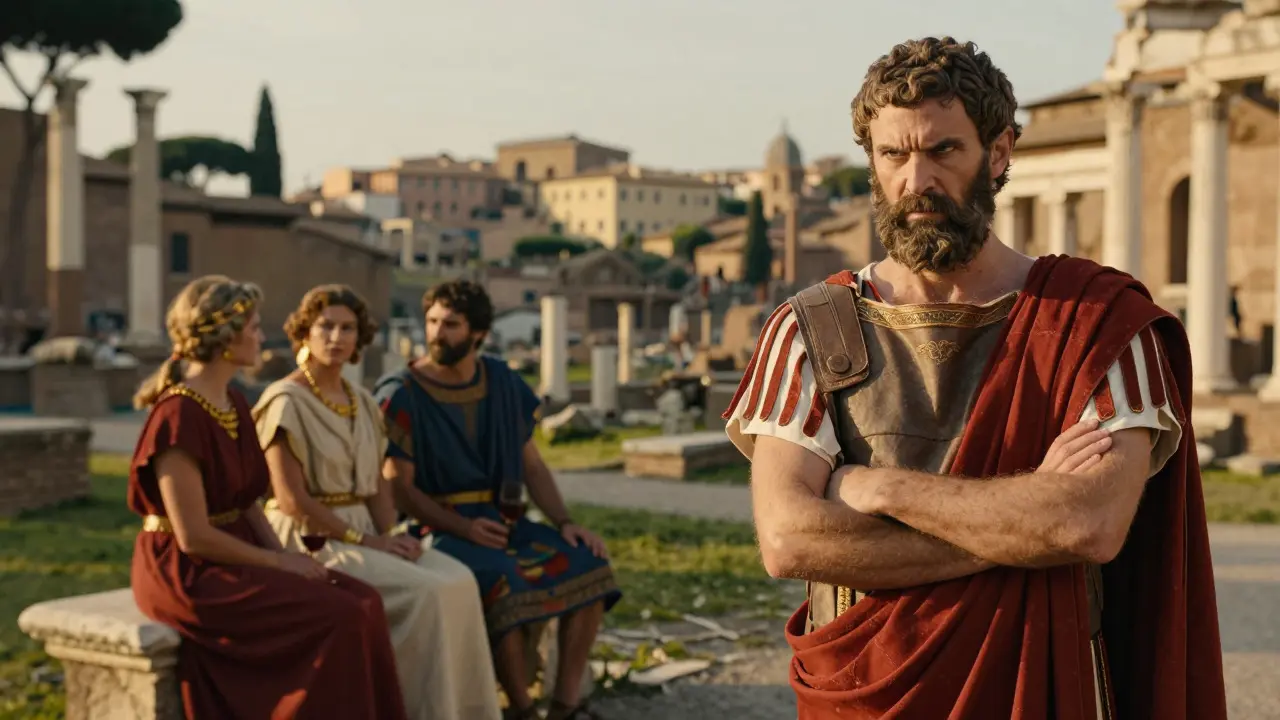
The core problem here is projection. When two cultures clash, the one with less power often gets labeled as "degenerate." The Greco-Roman world was a patriarchal society where public life was strictly divided by gender, with men dominating politics and women confined largely to the domestic sphere. In this context, anything that looked like female independence or male vulnerability was dangerous. So, when they saw Etruscan women sitting at banquets or men wearing jewelry, they didn't see normalcy. They saw chaos.
The Banquet Scene That Started It All
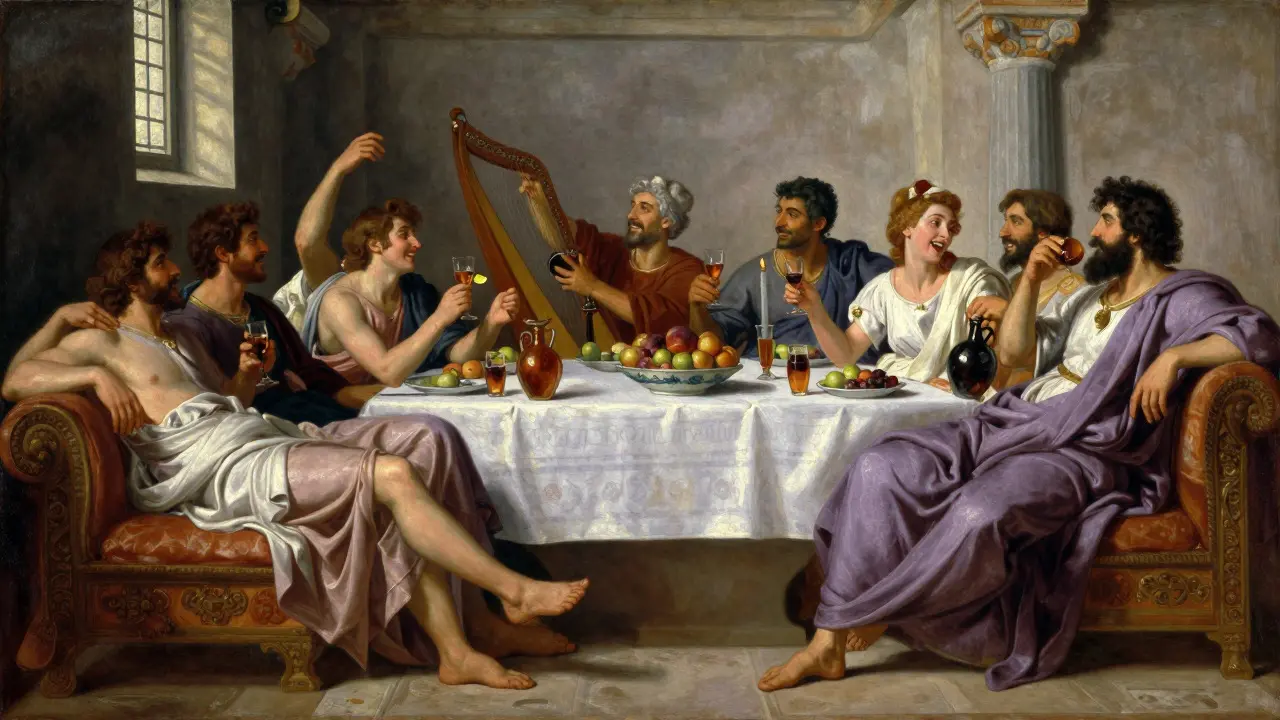
You’ve probably seen the famous fresco from the Tomb of the Nymphs in Tarquinia. It shows men and women reclining on couches together, drinking wine, and playing music. To a modern eye, it looks like a fancy party. To a Roman eye, it looked like scandal. In Roman dining customs, formal dinners (convivia) were strictly male-only events where hierarchy was reinforced through seating arrangements and food quality. Women eating with men? Unheard of. Unless you were an Etruscan.
But here’s the twist: the Etruscans weren’t trying to be provocative. They were trying to be comfortable. Their concept of leisure, or otium, was different. They valued relaxation and sensory pleasure more highly than the rigid stoicism prized by early Roman republicans. When a Roman historian like Livy wrote about Etruscan kings feasting while their armies marched, he wasn’t describing a fact; he was making a point. He was saying, "Look how soft they are. Look how little discipline they have." The accusation of immorality was really an accusation of weakness.
Gender Roles and the Myth of the 'Lustful' Woman
Let’s talk about Etruscan women. Greek sources often described them as having more freedom than their Greek counterparts. Is that true? Archaeology says yes. Etruscan women owned property, could inherit wealth, and had legal standing that Roman women rarely enjoyed until much later. But did this mean they were sexually loose? Not necessarily. It meant they had agency.
In the Greek city-states, political entities like Athens and Sparta where citizenship was tied to male lineage and public participation was restricted to freeborn men, a woman stepping out of the house without a male escort was suspicious. An Etruscan woman attending a funeral procession or a religious festival was just... going to church. The difference is context. The Greeks projected their own anxieties about female control onto the Etruscans. If a woman can vote (or at least sign contracts), she must be uncontrolled. If she drinks wine at dinner, she must be drunk. It’s a logical fallacy, but it stuck.
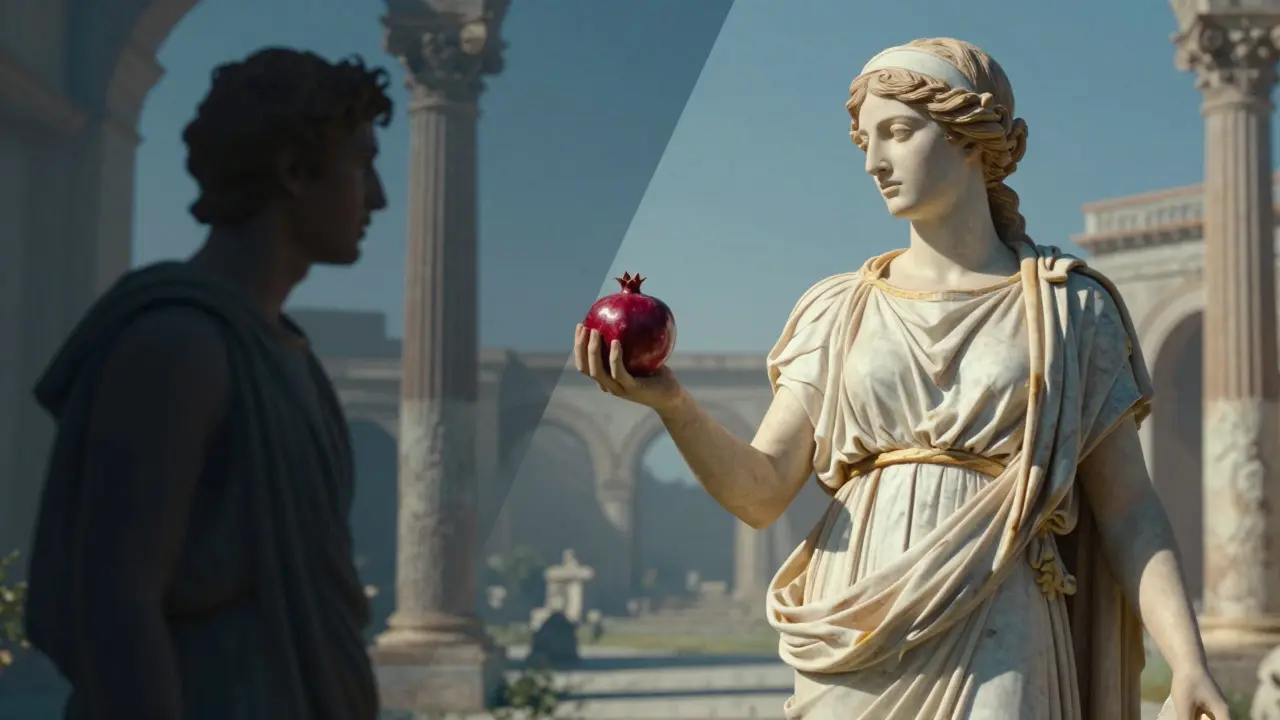
Consider the statue of the Etruscan woman holding a pomegranate. Pomegranates were symbols of fertility and the afterlife. To a Roman, a woman displaying fertility publicly might seem indecent. To an Etruscan, it was a sign of health and divine favor. We’re judging their values by our own standards, which is exactly what the ancients did to them.
Male Softness: Jewelry, Music, and Military Fear
If women’s freedom was scary, what about men? Etruscan men wore rings, earrings, and perfumes. They played musical instruments. They dressed in colorful tunics. Compare this to the ideal Roman man: the vir viridis (green man), rough, bearded, serious, and covered in scars. The contrast was stark. Plutarch, writing in the first century AD, noted that Etruscan men were "more effeminate" in their dress and habits. Was this true? Yes. Did it make them weak? No.
Etruscan military tactics relied on heavy infantry and cavalry, similar to the Romans. They won battles. They built walls that still stand today. But their culture celebrated aesthetics. Art was not a hobby; it was a civic duty. When a Roman saw an Etruscan general wearing a gold fibula, he didn't think, "He has good taste." He thought, "He cares more about his clothes than his sword." This bias extended to religion too. Etruscan priests, the haruspices, specialized diviners who interpreted the will of the gods by examining the entrails of sacrificed animals, were respected advisors to Roman kings. But because their rituals involved blood and viscera, some Romans found them grotesque. Again, it’s about comfort zones.
Sexual Norms: What the Evidence Actually Shows
So, what about the sex? Did Etruscans have wild orgies? Probably not. Most evidence points to a society with relatively open attitudes toward sexuality, but not chaotic. Homosexuality existed, as it did in Greece, but it wasn't the central pillar of social identity. Heterosexual relationships were standard. Divorce was possible, though rare. Adultery was frowned upon, but enforcement was lax compared to later Imperial Rome.
The biggest misconception comes from the word libido. Early Latin writers used terms suggesting high sexual drive to describe Etruscans. But when you look at the tomb paintings, you see couples holding hands, families sharing meals, and individuals meditating. You don't see constant copulation. You see intimacy. The "immorality" was in the lack of shame around bodily functions and pleasures. Eating well, drinking well, dressing well-these were signs of a good life, not a bad character.
| Aspect | Etruscan Practice | Roman/Greek Perception | Reality Check |
|---|---|---|---|
| Women at Dinners | Common; mixed-gender banquets | Scandalous; lack of modesty | Reflects higher female social status |
| Male Dress | Jewelry, perfumes, bright colors | Effeminate; soft; undisciplined | Valued aesthetics and status display |
| Religious Rituals | Haruspicy (entrail reading); blood sacrifice | Grotesque; superstitious | Complex theological system respected by Rome |
| Leisure (Otium) | High value on relaxation and pleasure | Laziness; moral decay | Different economic and social priorities |
Why Did the Stereotype Stick?
It’s easy to dismiss these accusations as mere prejudice. But prejudice serves a purpose. When Rome conquered Etruria in the fourth century BC, they needed to justify the takeover. If the Etruscans were morally superior, why would Rome rule them? By labeling them as "soft" and "immoral," Rome created a narrative of civilizing mission. The conqueror is strong and disciplined; the conquered is weak and lustful. This binary made it easier to absorb Etruscan culture while erasing its political autonomy.
Also, consider the audience. These stories were told in forums and schools. They weren't academic papers. They were propaganda. A Roman boy learning about Etruscans was being taught what *not* to be. Be tough. Be austere. Don't wear rings. Don't let your wife sit next to you at dinner. The Etruscan became the anti-hero of Roman virtue.
Modern Re-evaluation: Looking Past the Lens
Today, archaeologists and historians dig deeper. We find Etruscan inscriptions that show complex legal codes. We see trade networks stretching from Spain to Egypt. We realize that "immorality" was just a word for "different." The Etruscans had a sophisticated understanding of urban planning, hydraulics, and metallurgy. Their social flexibility allowed for rapid adaptation and innovation. While Rome was struggling with internal strife, Etruscan cities were thriving as commercial hubs.
Does this mean we should ignore the Greek and Roman sources? No. They are valuable records of how cultures interact. But we need to read them with skepticism. Every time a source calls another group "barbaric" or "lustful," ask: What does that group value that threatens my own values? Usually, the answer reveals more about the writer than the subject.
Frequently Asked Questions
Were Etruscan women really more powerful than Roman women?
Yes, significantly. Etruscan women could own land, inherit wealth, and act as legal guardians. Roman women, especially during the Republic, were under the legal authority of a father or husband (tutela) and had limited independent property rights. This difference fueled much of the Greek and Roman criticism of Etruscan "disorderly" gender roles.
Did Etruscans practice polygamy?
There is no strong evidence that polygamy was common or legally standard in Etruscan society. Most marriages appear to have been monogamous. The accusation of sexual excess likely stemmed from the visibility of women in public life and the relative ease of divorce, rather than multiple concurrent spouses.
Why did Romans respect Etruscan religion if they disliked their morals?
Politics and practicality overrode cultural snobbery. Etruscan divination techniques (haruspicy) were considered highly accurate and effective for state decisions. Rome adopted many Etruscan religious practices, including the use of augurs and the layout of sacred spaces, because they worked. The "immorality
Popular Posts
Stag Films (1900s-1940s): The Underground Pornographic Movies That Shaped Modern Adult Cinema
Nov, 6 2025 / History & Culture
Teen Pregnancy Prevention Program: How Federal Cuts Undermined Evidence-Based Sex Education
Nov, 24 2025 / Social Policy
Consent Education in Schools: Teaching Affirmative Consent to Kids and Teens
Nov, 4 2025 / Health & Wellness