
Sex Education Program Impact Calculator
The Teen Pregnancy Prevention Program (TPP) funded evidence-based sex education that reduced teen pregnancy rates. This tool shows how evidence-based programs compare to abstinence-only programs using real data from the article.
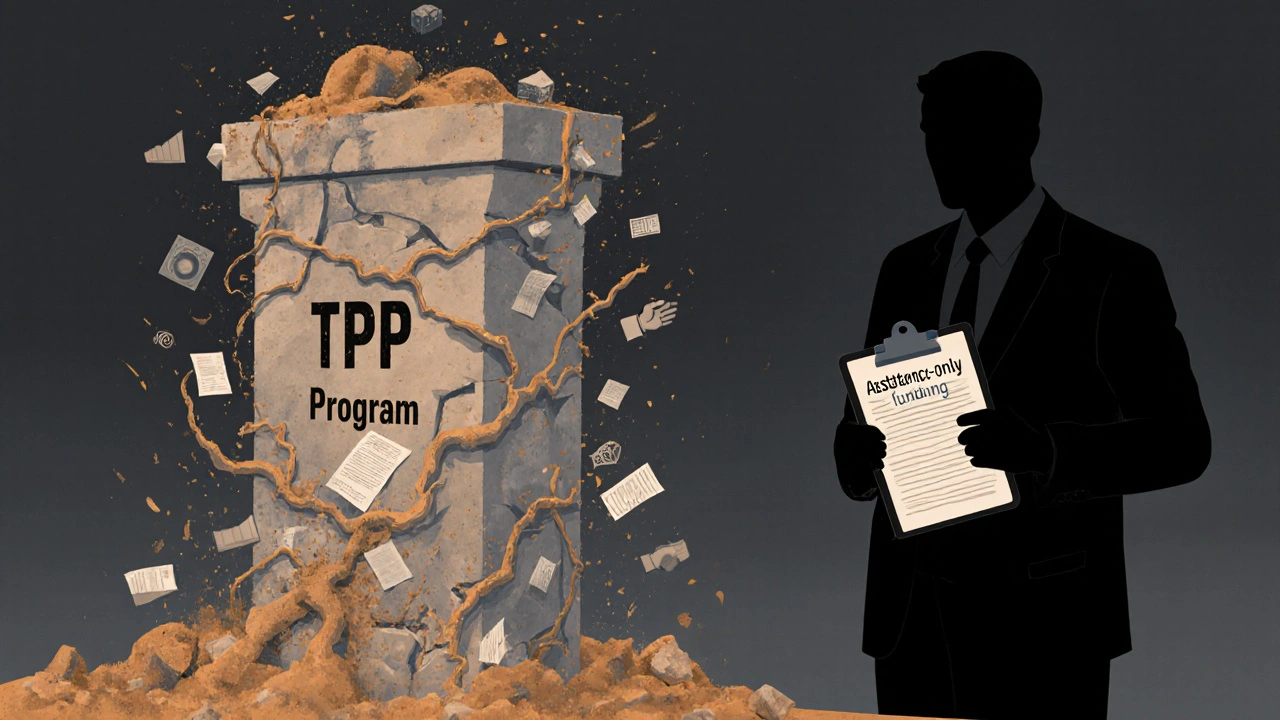
Between 2010 and 2017, the U.S. federal government invested over $800 million in a program designed to reduce teen pregnancy with real science-not ideology. The Teen Pregnancy Prevention Program (TPP) didn’t just hand out money. It funded programs that had been tested, measured, and proven to work. That changed in 2017. Without warning, the Trump administration pulled the plug on $213.6 million in grants, cutting off research, services, and education for tens of thousands of teens-especially those most at risk.
What the Teen Pregnancy Prevention Program Actually Did
The TPP wasn’t another vague abstinence campaign. It was built on a simple rule: if you wanted federal money, you had to prove your program worked. Grantees had to show data-from randomized trials or strong longitudinal studies-that their approach reduced teen pregnancies, STIs, or risky sexual behavior. That meant no more just telling kids to say no. Programs taught contraception, communication skills, healthy relationships, and how to access birth control. Some worked with foster youth. Others reached Native American communities, rural teens, and kids in underfunded schools.
By 2015, the program had funded 102 projects across 39 states and D.C., trained over 6,000 educators, and built nearly 4,000 community partnerships. Johns Hopkins worked with the Apache Nation to design culturally grounded education. The University of Texas ran one-on-one mentoring for teens in foster care. Chicago’s public health department offered free STD testing and counseling in high schools. These weren’t theoretical ideas. They were real services delivered to real kids.
And it showed. Between 2010 and 2015, the teen birth rate dropped 35%-from 34 births per 1,000 girls to 22. That’s the steepest five-year decline in decades. But here’s the thing: that drop started before TPP even began. The teen birth rate had been falling since the 1990s, from 62 per 1,000 in 1991 to 41 by 2005. So did TPP cause the drop? Or was it just riding a wave?
The Evidence Debate: Did TPP Actually Work?
Conservative think tanks like the Heritage Foundation pointed to the 35% drop as proof TPP was a success. But researchers from Harvard and the University of Washington dug deeper. Their 2019 study analyzed data from 1998 to 2016 and found something surprising: federal funding for abstinence-only programs actually increased teen birth rates in conservative states. Meanwhile, funding for comprehensive sex education-including TPP-helped lower those rates in the same areas.
That’s the key detail. Abstinence-only programs didn’t just fail-they made things worse in places where they were most popular. TPP, on the other hand, worked where it mattered most: in communities with high poverty, low access to healthcare, and limited parental support. The program didn’t assume teens would make perfect choices. It gave them the tools to make better ones.
And it wasn’t just about behavior. TPP funded 41 rigorous evaluation studies. Those studies produced 66 published papers and over 1,300 presentations at professional conferences. They showed which programs worked for Black teens, which worked for LGBTQ+ youth, which worked in rural clinics versus urban schools. That data didn’t just help kids today-it built the foundation for smarter policies tomorrow.

The 2017 Cuts: How a Political Decision Broke a Scientific Program
In July 2017, HHS sent letters to 80 grantees. No hearing. No debate. No explanation beyond “changing priorities.” The funding was cut mid-grant. Some programs had three years left. Others had just started collecting data. Suddenly, teachers lost their jobs. Clinics shut down. Research teams couldn’t finish analyzing results. One grant from UCLA, Michigan, and EngenderHealth was worth $2.9 million a year-gone overnight.
It wasn’t just money. It was trust. Grantees had spent years building relationships with schools, parents, and tribal councils. They had trained facilitators who knew how to talk to teens without judgment. Now, all of it was dismantled. The University of Texas lost its ability to support foster youth. Chicago couldn’t offer free STI testing. The Apache Nation lost its only federal partner in youth health education.
Health Affairs called it “highly unusual and wasteful.” Why? Because the data was already collected. Researchers had surveys, interviews, and health records. But without funding, they couldn’t analyze it. That meant losing years of insight into what works-and why. The cuts didn’t just hurt teens. They hurt science.
Why the Cuts Happened: Ideology Over Evidence
The decision didn’t come from public health experts. It came from political appointees with a history of opposing contraception. Tom Price, then HHS Secretary, had sponsored bills to defund Planned Parenthood. Valerie Huber, his chief of staff, had written that comprehensive sex education “undermines parental authority.” These weren’t policy decisions. They were ideological ones.
The cuts bypassed Congress entirely. Normally, funding changes go through appropriations committees. This didn’t. It was done through a backdoor memo, avoiding public scrutiny. And it wasn’t just TPP. The administration also slashed funding for the Personal Responsibility Education Program (PREP), which taught both abstinence and contraception, and redirected money toward abstinence-only programs-despite decades of evidence showing they don’t work.
Legal challenges followed. Four federal judges ruled the cuts illegal because the government couldn’t terminate multi-year grants without cause. Funding was restored for the final two years of each grant. But the damage was done. Programs couldn’t restart. Researchers moved on. Trust was broken.
The Lasting Damage: Lost Data, Lost Trust, Lost Progress
Even after funding was restored, the program never fully recovered. Many grantees couldn’t rehire staff. Partnerships dissolved. Teens who had come to rely on clinics and counselors had nowhere to turn. Rural areas were hit hardest-where access to reproductive healthcare was already scarce.
The most dangerous consequence? The erosion of evidence-based policymaking. Before TPP, federal sex education was based on moral beliefs. TPP flipped that. It said: let’s see what works. And then fund it. That shift was revolutionary. The cuts sent a message: if your data doesn’t match our ideology, we’ll erase it.
Today, teen birth rates are at a historic low-15.4 per 1,000 in 2024. But that’s not because of TPP. It’s because of broader trends: better access to long-acting contraceptives, more open conversations about sex, and the rise of digital health tools. TPP helped accelerate that progress. Now, without it, we’re relying on luck-not strategy.
Where We Stand Now: A Program on Life Support
The Biden administration has signaled support for evidence-based programs. But funding hasn’t returned to pre-2017 levels. In 2025, TPP received about $65 million-down from $100 million annually. That’s barely enough to keep a few pilot programs alive. The infrastructure-the trained facilitators, the evaluation systems, the community networks-is gone. Rebuilding it would take years and millions more.
Meanwhile, abstinence-only programs still get federal funding through Title V and the Adolescent Family Life Act. In 2024, those programs received over $110 million-more than TPP. That’s not a coincidence. It’s a pattern. When politics overrides science, the cost isn’t just budgetary. It’s measured in teen births, STIs, and lost opportunities.
The TPP program proved something simple: teens don’t need lectures. They need facts, access, and support. When we give them that, they make better choices. When we take it away, they pay the price.
Did the Teen Pregnancy Prevention Program actually reduce teen births?
Yes, but not alone. The teen birth rate had been falling since the 1990s due to broader social and economic trends. However, studies show that TPP-funded programs accelerated the decline in vulnerable populations-especially in rural areas and among teens in foster care. Research from the University of Washington and Harvard found that comprehensive sex education funding, including TPP, reduced birthrates in conservative states where abstinence-only programs had no effect-or even increased births.
Why did the Trump administration cut TPP funding?
The cuts were driven by political ideology, not data. Top HHS officials had long supported abstinence-only education and opposed funding for contraception education. In 2017, they terminated $213.6 million in grants mid-cycle, citing “changing priorities,” without congressional approval. The move bypassed normal budget procedures and ignored years of peer-reviewed evidence showing TPP’s effectiveness.
Were the TPP funding cuts legal?
No. Four federal judges ruled that terminating multi-year grants without cause violated federal law. The administration was forced to restore funding for the final two years of each grant. But by then, many programs had already shut down, staff had been laid off, and research data was at risk of being lost forever.
What’s the difference between TPP and abstinence-only programs?
TPP funded programs proven to reduce teen pregnancy through comprehensive education-including contraception, healthy relationships, and access to services. Abstinence-only programs teach only to avoid sex, often withholding information about birth control. Studies show abstinence-only programs don’t delay sex, don’t reduce teen births, and in conservative states, they’re linked to higher birthrates. TPP was science-based; abstinence-only was belief-based.
Is the TPP program still active today?
Technically, yes-but it’s a shadow of its former self. Funding in 2025 is around $65 million, less than two-thirds of its peak. Most of the original grantees are gone. The evaluation infrastructure, training networks, and community partnerships were never rebuilt. Without full funding and political support, the program can’t scale or innovate. It survives, but it doesn’t thrive.