Stag Film Cost Calculator
Convert prices from the stag film era (1915-1960s) to today's dollars. Based on the article's example: $15 per reel in the late 1930s equaled about $300 today.
Enter values to calculate...
Historical note: Stag films were sold for $15 per reel in the late 1930s (equivalent to ~$300 today), distributed through men's clubs and lodges. The cost represented a significant investment for its time.
Before the internet, before VHS, before even the first adult theater opened its doors, there were stag films. These weren’t Hollywood blockbusters. They weren’t even supposed to exist. Made in secret, shown in basements, passed hand to hand like contraband, these short, silent, black-and-white films were the first real pornographic movies in America. And they weren’t just dirty clips-they were a cultural ritual, a hidden economy, and a quiet rebellion against the laws of the time.
What Exactly Were Stag Films?
Stag films were short, silent, 10-to-15-minute pornographic movies made between 1915 and the late 1960s. They were shot on 16mm film, the same format that made home movie projectors affordable for regular guys. No credits. No titles on the cans. No studio logos. Just raw, uncut footage of naked bodies and sexual acts-something no mainstream movie could show after 1934, when the Hays Code locked Hollywood down tight.
The earliest known American stag film is A Free Ride, made in 1915. It’s a rough, grainy 12-minute clip of a man hitchhiking, getting picked up by two women, and ending up in a barn. No dialogue. Just movement, glances, and sex. It wasn’t art. It wasn’t meant to be. It was a commodity. And it sold.
By the 1920s, these films exploded. The introduction of 16mm film cut production costs in half. Suddenly, small-time operators in New York, Chicago, and Los Angeles could make them. They weren’t directed by auteurs. They were shot by guys with cameras, often using non-professional actors-dancers, sex workers, or friends willing to take cash for a few minutes on film. The result? A crude but consistent style: tight close-ups of female bodies, awkward framing, and a complete lack of narrative. The focus? Cunts, not pricks. As one historian put it, the films were obsessed with female anatomy, not male performance.
How Were They Distributed?
You couldn’t buy a stag film at the corner store. You didn’t rent it from Blockbuster. You got it through networks. Fraternal orders. Lodge meetings. Bachelor parties. Military barracks. These were all-male spaces where sex was taboo in public but whispered about in private.
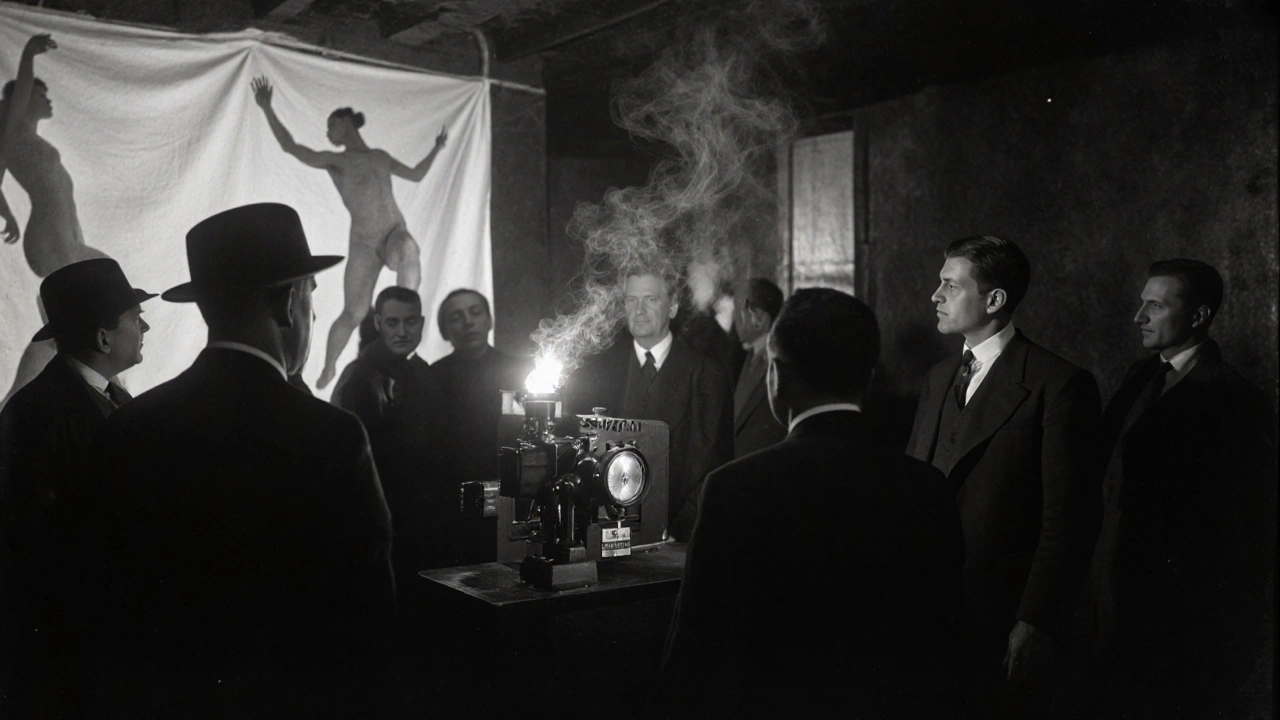
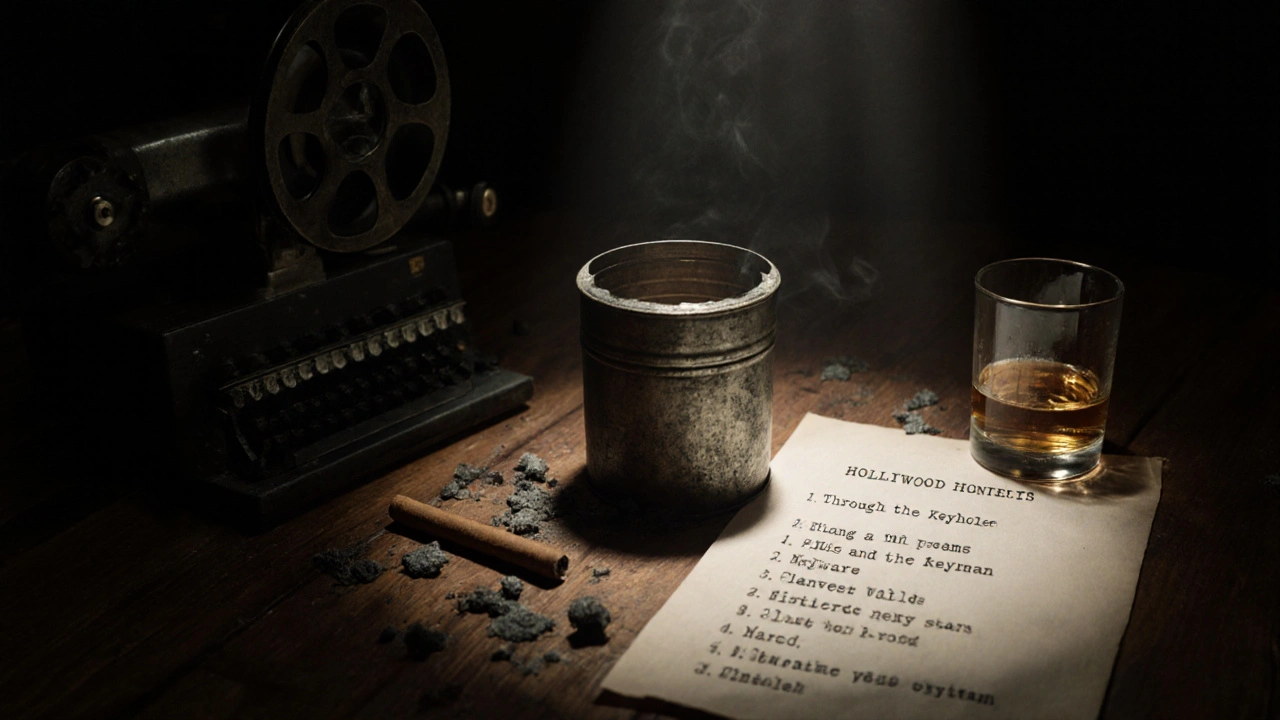
Men would gather for what were called “smoking concerts”-evening events where men would smoke cigars, drink whiskey, and watch films. The films were called “club films” or “blue movies” back then. The term “stag film” didn’t stick until around 1930. Before that, they were just “films for smoking concerts.”
Distribution was a tight operation. Films came in plain metal cans, no labels. Buyers picked from a typed list of titles-Hollywood Honeys, Through the Keyhole, Mortimer the Salesman-and paid $15 a reel in the late 1930s (that’s about $300 today). The projector? Usually rented along with the film. Projectionists traveled from town to town, carrying reels hidden in luggage, sometimes mixed with non-pornographic content to avoid detection. Border guards checked bags. Police raided rooms. So anonymity was survival.
Some lodges even had “stag librarians”-guys assigned to manage the film collection, keep track of rentals, and schedule screenings. It was institutionalized. A rite of passage for young men. A way to bond, to be initiated, to see what was forbidden.
What Did They Look Like?
Technically, they were simple. Silent. Black and white. 400 feet of film, running at 16-18 frames per second. No soundtracks-just the hum of the projector and the occasional crackle of nitrate film burning. But audiences didn’t watch in silence. They played records. Jazz. Crooners. Dirty blues. Songs like “The Ballad of the Green Beret” or “I’m a Woman” played over the images to set the mood.
Animation wasn’t left out. In 1928, a cartoon called Eveready Harton was made-believed to be the first animated stag film. It was crude, exaggerated, and absurd. A man gets trapped in a woman’s body, then escapes through her mouth. It was meant to be funny. It was also pornographic. And it worked.
Most films were straight. About 95% of surviving reels feature heterosexual acts. But there were exceptions. The Surprise of a Knight, made in 1929, is the earliest known gay stag film in the U.S. It’s only 10 minutes long. It’s also one of the rarest. Less than 5% of the total corpus featured same-sex content. That doesn’t mean gay men weren’t watching-they were. But the industry was built for straight men, by straight men, in a culture that punished homosexuality openly.
Why Did They Last So Long?
They lasted over 50 years because they filled a need. Mainstream movies were censored. Sex was hidden. But men still wanted to see it. And they were willing to pay for it. Stag films weren’t just about lust. They were about control, curiosity, and community.
Film historian Linda Williams called them “the sexual revolution before the sexual revolution.” These weren’t hippies in the 1960s. These were guys in suits in 1935, watching naked women in a basement in Detroit. They were breaking rules long before anyone talked about liberation.
And they weren’t just watched. They were preserved. Despite the legal risks, collectors saved them. Nitrate film was flammable. Many reels burned up. Others were destroyed by police. But enough survived. Today, about 2,000 reels exist in private and institutional collections. The Museum of Sex in New York has one of the largest public archives-over 200 reels from the 1910s to the 1970s.
Why Did They End?
They didn’t die because people lost interest. They died because the world changed.
In 1966, the Supreme Court case Memoranda v. Massachusetts redefined what counted as obscene. Suddenly, films that were once illegal could be shown in theaters-if they had “serious value.” That opened the door. In 1969, Blue Movie by Andy Warhol became the first adult film shown in a mainstream theater. Then came Deep Throat in 1972. Suddenly, porn wasn’t underground. It was commercial.
Stag films couldn’t compete. They were silent. Short. Grainy. Made for a world that no longer existed. The new porn had sound. Color. Story. Stars. And it was legal.
By 1968, production stopped. The last stag films were made, then quietly buried. The industry that had survived Prohibition, the Great Depression, and two world wars finally faded-not because it was shut down, but because it was replaced.
The Legacy
Today, stag films are studied by historians, preserved by archivists, and watched by curious collectors. They’re not just porn. They’re artifacts. Proof that people have always sought out sexual imagery, no matter the law. They show us that the “sexual revolution” didn’t start in the 1960s-it started in basements in 1915.
Modern pornography owes them everything. The format. The distribution. The taboo. Even the way we think about porn as something secret, something forbidden, something shared among men. Stag films were the first. They were crude. They were illegal. They were dangerous. And they were everywhere.
If you’ve ever watched a porn video on your phone, you’re seeing the direct descendant of a 1920s film projector in a lodge basement. The technology changed. The audience changed. But the desire? That stayed the same.