
Biopower Simulator: The State's View of Sex
Adjust the societal levers to see how the state's concern shifts from "Individual Sin" (Private/Religious) to "Population Management" (Public/State).
State Control Level
Social Impact
The state maintains a loose grip. Sex is largely managed by local customs and religious guilt.
Focus of Power
Focus is on preventing public scandal and maintaining basic communal order.
Risk Factor
Low state intervention. High reliance on personal and clerical discretion.
This shift wasn't about morality-at least not at first. It was about math. If a country wanted more soldiers or more laborers, it needed more babies. This is what Michel Foucault described as the rise of biopower, where the state manages the biological lives of its citizens to maximize power. Suddenly, things like marriage patterns, contraception, and birth rates weren't just personal choices; they were variables in a government equation. To manage these variables, the state needed to talk about sex, categorize it, and ever so slightly, control it.
The Gap Between Law and Reality in Paris
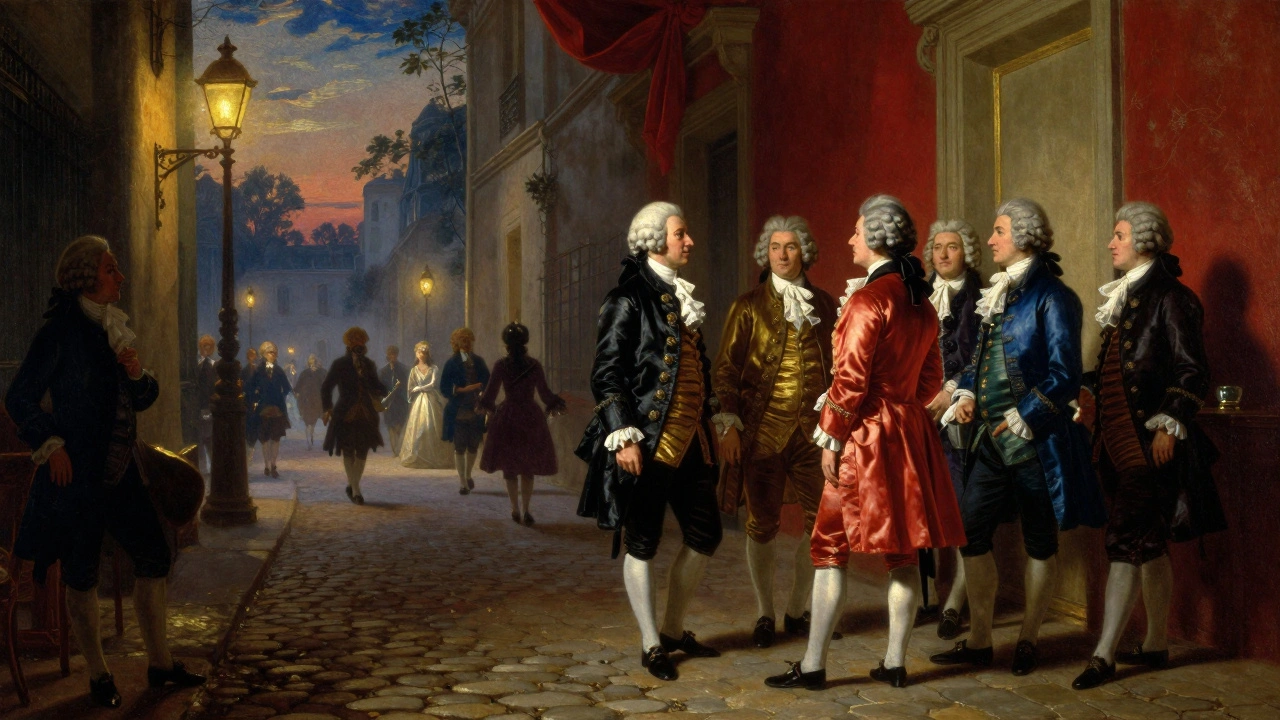
While the state was starting to theorize about population, the actual streets of 18th-century Paris told a different story. On paper, sex outside of marriage was strictly forbidden by religious and legal codes. In reality? People mostly did whatever they wanted. The police generally didn't care what happened behind closed doors unless someone specifically complained or the act became a public spectacle.
Paris had a wild variety of sexual subcultures. At the top, you had the libertines-wealthy elites who viewed sexual experimentation as an intellectual pursuit. They ignored traditional marriage and lived in a world of high-end mistresses and complex affairs. Meanwhile, a huge sodomitical subculture existed for men, though they didn't have a modern identity like "gay" or "bisexual" yet; they just lived their lives in a city that largely looked the other way.
Prostitution was everywhere, acting as a massive, unofficial industry. It had its own strict hierarchy, from the most famous courtesans who influenced politics to the women serving the poorest men in the slums. Even among the working class, young people didn't need a philosophy book to tell them sex was fun. They engaged in premarital sex frequently. The only real "regulation" here was social: if a girl got pregnant, the community and the courts put heavy pressure on the man to pay for childbirth and take care of the kid. It was a system based on responsibility, not state-mandated purity.
Political Chaos and the "Sexual Crisis"
Everything changed after the French Revolution. When the world turned upside down in the 1790s, people started linking sexual behavior to political loyalty. If you were a revolutionary, you were more likely to challenge the traditional family structure. Nonmarital sex became a symbol of dissent. This created a massive panic among the conservatives.
The backlash focused heavily on women. During the Revolution, women pushed for equality and political rights. The response from the establishment was a nasty smear campaign: they claimed that women's involvement in politics was "sexually unnatural." Essentially, the state argued that if women entered the public sphere, the moral fabric of the nation would unravel. They used the fear of rising divorce and adultery rates to push women back into the home, framing the "sexual crisis" as a threat to the very existence of society.
| Feature | Early 18th Century | Post-Revolution/Late 18th Century |
|---|---|---|
| Primary Regulator | Church & Local Custom | State & Legal Frameworks |
| Focus of Concern | Individual Sin | Population Health & Stability |
| View of Women | Socially constrained | Politically dangerous / "Predatory" |
| Police Role | Public nuisance control | Moral and demographic monitoring |
The Invention of the "Respectable" Woman
As the state tightened its grip, a new social divide emerged. There were "respectable" women and then there was everyone else. The state and society pushed a version of femininity based on sentimental romance-love without the "messy" erotic desire. This allowed middle-class women to form intense "Romantic Friendships" with other women, which often served as a safe cover for same-sex desire because the state didn't yet see female sexuality as an active force.
On the flip side, any woman who was sexually active outside these bounds-prostitutes, foreigners, or working-class women-was painted as predatory. The state began to use the image of the nation itself as a chaste woman who needed to be protected from "attack." This placed the burden of national honor on women's behavior. If women weren't virtuous, the nation was seen as weak. This wasn't just about modesty; it was a way for the bourgeois class to distinguish themselves from the "depraved" aristocracy and the "wild" poor.
Urbanization and the Law's Slow Catch-up
While this was happening in France, England was going through its own transformation. During the Georgian period (1714-1837), people flooded into cities like London. Urbanization acted as a catalyst for sexual liberation. In the anonymity of a big city, it's much easier to experiment than in a small village where everyone knows your business.
Regency London was a place of contradictions. The laws were still incredibly strict, and the "polite society" pretended that prostitution didn't exist. But in the shadows, there was a thriving culture of celebrity courtesans and experimental relations. The city created a gap between the official state discourse-which demanded order-and the lived experience of thousands of people who were exploring their sexuality in ways that would have been impossible fifty years prior.
The Turning Point: The 1885 Act and Legal Control
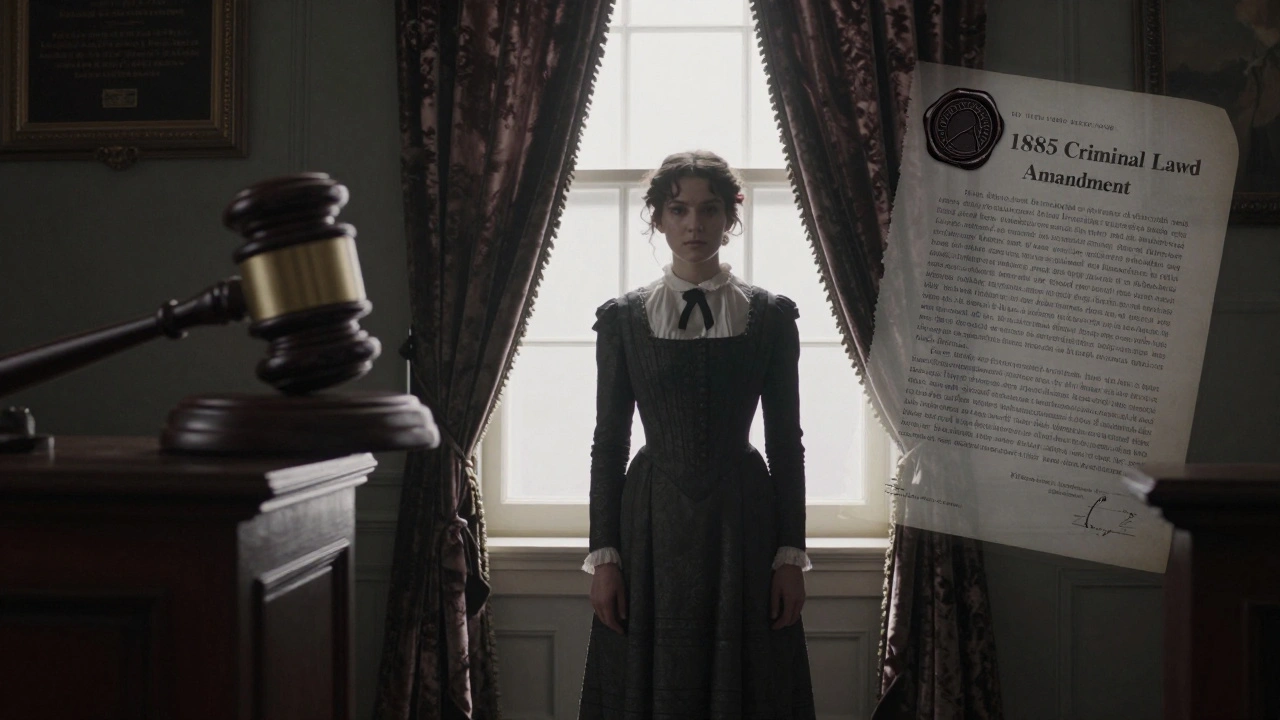
The trajectory that started in the 18th century peaked in the late 19th century. A major turning point came with the Criminal Law Amendment Act 1885. This happened after a newspaper exposé on the "White Slave Trade" sparked a public outcry over the protection of young girls. For the first time, the age of sexual consent was set at 16 for females.
This law is a perfect example of the state's obsession with "disorderly sexualities." It wasn't just about protecting children; it was about controlling female chastity during a "dangerous" life stage between childhood and marriage. The law moved away from the old ideas of puberty and marriage and toward a rigid, state-defined age. It was the final step in turning a private biological process into a legal boundary managed by the government.
Why did the state suddenly care about sex in the 18th century?
It wasn't a sudden switch, but a shift in perspective. Governments realized that to maintain power, they needed to manage their "population" rather than just their "subjects." This meant tracking birth rates, health, and marriage patterns to ensure a steady supply of workers and soldiers, making sexuality a key variable in state planning.
Was sex actually more restricted in the 18th century than today?
In many ways, no. While the laws were strict, enforcement was often lax, especially in cities like Paris and London. People engaged in a wide range of premarital and nonmarital sexual activities with relative impunity, provided they didn't cause a public scandal.
In many ways, no. While the laws were strict, enforcement was often lax, especially in cities like Paris and London. People engaged in a wide range of premarital and nonmarital sexual activities with relative impunity, provided they didn't cause a public scandal.
What is biopower in the context of sexuality?
Biopower is a term coined by Michel Foucault to describe how modern states regulate the biological processes of the population. In terms of sex, this means moving from punishing "sins" to managing "trends," such as using laws and medical discourse to encourage certain types of reproduction or discourage others.
How did the French Revolution affect views on female sexuality?
The Revolution initially opened doors for women's rights, but the subsequent backlash linked female political activity to sexual "unnaturalness." This allowed the state to frame women's desire for public influence as a moral failing, effectively using sexual discourse to push women back into private, domestic roles.
What was the significance of the 1885 Criminal Law Amendment Act?
It marked a shift toward legalizing the state's control over the female body by establishing a formal age of consent (16). This moved the regulation of sex away from religious or familial guidance and into the hands of the legal system, treating female sexuality as something that required state-monitored protection and control.