Islamic Countries and LGBTQ Rights Comparison Tool
Compare Legal Status of Homosexuality Across Muslim-Majority Countries
Select a country to see how its laws compare to Islamic tradition:
When people talk about Islam and homosexuality, they often assume there’s one clear rule: it’s forbidden, full stop. But the truth is far more complicated. The history of how Islamic societies have viewed same-sex relationships isn’t a straight line from ancient condemnation to modern repression. It’s a story of shifting interpretations, colonial interference, regional differences, and quiet resistance. Understanding this isn’t just about religion-it’s about power, identity, and who gets to decide what’s moral.
The Quran Doesn’t Spell Out Punishment
The most common source cited for Islamic prohibitions on homosexuality is the story of the people of Lot, mentioned in five different chapters of the Quran. These passages describe divine punishment for a community that engaged in sexual acts with men, often interpreted as anal sex. But here’s the key detail: the Quran never says what the punishment should be. It doesn’t mention stoning, flogging, or imprisonment. It only says God destroyed them for their actions. That’s it.This silence matters. In Islamic law, punishments like stoning or flogging are only applied to crimes with a hadd-a fixed penalty clearly defined in scripture. For adultery, the Quran specifies 100 lashes. For theft, it specifies amputation. But for same-sex relations? Nothing. No number. No method. No clear instruction.
So where did the harsh penalties come from? Not the Quran. They came from later collections of sayings attributed to the Prophet Muhammad, called hadith. One famous hadith in Sahih al-Bukhari says the Prophet ordered the death of a man who had sex with another man. But hadith were written down 100 to 250 years after Muhammad’s death. They were compiled in a time of political upheaval, with competing schools of thought trying to define what Islam meant. And not all hadith were treated the same way. Some scholars accepted them as binding. Others questioned their authenticity, their chain of transmission, or their context.
Historical Practice Wasn’t What You Think
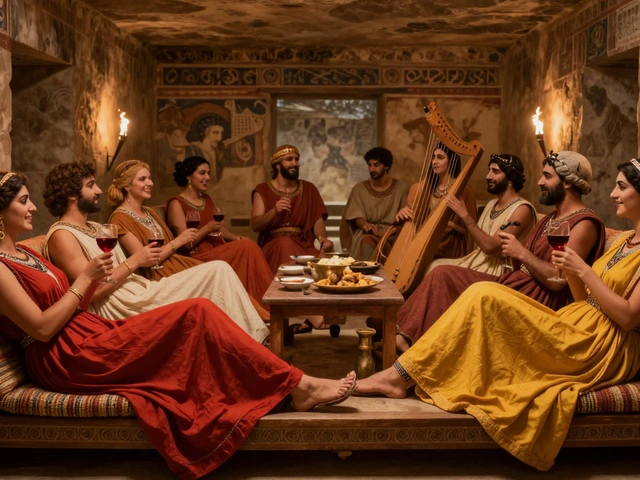
If you believe Islamic history was always hostile to same-sex relationships, you’re missing a big part of the story. In medieval Islamic societies, same-sex love wasn’t just tolerated-it was documented in poetry, literature, and even court records.In 18th-century Cairo, Abdallah al-Shabrawi, the rector of al-Azhar University, wrote homoerotic poetry addressed to his male students. No one tried to silence him. In Ottoman Turkey, men openly formed romantic relationships with younger men, often described as “boy-love,” similar to practices in ancient Greece. Ottoman legal scholars didn’t ban these relationships. In fact, they rarely punished them. Why? Because the legal system required four eyewitnesses to the act of penetration-or four separate confessions-to apply a hadd punishment. That was nearly impossible to meet. So judges often used their discretion, applying lighter penalties like fines or exile, or simply dismissing the case.
Even in places we think of as strictly religious, like the Abbasid Caliphate, scholars like Yahya ibn Aktham, the chief judge in Baghdad, reportedly allowed homosexual acts despite harsh penalties for other sexual offenses. He didn’t see them as equivalent to adultery or rape. That’s not a fringe opinion-it was mainstream in many regions for centuries.
Colonial Laws Changed Everything
The real turning point came not from Islamic scholars, but from European colonizers.In 1858, the Ottoman Empire-then the largest Muslim-majority state-reformed its legal code under the Tanzimat reforms. Homosexuality was not included as a crime. That meant, legally, same-sex relations were not punishable under Ottoman law. This wasn’t an exception. It reflected a broader trend in the Muslim world at the time.
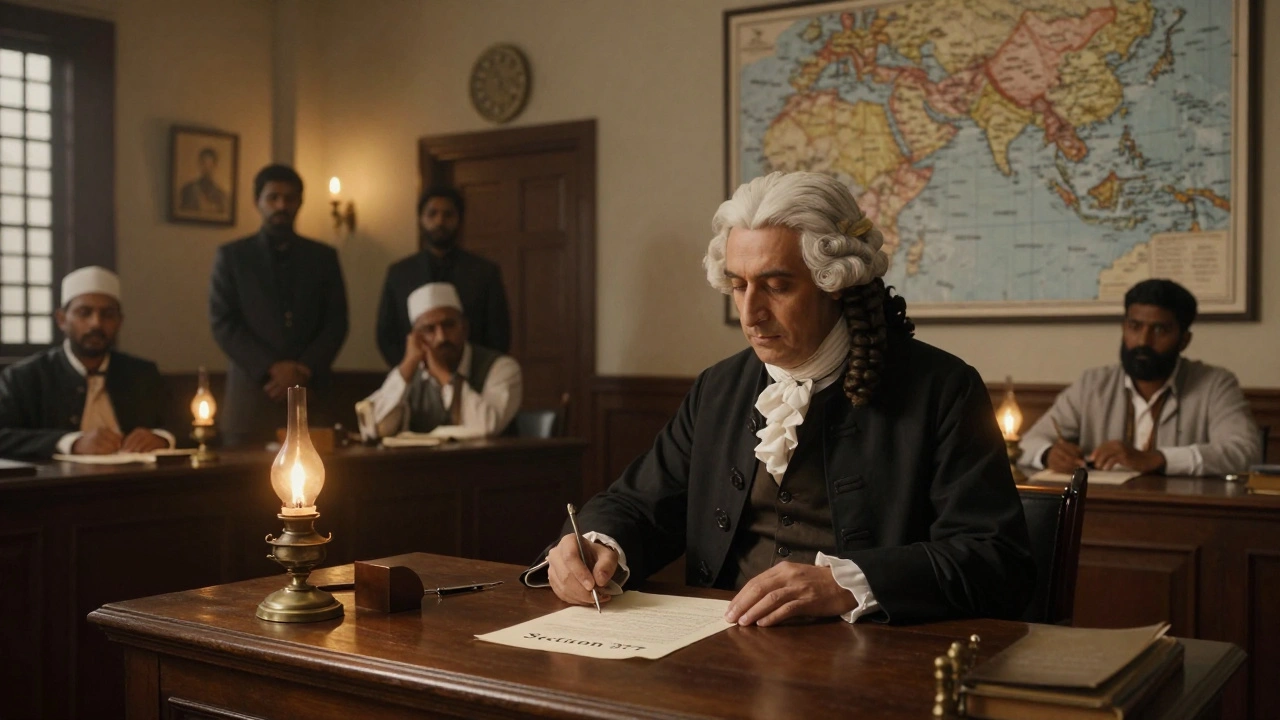
Then came the British. In 1860, they introduced Section 377 of the Indian Penal Code, which criminalized “carnal intercourse against the order of nature.” It was vague, broad, and designed to enforce Victorian morality. This law was exported to over 40 former colonies, including Nigeria, Uganda, Malaysia, and Singapore. Even though these countries had no history of criminalizing homosexuality under Islamic law, they inherited this British law-and kept it after independence.
Today, when people say “Islam bans homosexuality,” they’re often referring to laws created by colonial powers, not Islamic jurisprudence. The punishment isn’t rooted in the Quran or early Islamic practice. It’s rooted in 19th-century British courts.
The Four Sunni Schools Don’t Agree
Islamic law isn’t monolithic. There are four major Sunni schools of thought, and they handle same-sex relations differently.- Hanbali (Saudi Arabia, Qatar): The strictest. Advocates capital punishment for anal sex between men, based on certain hadith interpretations.
- Maliki (North and West Africa): Generally recommends flogging, sometimes with banishment. No death penalty as standard.
- Shafi’i (Southeast Asia, parts of the Middle East): Similar to Maliki. Flogging is common, but death is rare and requires extreme conditions.
- Hanafi (Turkey, Central Asia, South Asia): The most lenient. Often says no physical punishment is required. Judges can decide based on context.
And here’s the kicker: even in the Hanbali school, the requirement for four eyewitnesses still technically applies. In practice, that means most punishments were never carried out. It wasn’t that people were being stoned-it was that the system was designed to make punishment nearly impossible.
Modern Extremes and Progressive Voices
Today, we see two extreme poles.On one side, there’s the Islamic State. Between 2014 and 2016, IS publicly executed at least 27 men accused of homosexuality in Iraq and Syria. They didn’t follow Islamic law. They didn’t use the four-witness rule. They didn’t consult scholars. They used violence as propaganda. Their actions are a distortion, not a tradition.
On the other side, there are progressive Muslim scholars and communities pushing back. Dr. Scott Siraj al-Haqq Kugle, a professor at Emory University, argues that the Quran’s silence on punishment leaves room for reinterpretation. He says the focus on “nature” and “sin” in modern fatwas ignores the historical reality of love and desire in Islamic societies.
Daayiee Abdullah, the first openly gay imam in the U.S., founded Masjid Nur in Washington D.C. in 2011. He leads prayers for LGBTQ Muslims and has interviewed over 150 people who struggle to reconcile their faith with their identity. His book shows that many Muslims don’t reject their faith-they’re redefining it.
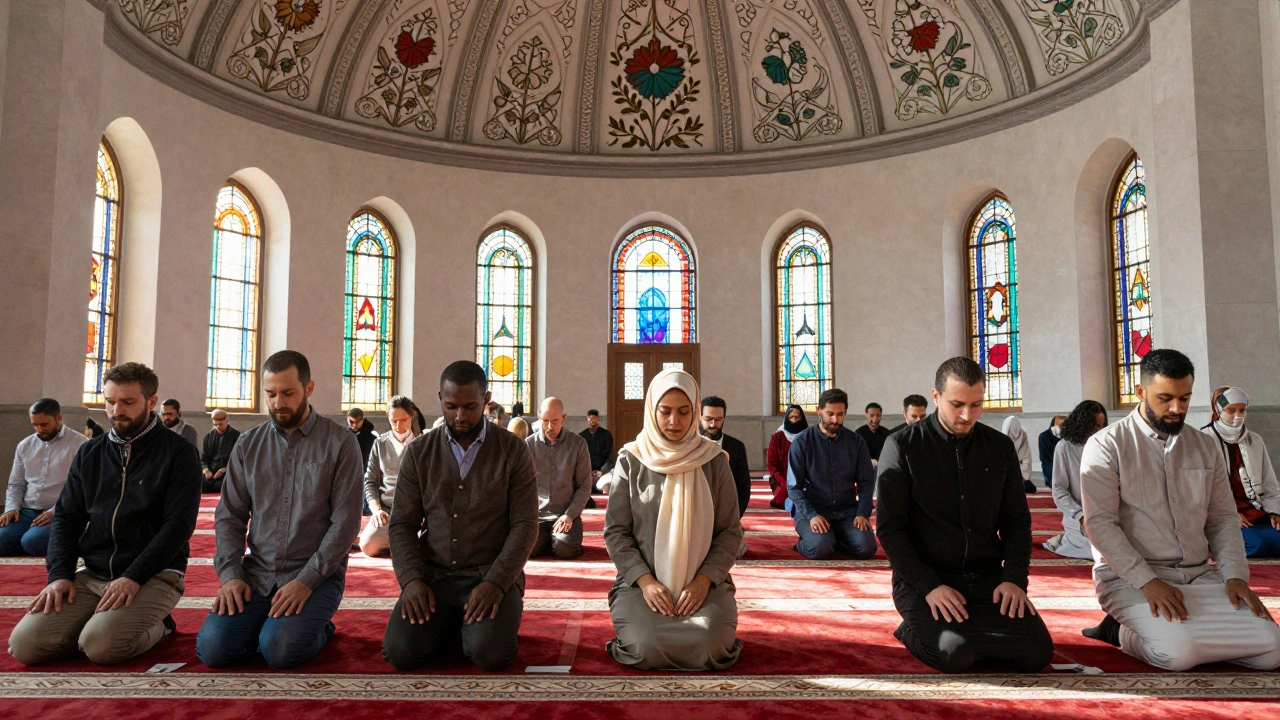
There are also inclusive mosques. The Ibn Rushd-Goethe Mosque in Berlin, led by female imam Seyran Ateş, welcomes LGBTQ worshippers. The Inner City Muslim Association in South Africa has been doing the same since 1994. These aren’t fringe experiments-they’re growing movements.
Where the Law Stands Today
The legal landscape today is wildly uneven.- Brunei introduced Sharia law in 2019, making same-sex sex punishable by death by stoning. International outrage followed. But since then, no executions have been carried out-there’s a de facto moratorium.
- Saudi Arabia technically allows death for homosexuality under uncodified Sharia, but executions are rare. The last confirmed one was in 2015.
- Iran executes gay men under its Islamic Penal Code. At least eight were executed in 2022 alone.
- Malaysia punishes same-sex relations with up to 20 years in prison and caning-thanks to its British colonial-era law.
- Indonesia’s Aceh province has carried out 12 public canings of gay men since 2016.
- Turkey, on the other hand, has never criminalized homosexuality. It decriminalized it in 1858 under Ottoman rule, and still doesn’t punish same-sex relationships today.
And then there are countries like Albania, Kosovo, and Tunisia that have never had anti-homosexuality laws. Tunisia even passed a 2023 draft constitution that removed protections for religious freedom, which could make life harder for LGBTQ people-but not because of Islam. Because of politics.
Public Opinion Is Shifting
Attitudes aren’t frozen in time.In 2013, the Pew Research Center found that 98% of Egyptians, 97% of Jordanians, and 90% of Pakistanis believed homosexuality should not be accepted. Those numbers are still high. But look closer.
In Lebanon, a 2019 Arab Barometer survey found that 52% of people supported same-sex marriage. In Kazakhstan, a 2022 poll showed 48% supported it. And in a 2023 Arab Youth Survey, 38% of people aged 18 to 24 supported LGBTQ rights-more than triple the percentage of those over 45.
Online activism is growing too. The hashtag #Muslims4LGBTQ generated over 12,000 posts on Twitter/X between 2020 and 2023. LGBTQ Muslim organizations like Imaan in London and Salaam in Toronto have been around for decades, offering community and support. A 2019 study of 500 LGBTQ Muslims found that 63% had positive experiences with progressive Muslim communities.
These aren’t outliers. They’re signs of change.
What This All Means
The idea that Islam has always and everywhere condemned homosexuality is a myth. It’s a myth built on colonial laws, modern political agendas, and selective readings of religious texts.The Quran doesn’t prescribe punishment. Early Islamic societies didn’t enforce it. Colonial powers imposed it. Modern extremists use it for terror. And today, millions of Muslims are quietly rewriting the narrative-choosing compassion over condemnation, faith over fear.
The future of Islam and homosexuality isn’t written in ancient texts. It’s being written now-in Berlin, in Cairo, in Toronto, in Tehran-by people who refuse to choose between being Muslim and being themselves.
Does the Quran explicitly ban homosexuality?
No, the Quran does not explicitly ban homosexuality or prescribe any punishment for it. It recounts the story of the people of Lot as a divine punishment for immoral behavior, but it never specifies what the punishment should be under human law. The idea that Islam mandates death or flogging for same-sex relations comes from later hadith literature and legal interpretations, not the Quran itself.
Why do some Muslim countries punish homosexuality if the Quran doesn’t say to?
Many of these laws were introduced during British colonial rule. Section 377 of the Indian Penal Code, written in 1860, criminalized “carnal intercourse against the order of nature” and was copied into the legal systems of over 40 former colonies. After independence, many countries kept these laws-even though they weren’t part of traditional Islamic jurisprudence. In places like Saudi Arabia and Iran, modern governments have used selective interpretations of hadith and Sharia to justify harsh penalties, often bypassing traditional legal safeguards like the four-witness rule.
Are there Muslim scholars who support LGBTQ rights?
Yes. Scholars like Dr. Scott Siraj al-Haqq Kugle and Daayiee Abdullah argue that the Quran’s silence on punishment allows for reinterpretation. They point to historical examples of same-sex love in Islamic poetry and society, and emphasize that Islamic law traditionally required near-impossible evidence to punish sexual acts. In 2021, over 150 Muslim scholars from 32 countries signed an Interfaith Statement on LGBTQ Inclusion, declaring that all people deserve dignity and respect regardless of sexual orientation or gender identity.
Is homosexuality banned in all Muslim-majority countries?
No. At least 12 Muslim-majority countries have decriminalized homosexuality since 2000, including Turkey, Albania, Kosovo, and Tunisia. Turkey decriminalized it in 1858 under Ottoman rule and still doesn’t criminalize it today. In contrast, countries like Iran, Saudi Arabia, Brunei, and Afghanistan have laws that can lead to death. The legal status varies widely-not because of Islam, but because of politics, colonial history, and cultural shifts.
How do LGBTQ Muslims reconcile their faith with their identity?
Many find support in progressive Muslim communities, online networks, and reinterpretations of scripture. Organizations like Imaan (UK) and Salaam (Canada) provide safe spaces for prayer and community. A 2019 study of 500 LGBTQ Muslims found that 63% had positive experiences with inclusive Muslim groups. Others, like Daayiee Abdullah, become imams themselves, creating mosques that welcome LGBTQ worshippers. For many, faith isn’t the problem-it’s the rigid, politicized interpretations of it that cause conflict.