Etruscan-Roman Inheritance Calculator
Etruscan Inheritance Model
Roman Inheritance Model
Results Comparison
When we think of ancient societies and illegitimacy, we often picture Roman law-where children born outside marriage had no legal rights, could not inherit, and were socially shamed. But what about the Etruscans? The people who lived in what’s now Tuscany, centuries before Rome rose to power, had a very different view. In Etruria, being born outside marriage didn’t mean being an outcast. It didn’t mean losing your name, your inheritance, or your place in the family. And that’s not speculation-it’s written in their tombs, their art, and their inscriptions.
What We Know About Etruscan Family Life
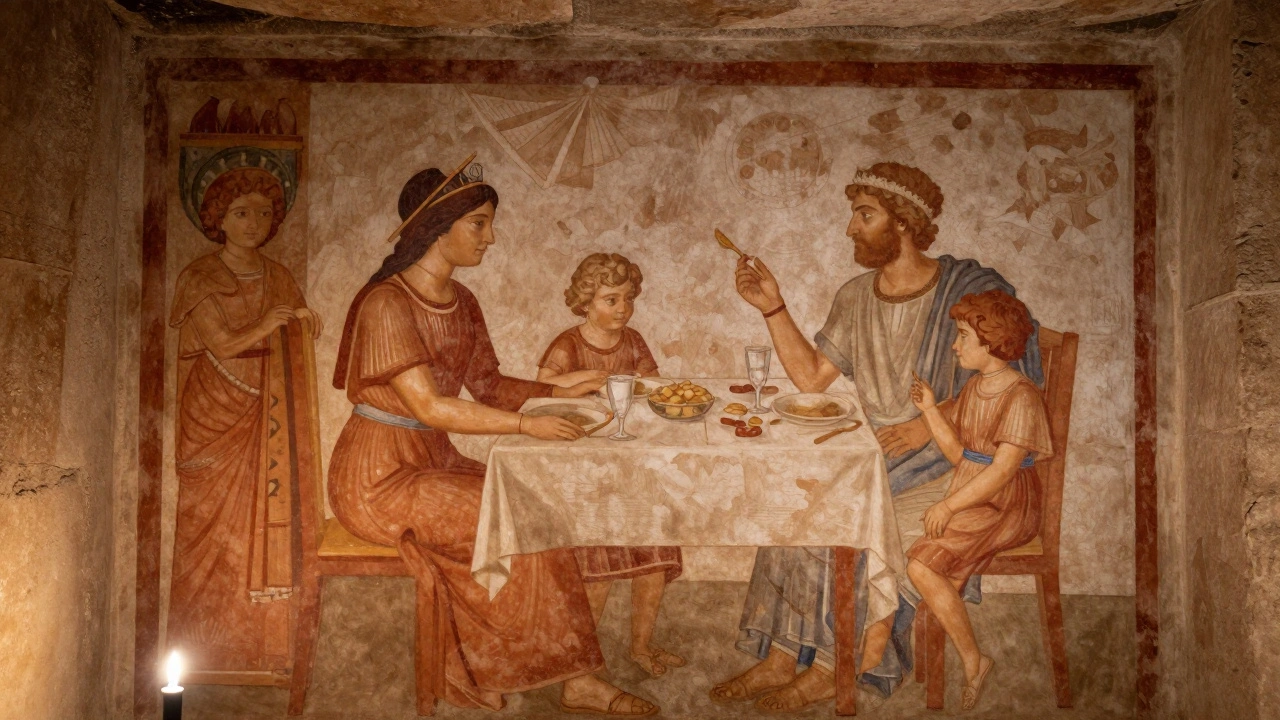
Etruscan society didn’t follow the same rigid gender roles as Rome. Women held property, participated in public life, and were buried with equal honors to men. Tomb frescoes from places like Tarquinia show couples dining together, women riding chariots, and families gathered in intimate scenes. These aren’t idealized myths. They’re snapshots of daily life. And in these images, there’s no distinction between children born to married couples and those born to unmarried partners.
Unlike Rome, where marriage was a legal contract tied to citizenship and inheritance, Etruscan unions were more fluid. There’s no evidence of a formal legal institution called “marriage” in the Roman sense. Instead, long-term partnerships-whether formal or informal-were recognized by community and kinship ties. Children born from these unions were simply part of the household. Their legitimacy wasn’t questioned because the concept didn’t exist the way it did in Rome.
Archaeology Tells the Real Story
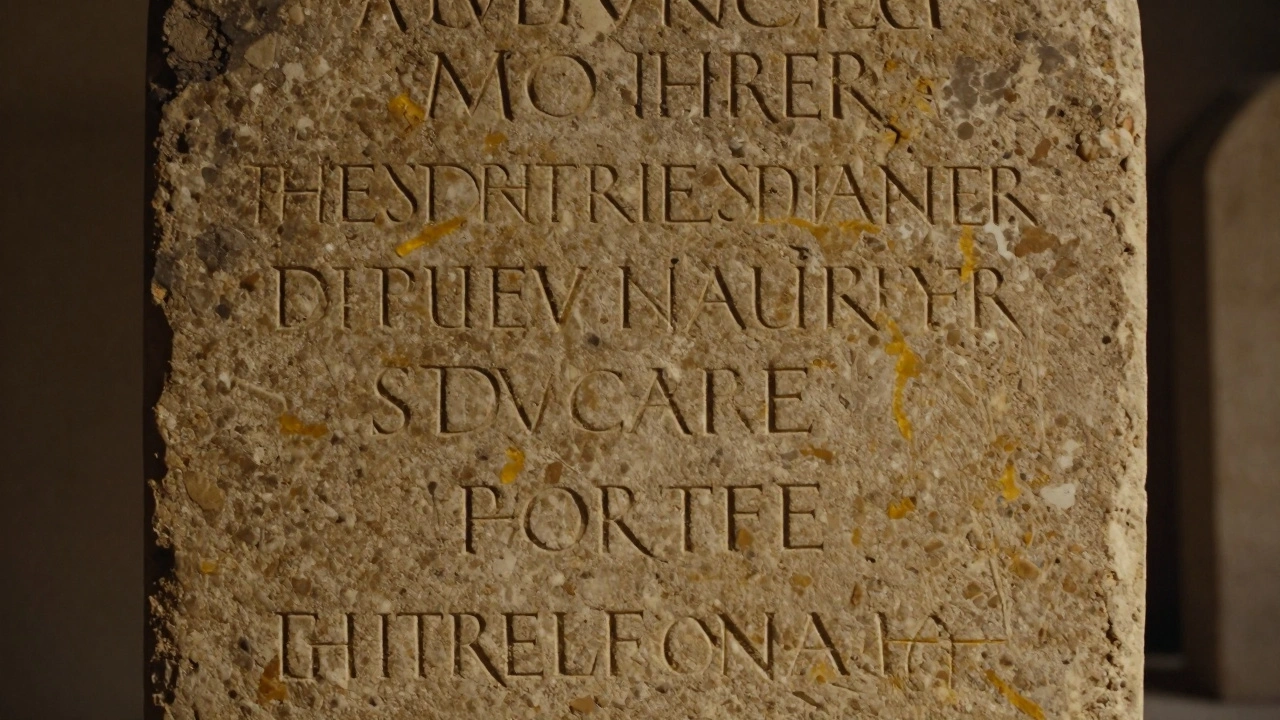
Look at the inscriptions on Etruscan tombstones. Names of children are listed alongside their parents, no matter the relationship status of the parents. In the Banditaccia necropolis near Cerveteri, you’ll find tombs where a child’s name appears directly under a mother’s name-with no father listed. In other cases, a child is named after a man who clearly isn’t the biological father, but is still treated as the family head. This wasn’t confusion. It was intention.
One tomb from the 6th century BCE in Veii lists a woman, her daughter, and her grandson. The daughter’s father is unnamed, but the grandson is clearly identified as the son of that daughter. No stigma. No asterisk. No legal footnote. Just lineage, passed down without condition.
Compare this to Rome. In Roman law, liberi legitimi-legitimate children-were the only ones who could inherit property or carry on the family name. Illegitimate children were called spurii, a term with heavy social shame. Etruscans didn’t use such a word. Not once has it been found in any inscription, tablet, or funerary text.
Inheritance Didn’t Require Marriage
In Etruria, inheritance flowed through blood, not legal paperwork. Property, land, and even religious duties were passed down to children regardless of their parents’ marital status. Archaeologists have found wills and property records from Etruscan cities where sons and daughters of unmarried unions inherited equal shares. One record from Volterra, dated around 500 BCE, divides a vineyard between two sons-one born to a married couple, the other to a woman who lived with her partner but never formally wedded him. The division was clear, unchallenged, and recorded without comment.
This wasn’t rare. It was normal. Etruscan law didn’t care whether parents were married. It cared whether the child was recognized by the family. And if the family accepted them, the community did too.
Gender and Power Played a Role
One reason Etruscan society handled illegitimacy so differently? Women had real power. Etruscan women owned land, conducted business, and could initiate divorces. They weren’t just wives-they were heads of households. A child born to an Etruscan woman didn’t need a father’s name to have status. The mother’s lineage was enough.
Compare this to Rome, where women had no independent legal identity. A child’s status depended entirely on whether the father acknowledged them. In Etruria, the mother’s authority was the anchor. If she claimed a child as her own, that was final.
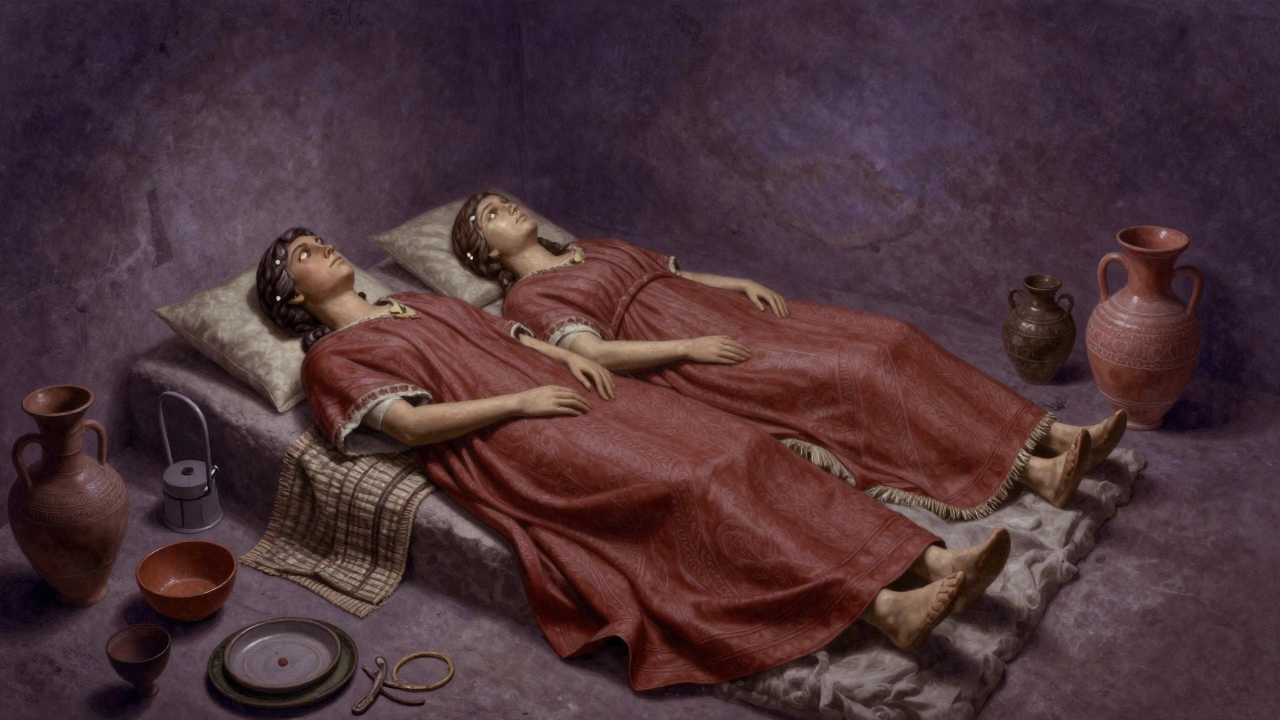
This is why Etruscan women were often buried with their children in the same tomb-even when the father was absent. The tomb wasn’t just a resting place. It was a declaration: this family is whole, no matter how they came together.
Why Rome Changed Everything
By the 3rd century BCE, Rome began absorbing Etruscan territories. As Roman law spread, Etruscan customs faded. The Roman system-rigid, patriarchal, and legalistic-replaced the older, more flexible traditions. Over time, even Etruscan families began adopting Roman practices. Illegitimacy became stigmatized. Inheritance laws shifted. The open, accepting attitude of earlier centuries disappeared.
But for centuries before that, Etruria stood apart. While Rome was busy writing laws about who could inherit, Etruscans were painting murals of families eating together, naming children after ancestors, and burying them with honor. They didn’t need a law to say a child was valid. They already knew it.
The Bigger Picture
Modern historians used to assume Etruscan society was just a “pre-Roman” version of Rome-less advanced, less organized. But that’s wrong. Etruria wasn’t trying to become Rome. It had its own values. And one of them was this: a child’s worth wasn’t tied to their parents’ paperwork. It was tied to their place in the family, the community, and the ancestors.
Today, we look at ancient societies and assume they were all like Rome-strict, hierarchical, obsessed with legitimacy. But Etruria proves otherwise. Sometimes, the most progressive ideas weren’t born in the 21st century. They were buried under centuries of Roman influence-and only now, through careful study of tombs and inscriptions, are we beginning to see them again.