Marriage Equality Country Tracker
Find when a country legalized same-sex marriage
Check the year when marriage equality was legalized in any country, or find out which countries have marriage equality today.
Marriage Equality Status
How it works
This tool tracks the year marriage equality was legalized in countries worldwide. For some countries, this was achieved through court decisions, referendums, or parliamentary action.
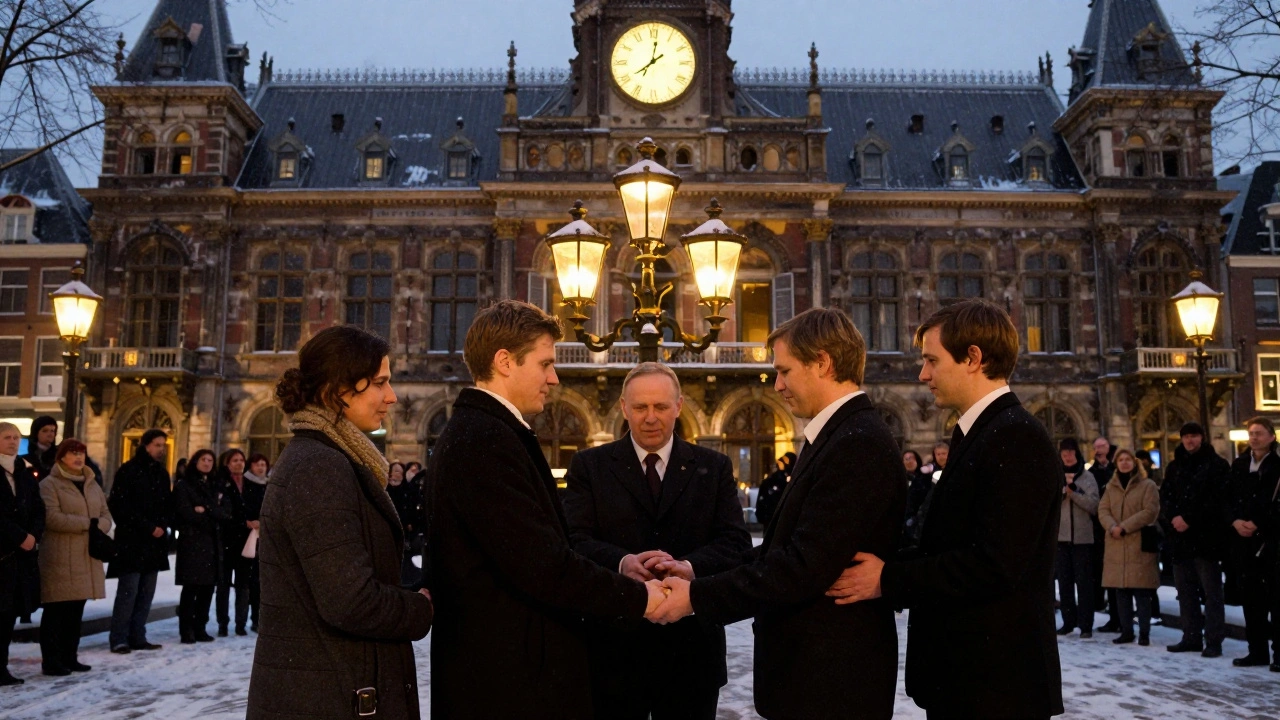
The world changed on April 1, 2001, when four same-sex couples walked into Amsterdam’s town hall and exchanged vows under the eyes of the world. It wasn’t just a ceremony-it was the first legal same-sex marriage in history. The Netherlands had just become the first country to open civil marriage to all couples, regardless of gender. No civil unions. No separate laws. Just marriage. Equal. Full. Legal.
The Netherlands: Breaking the Ice
Before 2001, no country had ever granted same-sex couples the right to marry. Some had civil partnerships-like Denmark in 1989-but those were second-class arrangements. The Netherlands didn’t settle for that. After a parliamentary vote in December 2000, Queen Beatrix signed the law on March 21, 2001. It didn’t just tweak old rules-it rewrote them. The Civil Code replaced the words “man” and “woman” with “partner.” No exceptions. No loopholes. Marriage was now gender-neutral by design. At exactly midnight on April 1, Amsterdam’s mayor, Job Cohen, married four couples. One of them, a lesbian pair named Els and Mieke, later said, “We didn’t want to be special. We just wanted to be normal.” That’s what this was about: normalizing love.Europe Follows, One by One
Belgium jumped in just two years later, in 2003. Its parliament voted 91 to 22 to pass the law. No court order. No referendum. Just lawmakers deciding it was time. Spain followed in 2005, despite fierce opposition from the Catholic Church. The vote was close-187 to 147-but the law passed anyway. For the first time, a majority-Catholic country recognized same-sex marriage. By 2009, Norway and Sweden had joined. Portugal in 2010. Iceland, where 90% of the population supported marriage equality, passed it without debate. Denmark, which had pioneered civil unions, upgraded to full marriage in 2012. France did it in 2013, after massive protests on both sides. Ireland did something no other country had done: they asked the people. In 2015, 62% voted yes. Not judges. Not politicians. Ordinary citizens. That was a turning point. Germany, Austria, and Switzerland followed between 2017 and 2021. Malta became the first majority-Catholic country in the EU to legalize same-sex marriage through parliament-not a court. Each step built on the last. Europe didn’t just catch up-it led.The Americas: Courts, Referendums, and Slow Shifts
Canada became the first country in the Americas to legalize same-sex marriage nationwide in 2005. But it wasn’t a single law. It was the result of court rulings in eight provinces and one territory over three years. When Parliament passed the Civil Marriage Act, it didn’t surprise anyone-it was inevitable. The United States took a longer, messier path. Massachusetts was first in 2004, after the Goodridge case. For the next decade, states fought it out. Some allowed it. Some banned it. The federal government refused to recognize these marriages until 2013, when the Supreme Court struck down part of the Defense of Marriage Act. Then, in 2015, Obergefell v. Hodges made it legal everywhere. The decision didn’t come from Congress. It came from five justices saying the Constitution guarantees equal dignity. Latin America moved slower but steadily. Argentina became the first in the region in 2010. Brazil and Uruguay followed in 2013. Mexico’s path was patchy-some states allowed it, others didn’t-until the Supreme Court ruled in 2015 that all states must recognize same-sex marriages. Colombia in 2016, Ecuador in 2019, Costa Rica in 2020, Chile in 2021. Each step faced resistance, but the legal tide kept rising.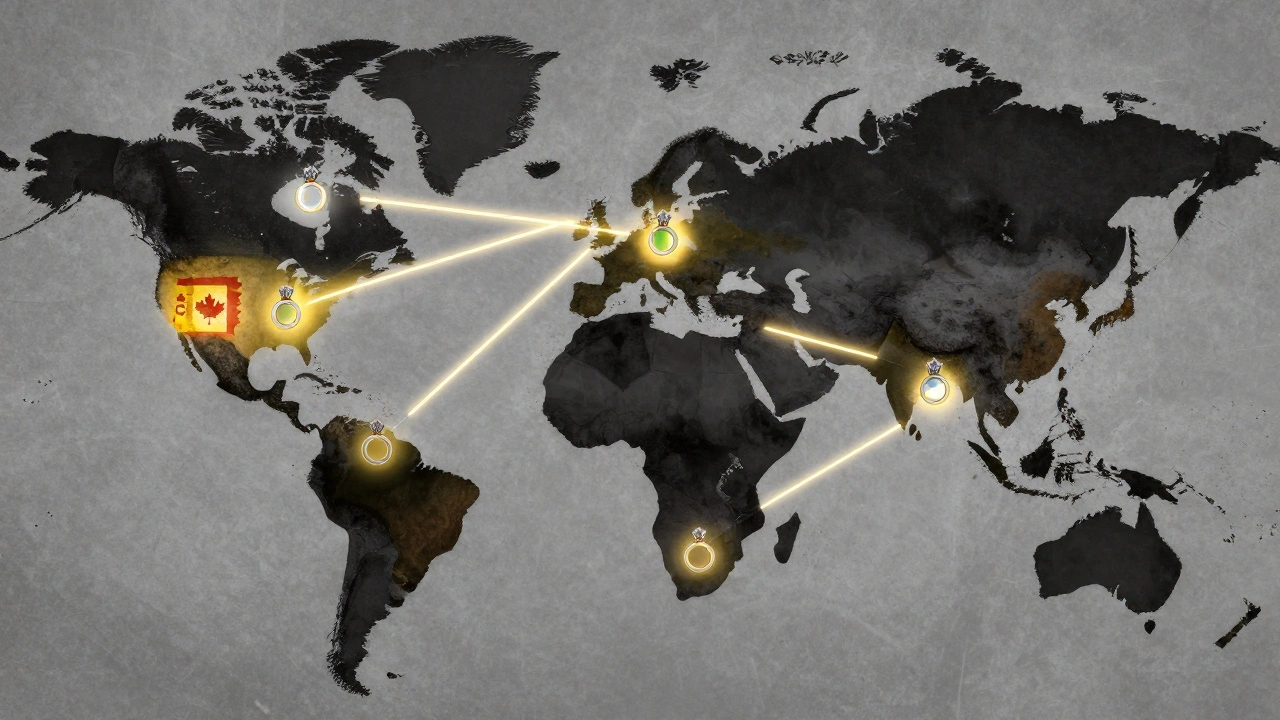
Africa and Asia: The Long Road Ahead
Africa has one country with marriage equality: South Africa. In 2006, its Constitutional Court ruled that denying same-sex couples the right to marry violated human dignity. It was the fifth country in the world-and the first on the continent-to do so. Since then, no other African nation has followed. In fact, over 30 African countries still criminalize same-sex relationships. South Africa stands alone, not because it’s more progressive, but because its constitution is one of the most rights-based in the world. Asia’s story is even starker. For decades, same-sex marriage was unthinkable. Then, in 2017, Taiwan’s Constitutional Court ruled that banning it was unconstitutional. Two years later, in May 2019, Taiwan became the first place in Asia to legalize same-sex marriage. It wasn’t easy. Protests, religious opposition, political delays-but the courts held firm. Today, Taiwan remains the only country in Asia with full marriage equality. Other nations like Thailand have passed civil partnership laws, but full marriage? Still out of reach.The Ripple Effects: More Than Just Weddings
Legalizing same-sex marriage didn’t just change wedding licenses. It changed lives. In the U.S., a 2022 survey of 5,000 same-sex married couples found that 87% said their mental health improved after getting married. Hospital visitation rights, inheritance protections, tax benefits-these weren’t abstract rights. They were life-or-death. One man in Germany told a reporter that he finally had the legal power to make medical decisions for his husband during cancer treatment-after 12 years of fighting. Economically, the impact was real. Between 2014 and 2019, same-sex weddings in the U.S. generated $3.8 billion in spending. Globally, that number is now over $7 billion a year. But the real value? Confidence. When the law says your love is valid, people spend more, start businesses, move cities, and plan for the future. There’s also a health benefit. The Council of Europe found that countries with marriage equality saw a 28% drop in suicide attempts among LGBTQ+ youth. Legal recognition doesn’t erase prejudice, but it sends a message: you belong.
Still Fighting: The Gaps Between Law and Life
But legality doesn’t mean acceptance. In Mexico City, one couple married in 2010. When the husband died, his family challenged the will. The wife spent years in court, hiring three lawyers, just to prove she was his legal spouse. In many places, even with marriage equality, bureaucracy ignores it. Doctors, landlords, employers-some still don’t recognize same-sex spouses. A 2022 survey found that 42% of same-sex married couples in the U.S. still faced discrimination in housing or jobs. In Latin America and Asia, satisfaction rates with marriage equality hover below 35%. Why? Because the law doesn’t change hearts overnight. It just gives people tools to fight.The New Frontiers: What’s Next?
The pace of change has slowed-but it hasn’t stopped. Slovenia legalized same-sex marriage in 2022 after its Constitutional Court ruled the ban unconstitutional. Cuba did the same in 2022, after a national referendum where nearly two-thirds voted yes. Andorra converted its civil unions into marriages in early 2023. Now, attention turns to Greece, where parliament is debating a bill. Thailand has a civil partnership law but is pushing for full marriage. The Czech Republic has 61% public support and a bill waiting in committee. These aren’t small steps. They’re the next wave. But the hardest battles lie ahead-in countries where religion, tradition, or politics block progress. In places like Nigeria, Russia, or Indonesia, same-sex marriage is still a criminal offense. The fight isn’t over. It’s just moved to new ground.Why This Matters
This isn’t just about weddings. It’s about who gets to be seen. Who gets to be protected. Who gets to be family. The Netherlands didn’t invent love. But it was the first to say: love like this deserves the same rights as any other. That idea spread-not because of force, but because people saw it and thought, “That’s fair.” Today, 35 countries recognize same-sex marriage. That’s 35 places where a child can grow up knowing their parents’ love is legal. Where a widow can inherit without a fight. Where a couple can hold hands in public without fear. It’s not perfect. It’s not everywhere. But it’s real. And it started with four couples in Amsterdam at midnight on April 1, 2001.Which country was the first to legalize same-sex marriage?
The Netherlands was the first country to legalize same-sex marriage on April 1, 2001. The law, passed by parliament in December 2000, amended the Civil Code to replace gender-specific terms with gender-neutral language, allowing same-sex couples to marry on equal terms with opposite-sex couples. The first marriages took place in Amsterdam at midnight, officiated by the city’s mayor.
How many countries currently recognize same-sex marriage?
As of December 2023, 35 countries legally recognize same-sex marriage. These include most of Western Europe, Canada, Argentina, Brazil, Uruguay, Mexico, Colombia, Ecuador, Costa Rica, Chile, South Africa, and Taiwan. Cuba and Slovenia became the most recent additions in 2022, with their laws taking full effect in early 2023.
Did the United States legalize same-sex marriage through Congress?
No. The United States did not legalize same-sex marriage through Congress. Instead, it was decided by the Supreme Court in the 2015 case Obergefell v. Hodges. The ruling held that the Fourteenth Amendment requires all states to license and recognize same-sex marriages. Before that, individual states had legalized it through courts or legislation, starting with Massachusetts in 2004.
Why is Taiwan significant in the global marriage equality movement?
Taiwan is significant because it became the first jurisdiction in Asia to legalize same-sex marriage in May 2019. This followed a 2017 ruling by Taiwan’s Constitutional Court, which found that banning same-sex marriage violated constitutional rights to equality and freedom of marriage. Despite strong cultural and religious opposition, Taiwan’s parliament passed the law in response to the court’s decision, making it a landmark moment for LGBTQ+ rights in Asia.
What impact has marriage equality had on mental health and suicide rates?
Studies show that legalizing same-sex marriage is linked to improved mental health outcomes for LGBTQ+ individuals. A 2022 survey of U.S. same-sex married couples found that 87% reported better mental health after legalization. The Council of Europe reported a 28% reduction in suicide attempts among LGBTQ+ youth in countries with marriage equality. Legal recognition reduces stigma and signals societal acceptance, which directly affects emotional well-being.
What’s the difference between civil unions and marriage equality?
Civil unions offer some legal rights to same-sex couples but are separate from marriage and often lack full federal recognition, social legitimacy, or portability across borders. Marriage equality means same-sex couples have access to the exact same legal framework, benefits, and societal recognition as opposite-sex couples-without a separate category. The Netherlands skipped civil unions entirely and went straight to full marriage, setting a global standard.