Turkey Medical Tourism Compliance Checker
Compliance Requirements
Check if your facility meets Turkey's new 2025 medical tourism requirements under Law No. 7557.
Input Your Facility Details
Compliance Results
Compliance Summary
Recommended Actions
When Turkey passed Law No. 7557 in July 2025, it didn’t just update a rule-it rewrote the playbook for how a country balances domestic healthcare needs with global medical tourism. The law didn’t come out of nowhere. It was the final piece of a three-year overhaul that began with the collapse of the old 2017 medical tourism framework, which left patients stranded when complications arose and clinics operating in legal gray zones. Now, every hospital treating international patients must be certified by USHAŞ, Turkey’s Health Services Social Security Institution. No more guesswork. No more shell companies posing as medical facilitators. Just a clear, digital, and enforceable system.
How Turkey’s New Licensing System Works
The core of Turkey’s 2025 reforms is the International Health Tourism Authorisation Certificate. It’s not just another form. It’s a digital gateway. Every clinic, every surgery center, every intermediary that connects foreign patients with Turkish doctors must apply through USHAŞ’s online portal. The application requires proof of staffing, facility compliance, insurance coverage, and telemedicine readiness. And it’s not optional. If you’re treating a patient from Germany, Saudi Arabia, or the U.S., you need this certificate-or you’re breaking the law.
Here’s what’s required to get it:
- At least four clinical specialists on staff, with at least 25% of all clinical roles filled by specialists
- 75% of those specialist positions filled within two years, or your license is revoked
- A Health Facility Compliance Certificate proving your building meets sanitation, ventilation, and emergency response standards
- An Environmental Impact Report showing no air, water, or noise pollution risks
- Proof of complication insurance coverage by December 31, 2025
- Use of only Ministry-approved USBS telemedicine platforms with e-Nabız integration
And here’s the catch: if your facility is bigger than 25,000 square meters, you need to double the minimum specialist count. That’s not a suggestion. It’s a rule. The government isn’t just trying to attract patients-it’s trying to make sure they’re safe.
Telemedicine: Only Approved Systems Allowed
In 2025, you can’t just use Zoom or WhatsApp to consult with a patient from abroad. Turkey banned all unlicensed telemedicine platforms. Only software certified by the Ministry of Health-called USBS systems-are legal. These platforms must connect to e-Nabız, Turkey’s national electronic health record system. Doctors can issue e-prescriptions and e-reports, but only through these systems. Cybersecurity isn’t optional. Patient data must be encrypted, stored locally, and auditable.
One clinic owner in Izmir told me his team spent ₺2.5 million upgrading their telemedicine setup. “We lost three months,” he said. “But now, 40% more of our international patients get follow-ups. That’s not just compliance-it’s better care.”
How Turkey Compares to the EU and U.S.
On paper, Turkey’s medical device rules match the EU’s MDR. But when it comes to advertising, Turkey is stricter than both the U.S. and Europe. The new Regulation on Advertising and Information Activities in Health Services bans influencers from posting about surgeries. No before-and-after photos on Instagram. No testimonials from patients without verified identities. Every ad must include the HealthTürkiye logo. That’s not branding-it’s control.
Compare that to the U.S., where clinics can run Google ads promising “affordable rhinoplasty” with no proof of outcomes. Or Germany, where doctors can work at three hospitals. Turkey limits physicians to two workplaces. The goal? Prevent brain drain from public hospitals. But critics say it’s backfiring. In rural areas like Diyarbakır, specialists are already stretched thin. Restricting them to two jobs makes access worse-not better.
Thailand still has more medical tourists than Turkey-but Thailand’s system is a patchwork. No central registry. No mandatory insurance. Turkey’s USHAŞ portal, by contrast, is public. Anyone can search for a clinic and see its certification status, complaint history, and insurance coverage. That transparency is what’s drawing more patients.
Who’s Struggling-and Who’s Thriving
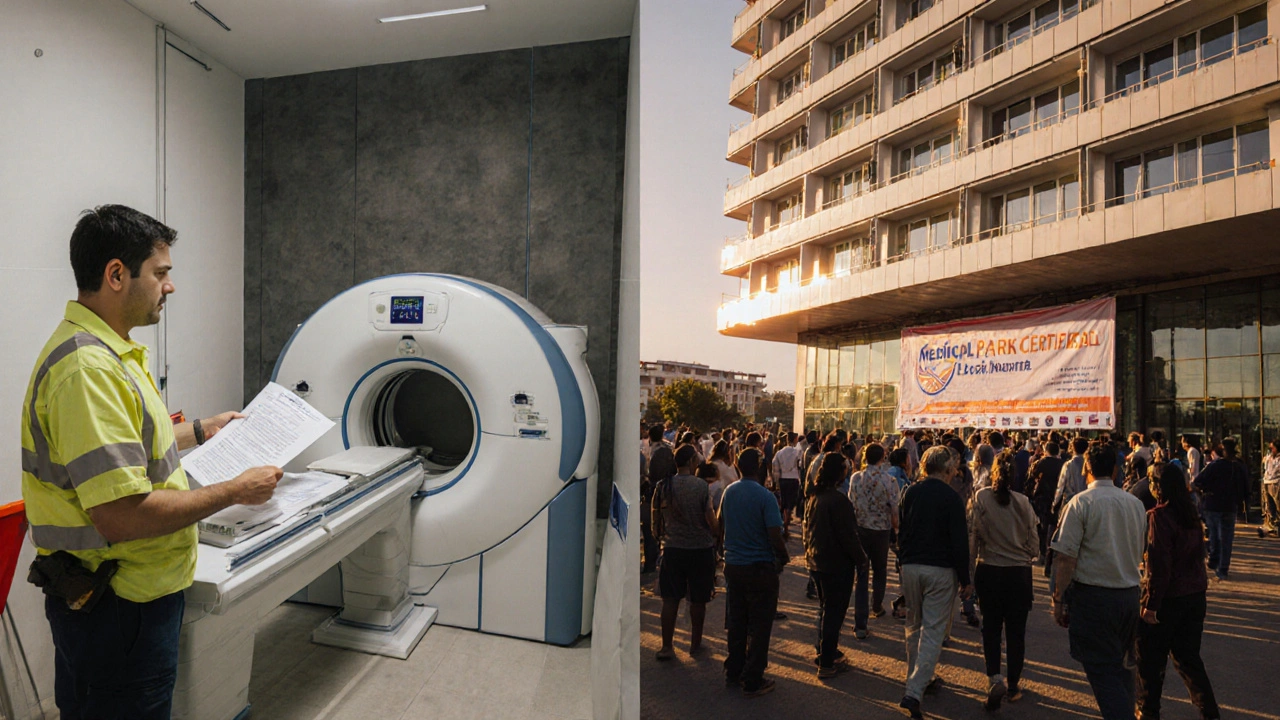
The new rules hit small clinics hard. A clinic in Antalya spent ₺780,000 just to meet environmental standards-22% of its annual revenue. “We didn’t know we needed a noise barrier around our MRI room,” the owner said. “Now we’re taking out a loan.”
Meanwhile, big hospital chains like Medical Park and Acıbadem are thriving. They had the resources to hire compliance officers, upgrade IT systems, and train staff. Their international patient volume rose 19% in the first six months after the law took effect. Their USHAŞ certification became a marketing tool. “Patients ask for us by name now,” said one administrator. “They trust the badge.”
Medical tourism agencies also saw big changes. Before 2025, they had to be registered as A-group travel agencies-a requirement that forced them to handle hotel bookings and flights. Now, they only need USHAŞ certification. That cut their paperwork by 30%. “We used to spend half our time on travel logistics,” said Fatma Demir of MedTour Turkey. “Now we focus on patient care.”
The Hidden Cost of Speed
One of the most controversial parts of the 2025 reforms is the timeline. Clinics had to get complication insurance by December 31, 2025-but full accreditation wasn’t due until December 31, 2026. That’s a year-long gap where a patient could be covered for emergencies but the facility might still be operating without full compliance.
Dr. Mehmet Arslan from TESEV called it “a regulatory blind spot.” “What if a patient has a reaction to a drug in January 2026, and the clinic hasn’t passed the environmental inspection yet?” he asked. “Who’s liable?”
The Ministry says it’s a transition buffer. Critics say it’s a gamble with patient safety.
What’s Next? AI, Cannabis, and Regional Equity
The next wave is already coming. In August 2025, Turkey launched its AI in Health Directorate. They’re testing algorithms that can predict post-op complications from patient data. If it works, it could become mandatory in all certified clinics by 2027.
Also under review is a draft law to legalize cannabis-derived medical products. If passed, Turkey could become the first Muslim-majority country with a regulated medical cannabis market. The Ministry estimates this could add $300 million to the health tourism economy by 2028.
And then there’s the geography problem. Istanbul and Ankara have 58% of private hospitals. Eastern Anatolia, home to 22% of the population, has just 12%. The new licensing rules now give extra points to clinics applying in underserved regions. In Q1 2025, 73% of new applications came from those areas. Whether they’ll get the staff to run them is another question.
Why This Matters Beyond Turkey
Turkey isn’t just fixing its own system. It’s showing the world how a middle-income country can build a high-standard health tourism model without copying the U.S. or EU. It’s not about being the cheapest. It’s about being the most reliable. The USHAŞ registry isn’t just a tool-it’s a brand. And it’s working.
By 2026, Turkey expects 1.5 million medical tourists. That’s up from 1.14 million in 2024. The sector is now worth $1.37 billion and is projected to hit $2.1 billion by 2027. The growth rate? 24% annually. That’s faster than Thailand, India, or Germany.
Other countries are watching. Saudi Arabia is modeling its new health tourism program after Turkey’s. Egypt is considering a USHAŞ-style registry. Even Germany is debating whether to tighten its own advertising rules.
This isn’t just about licenses and forms. It’s about trust. And Turkey, for now, is winning it.
What is USHAŞ and why is it important for medical tourism in Turkey?
USHAŞ, or the Turkish Health Services Social Security Institution, is the central authority that issues and manages the International Health Tourism Authorisation Certificate. Before 2025, medical tourism was handled by a patchwork of travel agencies and local health offices. Now, USHAŞ acts as the single, government-backed verification system. All clinics and intermediaries must be certified through USHAŞ to legally treat international patients. This gives patients a public, searchable database to confirm a facility’s legitimacy, insurance coverage, and compliance status-something no other major medical tourism destination offers at this level.
Can any clinic in Turkey treat international patients now?
No. Only clinics with the International Health Tourism Authorisation Certificate from USHAŞ can legally treat international patients. This applies to all facilities, whether they’re large hospitals in Istanbul or small clinics in Antalya. The certificate requires proof of staffing, environmental compliance, insurance, and telemedicine readiness. Clinics without this certification can still treat Turkish citizens, but they cannot advertise to or accept patients from abroad.
What are USBS systems and why are they mandatory?
USBS stands for Unified Health Services Platform. These are Ministry-approved telemedicine software systems that must be used by all Turkish healthcare providers offering remote consultations to international patients. They are mandatory because they connect directly to e-Nabız, Turkey’s national electronic health record system. This ensures patient data is secure, encrypted, and legally compliant. Only USBS platforms can issue e-prescriptions and e-reports. Using apps like Zoom or WhatsApp for medical consultations is now illegal under Turkey’s 2025 advertising and telemedicine rules.
How has Turkey’s regulation affected physician staffing?
Turkey now requires private hospitals to employ at least four clinical specialists, with 75% of those positions filled within two years. Hospitals over 25,000 m² must double that number. The biggest change came with Law No. 7557, which limits physicians to working at only two facilities. While this was meant to protect public hospitals from staff drain, it’s created shortages in underserved regions. Many clinics in Eastern Anatolia are struggling to fill specialist roles, and some have had to delay opening new services.
Is medical tourism in Turkey growing faster than in other countries?
Yes. In 2024, Turkey welcomed 1.14 million medical tourists, a 24% increase from the year before. That’s faster than Thailand (12%), India (15%), and Germany (8%). The new 2025 regulations are a major driver. The USHAŞ certification system has increased patient trust, and the removal of the A-group travel agency requirement has lowered barriers for specialized medical facilitators. By 2026, Turkey expects to hit 1.5 million international patients, and the sector is projected to grow to $2.1 billion by 2027.