Emergency Contraception Effectiveness Calculator
Emergency Contraception Effectiveness Calculator
Enter the number of hours since unprotected sex to see which emergency contraception methods are effective and how well they work at this time.
Emergency contraception isn’t a backup plan-it’s a medical tool that’s been saving lives for nearly 60 years. Yet most people still don’t know how it works, where to get it, or why access is so uneven. If you’ve ever wondered whether Plan B really works after 72 hours, or why a pharmacy might say it’s out of stock when the shelf behind the counter is full, you’re not alone. The truth about emergency contraception is messy, political, and deeply personal.
The Science Behind Emergency Contraception
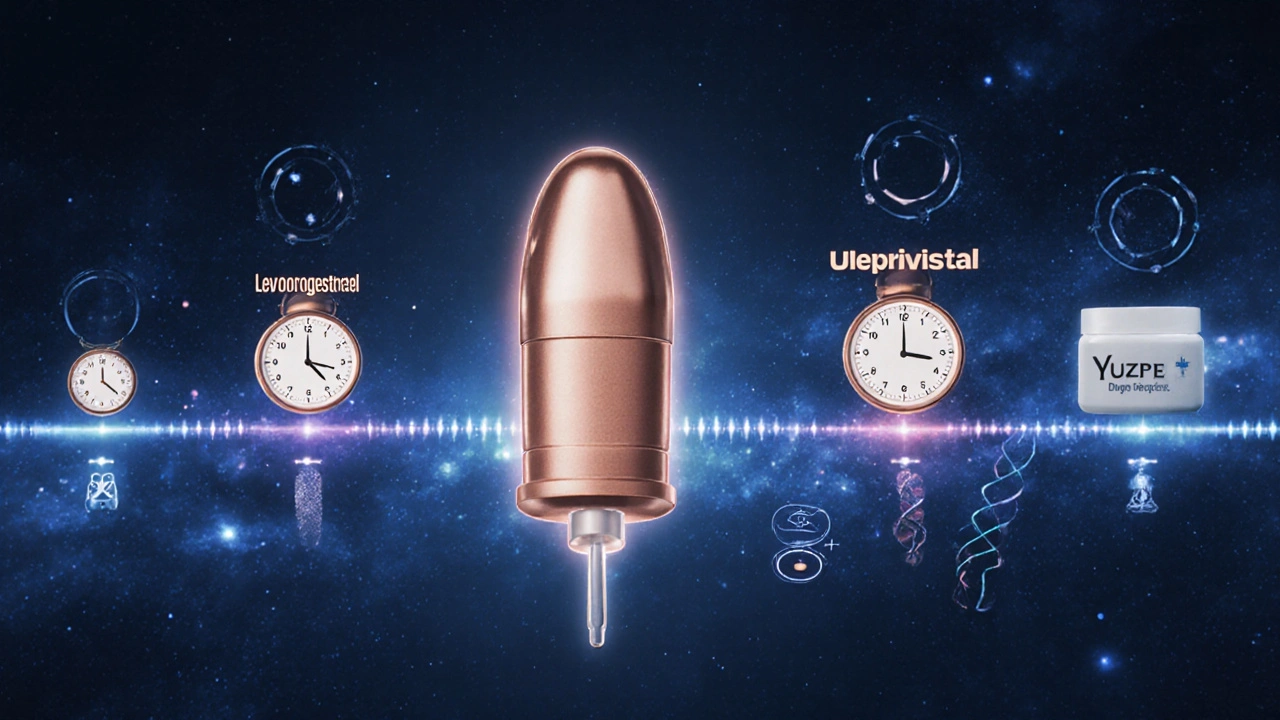
Emergency contraception doesn’t cause abortions. It prevents pregnancy before it starts. There are four proven methods: pills with levonorgestrel, pills with ulipristal acetate, the Yuzpe method (old-school estrogen-progestin combos), and the copper IUD. Each works differently, but none disrupt an existing pregnancy.
The copper IUD is the most effective. Inserted within five days of unprotected sex, it’s more than 99% effective at preventing pregnancy. That’s better than any pill. It also doubles as long-term birth control-lasts up to 12 years. But it requires a clinic visit, which isn’t always easy.
Levonorgestrel pills, like Plan B One-Step, are the most common. Taken within 72 hours, they’re about 85% effective. That drops to 58% if you wait until day 5. Ulipristal acetate (Ella) works longer-up to 120 hours-and keeps its 85% effectiveness throughout. It’s stronger, but you need a prescription in most places.
The Yuzpe method, using regular birth control pills in high doses, was the first human-tested approach in the 1970s. But it causes nausea in over half the users. Today, it’s mostly a last-resort option in countries where newer pills aren’t available.
Who Made Emergency Contraception Possible?
The story starts in the 1920s with animal experiments. Researchers found estrogen could stop ovulation after sex. But it wasn’t until 1966 that doctors at Yale used high-dose estrogen pills on women after rape. That was the first real proof it could work in humans.
In 1972, Canadian doctor Albert Yuzpe figured out how to combine estrogen and progestin in lower doses. That cut side effects and made the method more tolerable. Then in the 1970s, scientists tested different doses of levonorgestrel-eventually landing on the 1.5 mg single dose we use today.
The real breakthrough came in 1998 when the World Health Organization ran a massive trial comparing Yuzpe and levonorgestrel. Levonorgestrel was twice as effective and had way fewer side effects. By 2001, companies stopped selling combined estrogen-progestin emergency pills like Preven and Schering PC4 in the U.S. and U.K.
The copper IUD’s role in emergency contraception was discovered by accident. Doctors noticed women who had IUDs inserted after unprotected sex rarely got pregnant. That led to official recommendations in the 2000s. Today, it’s the gold standard for effectiveness.
Access Is Still a Nightmare
Plan B has been available over-the-counter since 2013-no ID, no prescription, no age limit. Sounds simple, right? But in 2022, a Guttmacher survey found 27% of women aged 18-29 couldn’t get emergency contraception when they needed it.
Why? Three big reasons: stockouts, pharmacist refusals, and cost.
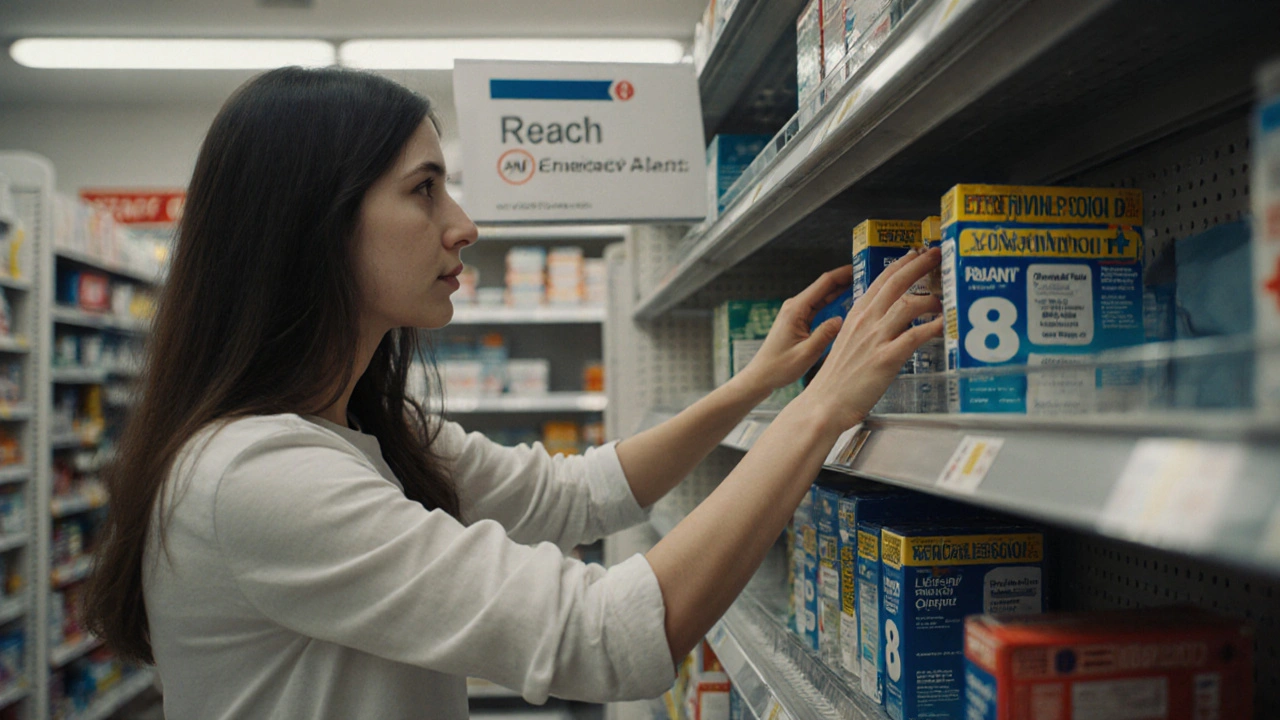
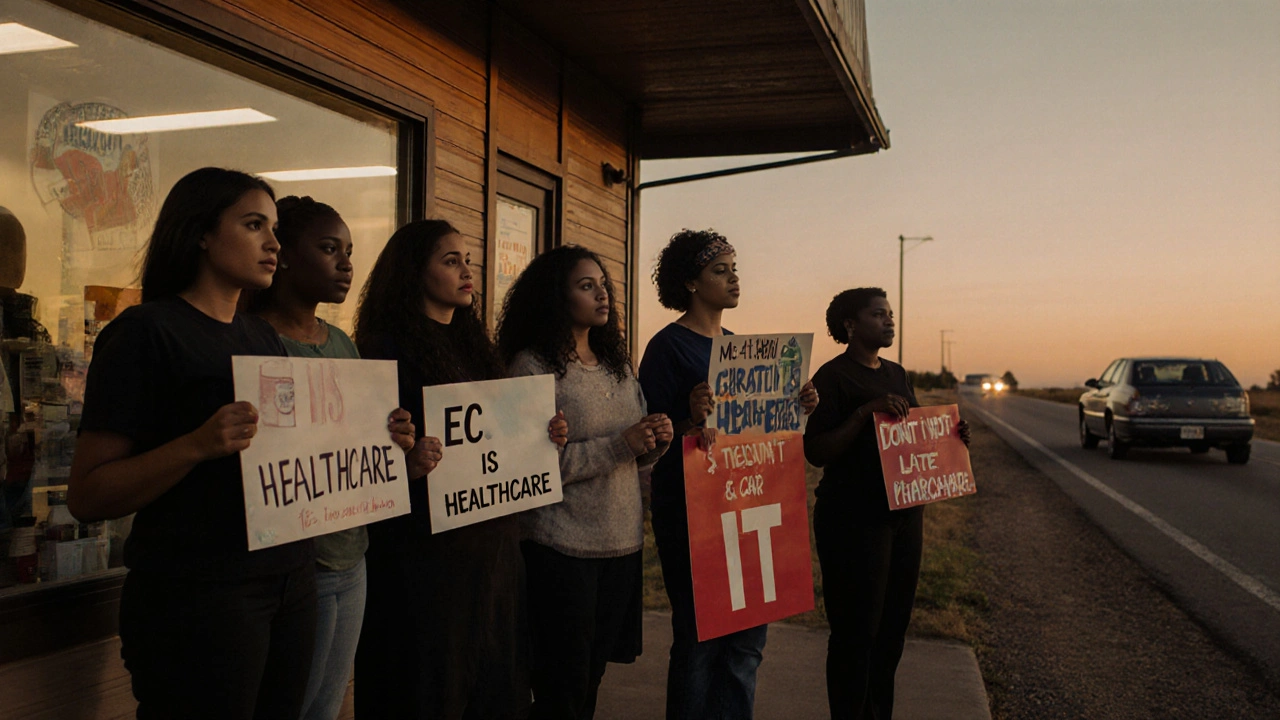
In rural towns, pharmacies often don’t keep EC on the shelf. One Reddit user visited three stores in her small town. Two claimed they were out. The third said they didn’t carry it. All three had boxes behind the counter.
Seventeen states have laws letting pharmacists refuse to dispense EC based on personal or religious beliefs. Even if the law says they must refer you to someone else, many don’t. In some places, you’re forced to drive 40 miles to the next town.
Cost is another barrier. The Affordable Care Act says insurance must cover EC without a copay. But in 2022, 23% of plans still found loopholes. One woman paid $50 out of pocket even though she had insurance. Her provider said EC wasn’t covered under her "preventive care" plan-even though the CDC says it is.
Who Uses Emergency Contraception-and Who Doesn’t?
Eighty-nine percent of sexually active women have heard of emergency contraception. Only 22% have ever used it.
Usage spikes between ages 20 and 24. That’s when most women are sexually active but not yet on long-term birth control. Women over 40 are the least likely to use it-only 7% have. That’s not because they’re not having sex. It’s because they’re not told it’s an option.
Studies show that college women who’ve had abortions often didn’t know EC existed. One doctor at Ibis Reproductive Health found only one in three knew it was an option. That’s not ignorance-it’s a failure of education.
Even when women know about EC, they often don’t know how soon to take it. Only 11.6% of women correctly knew ulipristal acetate works up to five days after sex. Most think it’s 72 hours. That misunderstanding costs lives-literally.
Policy Is Changing-Slowly
In 2022, California passed a law requiring pharmacies with five or more locations to stock EC and display signs saying where to find it. That’s a big step. Before that, some stores kept it locked behind the counter or hid it in the back.
The FDA approved Opill in April 2022-the first daily birth control pill you can buy without a prescription. It’s not emergency contraception, but it’s part of a larger shift: making birth control easier to get.
But the Dobbs decision in 2022 changed everything. Twenty-three states have passed laws restricting abortion. Some of those laws are written so vaguely, doctors fear prescribing EC could get them sued. That’s chilling. Some clinics now avoid offering EC altogether, even though it’s legal.
The global emergency contraception market is growing fast-projected to hit $3.24 billion by 2029. But that growth isn’t helping the people who need it most. In the U.S., 19 million women live in "contraceptive deserts"-counties with no public provider for birth control of any kind.
What You Need to Know Right Now
If you need emergency contraception, here’s what to do:
- Take levonorgestrel (Plan B) within 72 hours. It’s the easiest to find.
- If it’s been more than 72 hours, ask for ulipristal acetate (Ella). You’ll need a prescription, but it works up to 120 hours.
- If you can get to a clinic within five days, ask about the copper IUD. It’s the most effective and lasts for years.
- Call 1-888-NOT-2-LATE. The hotline connects you to nearby providers who can help.
- If a pharmacy says they’re out of stock, ask them to order it. Many will.
- If a pharmacist refuses, ask for another one. You have rights.
Don’t wait. Every hour counts. The sooner you act, the better the odds.
What’s Next?
The future of emergency contraception depends on two things: access and awareness.
More states need laws like California’s-requiring pharmacies to stock EC. Insurance companies need to stop dodging their obligations. Doctors need to talk about EC like it’s normal-not like it’s a secret.
And you? If you’ve ever used it, tell someone. If you’ve never used it, learn how. Emergency contraception isn’t about politics. It’s about control over your own body-and that’s something no law should take away.