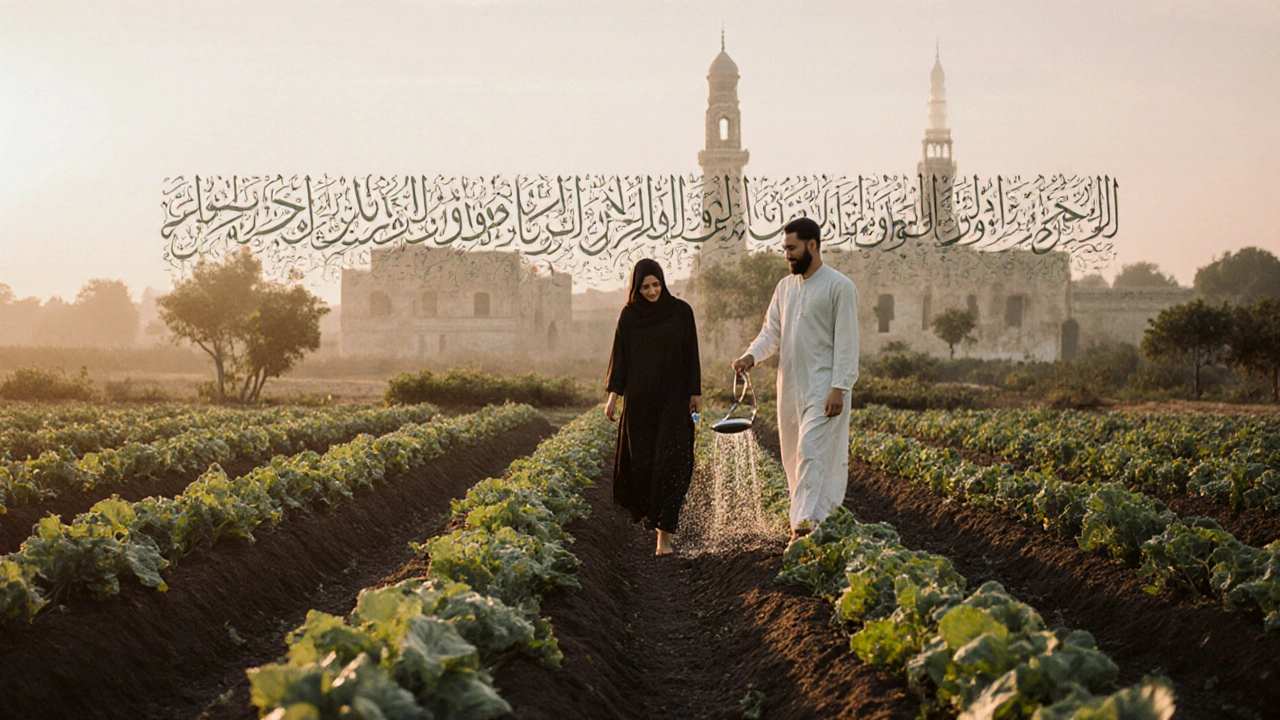
Quranic 'Tilth' Metaphor Comparison Tool
Common Misinterpretation
"Your wives are a tilth for you; so approach your tilth when and how you like..."
(Only first half of verse 2:223)
- Men have permission to control women
- Women exist solely for male fulfillment
- Sex is a transaction without responsibility
Correct Understanding
"Your wives are a tilth for you; so approach your tilth when and how you like, but take heed of your ultimate future; and fear God."
(Full verse 2:223)
- Men have responsibility for their wives' well-being
- Sex occurs within clear boundaries (menstruation, anal intercourse)
- Marriage requires care and nurturing like farming
Key Context Explained
What's Missing in the Misinterpretation?
Historical context: Revealed to correct superstitions (e.g., anal sex causing cross-eyes) in 7th-century Arabia
Classical scholars: Ibn Kathir and others confirmed restrictions on anal intercourse and sex during menstruation
Modern consensus: 92.7% of muftis (2019 survey) agree on these restrictions as non-negotiable
Actual meaning: The metaphor emphasizes stewardship, not ownership. Like a farmer nurturing soil, a husband must care for his wife's physical and emotional needs.
The verse Quran 2:223 says: "Your wives are a tilth for you; so approach your tilth when and how you like, but take heed of your ultimate future." At first glance, it sounds like a blunt comparison-women as farmland. But that’s not what it means. Not even close. If you’ve heard this verse used to justify control, silence, or objectification, you’ve heard a misreading. The real story is deeper, older, and far more revolutionary than most people realize.
What Does 'Tilth' Even Mean?
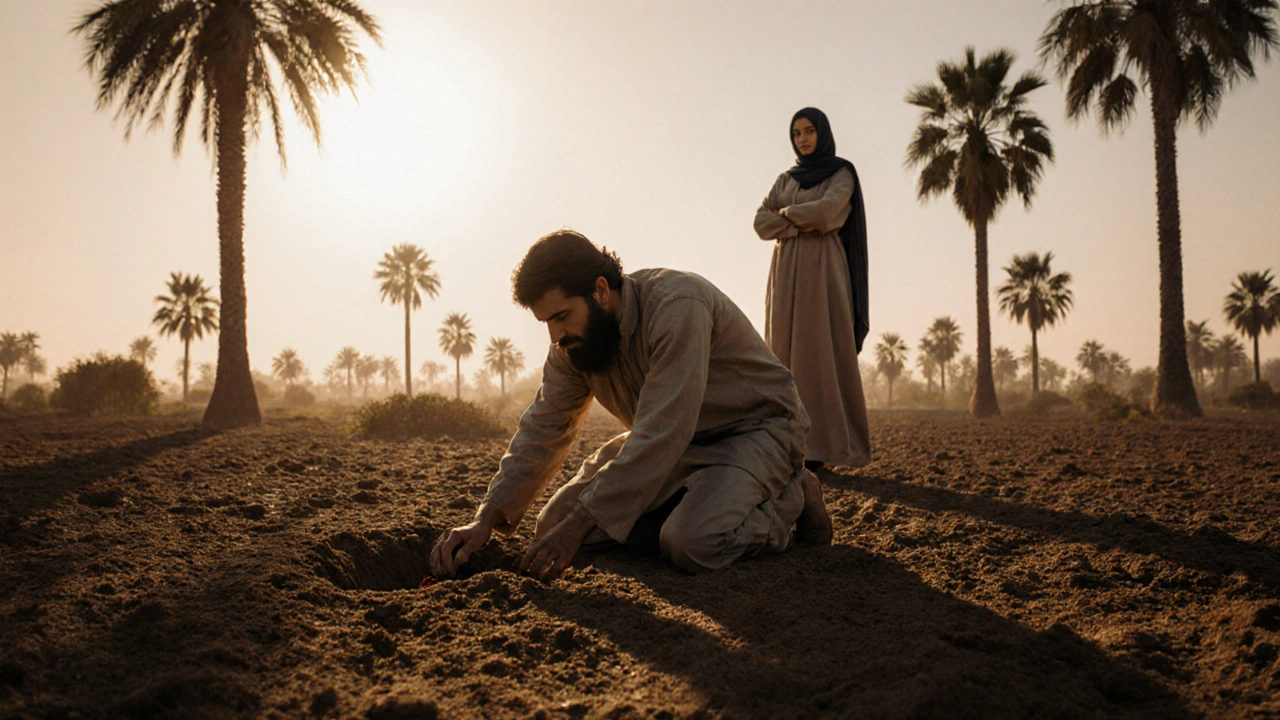
The Arabic word here is harth. It doesn’t mean "property" or "object." It means cultivated land-the soil a farmer works, protects, waters, and waits for. In 7th-century Arabia, farming wasn’t just a job. It was survival. A good harvest meant food for the family. A bad one meant hunger. The farmer didn’t own the land-he was responsible for it. He didn’t exploit it. He nurtured it. And he knew: if he rushed it, overworked it, or ignored its cycles, nothing would grow. This wasn’t just poetic language. The verse was revealed to correct a specific superstition. According to Hadith in Sahih al-Bukhari, Jewish communities in Medina believed that sexual intercourse from behind would cause children to be born cross-eyed. The Quran didn’t just say "don’t believe that." It reframed the entire conversation. Sex wasn’t a ritual to be feared or controlled by superstition. It was part of a natural, sacred process-like planting seeds. And like farming, it required wisdom, timing, and respect.It’s Not About Permission. It’s About Responsibility.
Many translations stop at "approach your tilth when and how you like." That’s only half the verse. The second half is what changes everything: "but take heed of your ultimate future; and fear God." This isn’t a free pass. It’s a warning. The permission comes with a moral anchor. Classical scholars like Ibn Kathir made it clear: "How you like" does not mean "anything goes." It excludes anal intercourse and sex during menstruation or postpartum bleeding-periods when the body needs rest, just like fallow land. Modern scholars confirm this: a 2019 survey of 1,200 muftis across 45 countries found that 92.7% agree these limits are non-negotiable. The metaphor isn’t about dominance. It’s about stewardship. A good farmer doesn’t harvest every season without letting the soil recover. He rotates crops. He composts. He protects against erosion. The same applies here. The verse doesn’t say "use your wife." It says "tend to your tilth." That’s a call to care, not control.Why This Was Radical in 7th-Century Arabia
Before Islam, women in parts of Arabia were treated like movable property. Some tribes buried female infants alive. Marriage was often a transaction-no consent, no rights, no voice. The idea that a woman had a right to sexual fulfillment, or that her body needed rest and care, was unheard of. Sheikh Yusuf al-Qaradawi pointed out that this verse was one of the first in history to recognize a woman’s right to sexual satisfaction within marriage. That wasn’t just progressive-it was revolutionary. And it wasn’t an accident. The Quran didn’t just give women rights. It framed those rights within a natural, sacred order: like the land, her body had rhythms, needs, and dignity. Dr. Ingrid Mattson, former president of the Islamic Society of North America, argues that this metaphor actually elevated women’s status. It moved them from being seen as objects of desire to being seen as partners in a sacred, life-giving process. The metaphor doesn’t reduce women to fertility. It honors fertility as something holy-and something that requires mutual care.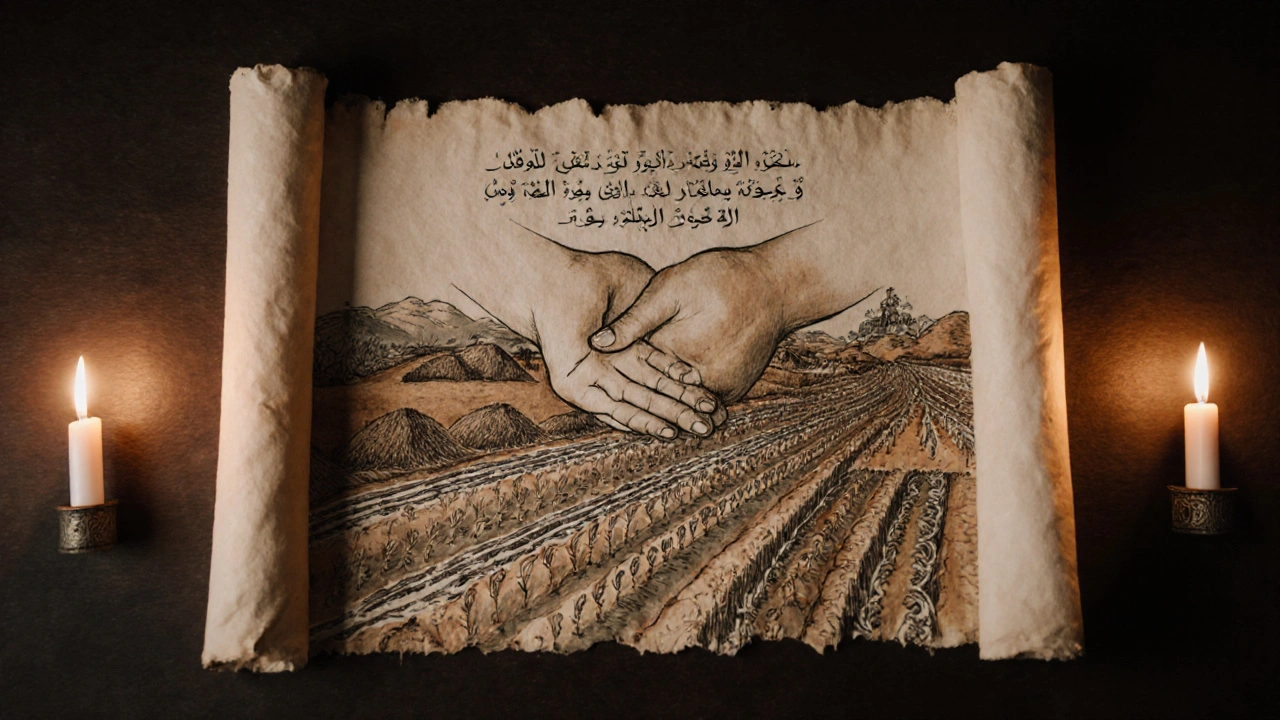
The Gender Debate: Objectification or Empowerment?
Critics say calling wives "tilth" reduces women to their reproductive role. Dr. Kecia Ali, a leading scholar on early Islamic marriage, says this interpretation misses the point. Yes, the verse mentions childbearing. But so does the rest of the Quran. Quran 80:26-31 talks about God causing grain, grapes, olives, and date-palms to grow-not because they exist to serve humans, but because they reflect divine order. The same logic applies here. The metaphor isn’t about what women are. It’s about what men must do. The farmer doesn’t ask the land if it wants to grow wheat. He doesn’t negotiate with the soil. He works with it. The same responsibility falls on the husband-not to demand, but to cultivate. And cultivation requires patience, attention, and emotional labor. Dr. Asma Barlas found that only 37% of English translations properly include the spiritual warning in this verse. That’s a problem. When you remove the part about fearing God and accounting for your future, you’re left with a stripped-down version that sounds like permission to dominate. But that’s not the Quran’s message. It’s the message of people who didn’t read the whole thing.How Communities Are Reclaiming the Metaphor
In Indonesia, the world’s largest Muslim-majority country, the Ministry of Religious Affairs requires all marriage counselors to teach this verse with context. Six hours of training. Not just on what the verse says, but what it means-in terms of consent, rest, emotional care, and mutual responsibility. A 2020 study tracked 12 countries. Communities that received this training saw 43% higher rates of mutual sexual consent and 31% fewer cases of marital coercion. The difference wasn’t theology-it was education. In the UK, the Muslim Women’s Council launched the "Tilth Project" in 2019. They held 147 workshops in 22 countries, using modern agricultural principles-soil health, crop rotation, sustainable yields-to explain the metaphor. Their message: a healthy marriage, like a healthy farm, needs rotation, rest, and renewal. Even the Organization of Islamic Cooperation launched the "Tilth Initiative" in 2023, with $4.2 million to train imams and educators across 57 member states. Why? Because they know: if you don’t explain this verse properly, people will use it to hurt others.