Social Boundaries Simulator: Classical Athens
Instructions: You are an observer in Classical Athens. Analyze the following social scenarios and determine if the behavior is Noble/Acceptable or a Social Transgression based on the rules of *paideia* and social honor.
Loading scenario...
Simulation Complete
You have navigated the complex social boundaries of the Athenian polis.
Correct Judgments
Quick Summary: Key Takeaways
- Pederasty was an elite social tool for mentorship and education (paideia), not a sexual orientation in the modern sense.
- The relationship involved a clear hierarchy between the erastes (lover/mentor) and the eromenos (beloved/student).
- Strict social boundaries existed to prevent predatory behavior and the "prostitution" of free citizens.
- The practice varied wildly across Greece, with Sparta and Crete having much more formalized or mandatory systems.
- The focus was on the active-passive dynamic rather than a gay-straight binary.
The Dynamic of the Erastes and Eromenos
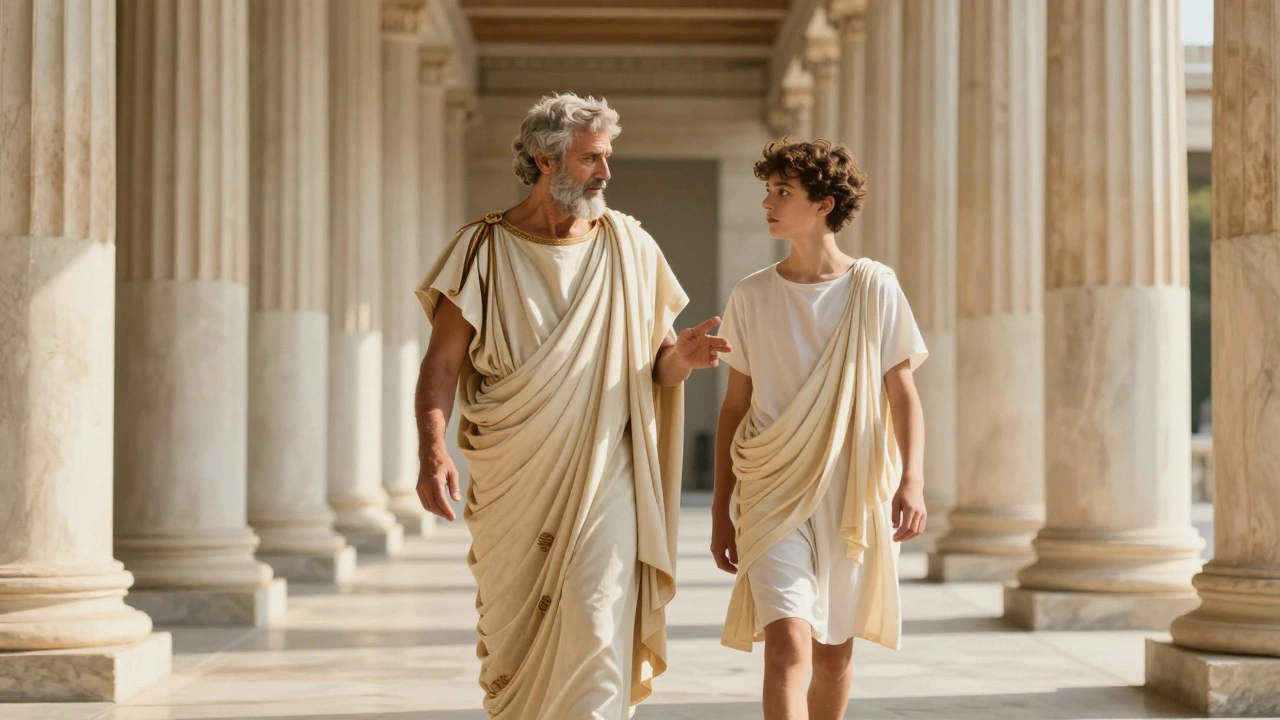
To understand how this worked, we have to look at the roles. The relationship was a dyad consisting of the Erastes (the older partner) and the Eromenos (the younger partner). The erastes was the pursuer. He would seduce the boy, but his role went far beyond romance. He acted as a guide, teaching the youth about politics, virtue, and how to behave like a gentleman in the polis.
In return, the eromenos provided companionship and a specific kind of affection. But there was a catch: the boy had to maintain a level of modesty. If a youth was too eager or actively chased adult men, he risked being labeled as promiscuous. In a society where reputation was everything, being seen as "too easy" could lead to social ostracization. The goal was for the boy to be a passive recipient of mentorship, not a seeker of sexual gratification. This modesty was highly valued, and the physical expression of the relationship was often carefully managed. For example, intercrural intercourse (sex between the thighs) was seen as a respectful way for the eromenos to show gratitude without compromising his dignity.
Education and the Path to Manhood
Pederasty wasn't just about Eros; it was a core part of Paideia, the system of education and training for the Athenian elite. The relationship acted as a social accelerator. By being paired with an experienced citizen, a teenage boy learned the unwritten rules of the upper class. He was taught how to navigate the assembly, how to argue a point in court, and how to embody arete (excellence).
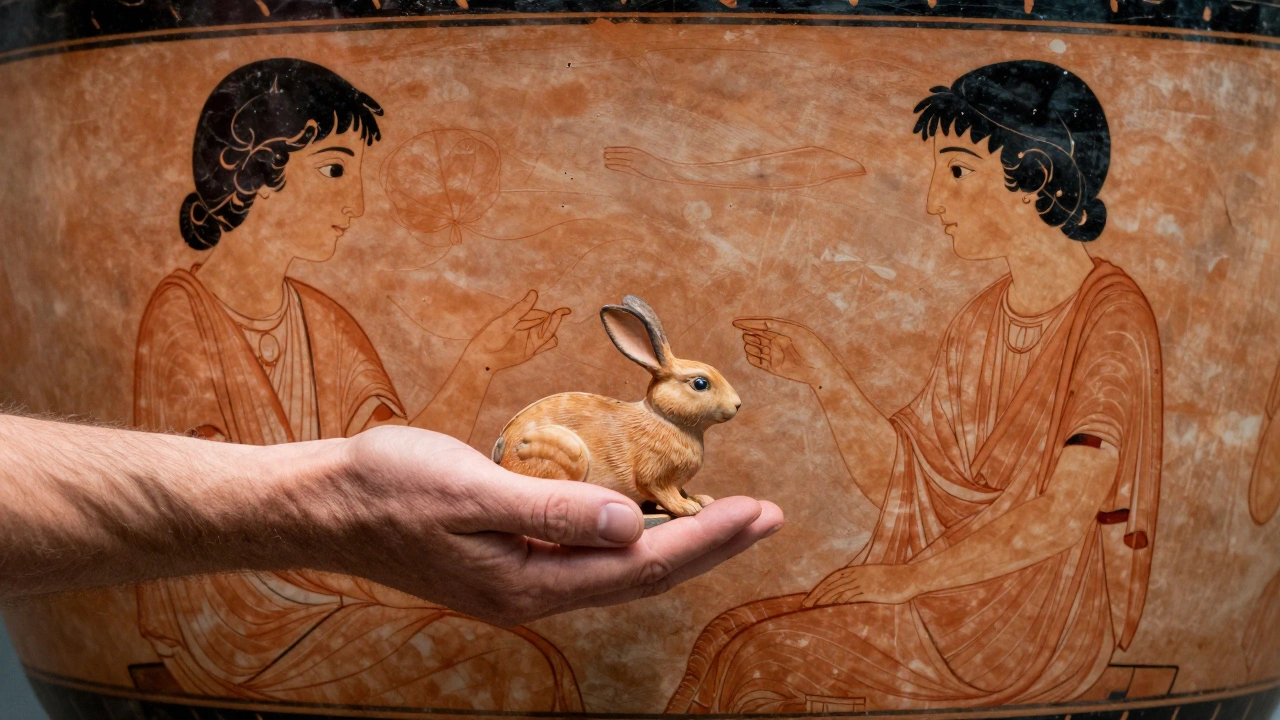
This mentorship often involved symbolic gestures. If you looked at Athenian pottery from the era, you'd see common gifts like roosters or rabbits being passed from the older man to the youth. These weren't just random pets; they were tokens of affection and markers of a budding social bond. This emotional and intellectual investment is what scholars believe fueled the "Greek miracle," as these relationships released creative and intellectual forces that pushed the boundaries of philosophy and art. Plato, for instance, spent a significant portion of his dialogues exploring the idea that this kind of love could lead a man toward a higher understanding of Truth and Beauty.
Drawing the Line: Social Boundaries and Taboos
While it might seem permissive to us today, the Athenians were obsessed with boundaries. The primary distinction was between a legitimate pederastic bond and predatory behavior. If an adult man used force or coercion, he was viewed with disgust. Society frowned upon "predators" who hunted boys purely for sexual pleasure without any intent to mentor or educate them.
There were also very specific "no-go" zones. The Gymnasium-the heart of athletic training where men exercised nude-had strict regulations. While it was the primary place for an erastes to spot a potential eromenos, actual sexual arrangements within the gymnasium were forbidden. Furthermore, age played a role in visibility: men over 40 were generally not allowed in the gymnasium when young boys were present. This prevented the image of an "old man" chasing children, which would have been seen as pathetic or creepy rather than noble.
Then there was the issue of status. These rules applied only to free citizens. The sexual abuse of enslaved people was common and largely ignored by the legal system. The strict etiquette of pederasty was a luxury of the elite; it was about the honor of free men, not the protection of all bodies.
| City-State | Nature of Relationship | Primary Goal | Key Characteristic |
|---|---|---|---|
| Athens | Elite/Optional | Education & Social Status | Strict focus on modesty and mentorship |
| Sparta | Institutional/Mandatory | Warrior Training | Pairing with adult warriors for mutual benefit |
| Crete | Ritualized | Social Initiation | "Ritual abduction" approved by the father |
| Thebes | Military/Social | Emotional Tempering | Pederastic couples in the Sacred Band |
Regional Variations: Not All Greece Was Athenian
If you stepped outside the walls of Athens, the rules changed. In Sparta, pederasty was less about a private choice and more about a state requirement. Young Spartans were paired with adult warriors to ensure they were properly socialized into the military machine. Because Spartan society made it incredibly difficult for men to interact with women before marriage, these bonds provided the primary source of emotional and sexual companionship.
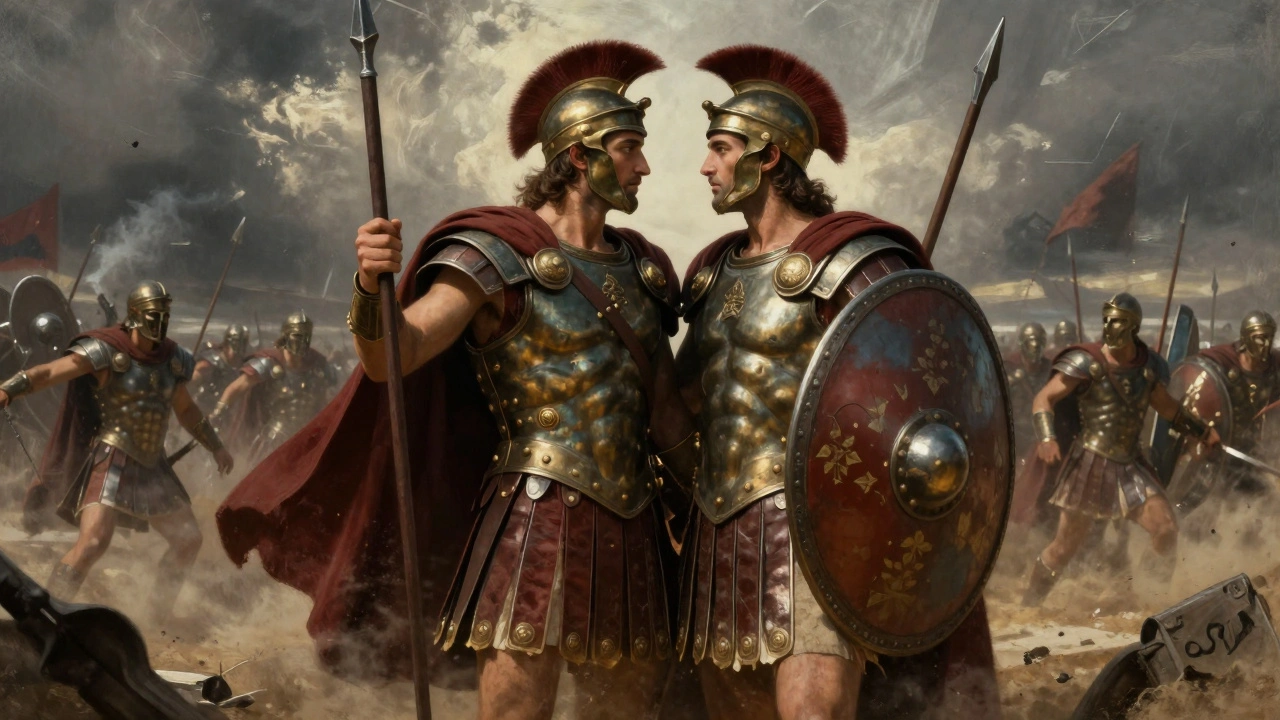
Over in Crete, they took a more theatrical approach. They practiced something called "ritual abduction." An erastes wouldn't just ask for a boy's hand; he would essentially kidnap him. However, this wasn't a crime-it was a rite of passage, provided the boy's father agreed that the suitor was a man of enough honor to deserve the youth. Meanwhile, in Thebes, the practice was used to "soften" the natural fierceness of young men, turning raw aggression into disciplined loyalty. This reached its peak with the Sacred Band of Thebes, an elite military unit made up entirely of pederastic couples. The logic was simple: a man would fight harder and more bravely to protect his lover than he would for a random comrade.
The Gender Gap and Modern Misconceptions
One of the biggest mistakes we make today is trying to apply the labels of "gay" or "straight" to the Athenians. They didn't think in terms of sexual orientation. Instead, they thought in terms of power and role: active versus passive. To be the erastes was to be the active, dominant party-the role of the citizen-man. To be the eromenos was to be the passive party, a temporary state the boy would eventually outgrow as he entered full manhood.
While we focus heavily on men, there are hints that this happened with women too, though far less frequently and with less documentation. In Sparta, where girls had more public education and athletic training than Athenian girls, some sources suggest that high-ranking older women might select girls aged 15 or 16 as partners for educational purposes. This mirrors the male system, suggesting that the link between age-gap relationships and "mentorship" existed across gender lines in certain cultures.
Much of what we know today comes from the work of Kenneth Dover, whose 1978 book Greek Homosexuality changed the game by analyzing everything from Plato's dialogues to the explicit scenes on ancient vases. While modern scholars still argue over how common these practices were-and whether Plato was describing reality or just a philosophical ideal-it's clear that pederasty was a complex tool for maintaining the social hierarchy of the ancient world.
Was pederasty considered "homosexuality" in Ancient Athens?
No. The modern concept of sexual orientation (being gay, straight, or bisexual) didn't exist. Athenians viewed sexuality through the lens of power and social roles. The important distinction was whether a person was the active partner (the adult) or the passive partner (the youth). A man was expected to be an erastes to a boy and later a husband to a woman.
Did the boys consent to these relationships?
Consent was a nuanced issue. While the eromenos was a minor by today's standards, Athenian law and social norms recognized consent as a factor. However, the power imbalance was inherent. If a relationship was seen as forced or predatory, it was socially condemned. The ideal was a voluntary bond based on mutual attraction and the promise of education.
What happened to the relationship once the boy became a man?
The relationship was intended to be transitional. Once the eromenos grew a beard (a sign of manhood), he was expected to transition from the role of the beloved to that of the lover. He would eventually become an erastes himself and marry a woman to produce legitimate heirs for the city.
Was this practice common across all social classes?
In Athens, it was largely an elite pursuit. The luxury of time required for a mentorship-based relationship-learning philosophy, politics, and art-was only available to the aristocracy. Lower-class citizens didn't typically participate in this formalized version of pederasty.
How did the law handle "criminal prostitution"?
If a free youth openly sold his body for money or pursued adult men purely for sexual gain, he could be charged with criminal prostitution. This was a serious offense because it signaled that the youth had abandoned his dignity and his duty to the polis, which could lead to the loss of certain political rights.
Next Steps for Understanding Greek Society
If you want to dig deeper into how the Athenians viewed the world, you might want to explore the concept of Arete (the pursuit of excellence) or look into the Socratic Method to see how mentorship shaped Greek philosophy. For those interested in military history, researching the Sacred Band of Thebes will show you how these intimate bonds were weaponized on the battlefield. If you're curious about the legal side, looking into the Athenian Law Courts of the 4th century BCE provides a glimpse into how they actually penalized social transgressions.