
Venus Evolution Timeline
How Venus Transformed in Ancient Rome
Explore how Venus evolved from a garden goddess to a symbol of Roman imperial power through key historical moments.
Most people think of Venus as the Roman goddess of love and beauty-soft, romantic, tied to roses and springtime. But if you walked through ancient Rome, you’d see her image everywhere: on coins, on temple walls, even in soldiers’ barracks. She wasn’t just about romance. She was about victory. About birth. About the survival of the state itself. To understand Venus in Rome, you have to let go of the idea that love and war are opposites. In Roman eyes, they were two sides of the same coin-and fertility was the force that held them together.
The Origins: From Garden Goddess to State Symbol
Venus didn’t start as a goddess of empires. She began as a quiet, local deity tied to the land. Early Romans, farming their small plots near the Tiber, honored her as a protector of gardens, orchards, and vineyards. Her earliest festival, the Vinalia Rustica in August, was a simple ritual to bless the grape harvest. No armies marched to her name. No poets sang of her conquests. She was the quiet force behind the fruit that fed the family, the wine that warmed the winter nights. That changed during the Second Punic War. Rome was losing. Hannibal’s armies were crushing legions across Italy. In 215 BCE, desperate for divine help, Rome brought in a foreign cult-the worship of Venus Erycina from Sicily. This wasn’t just a new prayer. It was a strategic move. The cult of Venus Erycina came with a reputation: she was linked to Aphrodite, the Greek goddess of love, but also to sacred prostitution and temple rituals tied to fertility and protection. The Romans didn’t just adopt her-they repurposed her. They built a temple to her on the Capitoline Hill, the most sacred spot in the city. Suddenly, a goddess of gardens was standing at the center of Rome’s political power.Julius Caesar and the Birth of Venus Genetrix
The real transformation came with Julius Caesar. He didn’t just worship Venus-he claimed to be her direct descendant. His family, the gens Iulia, traced their lineage back to Iulus, the son of Aeneas, who in turn was the son of Venus. This wasn’t just family pride. It was political armor. In 46 BCE, Caesar built a temple to Venus Genetrix-the Mother Venus-in the heart of his new Forum. Inside stood a statue of her holding the Palladium, the sacred relic that supposedly guaranteed Troy’s survival and, by extension, Rome’s destiny. This was genius. By linking himself to Venus as the mother of Rome’s founders, Caesar wasn’t just claiming divine favor. He was saying: Rome’s strength doesn’t come from brute force alone. It comes from birth, from lineage, from the ability to create and sustain life. His enemies fought with swords. He fought with bloodlines. And in that temple, fertility wasn’t just about women having children-it was about the empire reproducing itself, generation after generation.Venus Victrix: When Love Became Victory
Around the same time, another form of Venus emerged: Venus Victrix, Venus the Victorious. Pompey dedicated a temple to her in 55 BCE after his eastern campaigns. Caesar, ever the showman, used her image on coins, showing her with a palm branch and a trophy. Soldiers wrote letters asking for her protection in battle. A 2018 study of 347 Roman military dedications found that nearly 1 in 6 referenced Venus Victrix-more than those dedicated to Mars, the god of war. How did a goddess of love become a patron of soldiers? The answer lies in Roman thinking. Victory wasn’t just about winning battles. It was about securing land, capturing women, taking slaves, expanding families. A successful general didn’t just bring back spoils-he brought back new people, new blood, new generations. Venus didn’t just bless love. She blessed the outcome of conquest: the children born to captive women, the new colonies founded on foreign soil, the families that grew from the spoils of war. In Pompeii’s House of the Vettii, a fresco shows Venus holding a shield while Cupid carries a military standard. It’s not a joke. It’s a statement. Love and war weren’t separate. They were intertwined. The same force that made a man fall for a woman could make an empire expand.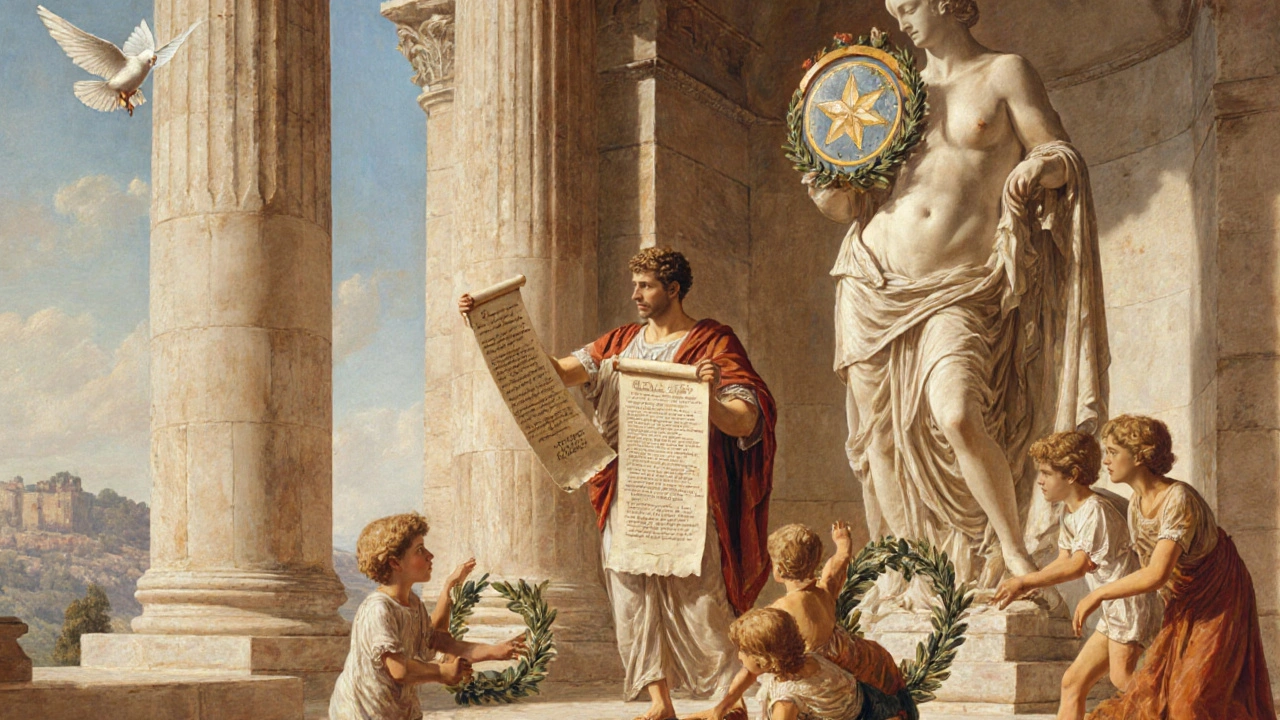
The Paradox of Venus Verticordia
But Venus wasn’t just about desire. She was also about control. In 114 BCE, Rome faced a crisis: elite women were accused of sexual misconduct. The Senate turned to Venus Verticordia-Venus the Changer of Hearts. A temple was built, and women were told to pray to her to restore modesty. Yet here’s the twist: the same goddess who was supposed to curb promiscuity was also honored by courtesans. Their festival, the dies meretricum, fell on April 23-the anniversary of the Colline Gate temple, built for Venus Erycina, where sacred prostitution was practiced. This wasn’t hypocrisy. It was realism. Roman society didn’t pretend women were pure or impure. They understood that fertility required both discipline and release. Venus Verticordia didn’t suppress desire. She redirected it. She made sure that desire served the state: producing legitimate heirs, maintaining social order, keeping the population growing. On April 1, during the Veneralia festival, her statue was carried to the men’s baths. Female attendants washed her with warm water and crowned her with myrtle. This wasn’t just a ritual. It was a metaphor: love, like water, needed cleansing. But it also needed renewal. The same goddess who protected chastity also protected the act that made chastity meaningful-sex leading to children.Augustus and the Imperial Myth
Caesar’s assassination didn’t end Venus’s rise. It made her stronger. Augustus, his adopted heir, turned her into the divine foundation of the Empire. The famous Prima Porta statue of Augustus shows him in military dress, but at his feet, Cupid rides a dolphin-symbolizing Venus’s birth from the sea. He’s not just a general. He’s the son of a god, the heir of Rome’s mother. Augustus didn’t just build temples. He built a narrative. Rome wasn’t just a city. It was a family. And Venus was its matriarch. Every child born in the empire, every new province added, every victory won-it was all part of her plan. She wasn’t just a goddess. She was the reason Rome endured.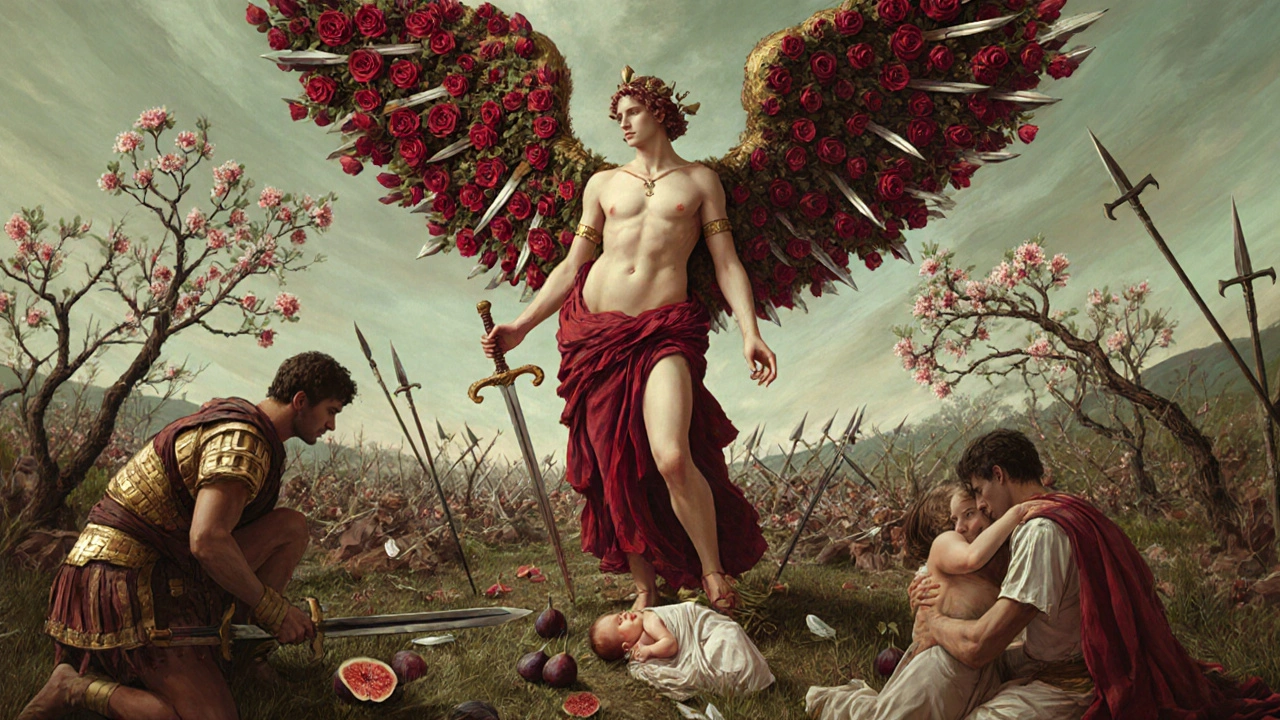
What the Evidence Really Shows
Modern scholars still argue over how much of this was real belief and how much was propaganda. Some, like historian Mary Beard, say most Romans still saw Venus as a goddess of gardens and love. The war connections? Just political theater. Others point to the sheer number of temples-287 found so far-and the fact that they cluster near military frontiers, not just farmlands. The truth? It was both. For farmers, Venus was the one who made the figs grow. For soldiers, she was the one who kept them alive. For senators, she was the ancestor who gave them the right to rule. She was never just one thing. And that’s why she lasted. When Hadrian finished his temple to Venus in 135 CE, he didn’t build it for war. He didn’t build it for love. He built it because Venus had become Rome itself. Her power wasn’t in one aspect-it was in the way she held them all together: birth, beauty, victory, land, family, empire.Why It Still Matters
We still use symbols to link power with fertility today. Think of national flags with rising suns, corporate logos with growing trees, political campaigns with images of families. We don’t call them gods, but we still believe that a nation’s strength comes from its ability to reproduce-not just in bodies, but in culture, in loyalty, in legacy. Venus didn’t just symbolize fertility. She showed that fertility is political. That love isn’t separate from power. That to build something that lasts, you need more than armies-you need children, gardens, stories, and the belief that what you’re creating matters enough to pass on.Was Venus originally a war goddess in Rome?
No. Venus began as a native Italian goddess of gardens, vineyards, and agricultural fertility. Her association with war emerged later, during the Second Punic War (218-201 BCE), when Rome adopted the cult of Venus Erycina from Sicily. Political leaders like Pompey and Julius Caesar then expanded her role to include military victory, turning her into Venus Victrix. But for most ordinary Romans, she remained primarily a goddess of love and fertility.
How did Julius Caesar use Venus to gain power?
Caesar claimed direct descent from Venus through his ancestor Aeneas, the legendary founder of Rome’s ruling line. In 46 BCE, he built the Temple of Venus Genetrix in his Forum, dedicating it to her as the mother of the Julian family and, by extension, the Roman people. He placed her image on coins and used her name in propaganda to frame his rule as divinely ordained. This wasn’t just religion-it was a political strategy to legitimize his authority by tying it to divine lineage and generative power.
What’s the difference between Roman Venus and Greek Aphrodite?
While Greek Aphrodite was mainly a goddess of love, beauty, and sexual desire-with little connection to warfare-Roman Venus absorbed those traits but added layers of political and military significance. The Romans linked her to state survival, ancestral lineage, and military victory through epithets like Genetrix and Victrix. Unlike Aphrodite, Venus had no clear genealogical tie to Greek city-states, but she became the divine mother of Rome itself, making her far more central to Roman identity.
Did Roman soldiers really pray to Venus for victory?
Yes. Archaeological evidence, including military dedications and Vindolanda writing tablets, shows soldiers prayed to Venus Victrix for protection and success in battle. A 2018 study of 347 Roman military inscriptions found that 17.3% referenced Venus in her victorious form-more than those dedicated to Mars. Soldiers saw her as a source of both personal luck and strategic advantage, blending her roles as a goddess of love and war.
Why was Venus worshipped by both courtesans and chaste women?
Roman religion didn’t separate sacred and profane the way modern societies do. Venus Verticordia, the ‘Changer of Hearts,’ was invoked to guide women toward marital virtue, yet her festival coincided with the dies meretricum, a celebration by courtesans. This wasn’t contradictory-it reflected the Roman view that fertility required both control and expression. Venus managed the full spectrum of human desire, ensuring that sex served the state’s need for population growth, regardless of social status.
How many festivals were dedicated to Venus in Rome?
By the Imperial period, Venus received 22 official festivals annually-more than Mars, the god of war. These included the Vinalia Rustica (August 19) for vineyards, the Veneralia (April 1) for purification and love, the dies meretricum (April 23) for courtesans, and festivals honoring her as Genetrix and Victrix. This high number shows her deep integration into Roman life, from agriculture to sexuality to state religion.