Pornography Impact Assessment Tool
How Your Usage Patterns Might Affect You
This assessment is based on research from the article and studies on pornography's effects on the brain, mood, and relationships. Answer honestly to get personalized insights.
Your Assessment Results
Based on research: Studies show that daily pornography use, especially when used to cope with negative emotions, is linked to increased depression, anxiety, relationship difficulties, and reduced brain sensitivity to normal rewards.
Watching pornography every day doesn’t just change what you see-it changes how your brain works, how you feel about yourself, and how you connect with others. For many, it starts as curiosity. For others, it becomes a habit that’s hard to break. And the science is clear: daily use isn’t harmless entertainment. It’s a behavior that rewires reward pathways, deepens loneliness, and fuels anxiety-especially when it’s used to escape emotions instead of connect with people.
How Pornography Rewires Your Brain
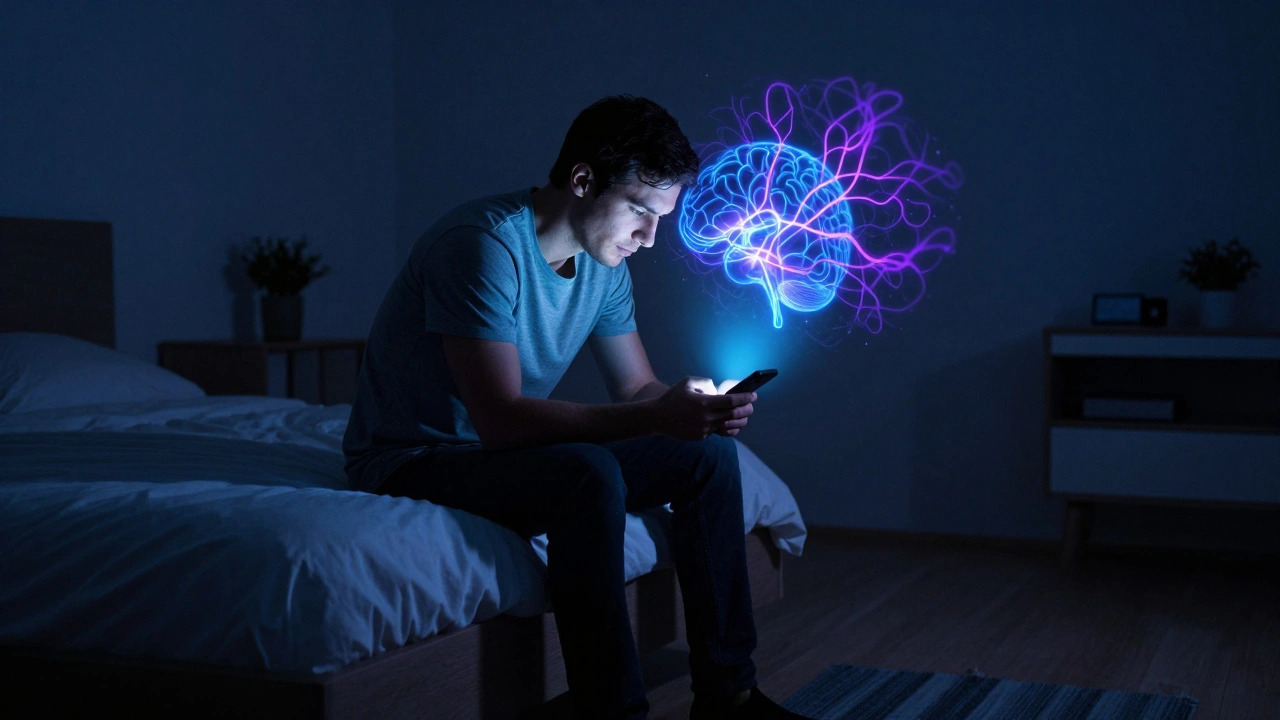
Your brain has a natural reward system. It releases dopamine when you do something pleasurable-eating, exercising, having sex. Pornography hijacks this system. Unlike real human interaction, which is unpredictable and emotionally complex, porn delivers a steady stream of intense, novel stimuli. This creates a pattern: more viewing → more dopamine → less sensitivity to normal rewards. A 2015 brain scan study of male porn users found that those who watched frequently had less gray matter in the striatum, a key part of the brain’s reward circuit. The more they watched, the less responsive their brains became to sexual images. This isn’t just about tolerance-it’s about desensitization. The same way someone needs more alcohol to feel buzzed, a person needs more extreme or novel content to feel the same rush. That’s why 49% of users in one study reported chasing content they once found disgusting or uninteresting. This change doesn’t just affect sexual response. It spills over into decision-making. The prefrontal cortex, responsible for judgment and self-control, becomes less connected to the reward system. That’s why people with compulsive use often make choices that hurt their lives-skipping work, ignoring partners, lying about time spent. They know it’s bad, but the craving overrides the logic.The Depression and Anxiety Link
Daily porn users are twice as likely to report depression compared to those who watch rarely or never. In one study of 150 college students, those who couldn’t control their porn use had significantly higher levels of depression, anxiety, and sexual compulsivity. The pattern holds across genders, even though men are more likely to use it regularly. For men, depression often comes before compulsive use. Feeling down leads to watching porn as a way to numb out. But after six months, that behavior makes the depression worse. For women, the link is different. Depression doesn’t predict porn use as clearly, but women who feel they can’t control their use still report high anxiety and low self-worth. Anxiety isn’t just about feeling nervous. It’s about isolation. Among young adults who watch porn daily, 36% report feeling lonely most or all of the time. That’s nearly double the rate of those who rarely watch. Why? Because time spent watching porn replaces time spent building real relationships. It’s not that porn itself causes loneliness-it’s that it becomes a substitute for connection.Loneliness, Shame, and the Cycle of Avoidance
Many people turn to pornography to cope with stress, sadness, or boredom. It feels like a quick fix. But the relief is temporary. Afterward, guilt or shame often follows, especially if someone believes their use conflicts with their values. This is called moral incongruence-when your behavior clashes with what you think you should believe. A study of 559 adults found that people who felt shame about their porn use were more likely to report emotional dysregulation. They struggled to manage emotions, bounced between numbness and panic, and felt worse about their bodies. Women, in particular, reported lower body satisfaction when they used porn to avoid negative feelings. The more they used it to escape, the more disconnected they felt from themselves. This cycle is hard to break. Watching to feel better → feels worse afterward → watches again to fix it. Over time, it becomes a reflex. Not because of addiction in the drug sense, but because the brain learns: when I feel bad, I do this.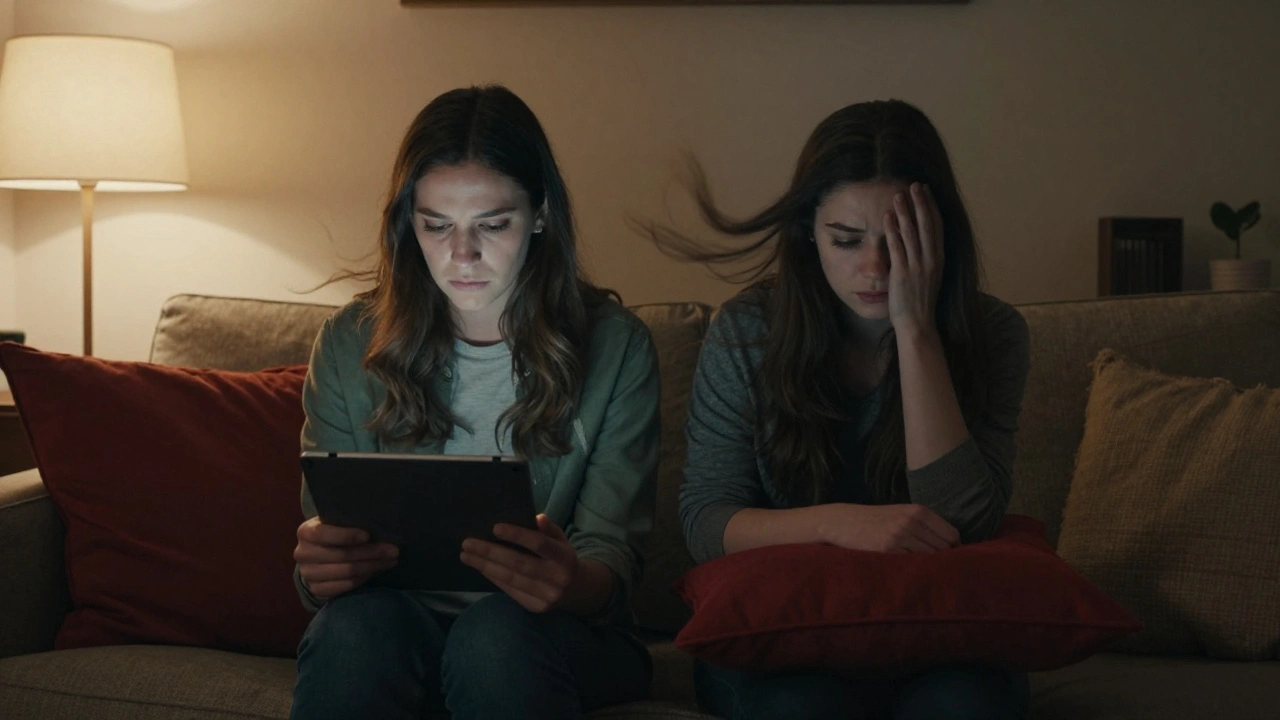
Gender Differences: Not Just About Frequency
It’s true that men use porn more often. Among college students, 97% of men and only 36% of women reported using it in the past month. But the real story isn’t about who watches-it’s about why and how it affects them. Men are more likely to develop compulsive patterns linked to depression. Women, on the other hand, are more likely to feel shame and body dissatisfaction. A study of 949 women found that even occasional porn use, especially when tied to avoiding negative emotions, was linked to poorer body image. That matters because body dissatisfaction doesn’t just hurt self-esteem-it hurts intimacy. The brain changes seen in male users don’t mean women are unaffected. Women’s brains respond to porn too. But because research has focused mostly on men, we’re still learning how it impacts women’s emotional and sexual health differently.When Pornography Hurts Relationships
Porn doesn’t just affect individuals-it affects partnerships. People who watch daily often report lower sexual satisfaction with partners. Why? Because porn creates unrealistic expectations. Real bodies change. Real sex involves vulnerability, timing, and missteps. Porn offers perfect lighting, perfect bodies, and perfect reactions-all edited, scripted, and amplified. One man described watching porn for years, then feeling confused when his partner didn’t react the same way. “I didn’t realize I was comparing her to actresses,” he said. “I thought I was just enjoying it. I didn’t know it was changing what I expected.” It also creates distance. Partners report feeling ignored, replaced, or inadequate. One woman said her husband would watch porn instead of talking after work. “He’d say he was tired. But I knew. I could feel the space between us.” Even when couples watch together, the dynamic can shift. What starts as exploration can become a performance, not intimacy. The emotional connection fades when pleasure is tied to fantasy instead of presence.ADHD, Trauma, and Other Vulnerabilities
Not everyone who watches porn develops problems. But certain groups are at higher risk. People with ADHD are more likely to use porn compulsively. Why? Because their brains struggle with impulse control and delayed gratification. Porn offers instant reward, making it a powerful distraction. Veterans and trauma survivors also show elevated rates of problematic use. For them, porn can feel like a safe escape from flashbacks, anxiety, or emotional numbness. But over time, it deepens isolation instead of healing it. One study found that 35% of adult porn users met criteria for ADHD. Among them, avoidant attachment-fear of closeness-was strongly linked to higher porn use. This isn’t coincidence. It’s a pattern: trauma → emotional avoidance → porn as coping → more isolation.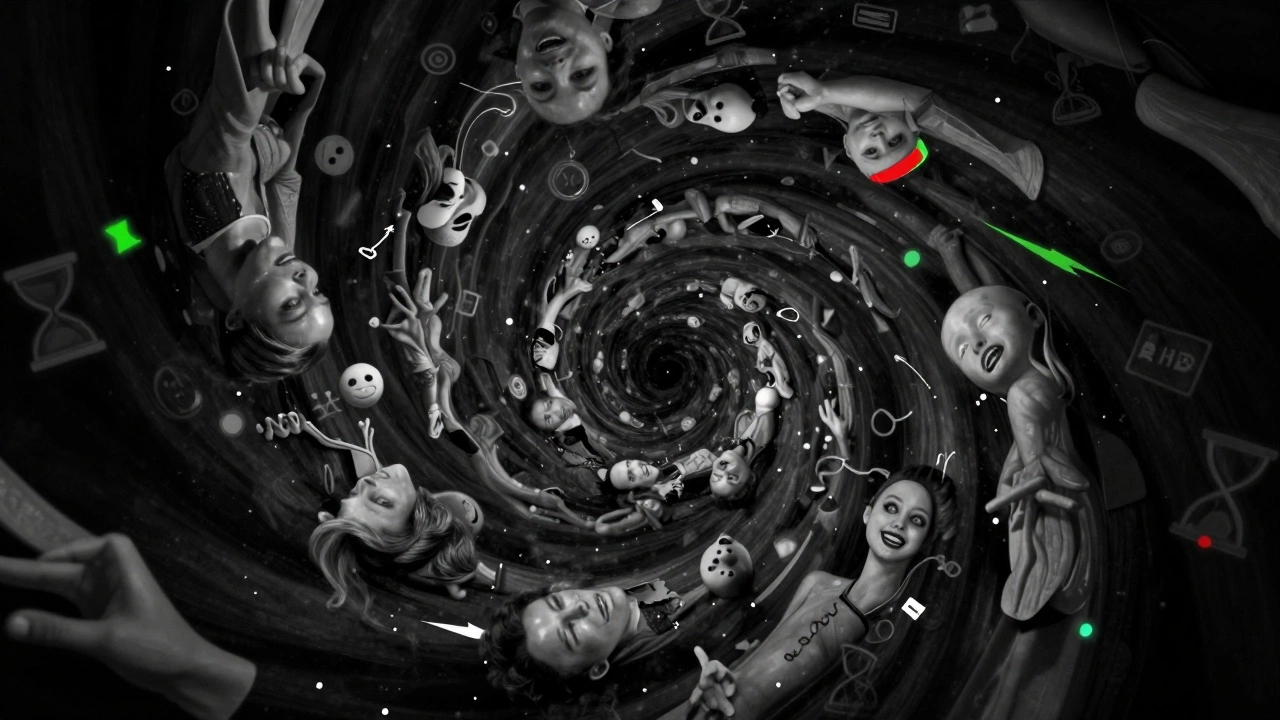
Is It Addiction? The Science Says… Maybe
The word “addiction” is controversial when applied to porn. Unlike drugs, porn doesn’t cause physical withdrawal. But it does create behavioral addiction patterns: craving, loss of control, continued use despite harm, and tolerance. The American Psychiatric Association doesn’t list “porn addiction” as a diagnosis. But it does recognize compulsive sexual behavior disorder in the ICD-11. That’s not about morality-it’s about function. If your porn use is ruining your job, relationships, or mental health, it’s a problem, regardless of what you call it. Modern platforms make it worse. Infinite scroll, autoplay, personalized feeds-these are the same tricks used by social media companies to keep you hooked. Porn sites are designed to maximize engagement, not well-being. Your attention is the product.What Can You Do?
If you’re watching porn daily and feel stuck, you’re not broken. You’re responding to a system designed to exploit human psychology. Here’s what helps:- Track your triggers. Are you watching when you’re stressed? Bored? Lonely? Write it down. Awareness breaks the autopilot.
- Replace, don’t just quit. Find another way to soothe yourself-walking, calling a friend, journaling. The goal isn’t to eliminate pleasure-it’s to reconnect with real sources of comfort.
- Limit access. Use website blockers. Change passwords. Make it harder to fall back into the habit.
- Talk to someone. Therapy focused on compulsive behavior or trauma can help. You don’t need to label it “addiction” to get support.
The Bigger Picture
Pornography isn’t evil. It’s a tool. And like any tool, its impact depends on how it’s used. Occasional use by a healthy adult rarely causes harm. But daily use-especially when tied to avoidance, shame, or loneliness-creates real damage to mental health, relationships, and self-image. The science doesn’t judge. It shows patterns: more daily use = more depression, more anxiety, more isolation. Not for everyone. But for enough people that it’s a public health issue. The question isn’t whether you should stop watching. It’s whether you’re watching because you want to-or because you’re trying to escape something you haven’t faced yet.Is watching pornography every day considered addiction?
Not everyone who watches daily has an addiction, but the behavior can meet the criteria for compulsive sexual behavior disorder if it causes distress, loss of control, or harm to relationships, work, or mental health. Addiction here isn’t about frequency-it’s about function. If you can’t stop despite negative consequences, it’s worth examining.
Does pornography cause depression, or do depressed people just watch more?
It works both ways. Depression can lead to increased porn use as a coping mechanism, and daily porn use can worsen depression over time. Studies show a feedback loop: depressive symptoms predict increased use, and increased use predicts worsening symptoms, especially in men. The brain’s reward system becomes less responsive, making everyday pleasures harder to enjoy.
Why do some people feel more lonely after watching pornography?
Porn replaces real connection with fantasy. The more time spent watching, the less time spent building relationships or engaging in social activities. Over time, this creates isolation. People who watch daily are 36% more likely to report feeling lonely most of the time-similar to the loneliness spike seen in people with depression. It’s not the content itself-it’s what it displaces.
Can pornography affect body image?
Yes, especially for women. Studies show that using porn to avoid negative emotions is strongly linked to poorer body satisfaction. Constant exposure to idealized, edited bodies creates unrealistic standards. Even occasional users report feeling inadequate when comparing themselves to what they see. This affects self-esteem and intimacy.
Is there a difference in how men and women are affected by pornography?
Yes. Men are more likely to develop compulsive patterns tied to depression and use porn more frequently. Women are more likely to report shame, body dissatisfaction, and emotional distress when they feel they can’t control their use. The brain changes are similar, but the emotional and social consequences differ based on gender norms, societal pressure, and how each group uses porn.
Can pornography use be linked to ADHD?
Yes. People with ADHD are more likely to use porn compulsively because they struggle with impulse control and seek immediate rewards. One study found 35% of adult porn users met ADHD criteria. For them, porn acts as a distraction from boredom or emotional discomfort-but it often worsens long-term functioning by reinforcing avoidance.
What should I do if I think my porn use is becoming a problem?
Start by tracking your habits: when, why, and how you feel before and after. Ask yourself if it’s helping or hurting your life. Try replacing it with healthier coping strategies-exercise, talking to a friend, journaling. If you can’t stop despite wanting to, consider talking to a therapist who specializes in compulsive behavior. You don’t need to label it an addiction to get help.