Pompeii Erotic Art Decoder
Explore how Romans viewed explicit imagery. Select a scenario below to reveal its likely function, audience, and artistic intent.
Select a location and style above to decode the purpose of the artwork.
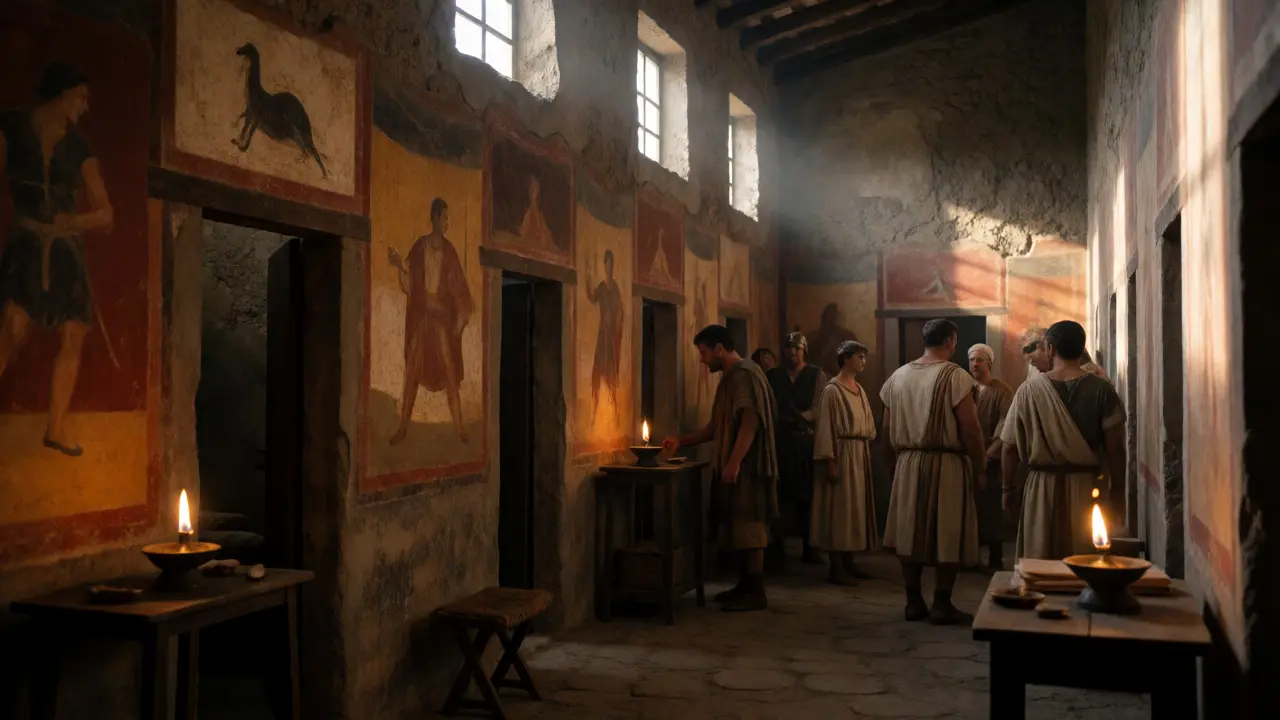
Imagine walking into a room in Pompeii today. You’re not looking at a museum exhibit behind glass; you’re standing in the doorway of a two-thousand-year-old brothel. The air is still thick with history, even if the smell of sulfur from Mount Vesuvius has long faded. What hits you first isn’t the decay or the rubble-it’s the explicitness. There are no euphemisms here. No shy glances. Just vivid, colorful frescoes depicting sex acts in unapologetic detail.
For centuries, these images were considered too scandalous for polite company. They were hidden away in secret cabinets, locked behind doors marked "for adults only." But that secrecy was a modern invention, not an ancient one. To the Romans who lived and died in Pompeii, these Pompeii erotic paintings were mundane public art, serving functions we might find surprising: advertising, education, and even protection against bad luck.
The Secret Cabinet and the Myth of Victorian Modesty
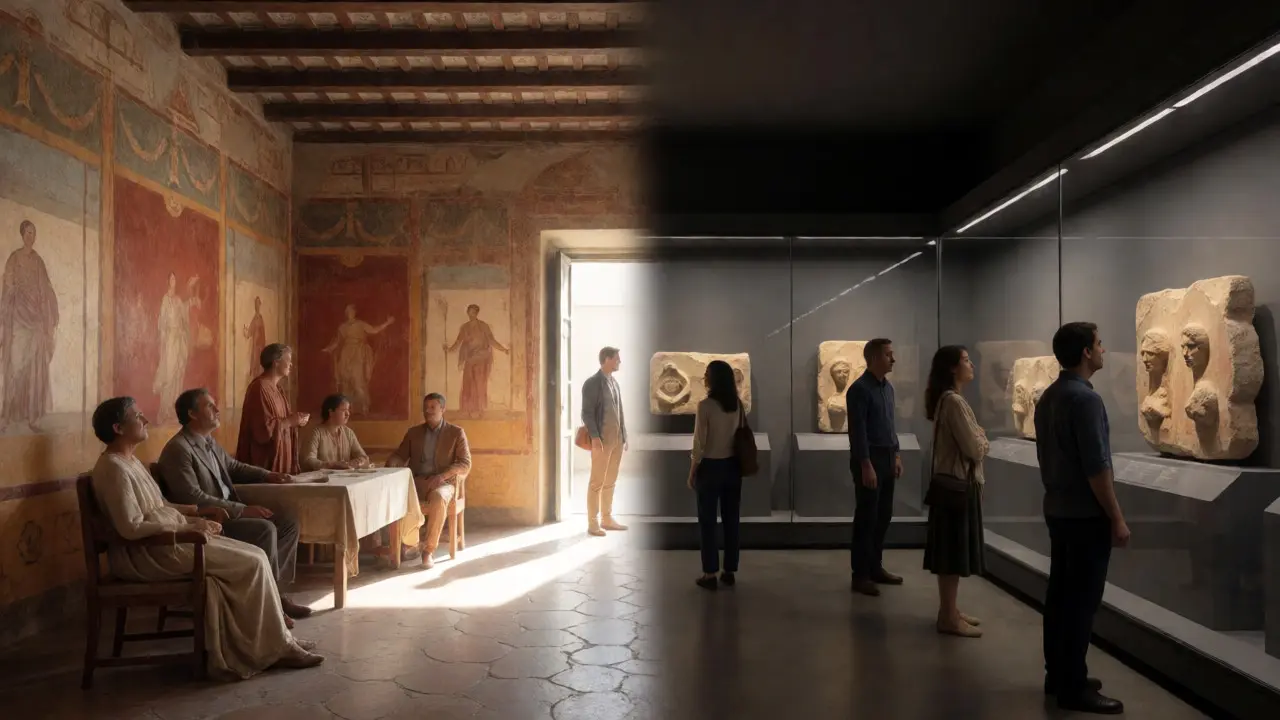
If you visit the Naples National Archaeological Museum now, you’ll find a specific section called the Gabinetto Segreto, or Secret Cabinet. This collection houses the most graphic artifacts recovered from the ruins. Why secret? Because when excavations began in earnest during the 18th and 19th centuries, the prevailing moral standards of Europe couldn’t handle what they found. These weren’t just private doodles on wall plaster; they were masterpieces commissioned by wealthy homeowners and displayed in main reception areas.
The idea that antiquity was prudish is a myth. The Romans didn’t view nudity as inherently shameful in the way later Christian cultures did. A statue of a naked god wasn’t pornographic; it was divine. However, there was a clear distinction between idealized beauty and raw, comic sexuality. The erotic art in Pompeii often leans toward the latter. It’s earthy, humorous, and sometimes grotesque. This wasn’t high art meant to inspire awe; it was street-level culture meant to entertain, inform, or ward off evil.
Advertising Services: The Lupanar’s Visual Menu
Let’s talk about the Lupanar, the most famous brothel in Pompeii. Located near the forum, this small building housed five tiny cells, each barely large enough for a bed. Above each cell entrance, painted directly onto the wall, were scenes of sexual intercourse.
Why paint them there? Many scholars used to think these were decorative touches to set the mood. That theory doesn’t hold up under scrutiny. Consider the clientele. Not everyone in Pompeii spoke fluent Latin. The city was a port, a melting pot of Greeks, Egyptians, Syrians, and locals. For many customers, reading a written menu of services would have been difficult. The paintings served as a universal visual language.
Each fresco above a door depicted a specific position or act available in that particular room. If you wanted a certain service, you looked at the picture and knocked on the corresponding door. It was efficient, discreet, and practical. Think of it less like a modern billboard and more like a photo gallery on a dating app profile-quick, visual, and direct. The quality of the art varies significantly, suggesting different levels of investment by the brothel owners or perhaps the artists themselves. Some are crude sketches; others show a surprising understanding of anatomy and movement.
Price Boards and Economic Realities
You might wonder about the cost. Did these places charge by the hour? By the act? While we don’t have a preserved receipt book from every establishment, archaeological evidence gives us clues. In some cases, inscriptions (graffiti) found near these sites mention prices. We know that a common prostitute (meretrix) might charge around two asses, a relatively low sum equivalent to a loaf of bread or a cup of wine. Higher-end courtesans (scortum or those attached to wealthy households) commanded much higher fees.
The connection between the paintings and the price structure is likely indirect but significant. The elaborate nature of some frescoes in private homes suggests that owning such art was a status symbol. It showed that the owner had the wealth to commission skilled painters and the social confidence to display bold imagery. In commercial spaces like the Lupanar, the focus was on utility. The "price board" wasn’t always a literal sign listing costs next to pictures; often, the negotiation happened verbally. But the visual cue helped streamline the process, reducing the awkwardness of explaining desires in a second language.
| Context | Purpose | Audience | Artistic Style |
|---|---|---|---|
| Private Domus | Status display, entertainment, apotropaic (luck-bringing) | Guests, household members | High-quality, mythological references, refined compositions |
| Lupanar (Brothel) | Service advertisement, instruction | Customers (often non-Latin speakers) | Functional, explicit, varied quality, focus on clarity |
| Public Baths | Decorative, cultural reference | General public | Mixed, often smaller vignettes, less explicit than bedrooms |
Apotropaic Magic: Fending Off the Evil Eye
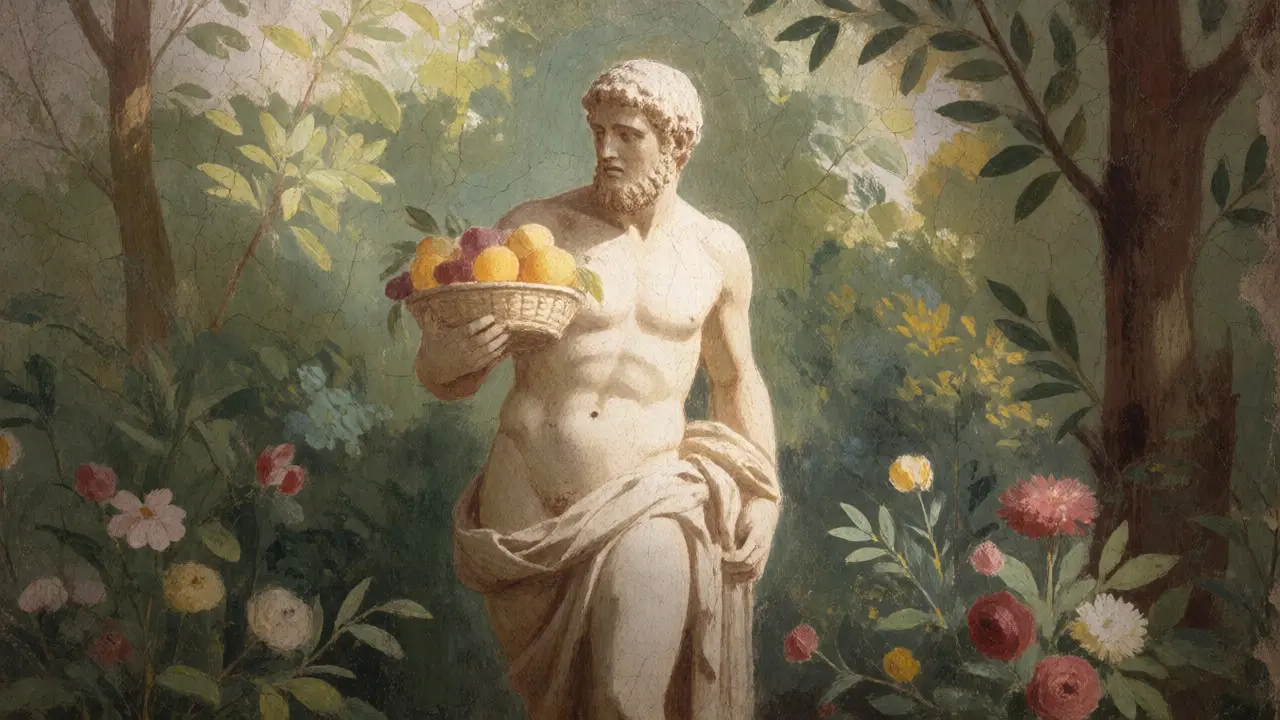
Here’s where things get really interesting. Modern viewers look at a painting of Priapus-the ithyphallic god of fertility-and see pornography. The Romans saw a talisman. Priapus is frequently depicted in Pompeian art, often holding a basket of fruit or threatening passersby with his oversized phallus.
In Roman belief, the phallus (fascinus) was a powerful protective symbol. It warded off the "evil eye," a malicious glare believed to cause harm, jealousy, or misfortune. Hanging a phallic amulet over a doorway or painting a scene of vigorous sexuality wasn’t just about arousal; it was spiritual hygiene. It kept negative energies out. When you see a painting of a couple in an unusual position, remember that part of its job description was magical. It asserted dominance over chaos and ensured the health and prosperity of the household.
This explains why such art appears in kitchens, gardens, and children’s rooms-not just bedrooms. It was everywhere because the threat of the evil eye was considered omnipresent. To remove the art would be to leave the home vulnerable. So, when archaeologists uncovered these frescoes, they weren’t finding hidden shame; they were finding active spiritual defenses.
Positions and Practices: A Window into Daily Life
The variety of positions depicted challenges the notion that ancient sex was limited or simplistic. The frescoes show missionary, doggy style, woman-on-top, and various acrobatic combinations. They also depict tools and accessories. We see straps, pillows, and sometimes even hints of role-play involving mythology.
One recurring theme is the depiction of oral sex, which was common and openly acknowledged in Roman society, unlike in many later Western cultures. Another notable aspect is the lack of romantic context. These aren’t love scenes. There are rarely hearts, flowers, or tender gazes. The focus is physical and mechanical. This reflects the Roman attitude toward sex as a natural bodily function, akin to eating or sleeping. It was something to be enjoyed, but not necessarily sanctified by emotion.
Interestingly, the art also reveals social hierarchies. Often, the figures depicted reflect class distinctions. Slaves or lower-class individuals might be shown in subservient positions, while free citizens are portrayed with more agency. However, in the privacy of the bedroom, these rules could be bent or broken, adding another layer of complexity to our understanding of power dynamics in ancient households.
Rediscovery and Censorship Through the Ages
The journey of these paintings from public walls to hidden vaults mirrors changing societal attitudes. When Pompeii was rediscovered in the 1700s, travelers flocked to see the ruins. But guides often skipped the erotic sections or described them vaguely. As tourism grew, so did the discomfort. King Francis I of Naples famously ordered the removal of the most explicit items from public view in the early 19th century, locking them in the Secret Cabinet.
Access to the cabinet required special permission, often granted only to men of good character. Women and young boys were barred. This censorship lasted well into the 20th century. It wasn’t until the 1960s and 70s, amid the sexual revolution, that restrictions began to loosen. Today, the cabinet is open to all, though some museums still blur the most graphic images for younger visitors.
This history of hiding tells us more about us than about the Romans. Our ancestors’ embarrassment says nothing about their morality and everything about ours. By studying how we’ve handled these images, we uncover our own biases regarding gender, sexuality, and public decency.
Key Takeaways
- Function over Form: Most erotic art in Pompeii served practical purposes like advertising services or providing spiritual protection, not just decoration.
- Universal Language: Frescoes in brothels acted as visual menus for a multilingual customer base, transcending language barriers.
- Protective Symbolism: Phallic imagery was widely used as an apotropaic device to ward off the evil eye and bring good fortune.
- Modern Bias: The classification of these works as "pornography" is a modern construct; Romans viewed them as normal aspects of daily life.
- Economic Indicator: The presence and quality of erotic art can indicate the economic status of a household or the operational efficiency of a business.
Frequently Asked Questions
Were Pompeii’s erotic paintings considered obscene by the Romans?
No, they were generally not considered obscene in the modern sense. While there were boundaries of taste, nudity and sexual acts were common in art, literature, and daily conversation. Obscenity was more about vulgarity or inappropriate context rather than the act itself. These paintings were often seen as humorous, educational, or protective.
Did all brothels in Pompeii have erotic paintings?
Not all, but many did. The Lupanar is the most famous example, but other establishments likely used similar visual cues. The presence of such art depended on the owner’s resources and the target clientele. Cheaper establishments might have had simpler markings or none at all, relying on verbal communication.
What is the significance of Priapus in Pompeian art?
Priapus, the god of fertility with an exaggerated phallus, was a popular apotropaic figure. His image was believed to scare away the evil eye and protect property, livestock, and people. He appears frequently in gardens, doorways, and shops, serving as a guardian rather than just a sexual symbol.
How do historians know these paintings advertised sex services?
The primary evidence comes from their location. In the Lupanar, the paintings are placed directly above the entrances to individual rooms, each showing a distinct act. This spatial arrangement strongly suggests a catalog system. Additionally, graffiti nearby mentions prices and client names, reinforcing the commercial context.
Why were these paintings hidden for so long after discovery?
They were hidden due to Victorian-era sensibilities and religious conservatism. 18th and 19th-century European society found the explicit content shocking and immoral. Authorities feared it would corrupt public morals, leading to the creation of the "Secret Cabinet" where access was restricted to approved male scholars and elites.