Ancient Greek Social Norms Explorer
Select a city-state to explore how their approach to same-sex bonds differed in purpose and visibility.
Athens
The Art of Mentorship
Sparta
The Value of Privacy
Thebes
Tactical Advantage
Athenian Norms: Educational Pederasty
High: Celebrated in public art, poetry, and civic discourse.
Mentorship: Training adolescents in philosophy, politics, and virtue.
Spartan Norms: Marital Stability
Very Low: Deeply private; almost no homoerotic art exists from Sparta.
Stability: Focus on marriage and state-mandated austerity.
Theban Norms: Military Weaponization
High: Institutionalized within the professional army.
Efficiency: Using romantic bonds to increase combat bravery.
Forget the image of a single, uniform "Greek way" of loving. If you stepped into a different city-state in ancient Greece, you'd find that the rules of attraction and social acceptance changed as quickly as the borders. While we often lump the whole region together, the reality is that Greek sexuality is a complex spectrum of social practices that varied wildly depending on where you lived. In Athens, it was a public celebration of mentorship; in Sparta, it was a whispered private matter; and in Thebes, it was literally weaponized for war.
The Quick Breakdown
- Athens: Publicly normalized, focused on education and mentorship through pederasty.
- Sparta: Deeply private, prudish by Greek standards, and focused on marriage and stability.
- Thebes: Institutionalized homoerotic bonds as a core military strategy.
Athens: The Art of the Mentor
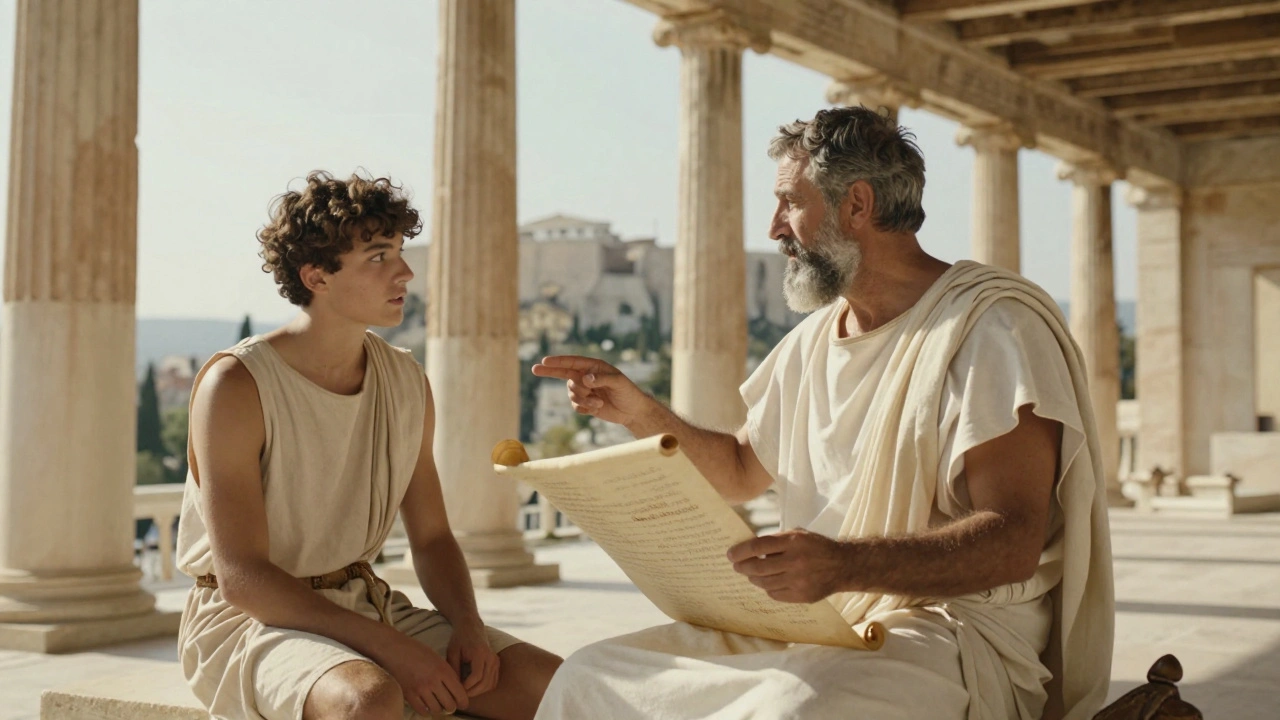
In Athens, same-sex relationships weren't just tolerated; they were woven into the fabric of civic life. The central practice here was Pederasty, which is a socially structured relationship between an adult male (the erastes) and an adolescent male (the eromenos). But don't mistake this for just a physical arrangement. It was essentially an ancient version of a high-intensity internship in manhood.
The older man didn't just provide affection; he taught the youth how to navigate philosophy, politics, and poetry. If you look at Athenian pottery and art, you'll see homoerotic imagery appearing just as often as heterosexual scenes. This tells us that for the Athenians, these bonds were a natural part of growing up. However, it wasn't without debate. Even the famous philosopher Plato questioned the ethics and nature of these bonds in his writings, showing that while the practice was common, the "correct" way to do it was a constant topic of intellectual battle.
Sparta: The Myth of the Homoerotic Warrior
You've probably heard that Sparta was a paradise of male-male bonding. In reality, the evidence suggests they were the most prudish people in Greece. While Athens had public symposia and erotic art everywhere, Sparta is a militaristic city-state that viewed sex as a private matter strictly confined to the home.
Archaeologists have found almost zero pornographic or homoerotic art coming out of Sparta. Contrast that with Athens or Corinth, where such art is plentiful. The Spartans weren't interested in public displays of affection. They didn't even have brothels within their city limits. Their ideal was stability through marriage, and they took pride in claiming they didn't deal in adultery or prostitution.
Sure, there were bonds formed during the Agoge (the brutal state training system), but these were about shaping soldiers, not institutionalizing romance. Unlike Athens, where an adult dominated a youth, the Spartan ideal leaned more toward relationships between equals. They avoided the "institutional" side of pederasty, preferring that sexual satisfaction be found within the marriage bed.
Thebes: Romance as a Tactical Advantage
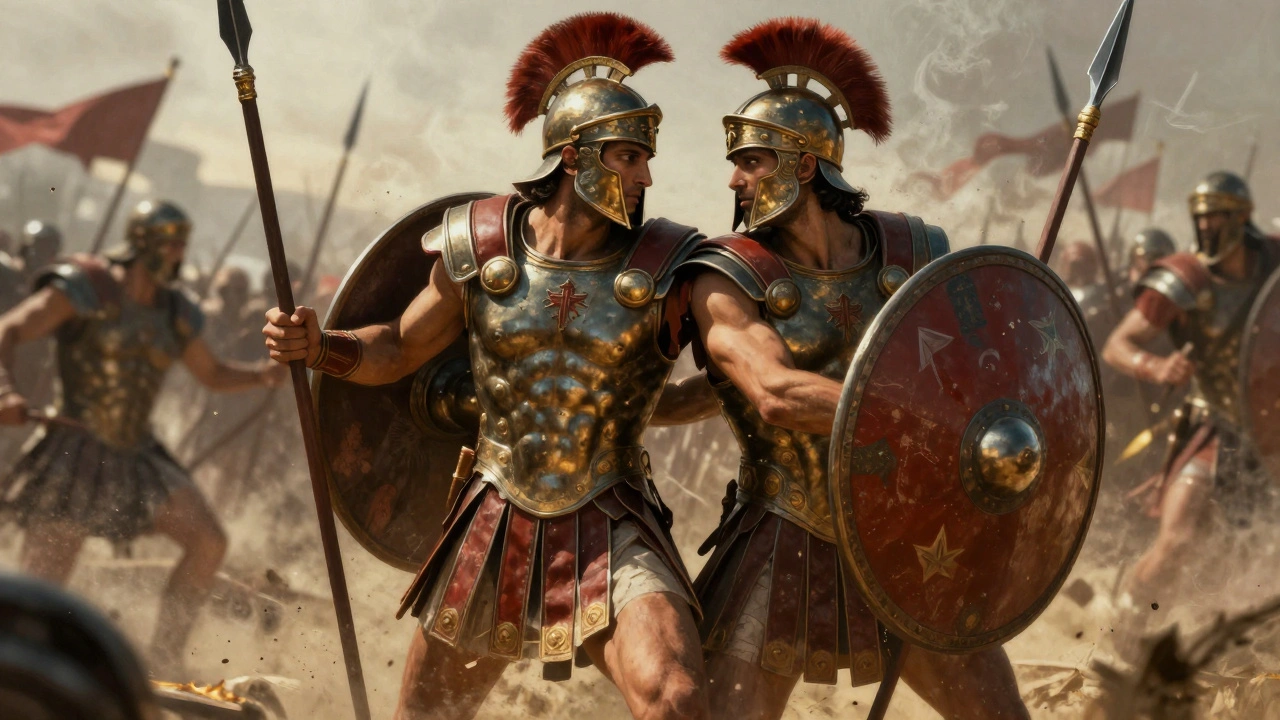
Then there's Thebes, which took the idea of "love in the trenches" to a literal extreme. They created the Sacred Band of Thebes, a professional elite unit consisting of 150 pairs of male lovers. This wasn't just a social club; it was a calculated military move.
The logic was simple: a man would fight harder and more bravely to protect his lover, or to avoid looking like a coward in front of him, than he would for a random comrade. This unit was funded by the state and handpicked for their merit and their romantic partnerships. It was a real-world experiment based on the theory that a division of lovers could conquer the world. These men lived, trained, and fought together, creating a bond of loyalty that made them nearly unstoppable on the battlefield for a time.
| Feature | Athens | Sparta | Thebes |
|---|---|---|---|
| Public Visibility | High (Art/Discourse) | Very Low (Private) | High (Military Unit) |
| Primary Structure | Educational Pederasty | Marital Focus | Military Pairs |
| State Role | Socially Accepted | Discouraged Publicly | Officially Funded |
| Goal | Civic Virtue/Mentorship | Private Stability | Combat Efficiency |
The Military Connection
Across all these cities, there was a general belief that emotional bonds between men boosted morale. Even in Sparta, where they hated the idea of organizing units based on sexuality-viewing it as a distraction from pure merit-they still recognized that these bonds created brave soldiers. The difference was simply in how they managed it. Athens treated it as a school, Thebes treated it as a weapon, and Sparta treated it as a private detail.
It's also vital to remember that these men didn't see themselves as "gay" or "straight." Those are modern labels. An Athenian man could have a romantic relationship with a younger man for years and then marry a woman to start a family. It wasn't an "either-or" situation; it was a timeline of life stages.
Did the Greeks view homosexuality as a fixed identity?
No. Ancient Greeks did not have a concept of sexual orientation. Sexuality was seen more as a set of behaviors. Men were expected to marry women and produce heirs regardless of whether they also had romantic or sexual relationships with other men.
Was pederasty the same as modern relationships?
Not exactly. In places like Athens, it was a highly structured social institution. The focus was on the transition from youth to adulthood, with the older partner acting as a teacher and protector. It was as much about social status and education as it was about attraction.
Why is there so little art from Sparta regarding this?
Spartan culture emphasized austerity and privacy. While other cities used art to celebrate public and erotic life, Spartans viewed sex as a private matter. The lack of homoerotic artifacts suggests that such relationships didn't have the same public, celebrated status they did in Athens.
What happened to the Sacred Band of Thebes?
They were incredibly successful until they faced the Macedonians. Their commitment to one another was legendary, often fighting to the death to protect their partners, which served as a powerful psychological tool in warfare.
Was homosexuality legal in these city-states?
The concept of "legal" is tricky here because laws varied by city. In Athens, it was largely accepted as long as the social roles (adult vs. adolescent) were respected. It wasn't a matter of legality so much as social propriety and status.
Next Steps for Understanding Ancient Sexuality
If you want to dig deeper, look into the Symposium by Plato. It provides a window into how the Athenians debated the "ideal" form of love. You might also want to compare these Greek practices with the later Roman views on masculinity and power, as the Romans had a very different take on who was "active" versus "passive" in a relationship, which shifted the focus from mentorship to dominance.