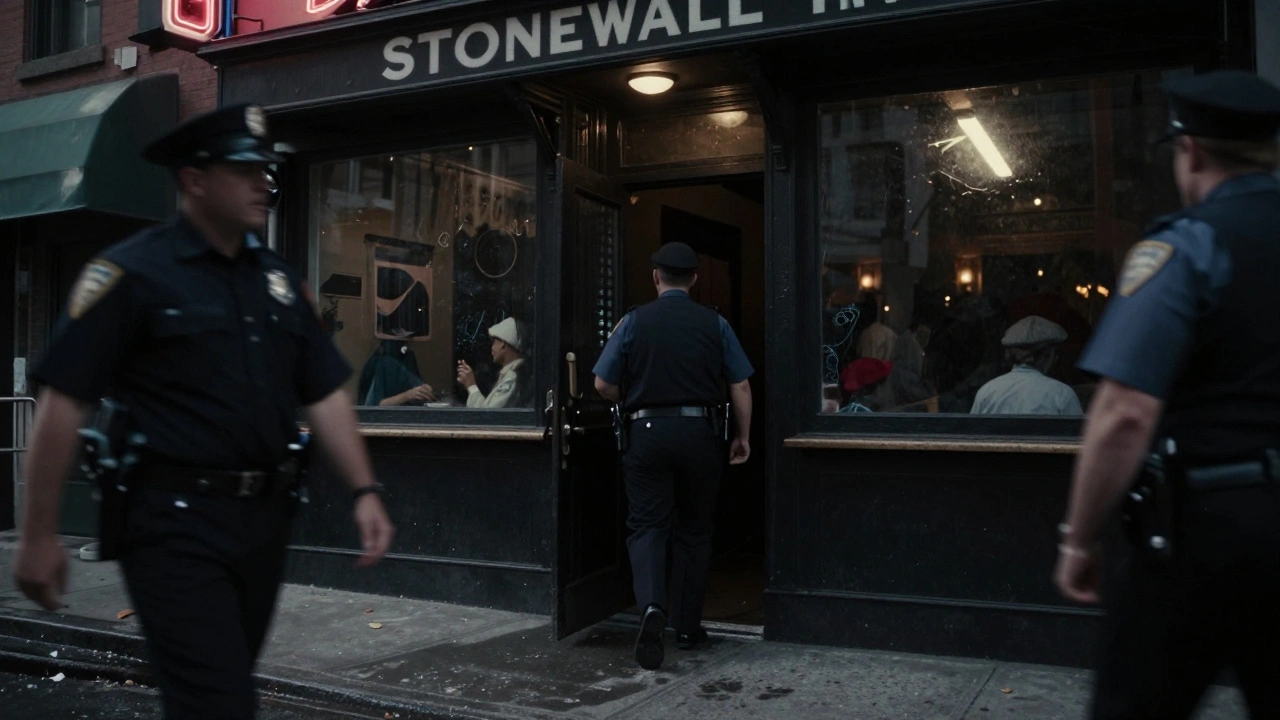
Stonewall Movement: From Erasure to Liberation
Explore how the 1969 Stonewall Uprising shifted the movement from seeking assimilation (fitting in) to demanding liberation (the right to be seen).
The Homophile Era
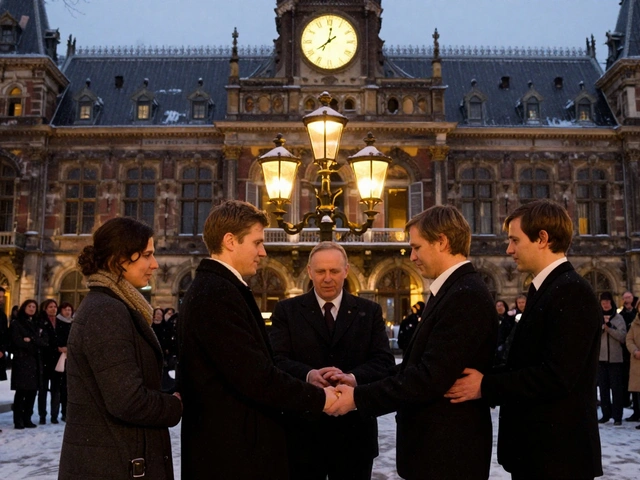
Focused on social acceptance and proving that LGBTQ+ people were "just like everyone else." Tactics were cautious and polite.
- Goal: Assimilation
- Tactics: Picketing in suits/dresses
- Space: Hidden underground bars
The Liberation Era
Born from the Stonewall spark. A shift toward political visibility, coalition building, and reclaiming public space.
- Goal: Political Liberation
- Tactics: Street protests & Riots
- Space: Public visibility & Pride
The Pivotal Shift:
Imagine a world where simply wearing a dress as a woman or a shirt as a man-if the police decided you weren't the 'right' gender-could land you in a jail cell. For most of the 20th century, this wasn't a dystopian novel; it was daily life for thousands of people in New York City. The Stonewall riots is a series of spontaneous demonstrations and violent clashes between police and LGBTQ+ people that began on June 28, 1969, at the Stonewall Inn in Greenwich Village. While it didn't start the fight for equality, it acted as the match that lit a global fire, turning a fragmented group of marginalized people into a political force that could no longer be ignored.
The Flashpoint: What Really Happened at the Inn?
The Stonewall Inn wasn't a fancy lounge. It was a dark, crowded, and seedy spot in Manhattan that operated without a liquor license. Because it was one of the few places where homeless LGBTQ+ teens, trans women of color, and drag queens could gather without being immediately chased away, it became a sanctuary for those the rest of society rejected. But on the early morning of June 28, 1969, the police decided to turn that sanctuary into a crime scene.
Nine officers entered the bar for a routine raid. In those days, raids were common, and usually, the patrons would just scatter or submit. But this time was different. The police didn't just arrest the employees for the liquor license violation; they roughed up the patrons and used a specific New York criminal statute to arrest people who weren't wearing at least three pieces of "gender-appropriate" clothing. This legal weaponization of fashion was a breaking point. Instead of running, about 400 people stayed and fought back, throwing bottles and debris at the officers. The police, shocked by the lack of passivity, actually had to barricade themselves inside the bar while the crowd took over the street.
The Law as a Weapon of Control
To understand why people were willing to fight the police, you have to understand the legal landscape of the 1960s. The law wasn't just failing to protect LGBTQ+ people; it was actively hunting them. Civil Rights for the gay community were virtually non-existent. They were denied the right to free assembly and the right to patronize public accommodations. If you were caught in a "gay bar," you weren't just in a place with no liquor license-you were in a space that the state viewed as a hub of "deviant" behavior.
The arrests during the uprising show how the conflict lingered. On the first night, 13 people were arrested. On the second, three more. By the sixth night, another five were taken in. These weren't just random arrests; they were attempts by the city to maintain a social order based on the erasure of queer identity. The use of "sumptuary laws"-rules about what people must wear-shows how the legal system was used to police the very bodies of transgender and gender-nonconforming individuals.
| Feature | Pre-Stonewall (Homophile Era) | Post-Stonewall (Liberation Era) |
|---|---|---|
| Primary Goal | Social acceptance and assimilation | Political liberation and legal rights |
| Tactics | Picketing in suits/dresses, polite appeals | Street protests, riots, visibility |
| Organization | Small, fragmented social clubs | Broad coalitions (Gays, Lesbians, Trans) |
| Public Space | Avoidance and hidden "underground" spaces | Reclaiming the streets and public visibility |
From a Riot to a Movement
The magic of Stonewall wasn't just that people fought back, but who was fighting. For the first time, Lesbians, gay men, and Transgender people realized they were fighting the same enemy. Before 1969, these groups often operated in separate silos. The streets of Greenwich Village became the first place where a unified identity began to form. They realized that the police didn't distinguish between a drag queen and a gay man when they swung a baton; therefore, the community shouldn't distinguish between them when organizing for rights.
This unity was a direct result of the broader Civil Rights Movement and feminist waves of the 1960s. The LGBTQ+ community saw how Black Americans and women were using public protest to demand legal changes and decided to apply those same tactics. They stopped asking for permission to exist and started demanding it.
Reclaiming Public Space
One of the most lasting impacts of the uprising was the change in how LGBTQ+ people viewed "public space." For decades, the only safe spaces were private or hidden. Stonewall turned the sidewalk into a political stage. By refusing to leave the area around the bar, the protesters claimed a right to the city. This shift is why the first Pride parades were organized shortly after the riots. They weren't just celebrations; they were strategic assertions of presence. By marching in the daylight, they were effectively saying, "We are here, we are many, and we will no longer hide in the shadows of seedy bars."
The ripple effect was international. The news of a marginalized group successfully fighting back against police brutality traveled fast. It inspired activists in Europe and Canada to start their own liberation movements. The Gay Rights Movement ceased to be a series of isolated incidents and became a global crusade for legal recognition and human dignity.
The Legal Legacy and the Long Road Ahead
While the riots didn't change the law overnight, they created the social pressure necessary for legal shifts. The momentum from Stonewall eventually led to the removal of homosexuality from the DSM (Diagnostic and Statistical Manual of Mental Disorders) and, decades later, to the decriminalization of same-sex acts across the US. The transition from "criminal" to "citizen" started with the decision to stop running from the police in 1969.
Today, we see the legacy of Stonewall in every law that protects against employment discrimination or ensures marriage equality. But the core of the uprising was about more than just laws; it was about the right to be seen. It reminded the world that the most powerful tool against systemic oppression isn't always a courtroom appeal-sometimes, it's a crowd of people who have simply had enough.
Did the Stonewall riots start the gay rights movement?
Not exactly. There were organizations and protests before 1969. However, Stonewall is considered the "spark" because it shifted the movement from a polite, assimilationist approach to a more militant, visible, and inclusive liberation movement that brought together different groups like trans women and lesbians.
Why was the Stonewall Inn targeted by police?
The police used the lack of a liquor license as a legal pretext to raid the bar. However, the deeper reason was the systematic harassment of LGBTQ+ people, who were seen as threats to public morality. The raid was specifically timed for a Friday night when the bar would be most crowded to maximize arrests.
What were the 'three articles of clothing' laws?
New York City had statutes that allowed police to arrest anyone not wearing at least three items of clothing that matched their assigned gender at birth. This was used primarily to target transgender people and drag queens, making their very existence a legal offense.
Were there any casualties during the riots?
While there were no fatalities directly caused by the clashes between rioters and police, there was one reported death of a cab driver on Christopher Street who suffered a heart attack after his taxi was rocked by a crowd during the second night of the uprising.
How did Stonewall influence today's Pride events?
The first Pride marches were held in June 1970 to commemorate the one-year anniversary of the riots. These marches transformed the uprising from a spontaneous riot into an organized annual tradition of visibility and political demand, turning a site of trauma into a site of celebration and protest.