Imagine spending your entire life preparing for a party you'll only attend once, but the dress code isn't about fashion-it's about the biological ability to be reborn. For the people of the Nile, death wasn't a quiet sleep or a distant paradise. It was a high-stakes transition that required a very specific kind of energy: procreative power. In the eyes of the ancients, Ancient Egyptian afterlife beliefs weren't just about morality or prayer; they were intimately tied to sexuality and the raw mechanics of fertility.
The Masculine Engine of Creation
To understand why tombs are filled with fertility symbols, you first have to understand how the Egyptians viewed the start of everything. Their cosmology was heavily skewed toward the masculine. They believed that the power to create and regenerate belonged exclusively to men and male deities. Atum is the creator god of Heliopolis who initiated the universe through an act of self-sexual intercourse . After this solo act of creation, he famously sneezed out the void that separated him from the primeval chaos.
This wasn't just a myth for the history books; it was the blueprint for existence. Because the act of creation was seen as a male-driven event, the path to resurrection followed the same logic. To be "reawakened" after death, a person needed to tap into that same generative spark. This created a strange situation for elite women. If the "key" to the afterlife was masculine generative power, women had to find a way to fit that lock. This led to a fascinating practice where women in the elite class would "masculinize" themselves in their funerary equipment-coffins and inscriptions-to ensure they could harness the powers needed to enter the Fields of Peace.
Tomb Art: More Than Just Decoration
If you walk through an ancient Egyptian tomb, you aren't looking at a gallery of memories; you're looking at a survival kit. Egyptians believed that images carved into stone or painted on walls would literally come to life. If you painted yourself offering a sacrifice or holding a flower, you would have that object and that action available to you in the next world.
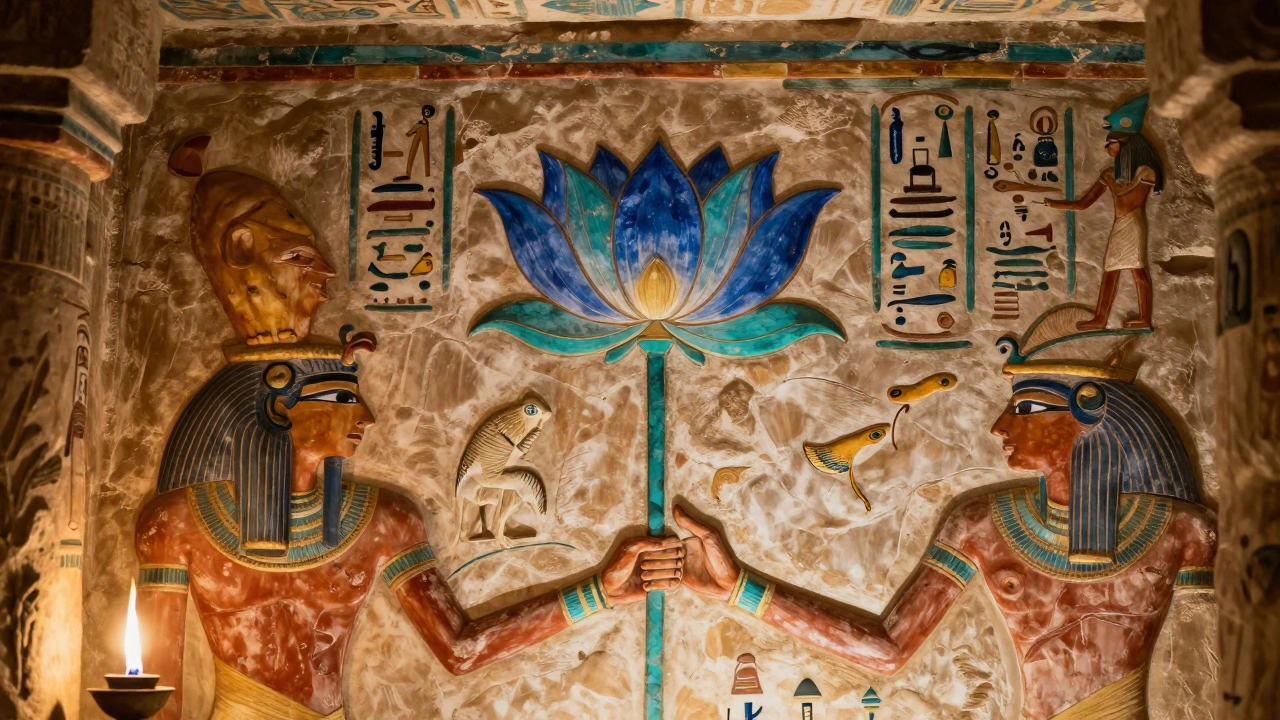
Among these images, fertility symbols were the most critical. You'll often see the Lotus Flower, which symbolizes rebirth and the entrance of the soul into a new life . It was common to place actual lotus flowers in the hands of the mummified dead. This wasn't just for the smell; it was a spiritual trigger for regeneration.
Beyond flowers, the art often focused on the reconstitution of the self. The sexual act was viewed as the ultimate way to reunite the disparate parts of a person-their body, soul, and spirit-into a complete whole. Without this "re-assembly," resurrection was impossible. This is why erotic imagery, once dismissed by modern historians as "taboo" or "primitive," was actually a core theological requirement for eternal life.
| Symbol/Entity | Represented Attribute | Purpose in Afterlife |
|---|---|---|
| Lotus Flower | Regeneration | Facilitates the soul's entrance into new life |
| Phallic Amulets | Sexual Potency | Triggers the biological spark of resurrection |
| Osiris Imagery | Transition/Rebirth | Connects the deceased to the god of the dead |
| The Ka (Soul) | Vital Essence | Maintains the link between the body and spirit |
Osiris and the Democratization of Resurrection
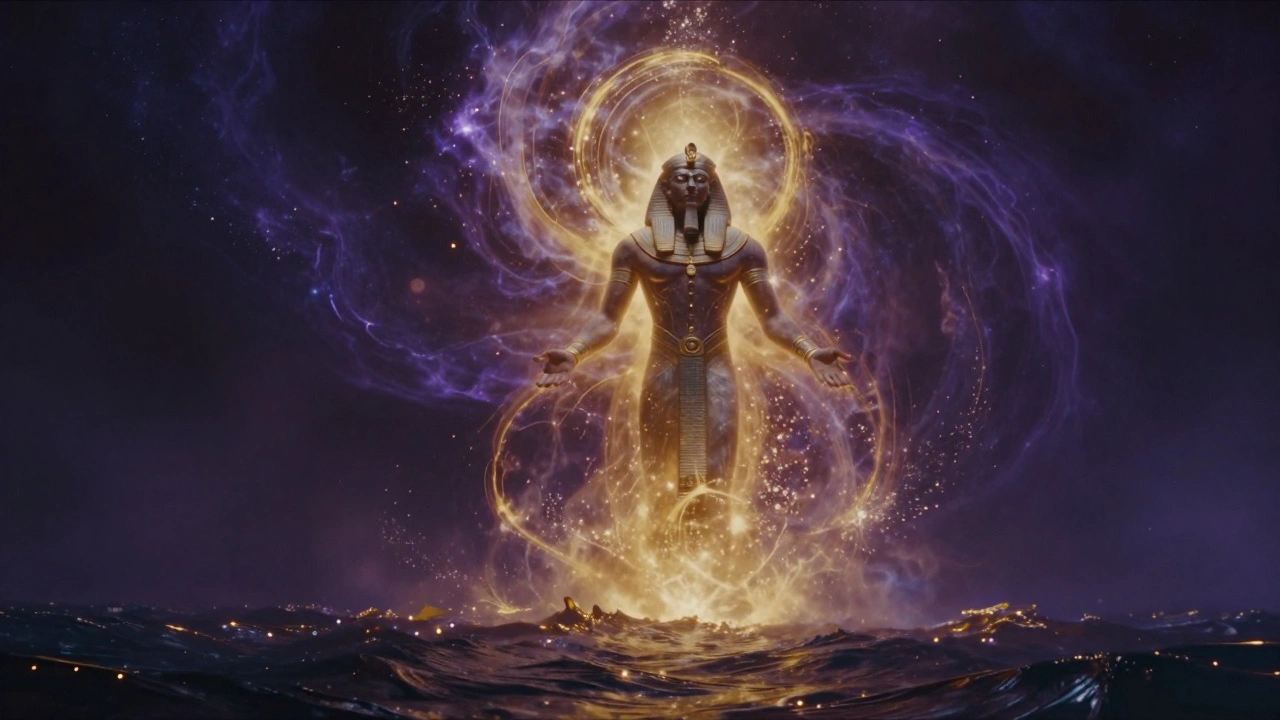
For a long time, the idea of an afterlife was largely reserved for the pharaohs. But as time went on, this shifted. Osiris is the god of the afterlife, underworld, and regeneration who serves as the model for all deceased individuals . By identifying themselves with Osiris, every Egyptian-not just the king-could potentially achieve eternal life.
Osiris represented the perfect cycle of death and rebirth. To follow in his footsteps, the deceased had to embody his regenerative potency. This is why mummification became such an obsession. The physical body had to be preserved perfectly because the Ka or immortal spirit remained dependent on its earthly form. If the body decayed or the fertility symbols were missing, the spirit had no "anchor" to return to, and the cycle of rebirth would break.
The Moral Filter: The Weighing of the Heart
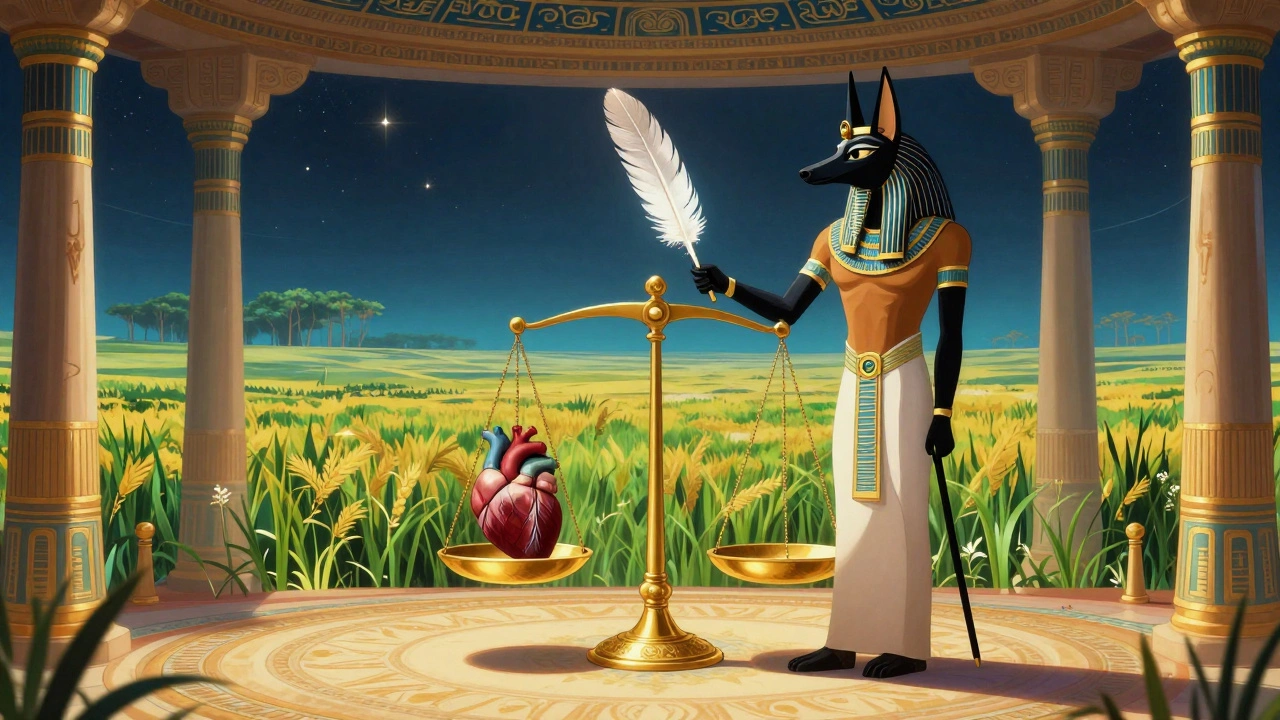
While sexual potency was the "engine" of rebirth, morality was the "gatekeeper." Even if you had the best amulets and the most elaborate tomb art, you still had to pass the ultimate test: the weighing of the heart. This ceremony took place in the presence of Anubis, the jackal-headed god who oversaw the scales, and Thoth, the ibis-headed scribe who recorded the result.
The heart of the deceased was weighed against a feather representing Ma'at, the goddess of truth and cosmic balance. If the heart was as light as the feather, the person was judged pure and allowed to enter the Field of Reeds-an idealized version of Egypt where fertility and abundance were eternal. It's a striking contrast: you needed the biological "drive" of sexuality to be reborn, but the spiritual "lightness" of a good life to stay there.
Overcoming the "Taboo" of Erotic Amulets
For decades, Western archaeologists ignored or suppressed erotic artifacts from Egypt. When they found small, blue faience amulets of men with enlarged phalluses, they often labeled them as "toys" or "charms" rather than religious tools. This was a mistake driven by Victorian sensibilities.
In reality, these objects were produced in massive quantities, especially during the Late Period. They weren't pornographic; they were functional. A phallic amulet in a tomb was a spiritual battery, designed to provide the deceased with the necessary sexual energy to restart their life in the underworld. The sheer volume of these items proves that sexuality was not a peripheral concern-it was the very foundation of their religious ideology.
Why did ancient Egyptians put phallic symbols in tombs?
They believed that the sexual act was the fundamental process that enabled rebirth and resurrection. Phallic symbols and amulets acted as spiritual catalysts to trigger the regenerative power needed to wake up in the afterlife.
How did women access the afterlife if creation was seen as masculine?
Elite women often underwent a symbolic "gender transformation" in their funerary art. By incorporating masculine generative symbols and identities into their coffins and inscriptions, they could harness the powers associated with male divinity to enter the Fields of Peace.
What is the significance of the lotus flower in tomb art?
The lotus represents rebirth and renewal. Because the goddess Isis was often depicted being born from a lotus, placing these flowers in the hands of the mummified deceased symbolized the soul's entrance into a new, eternal life.
What happened if the heart was heavier than the feather of Ma'at?
If the heart was heavy with sin or imbalance, the deceased failed the judgment. This meant they could not enter the Field of Reeds, effectively ending their chance at a blessed eternal existence.
Did only Pharaohs believe in the Field of Reeds?
Originally, the afterlife was heavily focused on royalty, but over time, these beliefs democratized. Non-royal Egyptians also sought entry into the Field of Reeds or hoped to live eternally in their tombs as a Ka (soul).
Next Steps for Understanding Egyptian Beliefs
If you're fascinated by the intersection of biology and spirituality in the ancient world, start by looking into the Book of the Dead. It provides the "cheat codes" and spells the Egyptians used to navigate the underworld. You might also explore the architecture of New Kingdom private tombs to see how the chapels were designed to facilitate the ongoing relationship between the living and the dead. For those interested in the social side, researching the role of the priesthood in maintaining these fertility rituals will reveal how deeply these beliefs permeated daily government and social structures.