U=U Calculator: Undetectable = Untransmittable
How U=U Works
According to the PARTNER study (2019) and HPTN 052 trial (2011), people with HIV who maintain an undetectable viral load (typically below 200 copies/mL) cannot transmit HIV to sexual partners. This is known as U=U (Undetectable = Untransmittable).
Key findings: 0 transmissions occurred when viral load was undetectable over thousands of condomless sex acts in the PARTNER study.
Important Facts
- U=U is supported by CDC, WHO, UNAIDS, and major medical associations
- Viral load must be undetectable for at least 6 months
- Consistent medication adherence is essential for maintaining undetectable status
- Regular viral load testing is recommended
U=U Transmission Risk Calculator
Enter your viral load to see your transmission risk.
What This Means for You
If you are HIV-positive and maintain an undetectable viral load, you cannot transmit HIV to your sexual partners. This is a powerful tool to end stigma and protect relationships.
Remember: Undetectable does not mean cured. You must continue treatment to maintain viral suppression.
If you're HIV-negative, know that U=U is real. An undetectable person cannot transmit HIV.
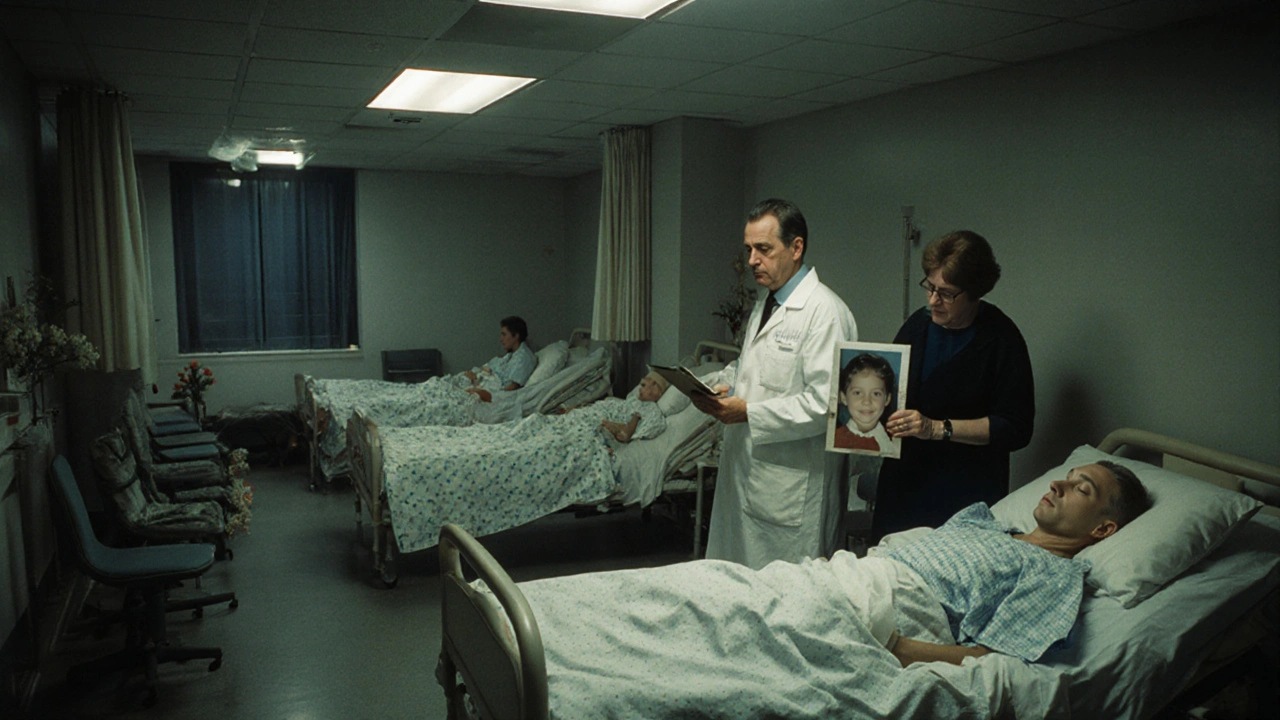
Before 1996, an AIDS diagnosis was a death sentence. People didn’t just get sick-they faded. Friends vanished. Bodies weakened. Hospitals filled with young men and women who had no future left to plan. Then, in a matter of months, something impossible happened. People who were too weak to stand up walked out of the hospital. Others who had been given weeks to live were back at work, hugging their families, laughing again. This wasn’t a miracle. It was medicine. And it had a name: the Lazarus Effect.
What the Lazarus Effect Really Meant
The term comes from the biblical story of Lazarus, raised from the dead by Jesus. In the mid-1990s, doctors started using it to describe patients who were clinically dead from AIDS-CD4 counts below 50, opportunistic infections everywhere, wasting away-and then, within weeks of starting new drug combinations, they came back to life. Their viral loads dropped. Their immune systems rebuilt. Their skin cleared. Their energy returned. One patient in San Francisco, told he had six months to live, was back coaching his daughter’s soccer team by the next spring. This wasn’t luck. It was the result of three drugs working together: two nucleoside reverse transcriptase inhibitors (like zidovudine and lamivudine) and one protease inhibitor (like ritonavir or indinavir). Together, they formed what doctors called HAART-highly active antiretroviral therapy. Before this, the only option was AZT, a drug that barely slowed the virus and made people sicker with side effects. HAART didn’t just slow HIV-it crushed it. By 1997, AIDS-related deaths in the U.S. dropped by 69%. In Haiti, where most patients started treatment with CD4 counts below 150, two-thirds were still alive ten years later. That’s not a statistical fluke. That’s a revolution.From 20 Pills a Day to One Pill a Week
In the early days, patients had to take up to 20 pills a day, at precise times, with strict food rules. Some pills caused nausea so bad people couldn’t keep them down. Others gave them nightmares. Others made their kidneys fail. Adherence was a full-time job. Today, the first-line treatment for most people is a single pill, taken once a day. Drugs like Biktarvy combine three medications-bictegravir, emtricitabine, and tenofovir alafenamide-into one tablet. No food restrictions. No timing worries. Side effects? Minimal. In clinical trials, over 95% of patients achieve undetectable viral loads within six months. And it’s getting even simpler. In 2021, the FDA approved Cabenuva, a long-acting injectable treatment. Instead of swallowing pills, patients get two shots in the buttocks every month-or even every two months. In trials, 94% stayed virally suppressed. A new twice-yearly injection, lenacapavir, is in late-stage testing. Imagine getting HIV treatment only twice a year. That’s not science fiction. It’s the next step.Undetectable = Untransmittable (U=U)
One of the most powerful outcomes of modern HIV treatment isn’t just about survival-it’s about connection. The PARTNER study, which followed nearly 1,800 serodifferent couples (one partner HIV-positive, one negative) who had condomless sex over two years, found zero cases of HIV transmission when the positive partner had an undetectable viral load. That’s not “very low risk.” It’s not “almost no chance.” It’s zero. Not one. This changed everything. It shattered stigma. It gave people permission to love without fear. It turned HIV from a moral crisis into a medical one. The same finding was confirmed in the HPTN 052 trial, which showed a 96% drop in transmission when the positive partner was on treatment. Science named it the “Breakthrough of the Year” in 2011. Today, U=U is backed by the CDC, WHO, UNAIDS, and every major medical association.
The Cost of Survival: Long-Term Side Effects and Inequality
But here’s the truth: surviving HIV isn’t the same as being healthy. Even with viral suppression, people on long-term treatment face higher risks of heart disease, kidney problems, bone loss, and neurocognitive decline. The virus leaves behind inflammation-even when it’s gone. It’s called “treated HIV disease,” and it’s a new medical reality. Dr. Steven Deeks at UCSF calls it “a chronic condition with hidden scars.” Patients might feel fine, but their arteries are aging faster. Their bones are thinner. Their brains aren’t quite the same. That’s why doctors now use tools like the “frailty meter”-a Bluetooth sensor that measures movement speed and balance in 20 seconds-to catch decline early. And then there’s access. In the U.S., 65% of people with HIV are virally suppressed. But among Black Americans, it’s 55%. In the South, it’s 49%. In sub-Saharan Africa, where 67% of all HIV cases live, only 75% of diagnosed people get treatment. In Eastern Europe, it’s 47%. In the Middle East, 42%. The Ryan White HIV/AIDS Program helped 509,000 Americans in 2022, covering 85% of drug costs for those below 500% of the poverty line. But millions globally still wait. UNAIDS says 9.2 million people lack access to treatment. That’s not a gap. It’s a moral failure.Living With the Ghosts of the Epidemic
Many who survived the early years carry invisible wounds. At the University of Alabama at Birmingham, researchers found that 34% of long-term survivors struggle with survivor’s guilt. One man lost 47 friends between 1985 and 1995. When HAART saved him in 1997, he didn’t feel relief-he felt shame. “Why me?” he asked. “They were smarter. Kinder. More talented.” On Reddit, someone wrote: “I started Atripla in 2010 with a CD4 of 186. Six months later, undetectable. Felt like I got my life back.” Another said: “Dolutegravir gave me nightmares so bad I switched meds. I was suppressed, but I couldn’t sleep.” Modern treatment gives life. But it doesn’t erase the past. The Lazarus Effect didn’t just bring people back from death-it forced them to live with the weight of who didn’t make it.
What’s Next? The Road to a Functional Cure
The goal now isn’t just to manage HIV-it’s to end it. Scientists are testing stem cell transplants from donors with a rare genetic mutation (CCR5-delta32) that blocks HIV from entering cells. Five out of 52 patients in the IciStem study have now lived for years without any medication. They’re in remission. Not cured, but free. Other approaches include vaccines, gene editing, and long-acting drugs that could keep the virus locked down for years. The NIH’s 2023 HIV research plan calls this “functional cure” work the top priority. But none of this matters if people can’t get the treatment they already have. The biggest threat to the Lazarus Effect isn’t science. It’s inequality. It’s politics. It’s stigma that keeps people from getting tested. It’s poverty that makes choosing between rent and meds a daily reality.What You Need to Know Today
If you’re living with HIV:- Take your meds. Even one missed dose can let the virus rebound.
- Get your viral load tested every 6-12 months if stable. CD4 counts? Not needed anymore once you’re suppressed.
- Ask about long-acting injectables if daily pills are hard. They’re covered by most insurance.
- Monitor your heart, bones, and kidneys. Talk to your doctor about screenings.
- PrEP works. If you’re at risk, talk to your doctor. It’s 99% effective when taken daily.
- Know that U=U is real. An undetectable person cannot transmit HIV.
- Challenge stigma. Don’t assume someone’s status. Don’t treat HIV like a moral failing.