Ancient Athenian Economics Calculator
| Party | Gross Earnings | Keeper's Cut (Est.) | Net Take-Home |
|---|---|---|---|
| Worker | -- | -- | -- |
| Brothel Keeper | -- | -- | -- |
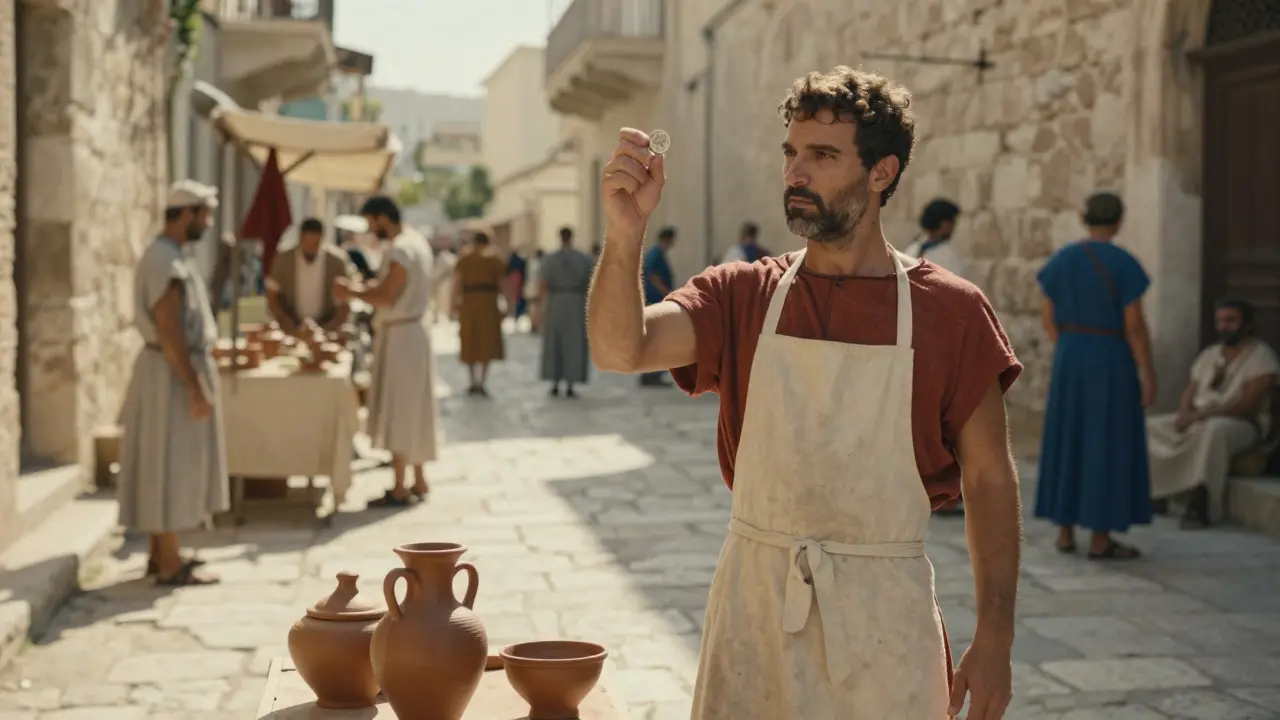
Imagine walking through the bustling streets of Athens is the ancient Greek city-state that established democracy and hosted the first Olympic Games. in the 5th century BCE. You are a citizen with a modest income, perhaps a potter or a merchant. You have exactly one Obol is a silver coin worth one-sixth of an Attic drachma, used for daily transactions in ancient Greece. in your pocket. That single coin represents the standard market rate for a brief sexual encounter with a Pornai is female sex workers in ancient Greece who were legally distinct from citizens and often owned by brothel keepers.. This specific price point wasn't just a number; it was a fixed economic anchor that shaped social interactions, legal rights, and the gender dynamics of the entire polis.
The Currency of Desire: Why One Obol?
To understand why this price stuck, we need to look at what an obol actually bought in daily life. It was roughly equivalent to the cost of a loaf of bread or a small bottle of wine. For a working-class male citizen, spending an obol on pleasure was an affordable luxury, similar to buying a snack today. However, for the women involved, the economics were starkly different. The Brothel Keepers is individuals who owned and managed establishments where sex workers lived and worked, taking a significant cut of earnings. typically took a large portion of the fee. Historical records suggest that a woman might earn only a fraction of that initial obol after rent, food, and fees were deducted. This created a tiered system where the entry-level service was cheap for men but barely covered survival costs for women.
This pricing structure served a dual purpose. First, it made access to sex work accessible to the lower end of the male citizen class, ensuring that even those without wealth could participate in a socially accepted form of leisure. Second, it kept the service distinct from high-end entertainment. If you wanted conversation, companionship, or cultural refinement, you didn't go to the street corner or the public bathhouse; you went to a private house and paid significantly more. The one-obol rule effectively segregated the market into two clear classes: the pornai (common prostitutes) and the hetairai (courtesans).
Pornai vs. Hetairai: A Tale of Two Markets
The distinction between these two groups is crucial for understanding the "economics of desire." The Hetairai is high-status courtesans in ancient Greece who provided companionship, conversation, and sexual services to wealthy elite men. operated on a completely different financial model. They weren't selling a quick act for an obol; they were selling status, education, and exclusivity. Famous figures like Aspasía is a famous hetaira known for her intelligence and influence, who was the partner of the statesman Pericles. charged fees that could rival the salaries of skilled artisans. Their clients paid not just for physical intimacy, but for the prestige of being seen with a cultured and intelligent woman.
| Feature | Pornai (Common Prostitutes) | Hetairai (Courtesans) |
|---|---|---|
| Typical Fee | 1 Obol (approx. 0.17 Drachmas) | Several Drachmas to Minas (High Variable) |
| Target Clientele | Lower-middle class citizens, laborers | Wealthy elites, politicians, philosophers |
| Legal Status | No citizenship rights, often property of keeper | No citizenship, but greater personal autonomy |
| Primary Service | Brief sexual encounter | Companionship, conversation, dinner parties |
| Income Stability | Low, dependent on volume | High, dependent on reputation and patronage |
This table highlights a key economic divergence. While the pornai relied on high volume and low margins, the hetairai relied on brand building and high margins. An hetaira could command prices because she offered something money usually couldn't buy in Athens: intellectual equality for a woman. This made her a valuable asset in the social networks of the elite, where business deals and political alliances were often forged over dinner.
Legal Rights and Economic Vulnerability
Despite their economic activity, neither group held full legal personhood under Athenian law. Citizenship was strictly tied to birth from two Athenian parents. Since most pornai and hetairai were foreign-born or slaves, they existed in a legal gray area. This lack of protection had severe economic implications. If a client failed to pay, the woman had no easy recourse in court. If a brothel keeper mistreated his workers, there was little oversight. The state tolerated sex work because it provided a controlled outlet for male desire, keeping women out of the domestic sphere where they might disrupt family structures, but it did so without granting them economic security.
However, some women found ways to leverage their position. Successful hetairai often saved portions of their earnings to purchase their freedom if they were enslaved. Once free, they could continue their careers as independent contractors, managing their own households and finances. This path allowed a rare degree of financial independence for women in a society that otherwise restricted female economic agency to managing household budgets. The transition from slave to free worker to independent entrepreneur was a significant, though difficult, economic journey.
Social Dynamics and the Role of the Symposium
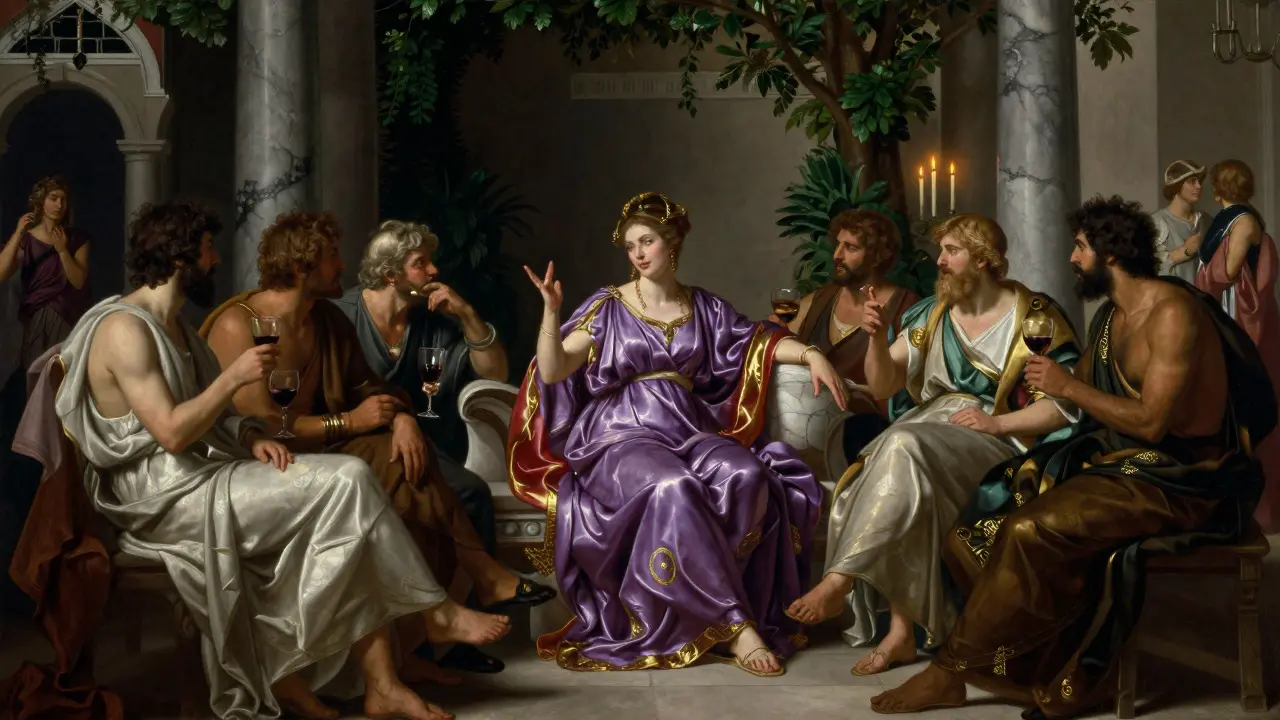
Economics didn't exist in a vacuum; it was deeply embedded in social rituals. The Symposium is a formal drinking party in ancient Greece where men gathered to drink wine, discuss philosophy, and enjoy entertainment. was the primary venue where hetairai showcased their value. At these gatherings, men would compete to secure the company of a particular courtesan. The price of admission to such a gathering was high, covering food, wine, music, and the presence of the women. This event functioned as both a social club and a marketplace. The ability to afford a seat at a symposium with a renowned hetaira signaled wealth and taste. Conversely, relying solely on the one-obol option was considered undignified for a man of means, marking him as either too poor or too unrefined.
This social stratification reinforced the economic divide. The wealthy men who frequented symposia formed tight-knit networks based on shared expenses and exclusive access. The poorer citizens, who might use the services of pornai, remained on the periphery of these elite circles. Thus, the price of sex was not just about the transaction itself but about which social world you were accessing. The obol bought a moment of relief; the mina bought a network of influence.

Long-Term Economic Impact on Athenian Society
Over time, the existence of a regulated (though loosely enforced) sex work economy contributed to the broader monetary circulation in Athens. Silver coins flowed from the pockets of citizens to the hands of workers, keepers, and eventually back into the general economy through purchases of food, clothing, and goods. This constant flow helped stabilize local markets. Furthermore, the demand for cosmetics, perfumes, and fine clothing driven by the sex work industry supported other sectors of the economy, including textile production and trade imports from Egypt and Persia.
Yet, the system also highlighted deep inequalities. While men could spend freely, women's economic contributions were largely invisible in official records. Historians debate whether this informal economy helped sustain the population during times of war or famine, providing a safety net for those who lost jobs or lands. Regardless, the "one obol" standard remained a benchmark for centuries, illustrating how ancient societies codified human relationships into measurable economic units. It was a primitive form of commodification that laid early groundwork for modern concepts of labor, service, and market value.
Frequently Asked Questions
Was one obol a fair wage for a prostitute in ancient Athens?
From a modern perspective, likely not, especially considering the cuts taken by brothel keepers. However, within the context of the ancient economy, it was a standardized market rate comparable to other basic goods. For the client, it was affordable; for the worker, it was a survival income rather than a profit center.
What was the difference between a pornai and an hetaira?
A pornai was a common prostitute who offered brief sexual services for a low, fixed price (like one obol). An hetaira was a high-status courtesan who offered companionship, conversation, and sexual services to wealthy clients for much higher fees, often involving long-term patronage.
Did all women in sex work have the same legal status?
No. Most were non-citizens, either foreigners or slaves. Slaves were property of their owners (often brothel keepers), while free women had slightly more autonomy but still lacked full civic rights. Both groups were excluded from voting and holding office.
How did the price of sex affect social class in Athens?
It reinforced class divisions. Wealthy men spent heavily on hetairai to display status and build networks at symposia. Poorer men used the cheaper services of pornai. The type of sex work a man consumed was a visible marker of his economic standing and social sophistication.
Could a prostitute save enough money to buy her freedom?
Yes, particularly for enslaved women. Many saved a portion of their earnings to purchase their manumission (freedom). Once free, they could operate independently, often becoming successful entrepreneurs or influential social figures, though this path required significant effort and luck.