Medieval Intersex Timeline & Response Explorer
Step through the key moments from the 12th to 15th centuries and see how medical, legal, and social responses shifted over time.
When you think of the Middle Ages, images of knights, castles, and rigid religious rules probably come to mind. It’s easy to assume that people who didn’t fit neatly into male or female categories were simply erased from history or treated with total indifference. But if you dig through the surviving manuscripts, court records, and medical texts from the 12th to 15th centuries, a different picture emerges. These weren't just blank spaces in the historical record; they were active moments of legal debate, medical curiosity, and social negotiation. The term intersex is modern, but the conditions it describes have always existed, and medieval societies had to figure out how to handle them without the benefit of modern biology.
The core issue for medieval authorities wasn't usually about identity or self-expression. It was about property, inheritance, and sexual permission. If a person had ambiguous genitalia, could they marry? Could they inherit land? Did they count as one soul or two? These questions drove the scattered records we have today. They show a society trying to force complex biological realities into binary legal boxes, often with surprising flexibility or, conversely, harsh rigidity depending on the region and the specific case.
The Medical Lens: Galen and the 'Hermaphrodite'
To understand how medieval people viewed these bodies, you have to look at what they read. The dominant medical framework in Europe came from Galen, a Greek physician whose works were translated into Latin and Arabic during the early Middle Ages. Galen believed that all humans started as male in the womb and that environmental factors could prevent full development, resulting in a "hermaphrodite." This idea stuck around for centuries because it offered a simple explanation for a confusing reality.
By the 13th century, physicians like Maimonides in the Islamic world and various European university doctors were debating whether these individuals could truly be considered human in the full legal sense. The prevailing medical opinion was that the sex was determined by the presence of functional reproductive organs. If a person had a penis, they were male; if they had a vagina and uterus, they were female. Anything else was seen as a defect, a deviation from the natural order. This medical definition became the basis for legal arguments later on. You can see this in the Summa of various theologians who cited medical authorities to justify why certain marriages should or shouldn't be annulled.
Legal Battles: Inheritance and Marriage
Where the rubber met the road was in the courts. Medieval law, particularly Canon Law (church law) and civil law, had strict requirements for marriage. A valid marriage required a man and a woman. So, what happened when someone with intersex traits wanted to marry?
One of the most famous cases involves a woman named Joan of Arc's contemporaries, though Joan herself wasn't intersex, the era saw many similar disputes. A more direct example comes from the 14th century in France, where a person assigned female at birth but with developed testicles sought to marry a woman. The local bishop had to decide if this union was valid. The decision often hinged on a physical examination conducted by midwives or physicians. If the examiner found testes, the person might be legally reclassified as male, invalidating any previous marriage to a woman and potentially allowing marriage to another woman. If no testes were found, the person remained female in the eyes of the law.
This process highlights a key social response: the body was evidence. It was put on trial. The outcome depended less on how the person lived their life and more on what the examiners saw. This created a system where social status was literally determined by anatomy, leading to high-stakes outcomes. Lose the legal battle, and you might lose your home, your spouse, or your freedom.

Social Responses: From Acceptance to Stigma
It’s tempting to view the Middle Ages as a monolith of persecution, but social responses varied wildly by class, location, and time. In rural communities, practicality often outweighed theoretical purity. If a neighbor had ambiguous features but worked hard, raised children, and paid taxes, they were often accepted as part of the community fabric. The church’s interest was primarily in sacramental validity, not necessarily in policing daily life unless a dispute arose.
However, as urban centers grew and legal systems became more formalized, stigma increased. The label "hermaphrodite" carried connotations of unnaturalness. Some local laws explicitly banned intersex individuals from holding office or inheriting titles, viewing their condition as a sign of divine displeasure or moral weakness. Yet, there were also pockets of acceptance. In some Italian city-states, wealthy families sometimes kept such secrets within the household to preserve inheritance lines, showing that economic motivation could override social prejudice.
| Aspect | Rural Communities | Urban/Court Settings |
|---|---|---|
| Primary Concern | Productivity and social cohesion | Legal validity and property rights |
| Role of Church | Minimal interference unless marriage disputed | Active involvement in defining marital status |
| Outcome of Disputes | Often resolved informally | Formal examinations and written rulings |
| Stigma Level | Low to moderate (pragmatic) | High (legalistic and theological) |
The Role of Midwives and Examiners
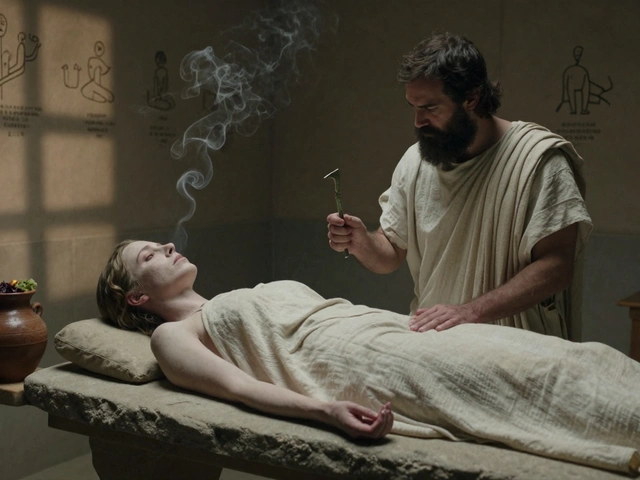
You can’t talk about medieval intersex history without mentioning the people who actually looked. These examinations were usually performed by midwives, who held significant authority in matters of childbirth and bodily integrity. Their testimony was crucial in court. A midwife’s report could make or break a case. They were trained to identify signs of puberty, menstruation, and anatomical structures. Their knowledge was practical, gained through years of assisting births, rather than theoretical study.
This role gave midwives a unique power. They were gatekeepers to legal identity. If a midwife said a person had a uterus, that person was legally female. If she said otherwise, the legal landscape shifted. This dynamic meant that the fate of an intersex individual often rested in the hands of a single expert whose judgment could be influenced by bias, pressure from family members, or genuine uncertainty. It was a high-risk profession, both for the examiner and the examinee.

Why These Records Are Scattered
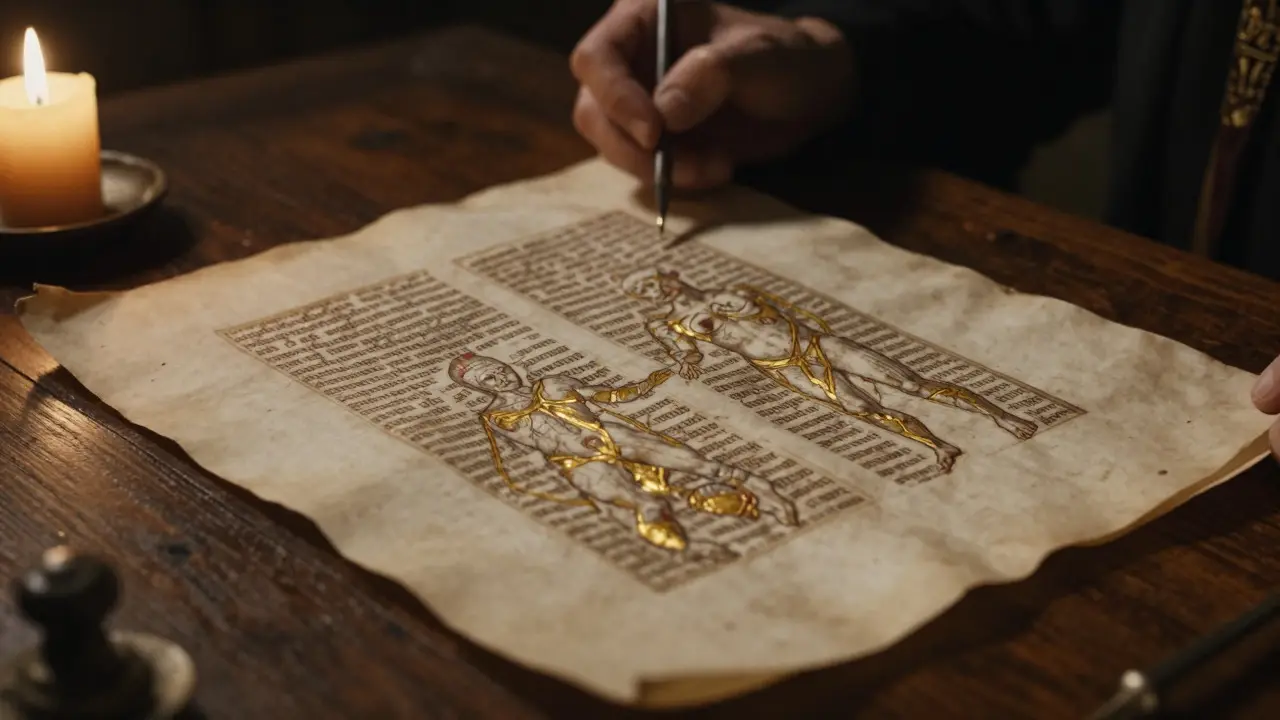
So why do we only have fragments? Partly, it’s because these cases were rare enough that they didn’t generate massive amounts of documentation. Most people lived and died without ever appearing in a legal record. When they did appear, the documents were often destroyed over time due to war, fire, or simple neglect. Additionally, many records were kept in local archives that haven’t been fully digitized or studied by historians specializing in gender and sexuality.Another factor is language. Many records are in Latin, Old French, or regional dialects that require specialized training to interpret. Terms like "hermaphrodite" or "ambiguous" can mean different things in different contexts. Translators have to be careful not to impose modern meanings on medieval words. This linguistic barrier makes it harder to build a complete picture, leaving us with a mosaic rather than a full image.
Lessons for Modern Understanding
Looking back at these medieval mentions helps us understand that the struggle for recognition isn't new. People have always faced challenges when their bodies don't fit societal expectations. The medieval approach, while flawed, shows that societies have always tried to find ways to integrate these individuals, even if those ways were based on outdated science or rigid law. It reminds us that progress is slow and often uneven. What seemed like a settled issue in the 13th century was still being debated in the 15th, and debates continue today.Studying these scattered records isn't just an academic exercise. It provides context for current conversations about healthcare, legal rights, and social acceptance. By understanding how past societies handled ambiguity, we can better appreciate the complexity of our own challenges and the importance of inclusive policies.
Did medieval people use the word 'intersex'?
No, the term 'intersex' is a modern scientific classification. Medieval texts typically used terms like 'hermaphrodite,' 'ambiguous,' or described specific anatomical features. The concept existed, but the vocabulary was different and often less precise.
How were intersex individuals treated in rural areas versus cities?
In rural areas, treatment was often more pragmatic and focused on productivity and community roles. In cities, especially those with strong legal institutions, treatment was more formalized, involving court examinations and strict adherence to canonical definitions of gender for marriage and inheritance.
Who decided the legal sex of an intersex person in the Middle Ages?
Decisions were usually made by a combination of physicians, midwives, and judges. Physical examinations were central, and the findings were interpreted through the lens of contemporary medical theory and legal precedent. Bishops often had final say in marriage-related cases.
Were there any positive portrayals of intersex people in medieval art?
Positive portrayals are rare. Most artistic depictions were either symbolic (representing duality or confusion) or satirical. However, some saints' lives included figures with ambiguous traits who were celebrated for their piety rather than their anatomy, suggesting that virtue could transcend physical characteristics.
How does medieval intersex history compare to ancient Roman views?
Ancient Romans had more explicit legal codes regarding hermaphrodites, often granting them the right to choose their sex after reaching adulthood. Medieval Christian Europe moved away from this choice-based model toward a more fixed, biologically determined model influenced by Galenic medicine and Canon Law.