Sexual Response Model Simulator
Select a Model
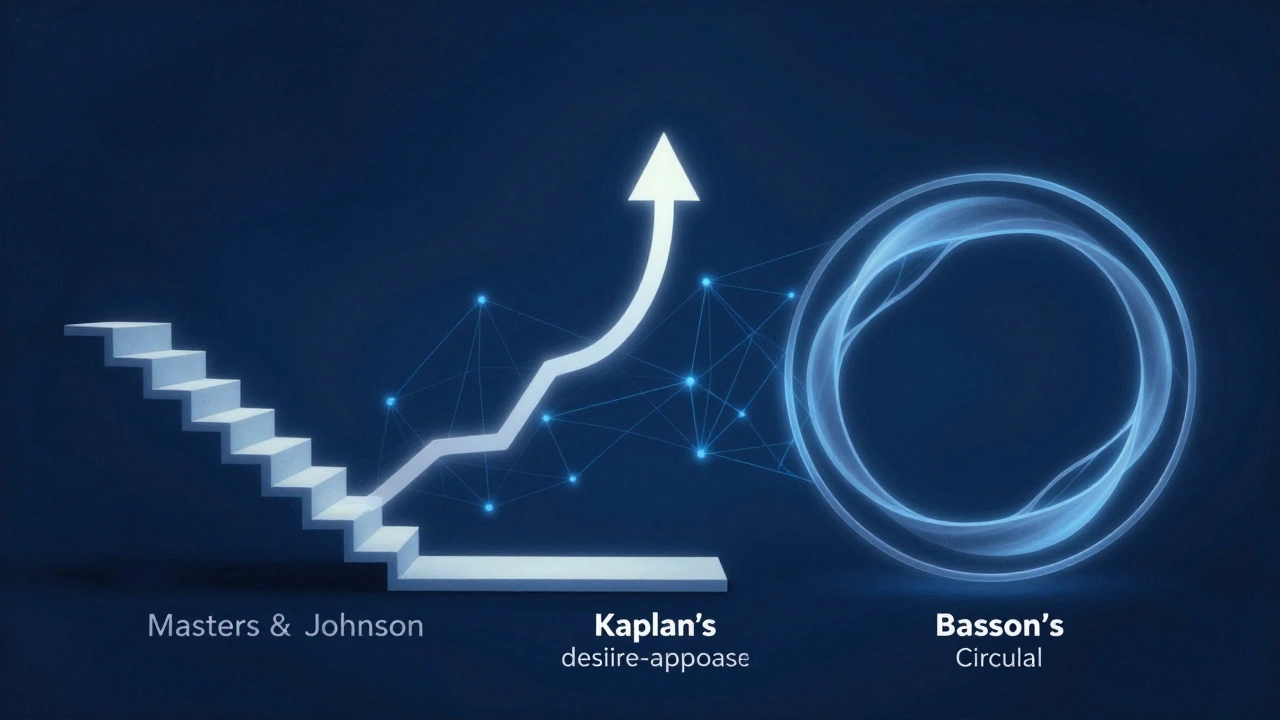
Masters & Johnson (1966)
The classic linear progression.
Kaplan (1979)
Adds psychological motivation.
Basson (2000s)
Circular model for responsive desire.
Simulation Output
Masters & JohnsonFor decades, we treated solo sex as a private mystery, often shrouded in shame or dismissed as mere habit. But modern physiology tells a different story. Your body doesn’t just “do it” because you want to; it executes a complex, coordinated symphony involving your brain, nervous system, hormones, and muscles. Understanding the physiology of solo sexual response isn’t just about anatomy-it’s about decoding how your mind and body talk to each other during one of the most natural human experiences.
From Linear Steps to Circular Cycles: How Models Evolved
To understand where we are today, we have to look at where we started. In 1966, physicians William H. Masters and Virginia E. Johnson published their groundbreaking work, *Human Sexual Response*. They introduced the world to a four-phase model that became the gold standard for decades: excitement, plateau, orgasm, and resolution. It was linear, predictable, and heavily focused on what happened in the genitalia.
But human experience is rarely that neat. By 1979, sex therapist Helen Singer Kaplan argued that this model missed a crucial piece: motivation. She proposed a three-stage model-desire, excitement, and orgasm-placing psychological drive before physical reaction. This was vital for understanding solo sex, where desire often starts internally through fantasy rather than external partner cues.
Then came a major shift in the early 2000s with researcher Rosemary Basson. She challenged the idea that desire always comes first. Her circular model included six stages, starting with sexual neutrality. This concept explains why many people, especially women, don’t start masturbating because they are suddenly "horny." Instead, they might be stressed or tired (neutral), engage in self-stimulation for comfort or stress relief, and only then feel desire and arousal. This model acknowledges that solo sex can be an act of self-soothing, not just a pursuit of climax.
| Model / Researcher | Year | Key Phases / Concepts | Relevance to Solo Sex |
|---|---|---|---|
| Masters & Johnson | 1966 | Excitement, Plateau, Orgasm, Resolution | Established physiological baseline; linear progression. |
| Kaplan | 1979 | Desire, Excitement, Orgasm | Added psychological motivation (fantasy/desire) as a precursor. |
| Basson | Early 2000s | Circular: Neutrality, Stimuli, Arousal, Satisfaction | Explains responsive desire; sex for stress relief/comfort. |
The Brain-Body Connection: Neurotransmitters and Nerves
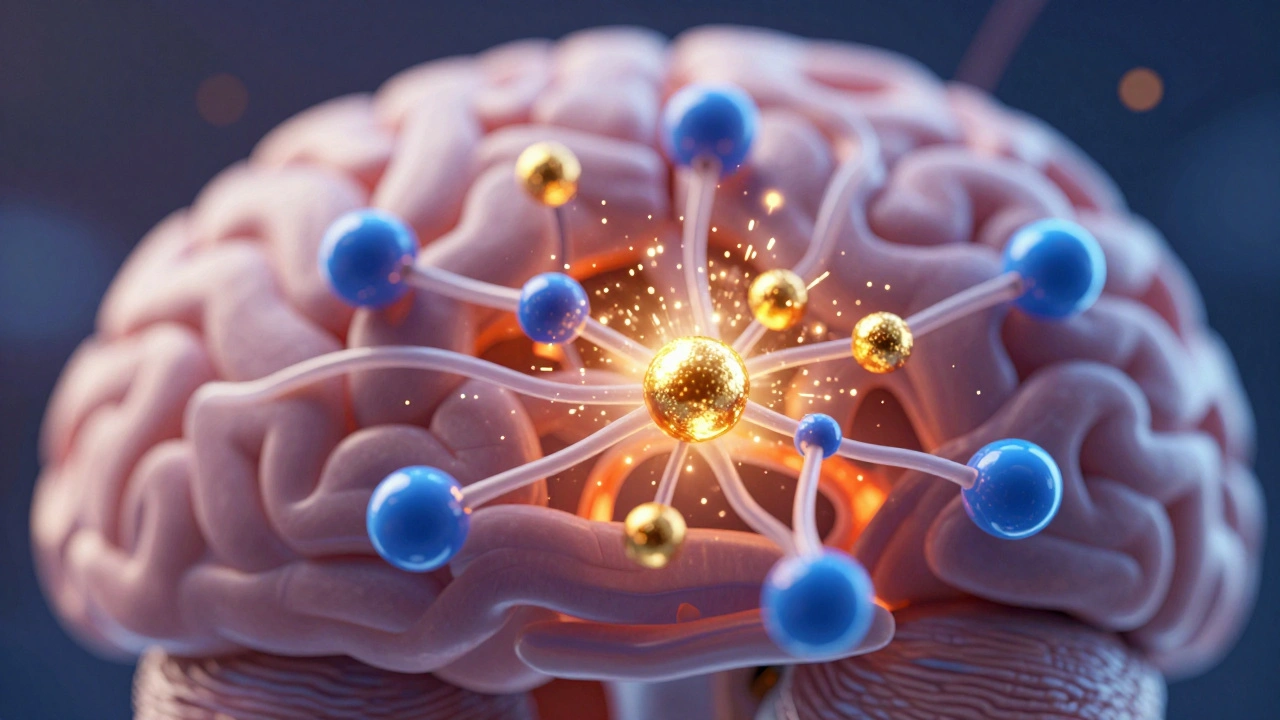
Your genitals don’t operate in isolation. The journey begins in the brain. When you view erotic content, recall a memory, or simply touch yourself, cortical and limbic regions process these stimuli. This triggers the hypothalamus and brainstem, which control your autonomic nervous system-the part of your body that runs automatically, like breathing or heart rate.
A 2003 neurophysiology review highlights specific chemicals that act as the "gas" and "brakes" for arousal:
- Dopamine: Known as the reward chemical, dopamine surges in the mesolimbic pathway (including the nucleus accumbens). It drives motivation and approach behavior, making you want to continue stimulation.
- Nitric Oxide (NO): This is the key to physical erection and engorgement. NO relaxes smooth muscles in the arteries of the penis and clitoris, allowing blood to flood into the tissues.
- Oxytocin: Often called the "cuddle hormone," oxytocinergic neurons in the paraventricular nucleus facilitate erectile function and enhance the feeling of intimacy and pleasure during orgasm.
Conversely, certain chemicals inhibit arousal. Serotonin and GABA tend to suppress sexual function. This is why Selective Serotonin Reuptake Inhibitors (SSRIs), commonly prescribed for depression, often lower libido or delay orgasm. Similarly, endogenous opioids rise after orgasm, creating a sense of satiety and contributing to the refractory period where further stimulation feels less appealing.
The Four Phases of Physical Response
Regardless of gender, the body follows a recognizable pattern of physiological changes during solo sexual activity. While individual timing varies, the core mechanisms remain consistent.
1. Excitement Phase
This is the ignition switch. Psychological stimuli trigger parasympathetic nervous system activity. Heart rate increases, breathing deepens, and blood pressure rises slightly. Genitally, this means vasocongestion-blood rushing to the area. For men, this results in penile erection via increased arterial inflow. For women, it causes vulvar swelling, clitoral engorgement, and vaginal lubrication as plasma transudate moves through the vaginal walls.
2. Plateau Phase
If stimulation continues, the body enters a state of sustained high arousal. Muscle tension builds throughout the body, not just in the pelvis. Skin flushing may occur (often called "sex flush"), and nipples may erect. Genital blood flow remains high, maintaining erection or engorgement. Subjectively, this is where pleasure intensifies, and the urge to reach orgasm becomes urgent.
3. Orgasm Phase
This is the peak of autonomic and cortical activity. It involves rhythmic, involuntary muscular contractions. In men, this typically includes ejaculation, controlled by sympathetic and somatic spinal reflexes. In women, it involves repetitive contractions of the pelvic floor and vaginal muscles. Both sexes experience a massive release of neurotransmitters, including oxytocin and endorphins, creating intense pleasure and emotional release.
4. Resolution Phase
The body returns to its resting state. Blood leaves the genitalia, muscle tension dissipates, and heart rate slows. Men typically enter a refractory period, a time during which re-erection and re-orgasm are physiologically difficult or impossible due to rising prolactin and opioid levels. Women may not experience a distinct refractory period, allowing for multiple orgasms if stimulation continues, though this is not universal.
Gender Differences: Concordance and Context
While the physiological hardware is similar, the software-how we perceive and report arousal-differs. A seminal 2003 article in the Monitor on Psychology by the American Psychological Association (APA) reviewed studies using penile plethysmography and vaginal photoplethysmography. These devices measure genital blood flow objectively while participants report their subjective feelings.
The findings were striking. Men generally show high concordance: if their penis is erect, they usually report feeling aroused. Women, however, often show low concordance. A woman may have significant genital lubrication and vasocongestion (physical arousal) without feeling mentally aroused, or vice versa. Her arousal is more influenced by context, emotion, and cognitive factors.
This doesn’t mean female arousal is "broken" or less real. As researcher Dr. Nicole Prause has noted, brain imaging shows overlapping neural circuits in both genders during arousal. The difference lies in the integration of sensory input. For many women, solo sex is deeply tied to emotional intimacy (even with oneself) or stress relief, aligning with Basson’s circular model. For men, the link between visual/tactile stimulus and physical response is often more direct.

Factors Influencing Solo Sexual Response
Your ability to navigate these phases smoothly depends on more than just technique. Several external and internal factors play a role:
- Medications: As mentioned, SSRIs and opioids can dampen arousal. Antihypertensives may affect blood flow, impacting erection or lubrication.
- Cardiovascular Health: Since arousal is essentially a vascular event (blood flow), heart health directly impacts sexual function. Poor circulation can lead to difficulty achieving or maintaining arousal.
- Mental State: Stress, anxiety, and shame activate the sympathetic nervous system’s "fight or flight" response, which can override the parasympathetic "rest and digest" mode needed for arousal. This is why relaxation is often a prerequisite for satisfying solo sex.
- Age: Hormonal changes, such as menopause in women or declining testosterone in men, can alter the intensity of desire and the speed of physical response, but do not eliminate the capacity for pleasure.
Conclusion: Embracing the Complexity
The science of arousal reveals that solo sexual response is a dynamic interaction of biology and psychology. It is not a mechanical checklist but a fluid process influenced by your brain chemistry, emotional state, and physical health. Whether you follow the linear path of Masters and Johnson or the circular journey of Basson, understanding these mechanisms can help you communicate better with your own body, reduce performance anxiety, and appreciate the intricate beauty of human physiology.
Does masturbation follow the same physiological stages as partnered sex?
Yes. Clinical resources like the Cleveland Clinic confirm that the four phases-desire, arousal, orgasm, and resolution-occur in the same sequence during masturbation as they do during intercourse. The primary difference is the source of stimulation (self vs. partner) and the potential for greater control over pacing and intensity.
What is the "refractory period" and does everyone experience it?
The refractory period is a recovery phase after orgasm during which further orgasm is difficult or impossible. It is most common and pronounced in male-bodied individuals due to hormonal shifts like increased prolactin. Many female-bodied individuals do not experience a strict refractory period and may be capable of multiple orgasms, though this varies greatly by person.
How do antidepressants affect sexual arousal?
Selective Serotonin Reuptake Inhibitors (SSRIs) increase serotonin levels in the brain. Since serotonin acts as an inhibitory neurotransmitter for sexual function, this can lead to reduced libido, delayed orgasm, or difficulty achieving arousal. This is a well-documented side effect affecting both men and women.
Why do women sometimes show physical arousal without mental desire?
Research shows that female genital response (lubrication, swelling) can occur independently of subjective desire. This is explained by Rosemary Basson’s circular model, which suggests that physical stimulation can precede and generate desire, rather than desire always coming first. Context, stress levels, and cognitive focus play larger roles in female arousal patterns compared to males.
What role does nitric oxide play in sexual arousal?
Nitric oxide (NO) is a critical molecule for vasodilation. It relaxes the smooth muscles in the arteries of the penis and clitoris, allowing blood to flow into the erectile tissues. Without adequate NO production, achieving erection or engorgement is difficult, which is why medications for erectile dysfunction often target this pathway.