Masturbation History Timeline
Historical Attitudes Timeline
Sumerian god Enki creates rivers through masturbation. Egyptian creator god Atum uses same act to bring world into being.
Ancient societies viewed masturbation as sacred, not taboo.
Roman social rules: Masturbation seen as weakness and surrender of masculinity.
Diogenes masturbates publicly to challenge social norms.
"Onania" pamphlet published: Claims masturbation causes blindness, madness, death.
Misinterprets biblical story of Onan for moral panic.
Samuel-Auguste Tissot's book claims masturbation drains "vital fluids" causing epilepsy and insanity.
Medical misinformation spreads with no scientific basis.
Victorian era: Masturbation linked to insanity. Brutal treatments including genital cages, electric shocks, clitoridectomy.
First vibrators invented to "treat" hysteria in women.
Havelock Ellis publishes "Studies in the Psychology of Sex": Challenges medical claims with data.
Famous historical figures like Darwin and Newton were masturbators.
Alfred Kinsey's studies: 92% of men and 62% of women masturbated by adulthood.
Data proved masturbation was universal, not rare.
American Medical Association declares masturbation normal.
DSM-II removes masturbation as disorder in 1968.
Scientific studies confirm masturbation benefits: Reduces stress, improves sleep, may lower prostate cancer risk.
Research shows masturbation occurs in primates for evolutionary advantages.
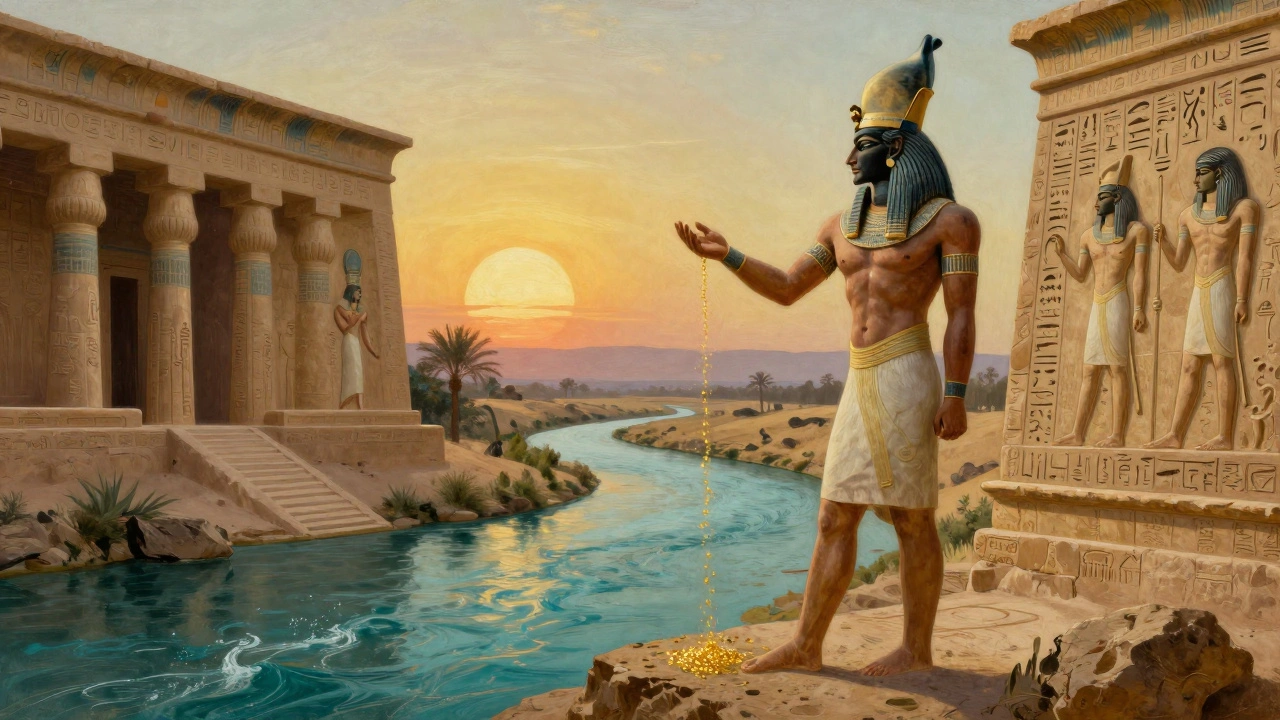
Long before doctors called it a disease and psychologists called it normal, masturbation was seen as a divine act. In ancient Sumer, around 4,000 years ago, the god Enki created the Tigris and Euphrates rivers not with thunder or flood, but by masturbation. He ejaculated into dry riverbeds, and water flowed. In Egypt, the creator god Atum brought the world into being the same way-alone, in silence, by his own hand. Even the pharaohs took part in ritual masturbation, pouring their seed into the Nile to ensure its annual flood and the fertility of the land. This wasn’t taboo. It was sacred.
From Sacred Act to Social Taboo
For thousands of years, human societies didn’t see masturbation as shameful. Ancient Greek pottery shows satyrs-half-man, half-goat creatures of lust-masturbating with ease. In comedies by Aristophanes, characters joke about it openly. But Roman social rules changed things. To be a "real man," you had to penetrate, not be penetrated. Masturbating, or even performing oral sex, was seen as surrendering your masculinity. It was weakness. It was submission. And in a culture obsessed with hierarchy, that was dangerous.
Then came Diogenes of Sinope. The Cynic philosopher didn’t care about social rules. He masturbated in public, not to shock, but to prove how absurd they were. When asked why, he replied: "If only it were as easy to banish hunger by rubbing my belly." His point? The body’s natural urges shouldn’t be feared. But most people weren’t listening.
The Rise of "Onanism"
The real shift happened in the 18th century. In 1716, a London pamphlet titled Onania, or the Heinous Sin of Self-Pollution hit the streets. It didn’t just call masturbation sinful-it claimed it caused blindness, madness, and death. The word "onanism" became a catch-all term for the act, pulled from the biblical story of Onan, who spilled his seed on the ground. But the Bible never said he was punished for masturbation. He was killed for refusing to impregnate his brother’s widow. The pamphlet twisted history to scare people.
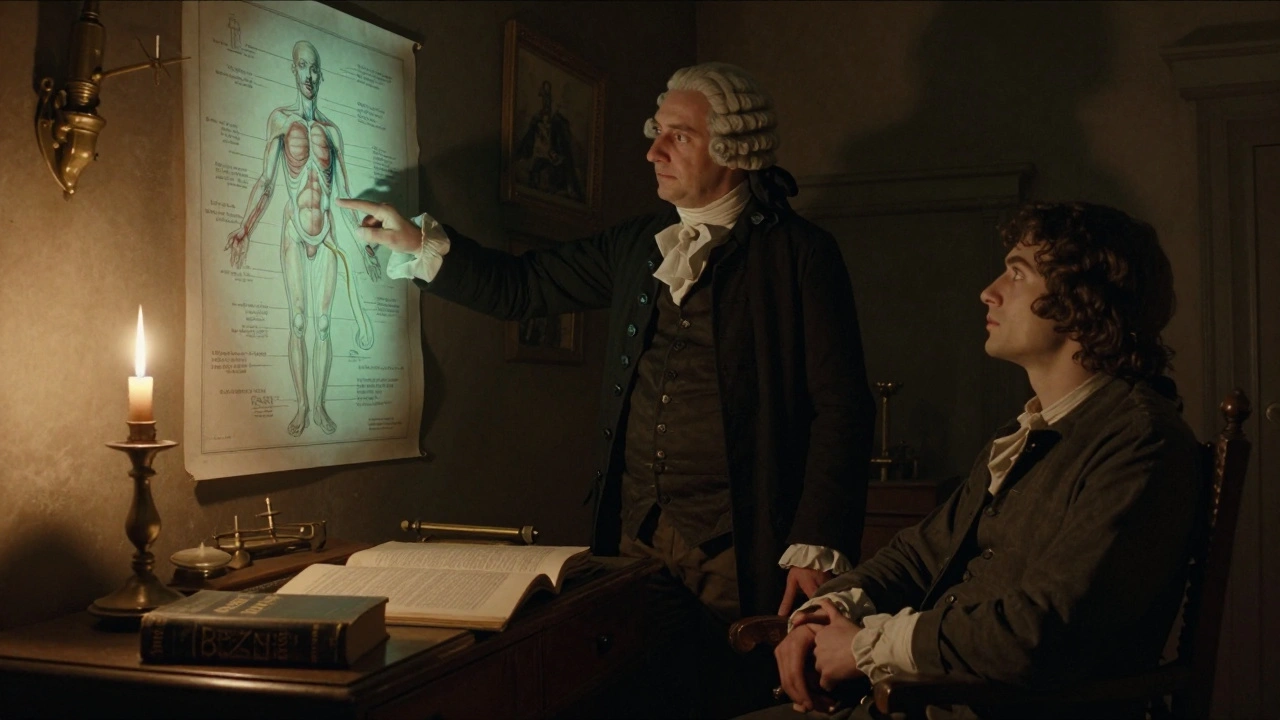
By the 1760s, this fear became medical. A Swiss doctor named Samuel-Auguste Tissot published a book that changed everything. He claimed masturbation drained the body’s "vital fluids," leading to epilepsy, tuberculosis, and even insanity. His book wasn’t based on experiments. It was based on assumptions. But it was written like science. And in a time when medicine had no real way to test claims, people believed it. Kant and Voltaire cited him. Governments passed laws. In Puritan New Haven, Connecticut, masturbation was punishable by death.
The Victorian Nightmare
The 1800s turned fear into torture. Doctors believed masturbation caused mental illness. Jean-Etienne Dominique Esquirol, chief psychiatrist at Paris’s Salpêtrière Hospital, declared it "recognized in all countries as a cause of insanity." Treatments were brutal. Boys were strapped to beds with metal cages over their genitals. Girls were given electric shocks. Some had their clitorises cut off. The goal? To stop the urge before it started.
Even the tools meant to help became weapons. In the 1880s, the first vibrators were invented-not for pleasure, but to treat "hysteria" in women. Doctors used them to induce orgasm, believing it relieved nervous tension. But the machines were kept secret. Women were told they were getting "electrotherapy." Men were told the same. The truth? They were being treated for a condition that didn’t exist.
The Turning Point
The first crack in the wall came in 1897. Havelock Ellis, a British physician, published Studies in the Psychology of Sex. He didn’t just challenge Tissot-he dismantled him. Ellis looked at real data. He named famous men-Darwin, Newton, Goethe-who masturbated. He showed no evidence linked it to disease. His conclusion? "In the case of moderate masturbation in healthy, well-born individuals, no seriously pernicious results necessarily follow."
Then came Alfred Kinsey. In the 1940s and 50s, his team surveyed tens of thousands of Americans. What they found shocked the world: 92% of men and 62% of women had masturbated by adulthood. This wasn’t rare. It was universal. The data didn’t match the moral panic. It matched reality.
In 1972, the American Medical Association officially declared masturbation normal. The DSM-II, the manual doctors used to diagnose mental illness, removed it as a disorder in 1968. Psychiatrist Thomas Szasz summed it up: "Masturbation: the primary sexual activity of mankind. In the nineteenth century it was a disease; in the twentieth, it’s a cure."

Science Finally Catches Up
Today, we know better. A 2024 study in Proceedings of the Royal Society B looked at 246 academic papers and 150 field reports from primatologists. They found that masturbation isn’t just human-it’s ancient. Male primates have been doing it for 40 million years. Why? Two reasons: First, it helps low-ranking males ejaculate faster before being interrupted. Second, it flushes out old sperm, making room for fresher, stronger sperm when mating. Female primates may use it to control which male’s sperm survives by changing vaginal acidity.
Modern human studies show similar benefits. Masturbation reduces stress. It improves sleep. It eases menstrual cramps. Some research suggests regular male masturbation lowers prostate cancer risk by clearing out harmful cells. It’s not just harmless-it’s protective.
From Myth to Medicine
The story of masturbation is the story of how societies control the body. First, it was sacred-a god’s way of creating life. Then it was sinful, a sin that could kill you. Then it was a disease, something to be cut, shocked, and chained. Now? It’s science. It’s health. It’s normal.
What changed? Not the act. We’ve been doing it since before we had words for it. What changed was who got to define it. Priests. Doctors. Politicians. All of them feared what they didn’t understand. Today, we know better. The body doesn’t need saving. It needs understanding.