Havelock Ellis: A Timeline of Sexual Reform
Explore the pivotal moments in Havelock Ellis's life that challenged Victorian norms and laid the foundation for modern sexology.
Imagine living in a society where discussing your own body is considered obscene, where same-sex attraction is treated as a criminal act rather than a natural variation of human experience, and where medical knowledge about reproduction is withheld from the general public. This was the reality of late Victorian and early Edwardian Britain. Yet, amidst this rigid repression, one man dared to challenge the status quo with science, empathy, and an unwavering commitment to truth. That man was Havelock Ellis, an English physician, eugenicist, writer, and social reformer who fundamentally transformed the scholarly study of human sexuality during the Victorian and Edwardian eras. His work laid the groundwork for modern sexology and shifted the conversation around sexuality from moral condemnation to scientific understanding.
The Birth of Modern Sexology
Havelock Ellis did not start his career as a sexologist. In fact, his early work focused on criminology and sociology. However, by the 1890s, he had turned his attention to what many considered taboo subjects. His intellectual journey toward sexual reform began formally with the publication of The Criminal in 1890. This book established him as a serious scientific thinker willing to engage controversial subjects through empirical methodology rather than moral judgment.
Two years later, in 1894, Ellis published Man and Woman: A Study of Secondary and Tertiary Sexual Characteristics. This work emphasized the naturalness of human sexual desire-a concept that Victorian society had not yet accepted. At a time when sexual expression was often viewed as a regrettable necessity or a sign of moral degeneracy, Ellis argued that sexual desire was a fundamental aspect of human nature. He believed that open discussion and scientific education could reduce the shame and fear that characterized Victorian attitudes toward sex.
This shift in perspective was revolutionary. Ellis viewed sexual activity as the healthy and natural expression of love between humans. He sought to dissipate the ignorance that surrounded human sexuality, advocating for comprehensive public education as a means to improve societal health and gender relations. His approach was not just academic; it was a call for social reform rooted in compassion and evidence.
Sexual Inversion and the Challenge to Homophobia
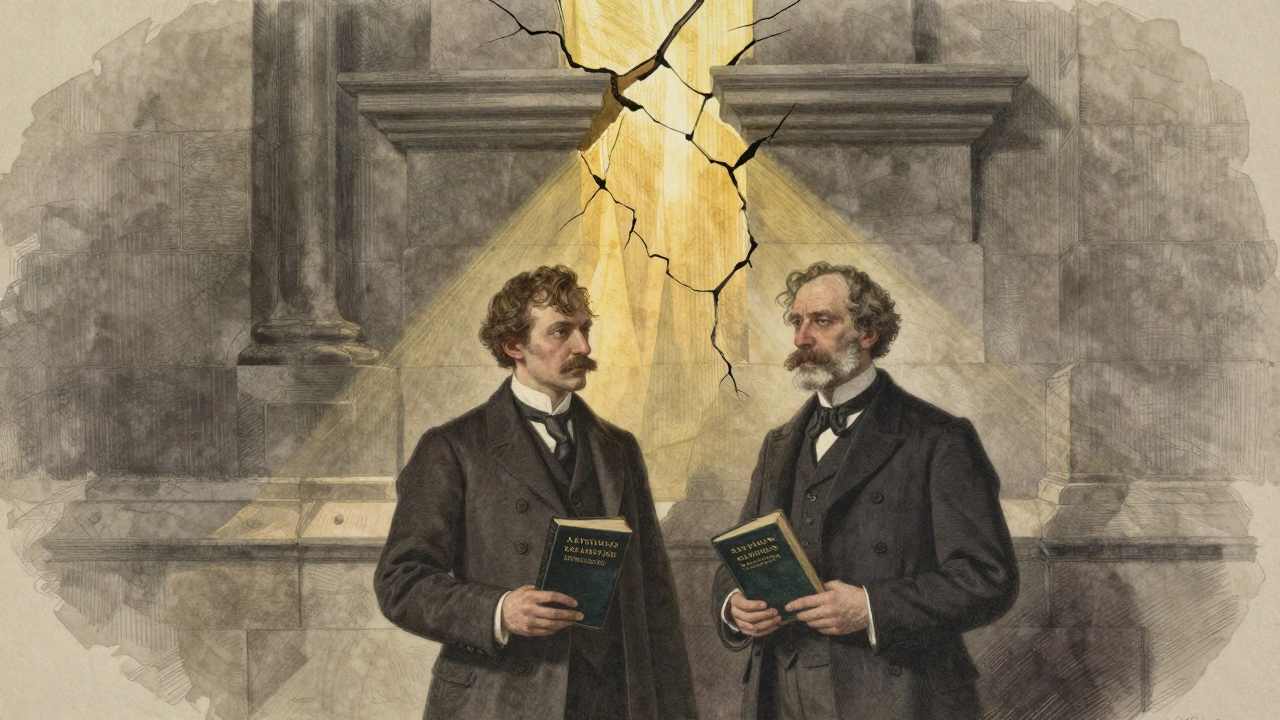
Ellis’s most groundbreaking contribution came in 1897 with the publication of Sexual Inversion. Co-authored with the classical scholar and poet John Addington Symonds, this book became the first medical textbook in English to address homosexuality as a subject worthy of scientific study. Before this, same-sex attraction was largely ignored by medicine or condemned as a sin or crime.
John Addington Symonds, a classical scholar, poet, and travel writer whose personal experiences with same-sex attraction provided crucial insights for the text, brought a deeply personal perspective to the work. Ellis and Symonds made a critical theoretical distinction: they separated homosexuality as a sexual practice from what Ellis termed "inversion," which he understood as a congenital condition. They argued that same-sex attraction was inborn rather than acquired or chosen.
This argument was radical for its time. By framing homosexuality as a natural variation rather than a disease or moral failing, Ellis challenged the legal framework that prosecuted homosexual acts under the Labouchère Amendment. This law had famously ensnared Oscar Wilde in trials that captured public attention and demonstrated the virulent social response to homosexuality among the British public. Ellis and Symonds explicitly contended that criminal penalties were unjust and counterproductive, arguing instead for a medical and sympathetic approach.
The reaction to Sexual Inversion was immediate and hostile. The book was banned in Britain shortly after publication. During a trial related to the book, the judge dismissed Ellis’s claims to scientific legitimacy, declaring them "a pretence, adopted for the purpose of selling a filthy publication." For decades, subsequent volumes of Ellis’s work remained legally available in Britain only to members of the medical profession until 1935. Despite this suppression, the book became a foundational text in the emerging field of sexology, influencing scholars and activists worldwide.
The Seven-Volume Masterpiece: Studies in the Psychology of Sex
Sexual Inversion was just the beginning. Between 1897 and 1928, Ellis published a monumental seven-volume work titled Studies in the Psychology of Sex, a comprehensive and groundbreaking encyclopedia of human sexual biology, behaviour, and attitudes. This series examined an extraordinarily wide range of topics, including masturbation, the physiology of sexual behavior, various sexual practices, and inclinations.
| Topic | Ellis's Perspective | Impact |
|---|---|---|
| Homosexuality | A natural, inborn variation ("sexual inversion") | Challenged criminalization and moral stigma |
| Masturbation | A normal part of sexual development | Reduced fear and guilt associated with self-pleasure |
| Women's Sexuality | Equal to men's; deserving of autonomy and education | Paved the way for feminist discourse on reproductive rights |
| Eugenics | Supported selective breeding for "sound" traits | Complicated legacy; criticized for ethical implications |
Ellis used extensive case studies compiled from multiple sources, representing a revolutionary departure from existing approaches. He drew on personal narratives and testimonies, insisting on a framework of scientific observation rather than moral judgment. This methodological rigor influenced future generations of scholars, including Alfred Kinsey, whose famous reports in the 1940s and 1950s built upon the foundations Ellis had laid.
Beyond homosexuality, Ellis also explored transgender psychology. Alongside German sexologist Magnus Hirschfeld, he helped establish a new theoretical category in sexology that was distinct from homosexuality. Ellis further developed psychological concepts such as narcissism and autoeroticism, which would later be adopted by the psychoanalytic movement. His work showed that sexuality was complex, diverse, and worthy of detailed scientific inquiry.
Gender, Eugenics, and Reproductive Autonomy
Ellis’s vision of sexual reform extended beyond questions of homosexuality to encompass broader issues of gender relations and reproductive autonomy. In 1890, he published The New Spirit, in which he decried the sexual repression evident in Victorian society and championed the rights of women. He positioned himself as a feminist intellectual avant la lettre, though his feminism was complicated by his simultaneous commitment to eugenic theory.
Ellis favored feminism from a eugenic perspective. He believed that enhanced social, economic, and sexual choices for women would result in women choosing partners who were more "eugenically sound." In his view, intelligent women would not choose to marry feeble-minded men if given genuine choice. He argued that birth control and access to contraceptive education were essential instruments for making eugenic selection practical. This stance placed him as an advocate for women’s reproductive autonomy while simultaneously supporting ideas that are now widely criticized for their ethical implications.
This tension reflects the complicated intellectual landscape of early-twentieth-century progressive thought. While Ellis’s support for contraception and women’s rights was forward-thinking, his engagement with eugenics remains a significant flaw in his legacy. Contemporary scholars recognize these limitations, noting that his belief in "improving" the human race through selective breeding was rooted in biases that have no place in modern ethics. Nevertheless, his insistence that women should have control over their bodies and reproductive choices was a crucial step toward gender equality.
The Legacy of Havelock Ellis
Despite the censorship and controversy he faced, Ellis’s impact on public discourse about sexuality grew significantly during the 1920s. As cultural shifts occurred, psychologists and physicians began reconsidering their approaches to sexuality. Ellis’s work, while initially suppressed in Britain, had circulated internationally and contributed to a broader intellectual movement toward reconsidering Victorian sexual repression.
His theoretical framework regarding sexual inversion maintained nuance. While he believed it was generally inborn, he was cautious about claiming it was fully "normal" or "healthy" in his clinical terminology. However, he was unequivocally a strong campaigner against severe social and legal penalties for homosexual behavior. His position represented a significant step forward from the dominant discourse of his era, which treated homosexuality as both a crime and a disease.
Ellis’s legacy extends beyond specific contributions to the study of homosexuality. He played a pivotal role in establishing sexuality itself as a legitimate subject of scientific inquiry. By combining historical documentation with case study methodology, he created a model for sexological research that influenced multiple generations. Today, contemporary sexual medicine, sex therapy, and LGBTQ+ scholarship continue to reference Ellis as a foundational figure who helped make it possible to discuss sexuality in scientific rather than purely moral terms.
In summary, Havelock Ellis challenged the repressive attitudes of his time with courage and intellect. He opened doors for honest conversations about sex, gender, and identity, laying the groundwork for the progress we see today. While his views on eugenics are rightly criticized, his contributions to sexology and sexual reform remain historically significant.
Who was Havelock Ellis?
Havelock Ellis was an English physician, writer, and social reformer active in the late 19th and early 20th centuries. He is best known for his pioneering work in sexology, particularly his efforts to destigmatize homosexuality and advocate for sexual education and reproductive autonomy.
What was "Sexual Inversion"?
"Sexual Inversion" was a 1897 book co-authored by Havelock Ellis and John Addington Symonds. It was the first medical textbook in English to treat homosexuality as a natural, inborn condition rather than a crime or moral failing. The term "sexual inversion" referred to Ellis's theory that same-sex attraction was a congenital reversal of typical gender roles.
Why was Havelock Ellis's work banned in Britain?
Ellis's work was banned because it challenged Victorian moral norms and laws regarding obscenity and homosexuality. Authorities viewed his scientific discussions of sexual topics as scandalous and immoral. His books were restricted to medical professionals in Britain until 1935 due to legal pressures and social conservatism.
How did Havelock Ellis contribute to women's rights?
Ellis advocated for women's sexual liberation and reproductive autonomy. He argued that women should have access to contraception and education about their bodies. Although his views were influenced by eugenic theories, his push for women's choice in partner selection and reproductive control was a significant step toward gender equality.
What is the significance of "Studies in the Psychology of Sex"?
Published between 1897 and 1928, this seven-volume series is considered a foundational text in sexology. It covered a wide range of sexual behaviors and identities using scientific methods and case studies. It helped establish sexuality as a legitimate subject of academic study and influenced future researchers like Alfred Kinsey.
Did Havelock Ellis support homosexuality?
Yes, Ellis was a strong advocate for the decriminalization and destigmatization of homosexuality. He argued that same-sex attraction was a natural, inborn variation and opposed the harsh legal penalties imposed by laws like the Labouchère Amendment. He worked to change public perception from moral condemnation to scientific understanding.
What is the connection between Havelock Ellis and eugenics?
Ellis supported eugenic theories, believing that improving social conditions would lead to better genetic outcomes. He thought that giving women more choice in partners would result in "healthier" offspring. While this view promoted some progressive ideas about women's rights, it is now criticized for its ethical flaws and association with discriminatory practices.
How did Havelock Ellis influence modern sexology?
Ellis established the methodological foundation for sexology by using empirical data, case studies, and scientific observation. His work paved the way for later researchers like Alfred Kinsey and influenced the development of sexual medicine, therapy, and LGBTQ+ advocacy. He helped shift the discourse from moral judgment to scientific inquiry.