Victorian Purity vs. Practice Meter
Slide to explore how the gap between public moral codes and private realities shifted across Victorian society by decade and social class.
We often picture the Victorian era as a time of stifled passion and rigid moral codes, where sex was strictly for procreation and any hint of desire was buried under layers of lace and silence. But if you dig into the actual records from 1837 to 1901, that image falls apart pretty quickly. The reality wasn't a blank void of repression; it was a chaotic mix of public virtue and private experimentation. The gap between what society preached about sexual purity and what people actually did in their bedrooms is one of the most fascinating contradictions in modern history.
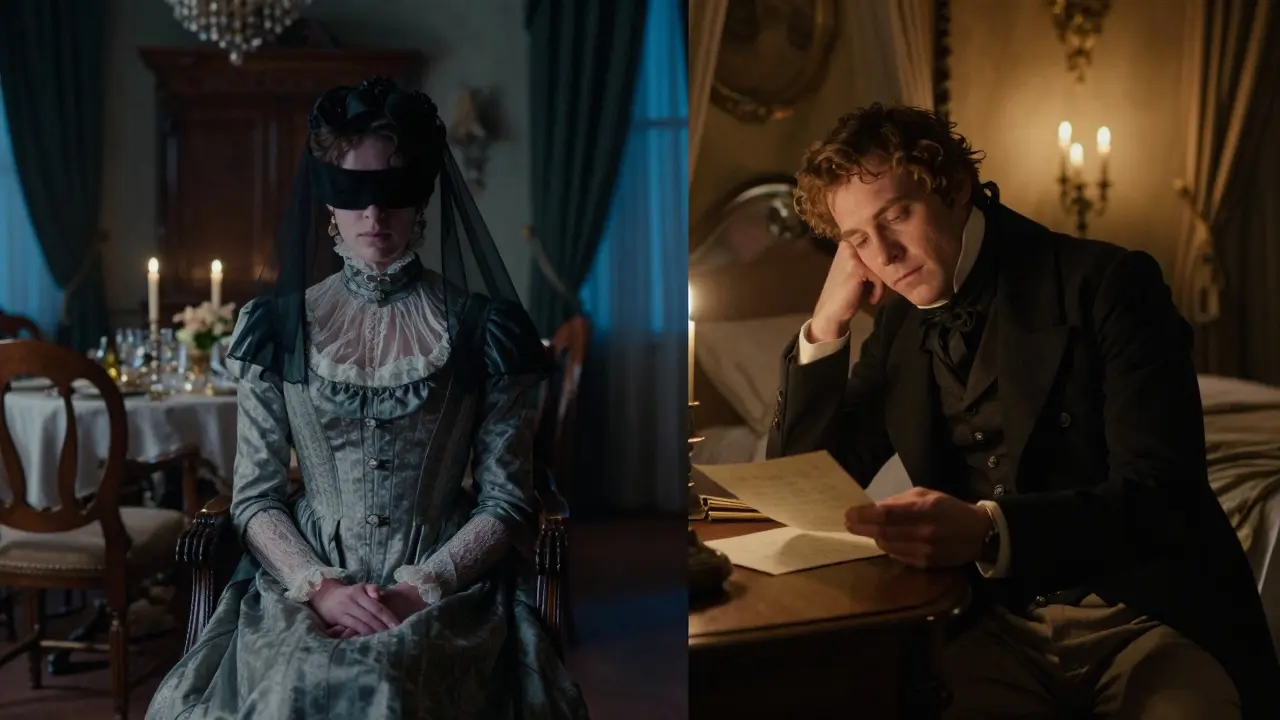
The core of this divergence lies in the concept of "separate spheres." Men were expected to be active and passionate, while women were cast as passive vessels of morality. This double standard created a pressure cooker environment. On the surface, families sat together at dinner without mentioning bodily functions. Underneath, men sought out discreet pleasures, and women navigated a complex web of expectations that often left them with little agency over their own bodies. Understanding this split helps us see that Victorian restraint was less about total abstinence and more about controlling who got to have fun and how.
The Myth of the Chaste Wife
The stereotype of the Victorian woman is the "Angel in the House," a figure so pure she barely existed as a physical being. Literature from the period, like Elizabeth Gaskell’s works, reinforced this idea. Women were taught that their value lay in their modesty and their ability to manage the home. If a woman showed too much interest in her husband, she risked being labeled "shrewish" or "unladylike."
However, domestic diaries and letters tell a different story. While many women adhered to these norms, others found ways to express desire. Some used the language of duty to justify intimacy, framing sex as a service to their husband rather than an act of mutual pleasure. Others, particularly those in higher social classes, had more freedom to explore their interests behind closed doors. The key here is that "chastity" was a performance. It was something you did when neighbors were watching, not necessarily a reflection of your inner life.
Male Privileges and the Double Standard
If women were expected to be silent, men were expected to be discreet. The Victorian male ideal was that of a self-controlled gentleman, but this control was largely about maintaining appearances. Society tolerated male infidelity far more readily than female infidelity, provided it didn’t disrupt the household stability or bring scandal to the family name.
- Prostitution: Red-light districts thrived in major cities like London and New York. These areas were ignored by law enforcement as long as they stayed out of sight. For many working-class men, regular access to prostitutes was a normalized part of adult life, separate from the sacred institution of marriage.
- Bachelor Culture: Unmarried men lived in boarding houses or shared apartments where single-sex environments allowed for open discussion of sexual matters. This contrasted sharply with the mixed-gender dining rooms of married couples.
- Medical Views: Doctors often prescribed opium or other sedatives to women for "hysteria," which was essentially a catch-all term for any behavior that deviated from the passive ideal. Meanwhile, men were rarely pathologized for their sexual appetites unless they became publicly indecent.
Class Divides in Sexual Freedom
You can’t talk about Victorian sexuality without talking about money. The strictness of purity ideology varied drastically depending on your social class. For the upper and middle classes, reputation was currency. A scandal could ruin a family’s business prospects or social standing overnight. Therefore, the performance of purity was essential for survival in these circles.
For the working class, things were looser. With smaller living spaces and less privacy, cohabitation before marriage was common. Religious attendance was lower, and community structures were different. A working-class couple might live together for years before getting married, and neighbors often looked the other way as long as the children were cared for. This suggests that the "repressive" nature of the era was largely a middle- and upper-class construct, enforced by institutions that the poor either couldn’t afford or didn’t care about.
Contraception and Control
One of the biggest myths is that Victorians had no way to prevent pregnancy. They definitely did. The challenge wasn’t availability; it was legality and stigma. Condoms, made from sheep intestines (called gutta-percha later), were available but expensive and primarily marketed to wealthy men for disease prevention. Diaphragms and douches were known, though less reliable.
For women, the lack of reliable contraception meant that sex was inherently risky. Every act carried the possibility of pregnancy, which could end a woman’s career, limit her mobility, and strain her health. This biological reality shaped the power dynamics in marriages. Husbands held the cards because they had fewer consequences to worry about. Women, however, began to organize. By the late 1800s, groups started advocating for birth control rights, arguing that without control over reproduction, true equality was impossible. This laid the groundwork for the women’s suffrage movement, linking sexual autonomy directly to political power.
| Aspect | Public Ideology | Private Reality |
|---|---|---|
| Marriage Purpose | Sacred union for procreation and moral guidance | Often a business arrangement; intimacy varied widely |
| Female Desire | Non-existent or pathological (hysteria) | Present but hidden; expressed through indirect means |
| Male Infidelity | Moral failing, but socially forgivable if discreet | Common among upper/middle classes; normalized via prostitution |
| Contraception | Immoral and dangerous to family values | Used covertly, especially by wealthier couples |
| Sexual Education | Children should not know about sex until marriage | Informal learning from peers, servants, or books |

The Role of Science and Medicine
Science played a strange role in shaping Victorian views on sex. Charles Darwin’s theory of evolution introduced ideas about natural selection and instinct, which some interpreted as justification for male dominance. However, science also challenged religious dogma. As anatomy and physiology became more understood, the mystery of the body diminished. This knowledge leaked into popular culture through pamphlets and lectures, even if they were technically banned.
Doctors became the new arbiters of sexual health. They diagnosed conditions like "spinal irritation" in men and "uterine displacement" in women, conditions that often stemmed from stress or lack of stimulation. Treating these conditions sometimes involved recommending sexual activity, creating a paradox where medicine both policed and permitted sexual expression. This medicalization of sex gave people a scientific cover for discussing topics that were otherwise taboo.
Legacy of the Divergence
So why does this matter today? Because the Victorian model of separating public virtue from private life still influences how we view sexuality. We still struggle with the idea that sex is something to be hidden or performed correctly. The tension between personal freedom and social expectation hasn’t gone away; it has just shifted platforms. What was once managed through church and neighborly gossip is now managed through social media and digital privacy.
Understanding that Victorians weren’t just repressed, but actively navigating a complex set of rules, helps us appreciate the resilience of human desire. People always find a way. Whether it was through secret letters, clandestine meetings, or quiet acts of defiance, the Victorian experience shows that no ideology can fully suppress the complexity of human relationships. The era wasn’t dark and silent; it was loud, messy, and deeply human, just like us.
Did Victorians really think sex was only for babies?
Not exactly. While procreation was the official justification for marital sex, most adults understood that pleasure was a natural part of it. The issue was that pleasure was considered secondary to duty, and any focus on enjoyment was seen as frivolous or immoral, especially for women.
How common was premarital sex in the Victorian era?
It was highly stigmatized in the upper and middle classes, where reputation was crucial. In the working class, cohabitation before marriage was more common and often accepted, though it still carried risks if discovered by authorities or religious leaders.
What methods did Victorians use for birth control?
Options included condoms (made from animal intestine), withdrawal, douching, and herbal remedies. These methods were unreliable and often illegal or socially frowned upon, leading many couples to rely on timing or simply accept the risk of pregnancy.
Why was the 'double standard' so strong in Victorian society?
The double standard protected property and lineage. Since inheritance passed through male lines, ensuring paternity was critical. Female chastity guaranteed legitimate heirs, while male infidelity, if kept secret, did not threaten the family’s legal or financial status.
How did the rise of feminism change Victorian sexual norms?
Feminists argued that women needed control over their bodies to achieve equality. Advocates like Mary Sanger linked birth control to women's rights, challenging the idea that women were passive vessels. This movement gradually shifted public opinion toward viewing sexuality as a matter of personal autonomy rather than just moral duty.