Pompeii's Lupanar Economics Simulator
| City | Evidence Type | Key Economic Insight |
|---|---|---|
| Pompeii | Graffiti & Rooms | Fixed public pricing, high turnover, immediate cash flow. |
| Oxyrhynchus | Papyrus Contracts | Long-term leases, shared living costs, complex legal agreements. |
| Ephesus | Temple Ruins | Religious tithes and cultic offerings rather than direct state tax. |
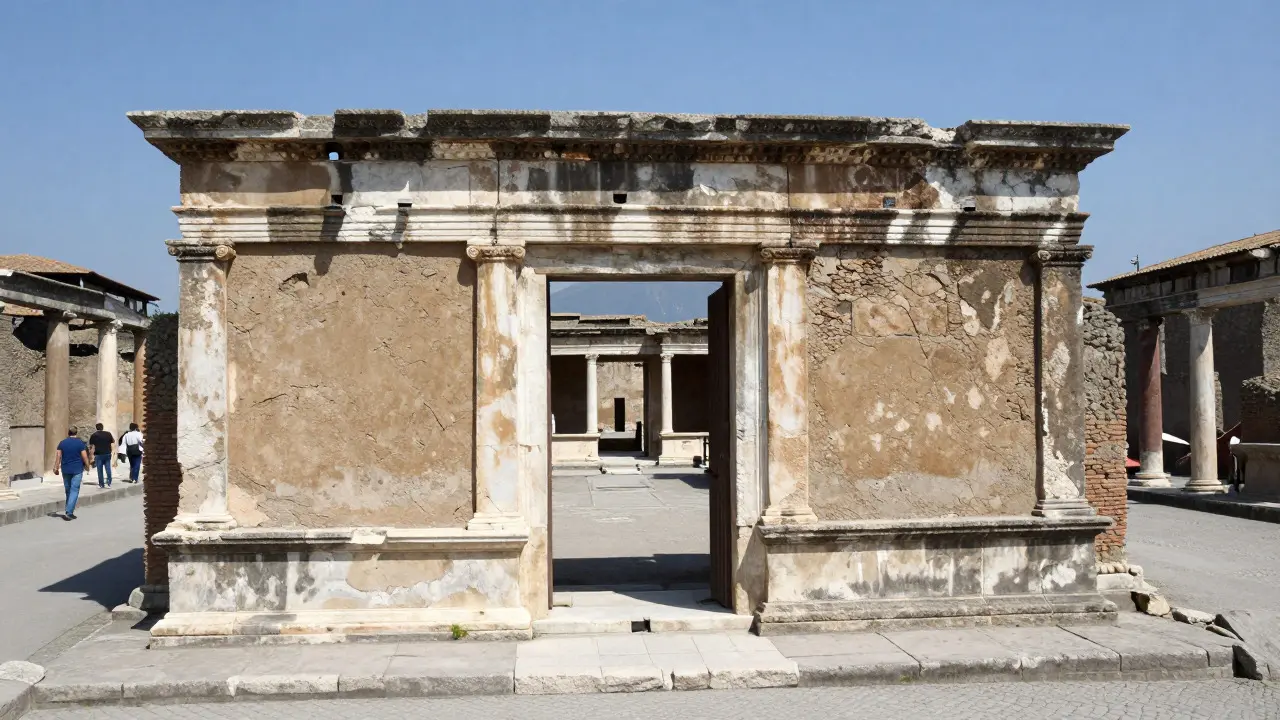
When the volcano Mount Vesuvius erupted in 79 CE, it didn't just bury a city; it froze a moment in time so completely that we can still see the graffiti on the walls and the layout of the rooms where people lived and worked. One of the most debated structures in Pompeii is the building known as the a large-scale commercial establishment for sexual services, often identified by scholars as a brothel or 'lupanar', located near the Forum. For decades, popular culture has painted this site as a chaotic den of vice, but the archaeological record tells a more nuanced story about economics, labor, and daily life in the Roman Empire.
The term "lupanar" comes from the Latin word lupa, meaning she-wolf, which was also slang for a prostitute. However, not every building with graffiti was a brothel. To understand what actually happened inside these walls, we have to look at the physical evidence: the floor plans, the inscriptions, and the artifacts left behind. This isn't just about titillation; it’s about understanding how one of the most stigmatized professions in antiquity functioned within a regulated society.
Decoding the Architecture: What the Rooms Tell Us
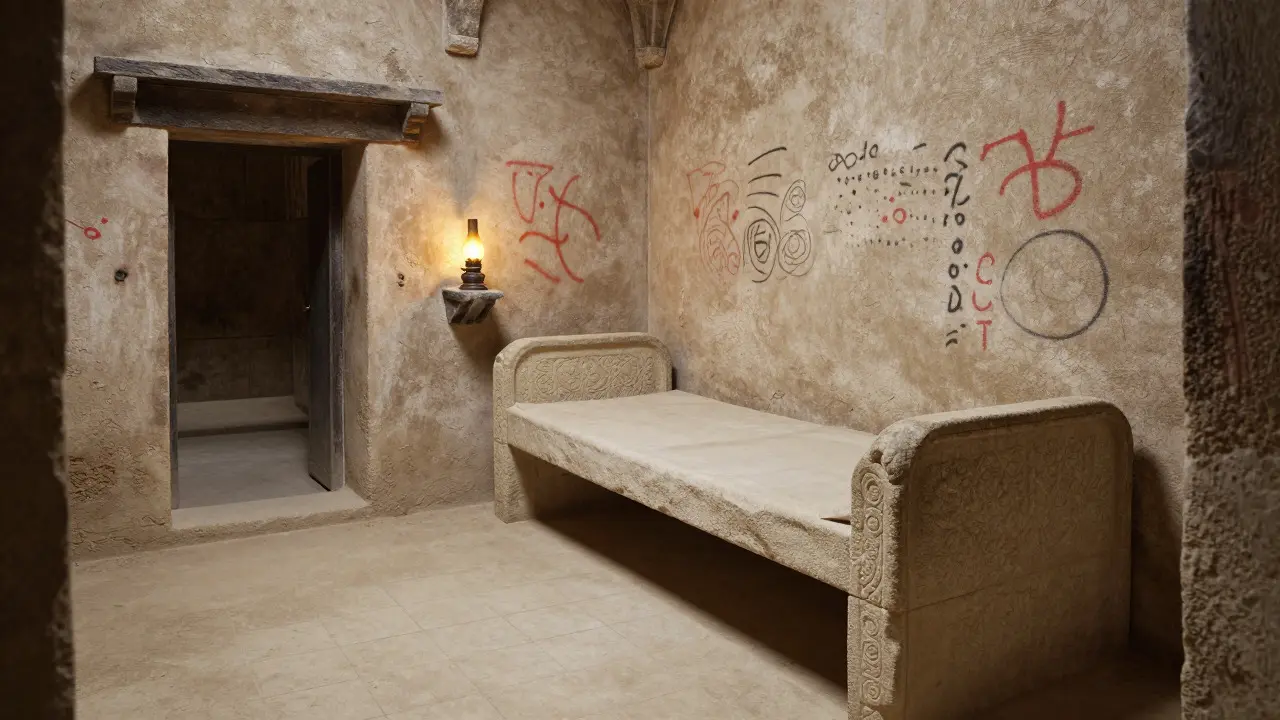
Walk into the main structure on Via dell'Abbondanza, and you notice immediately that it wasn’t built for luxury. It was built for efficiency. The building features a central courtyard surrounded by small, individual rooms. Most of these rooms are barely larger than a closet, measuring roughly 3 to 4 meters square. They contain a single stone bed, often with a carved headboard, and little else. There are no elaborate mosaics or frescoes here-just practical, durable materials.
This design suggests a high-turnover business model. The clients were likely local men, soldiers, or travelers passing through, rather than wealthy elites seeking exotic entertainment. The proximity to the main street and the Forum meant foot traffic was constant. The absence of private bathrooms in many of the smaller rooms indicates that workers relied on public facilities nearby, further emphasizing the commercial, industrial nature of the space. It was a workplace, much like a modern factory floor or a fast-food kitchen, optimized for speed and capacity rather than comfort.
The Graffiti: A Window into Daily Life
If the architecture shows us the business model, the graffiti reveals the human element. The walls of the Pompeian lupanars are covered in thousands of inscriptions. These aren’t just crude drawings; they are price lists, advertisements, and personal messages. Scholars have categorized these texts into three main types: official-looking price tags, humorous or erotic poetry, and casual notes between workers and clients.
One famous inscription reads, Hic bene meretur, which translates to "Here one gets good service." Another lists prices in sestertii, ranging from 1 to 20 coins depending on the room and the service. This standardization is crucial. It implies a level of organization and perhaps even union-like regulation among the workers. We know that prostitutes in Rome paid a tax called the vicesima venalium, a 20% levy on their earnings. The fact that prices were posted publicly suggests transparency, possibly to ensure fair competition or to comply with local authorities.
Beyond the ads, there are personal touches. Some graffiti records the number of times a specific worker was visited, acting as a ledger. Others are playful jokes, showing that the workers had a sense of humor and a social identity distinct from their profession. This humanizes them, moving them away from faceless stereotypes and into the realm of real people navigating their careers and relationships.
Economic Realities and Social Status
Sex work in Rome was not illegal, but it was socially stigmatized. Women who engaged in the trade were considered infames, meaning they lacked full legal rights. They couldn’t make wills or testify in court without an oath. Despite this, the industry was massive. Estimates suggest that in first-century Rome, there were tens of thousands of registered sex workers. In Pompeii, the density of such establishments suggests that the demand was driven by a population that included many transient visitors and a military presence.
The economic impact was significant. Money flowed from clients to workers, and then to landlords, tax collectors, and suppliers of oil, wine, and food. It was a vital part of the urban economy. Yet, the social hierarchy remained rigid. While a rich senator might frequent a high-end brothel, the average citizen dealt with the lower-tier establishments like those in Pompeii. This stratification mirrors modern dynamics, where different tiers of service cater to different income levels.
Comparing Pompeii to Other Ancient Sites
To fully grasp the uniqueness of the Pompeian evidence, it helps to compare it with other ancient sites. Oxyrhynchus in Egypt provides papyri that detail contracts for sex workers, showing long-term arrangements and shared living spaces. Ephesus in Turkey has remains of a large temple complex dedicated to Aphrodite, suggesting a religious dimension to sex work that is less visible in Pompeii. In contrast, Pompeii offers a snapshot of the secular, commercial side of the trade, preserved in ash rather than written in fragile paper.
This comparison highlights that while Pompeii gives us the "how," other sites give us the "why" and the "legal framework." Together, they paint a complete picture of a profession that was deeply embedded in the fabric of ancient society.
Myths vs. Reality: Correcting Common Misconceptions
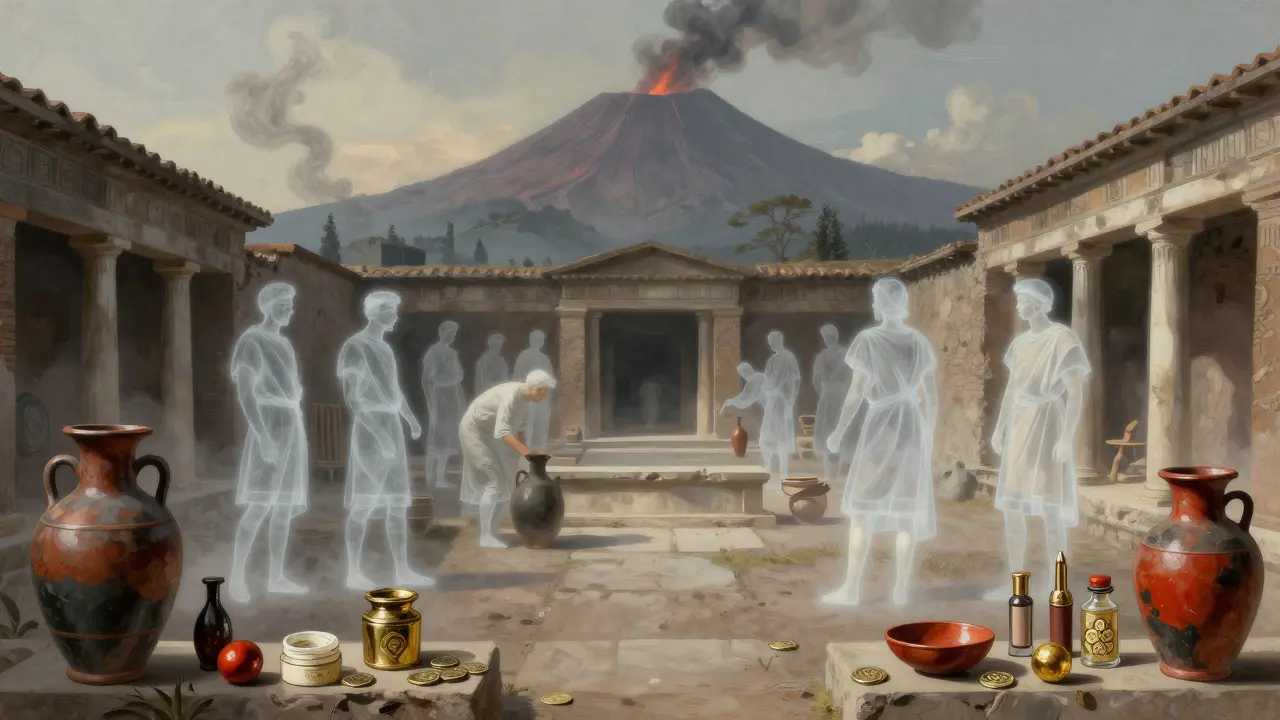
One persistent myth is that all women in these buildings were slaves. While slavery was widespread in Rome, and some sex workers were indeed enslaved, others were freeborn citizens who chose the trade due to poverty or lack of other opportunities. The graffiti sometimes references names that appear in other civic contexts, suggesting a mix of social backgrounds. Another myth is that the conditions were always squalid. While the rooms were small, they were clean and maintained. The presence of oil lamps and storage jars indicates a degree of domestic order. The workers managed their own hygiene and appearance, as reflected in the cosmetics found in some excavations.
Furthermore, the idea that sex work was purely exploitative ignores the agency of the workers. Many saved money, invested in property, and eventually bought their freedom if they were enslaved. The tax records imply a formal relationship with the state, granting them a degree of recognition, however limited. This complexity challenges the simplistic narrative of victimhood and points to a more dynamic social reality.
Preservation and Modern Interpretation
Today, the site is managed by the Parco Archeologico di Pompei. Conservation efforts focus on stabilizing the structures and protecting the delicate plasterwork. Visitors can walk through the rooms, but access is controlled to prevent damage. The interpretation centers on education, using signage to explain the historical context rather than sensationalizing the past. This approach reflects a broader shift in archaeology toward respectful, evidence-based storytelling.
For researchers, the challenge is to separate later additions from original content. Some graffiti may have been added after the eruption, though this is unlikely given the rapid burial. Carbon dating of organic materials and stylistic analysis of the handwriting help confirm the timeline. Every new excavation brings fresh insights, reminding us that our understanding of the past is always evolving.
Frequently Asked Questions
Was sex work legal in ancient Rome?
Yes, sex work was legal and taxed. Workers paid a 20% tax on their earnings, known as the vicesima venalium. However, they faced social stigma and limited legal rights compared to free male citizens.
How do we know the Pompeian building was a brothel?
The identification is based on the combination of small, uniform rooms, explicit graffiti advertising services and prices, and the location near high-traffic areas. No single piece of evidence is definitive, but the convergence of factors strongly supports the conclusion.
Were all sex workers in Pompeii slaves?
No. While many were enslaved, some were free women who entered the trade due to economic necessity or lack of other employment options. The diversity of names in the graffiti suggests a mixed social background.
What did a typical day look like for a worker?
Exact schedules are unknown, but the high turnover rate suggested by the room size implies multiple clients per day. Workers likely managed their own finances, hygiene, and interactions with clients, operating within a structured commercial environment.
How does the Pompeian evidence compare to modern sex work?
Both show patterns of stratification, taxation, and social stigma. However, the Roman context involved different legal frameworks and social norms, making direct comparisons difficult but highlighting universal themes of labor, economics, and marginalization.