Fact vs. Fantasy: Etruscan History Analyzer
Select a claim made by ancient Greek historians to see how it stacks up against modern archaeological evidence and scholarly views.
Loading...
Loading...
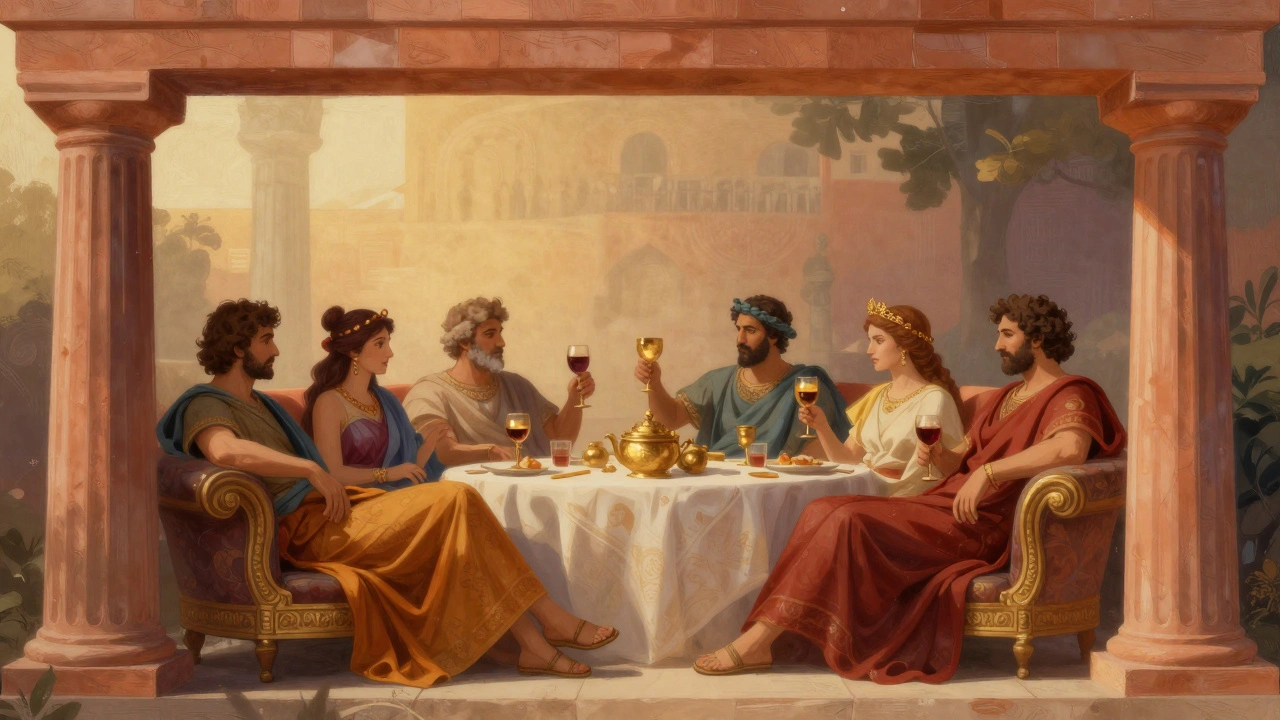
Imagine walking into a party in ancient Italy and seeing women drinking wine with any man they chose, exercising naked in public, and speaking openly about their sexual encounters without a hint of shame. To a Greek observer in the fourth century BCE, this wasn't just surprising-it was scandalous. The Etruscan sexual practices is a subject of intense historical debate, largely because most of what we "know" about them comes from Greeks who were essentially writing the ancient version of a tabloid.
For centuries, historians relied on a few specific Greek writers to understand how the people of Ancient Etruria handled intimacy and gender. But here is the problem: these writers weren't objective anthropologists. They were often biased, projecting their own cultural fears and stereotypes onto a civilization they viewed as both fascinating and morally bankrupt. If you've ever wondered why the Etruscans are often painted as a decadent, libertine society, the answer lies in the ink of a few specific Greek historians.
The "Tabloid" Historians: Theopompos and Timaios
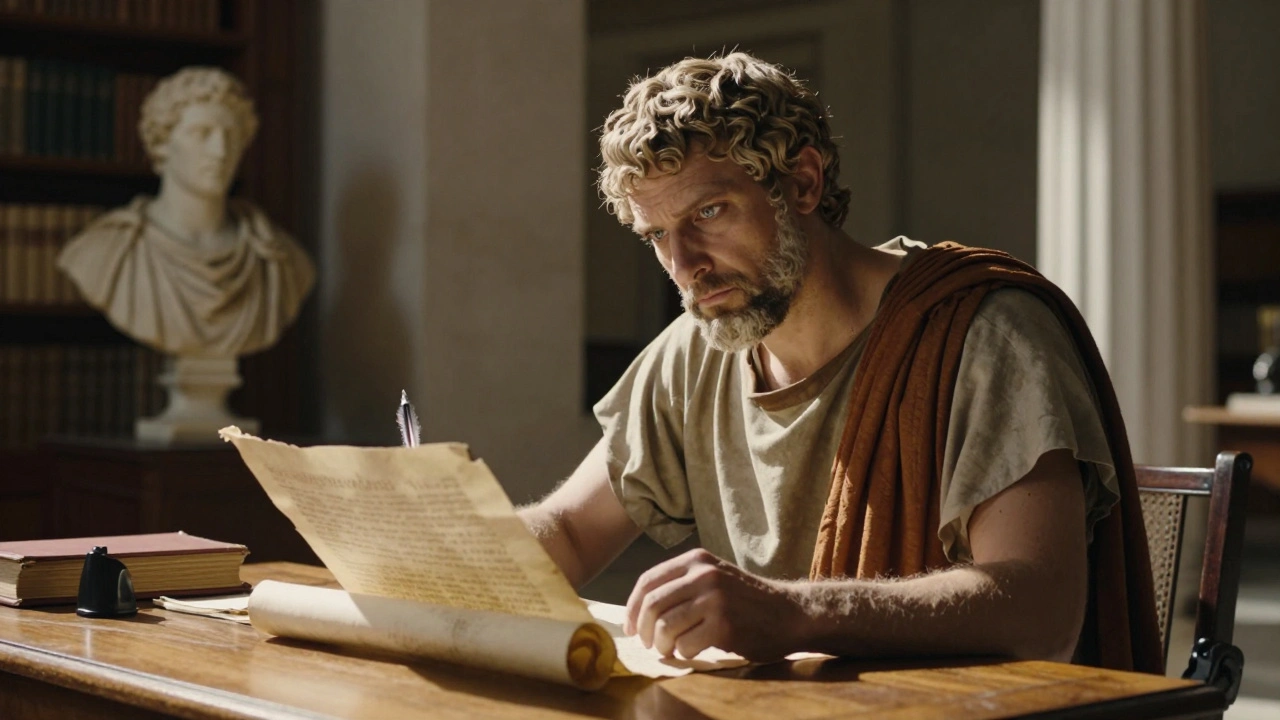
The most influential source of these claims was Theopompos of Chios. In the forty-third book of his Histories, he painted a picture of a society where traditional boundaries didn't exist. He claimed the Etruscans shared their women in common and that their women possessed a level of freedom that would have horrified a Greek husband. According to Theopompos, Etruscan women didn't just stay home; they exercised naked with men and each other, dined with whoever they liked, and toasted with wine to any man in the room.
Then there was Timaios. In his own Histories, he added a darker layer, reporting that slave girls waited on men in a state of total nudity. While this sounds like a window into Etruscan culture, it's more likely a window into how Greeks viewed the "other." By framing the Etruscans as sexually unrestrained, Greek writers could reinforce the perceived superiority of their own structured, restrictive social norms.
A Night in an Etruscan Household
Theopompos didn't just stop at general habits; he described specific social protocols that sound more like a wild party than a family gathering. He wrote that after the drinking stopped and it was time for bed, servants would bring in a variety of partners for the guests: beautiful young boys, prostitutes, and sometimes even the wives of the household members. Once those were "enjoyed," the servants would bring in lusty young men to satisfy the guests.
Interestingly, he mentions that while some of this happened in the open, the Etruscans also used screens made of latticed wooden wands covered with cloths for a bit of privacy. He also noted a strong preference for sexual relations with boys and youths over women. To a modern reader, this sounds like a detailed ethnographic report, but when you look closer, these descriptions start to feel like a caricature of "excess."
| Claimed Practice | Greek Perspective | Modern Scholarly View |
|---|---|---|
| Women exercising naked | Shameful and immoral | Likely exaggerated or misinterpreted |
| Communal sharing of wives | Civilizational collapse | Stereotype of "the foreign other" |
| Open talk of sex acts | Lack of refinement | Cultural difference in bodily modesty |
| Nude slave attendants | Extreme decadence | Common power dynamic in many ancient cultures |
The Childhood of "No Shame"
The Greek accounts even extended to how Etruscan children were raised. Theopompos claimed that paternal identification wasn't a big deal-children were essentially raised by the community and followed the lifestyle of their parents. This supposedly included attending drinking parties where children engaged in sexual relations with whatever women were available.
The most striking part of these accounts is the claimed total absence of shame. Theopompos writes that if a visitor asked where the master of the house was, the servants wouldn't use a polite euphemism. They would bluntly state that the master was having sex, using explicit terminology to describe the act. While this makes for a great story, it fits too perfectly into the Greek trope of the "uncivilized" foreigner who lacks the social grace of a Greek citizen.
When Archaeology Contradicts the Text
Here is where the story shifts. If you look at the actual dirt and stone-the Archaeological Record-the picture changes. Scholar Sybille Haynes has pointed out a massive gap: there is a conspicuous lack of female nudity in Etruscan art from the archaic period. If women were truly exercising naked in public and living in a state of constant exposure, why isn't that reflected in their own art?
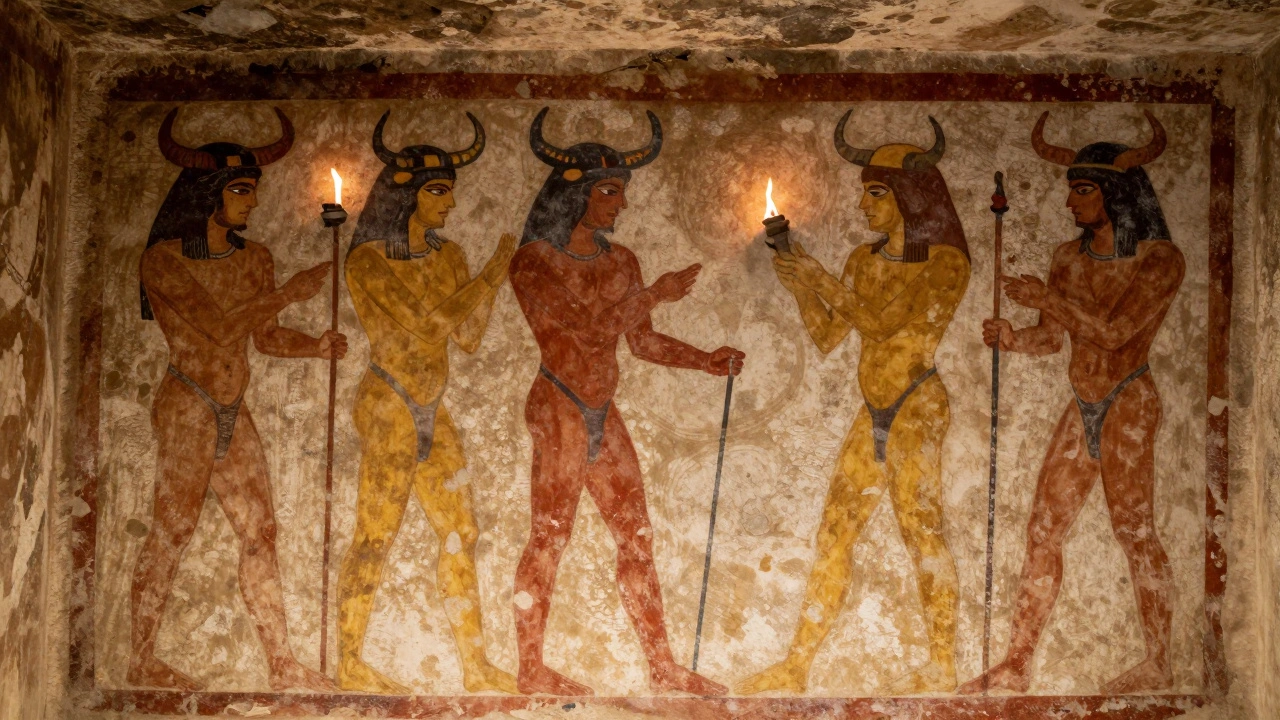
Etruscan tomb art does show intimacy, but it's different. In the "Tomb of the Bulls," we see erotic imagery, and the "Tomb of the Whippings" contains even more explicit scenes. However, modern researchers don't see these as snapshots of a "sex-crazed" society. Instead, these images are often seen as apotropaic symbols-charms intended to ward off evil or invoke fertility to protect the dead. They aren't meant to be a "how-to" guide on Etruscan orgies; they are spiritual tools.
The "Copy-Paste" History
One of the most damning pieces of evidence against the Greek writers is that they seem to have used templates. When you compare Theopompos's descriptions of Etruscan libertinism to Plato's ideal State or Xenophon's accounts of Sparta, the similarities are eerie. It's as if the historians were using a "social experiment" checklist to imagine how an alternative society would function, rather than actually observing the people of Etruria.
This wasn't just a Greek quirk; it became a legacy. The Romans inherited these Greek stereotypes. By the time Roman historians were writing about their Etruscan predecessors, the image of the "luxurious and sexually inappropriate Etruscan" was already set in stone. This ethnic stereotyping served a political purpose: by painting the Etruscans as decadent, the Romans could justify their own dominance as the more "disciplined" and "moral" power.
Distinguishing Fact from Fantasy
So, was everything a lie? Not necessarily. The sexual exploitation of servants mentioned by Timaios was likely a reality, but it wasn't uniquely Etruscan. Greeks and Romans did the exact same thing. The difference is that the Greeks wrote about it as a sign of Etruscan decadence, while ignoring it in their own homes.
The real takeaway is that the Etruscans likely had a very different relationship with the body than the Greeks did. While Greek culture mandated the concealment of women and the strict privacy of sexual acts, the Etruscans may have been more relaxed about physical display. This cultural gap was interpreted by the Greeks as "immorality," but in reality, it was just a different set of cultural rules. The "scandal" was in the eye of the beholder.
Did the Etruscans actually share their wives?
There is no archaeological evidence to support the claim that Etruscans shared wives in common. This claim comes primarily from Theopompos, a Greek historian whose work is now viewed by scholars as heavily biased and designed to paint the Etruscans as morally inferior.
Why is there erotic art in Etruscan tombs?
Modern scholars believe these images served as apotropaic symbols. Rather than representing everyday sexual abandon, they were likely intended to invoke fertility and protect the deceased from evil spirits or the terrors of death.
Who was the main source for these stories?
Theopompos of Chios is the primary source. His detailed and often explicit accounts of Etruscan behavior became the canonical reference for other ancient writers, including the Roman historians and the later writer Athenaeus.
Were Etruscan women really more free than Greek women?
Yes, likely to some extent. While the Greek accounts of nudity may be exaggerated, the fact that Etruscan women attended banquets and interacted more freely with men is generally accepted as a point of cultural divergence between the two societies.
Is there any evidence that the Greek accounts were based on truth?
Some elements, such as the exploitation of slaves, were common across many ancient Mediterranean cultures, including Greece and Rome. However, the specific claims of societal "promiscuity" are largely viewed as ethnic stereotypes rather than factual documentation.
Where to go from here
If you're interested in how ancient cultures were misrepresented, you might want to look into Roman accounts of "barbarian" tribes in Northern Europe. You'll find the same pattern: the "civilized" center painting the "outsider" as sexually wild or morally bankrupt to justify their own social structures. Alternatively, exploring the actual art of the "Tomb of the Bulls" can provide a more authentic (though still mysterious) look at how the Etruscans viewed the connection between sex and the afterlife.