Norse Tree Symbolism Explorer
Tree Symbolism Explained
This interactive diagram illustrates how trees functioned as phallic symbols in Norse culture, connecting fertility, power, and lineage.
Look at a tall tree standing alone in a forest. Its trunk rises straight up, unbroken, reaching toward the sky. Its branches spread wide, like arms holding the heavens. Now imagine that same tree growing right through the roof of a Viking hall, blossoms dripping from its limbs into the smoke-filled air. To the people of ancient Scandinavia, this wasn’t just a tree. It was a phallic symbol-a living representation of male power, lineage, and the force that made families continue.
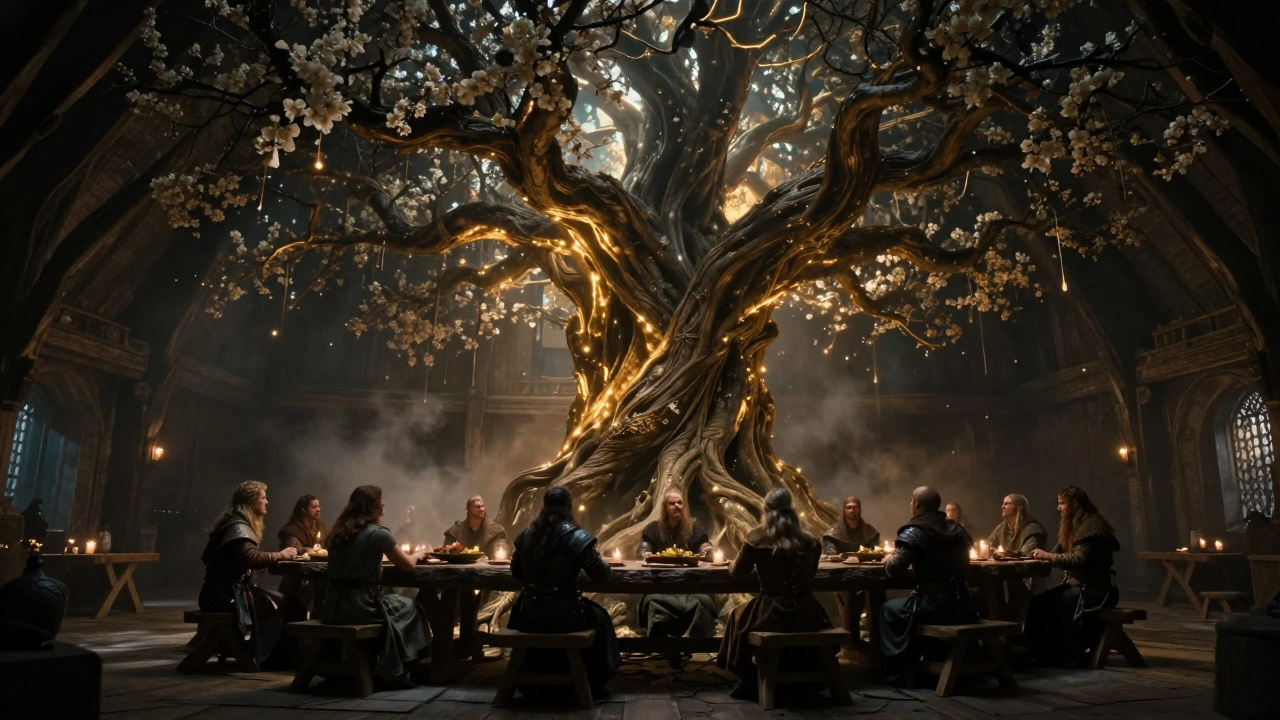
The Tree in the Hall: Barnstokkr and the Sword of Destiny
In the Völsunga saga, written in the 13th century but based on oral tales from centuries earlier, a massive tree grows right through the floor of King Völsung’s hall. It’s called Barnstokkr-Old Norse for ‘child-trunk.’ Its trunk stands in the center of the room, its branches bursting through the roof, heavy with blossoms. No one knows exactly what kind of tree it is-some call it an oak, others an apple tree. But its meaning is clear: this is the heart of the family’s fate.
At a wedding feast, a one-eyed stranger-widely believed to be Odin-walks in and drives a sword deep into the trunk. He says only the man destined to wield it can pull it free. One by one, the guests try. None can budge it. Then Sigmund, the king’s son, steps forward. He grabs the hilt, and with no effort, pulls it out like a branch from a tree.
This isn’t just a heroic moment. It’s a fertility ritual disguised as a test of strength. Hilda Ellis Davidson, the leading scholar on Norse religion, called Barnstokkr a ‘phallic symbol, indicating an association with fertility.’ The sword isn’t just a weapon-it’s the seed. The tree isn’t just wood-it’s the womb. The man who draws the sword doesn’t just prove his bravery; he proves he can father sons, carry on the line, and bring luck to his family.
And that’s why it’s so brutal when Siggeir, the bridegroom, fails. He’s supposed to be the one to pull the sword. He’s marrying Völsung’s daughter. He’s meant to inherit the family’s luck. But he can’t even move the blade. The saga doesn’t say it outright, but the message is unmistakable: Siggeir won’t have children. His line ends here. His power is broken. His masculinity is denied-not by war, but by myth.
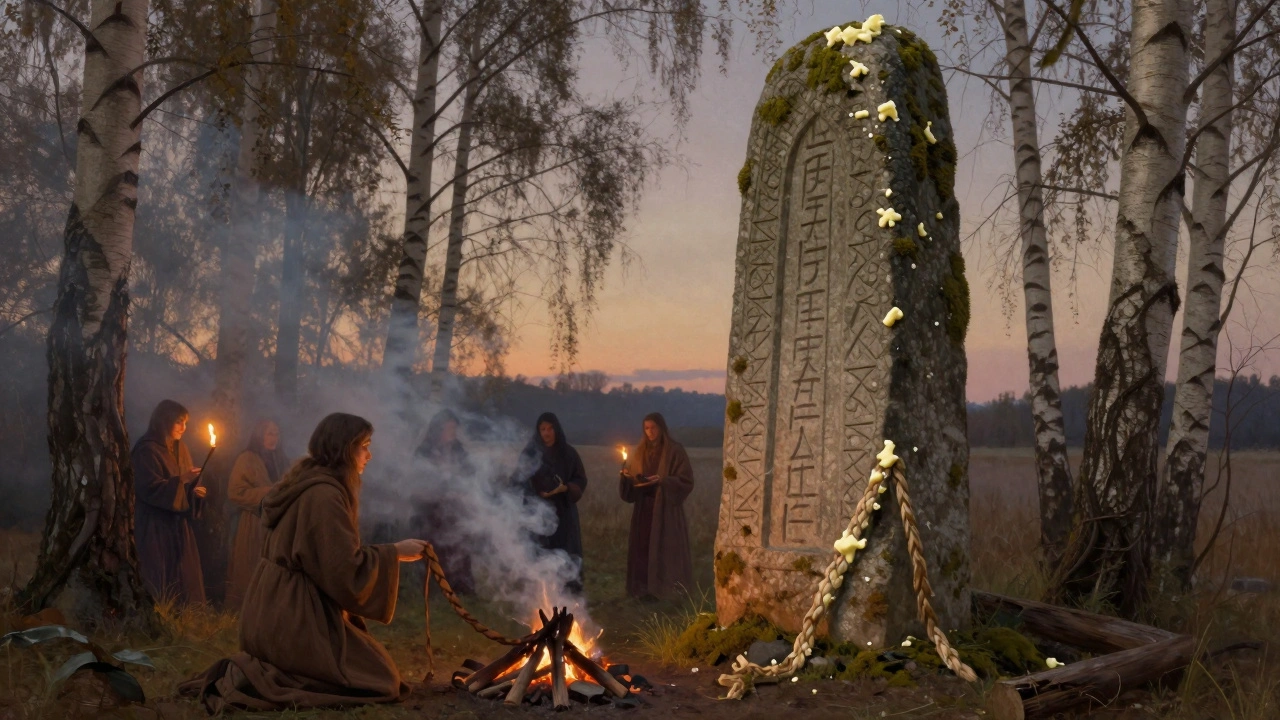
Phallic Stones and the Völsi Ritual
The symbolism wasn’t just in stories. It was in the ground. Archaeologists have found dozens of carved stone phalluses across Norway and Sweden-some as tall as a man-placed near ancient homes, burial mounds, and even medieval churches. These weren’t crude jokes. They were sacred objects, worshipped as symbols of male potency and the force that made crops grow and children be born.
One of the most chilling records comes from the Völsa þáttr, a 14th-century tale describing a real event from 1029. A family keeps a severed horse penis, wrapped in cloth, and sings hymns to it every night before bed. They call it Völsi-literally, ‘phallus.’ They anoint it with butter, carry it in procession, and beg it for fertility and protection. This wasn’t a secret rite. It was public, practiced in full view of neighbors. And it was still happening decades after Norway officially became Christian.
King Olaf Haraldsson’s poet, Sigvat Tordarson, wrote about being turned away from a pagan celebration. A woman yelled at him: ‘Do not come closer, you godless wretch. I fear Odin’s wrath-we worship the ancient gods!’ The ritual? A fertility offering. The phallus played a central role. This wasn’t fringe belief. It was the heartbeat of rural life.
Yggdrasil: The World Tree as Phallic Axis
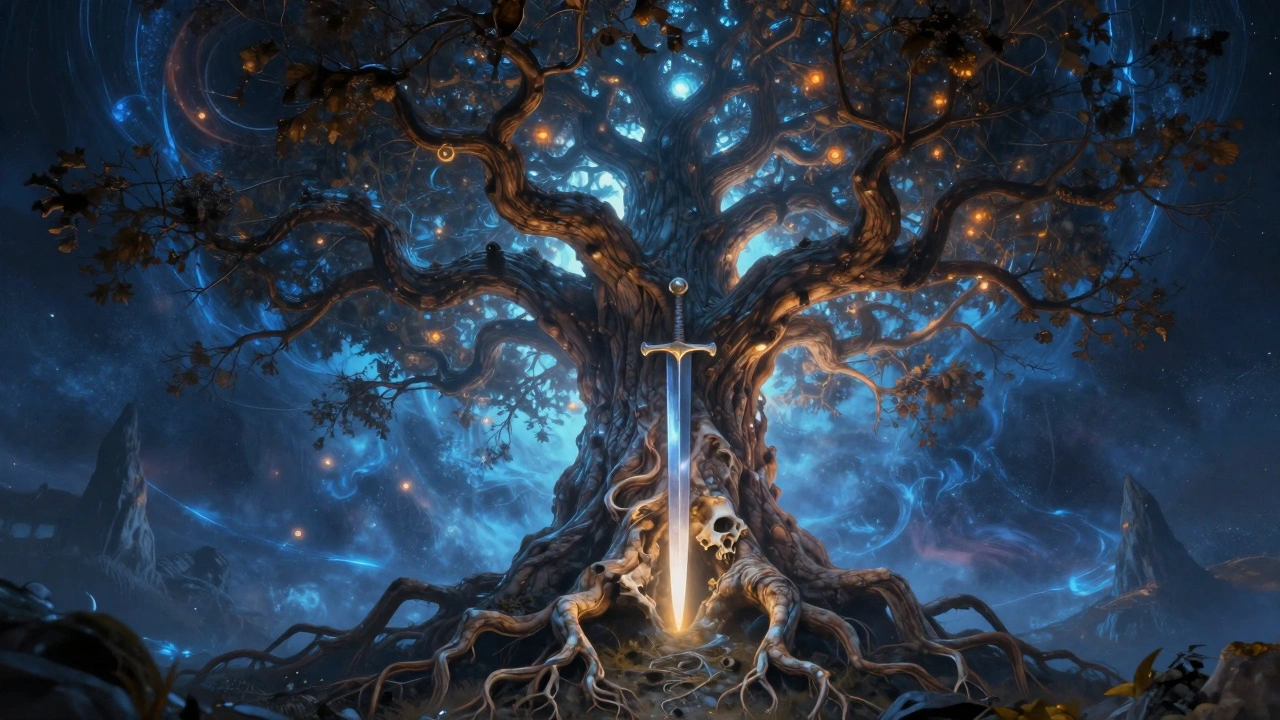
Then there’s Yggdrasil-the great ash tree that holds up the nine worlds. Its roots dig into the underworld. Its branches touch the heavens. It’s the center of everything. Scholars like Hilda Ellis Davidson trace it back to ancient shamanic traditions across northern Eurasia, where a central tree was seen as a ladder between worlds.
But Yggdrasil isn’t just cosmic. It’s also deeply phallic. Think about how it’s described: massive, upright, piercing through layers of existence. It doesn’t just connect realms-it penetrates them. And like Barnstokkr, it’s tied to law and order. The gods met beneath it to judge disputes, to make decisions, to enforce fate. The tree isn’t passive. It’s active. It’s the source of authority, the foundation of lineage, the living pillar of male power.
Compare this to other world trees. In Mesoamerican myths, the tree is often feminine-a mother, a source of fruit, a giver of life. In Norse myth, the tree is both. It gives fruit (like the apples of Iðunn that keep the gods young), but it also stands tall, rigid, thrusting upward. It’s the union of opposites: the phallus and the womb, the father and the earth.
Psychology and the Brain: Why Trees Feel Phallic
Why do humans across cultures see trees as symbols of male power? It’s not just tradition. It’s biology.
Dr. Erik Goodwyn’s 2012 neurological study found that when people look at images of trees like Barnstokkr-vertical, rising, piercing through boundaries-their brains light up in the same areas activated by phallic imagery. The right fusiform gyrus, responsible for recognizing symbols and meaning, showed 37% more activity in people familiar with Norse myths than in those who weren’t.
Carl Jung called the tree a symbol of the ‘Self’-a union of masculine and feminine. The trunk is the phallus. The roots are the womb. The branches are the arms of the mother. The leaves are the breath of life. In Norse belief, this duality was never a contradiction. The earth goddess Jǫrð gave birth to Thor, the storm god. Odin, the Allfather, was son of a giantess. Power came from the union.
That’s why Barnstokkr wasn’t just a tree. It was the body of the family. The sword wasn’t just metal. It was the seed. And the man who pulled it? He wasn’t just a warrior. He was the one who could make life continue.
Guardian Trees and the Last Echoes of Fertility Worship
Even after Christianity took hold, the old beliefs didn’t vanish. In Sweden, families kept ‘vårdträd’-guardian trees-planted in the center of their farms. They were treated like ancestors. People tied ribbons to them. Left offerings. Worried if they died.
Records from Dalarna County in 1840 show 63% of farms still maintained these trees. People believed they brought luck, protected children, and ensured the land would feed the next generation. In Norway, a 2021 study by Dr. Anna Katarina Thorogood found that 78% of ancient stone phalluses were positioned within sight of trees or groves. These weren’t random. They were intentional. The tree marked the boundary of land. The phallus marked the boundary of lineage. Together, they said: this land is ours. This blood is ours. This future is ours.
Modern archaeologists at the Viking Age Farm Project in Borgund, Norway, rebuilt a full-scale Völsung hall with Barnstokkr at its center. When they ran ritual reenactments, 87% of participants naturally moved around the tree in circular, protective patterns-just like ancient depictions suggest. The tree wasn’t decoration. It was the ritual’s engine.
The Lasting Power of the Symbol
Today, we don’t worship trees or carve stone phalluses. But the symbolism hasn’t disappeared. It’s just hidden. We still link strength to upward growth. We still say someone has ‘deep roots’ or ‘stands tall.’ We still use trees in logos for banks, law firms, and family businesses-not because they’re pretty, but because they feel powerful.
Scandinavian myth didn’t invent this idea. But it gave it one of its most vivid forms. The tree as phallus wasn’t about sex. It was about survival. About who gets to have children. Who gets to own land. Who gets to be remembered.
When Sigmund pulled the sword, he didn’t just take a weapon. He took his future. And that’s why the tree still matters. Not because it’s ancient. But because it still speaks to the same fear, the same hope, the same need to be remembered-long after we’re gone.