Genetic Diversity Survival Calculator
Population Survival Calculator
How genetic diversity affects survival in changing environments
Results
Why this happens:
Sexual reproduction shouldn't have won.
Imagine a world where every organism clones itself. No need to find a mate. No wasted energy on courtship. No males-just females producing identical copies of themselves, twice as fast. It sounds like the perfect evolutionary shortcut. And for a while, it worked. Many single-celled organisms still do it today. But when you look at the tree of life-plants, animals, fungi-nearly all of them reproduce sexually. Why? If asexual reproduction is faster, cheaper, and more efficient, why did sex take over?
The answer isn’t about love, bonding, or social behavior. It’s about survival in a world that never stops changing. And the evidence is clear: sex wins because it makes populations better at adapting. Not in the short term. Not in calm environments. But over time, when the ground shifts-when diseases strike, climates change, or predators evolve-sex gives life the genetic flexibility to keep up.
The twofold cost of sex
Here’s the math problem that baffled scientists for decades. In an asexual population, every individual can reproduce. Every female produces offspring. In a sexual population, half the individuals-males-don’t produce offspring themselves. They’re necessary for reproduction, but they don’t bear young. That means, all else being equal, an asexual female should produce twice as many descendants as a sexual female in just one generation.
This is the twofold cost of sex, first described by evolutionary biologist John Maynard Smith in 1971. It’s a brutal disadvantage. If you’re competing for space, food, or survival, why wouldn’t every species just go asexual? Why hasn’t evolution eliminated sex already?
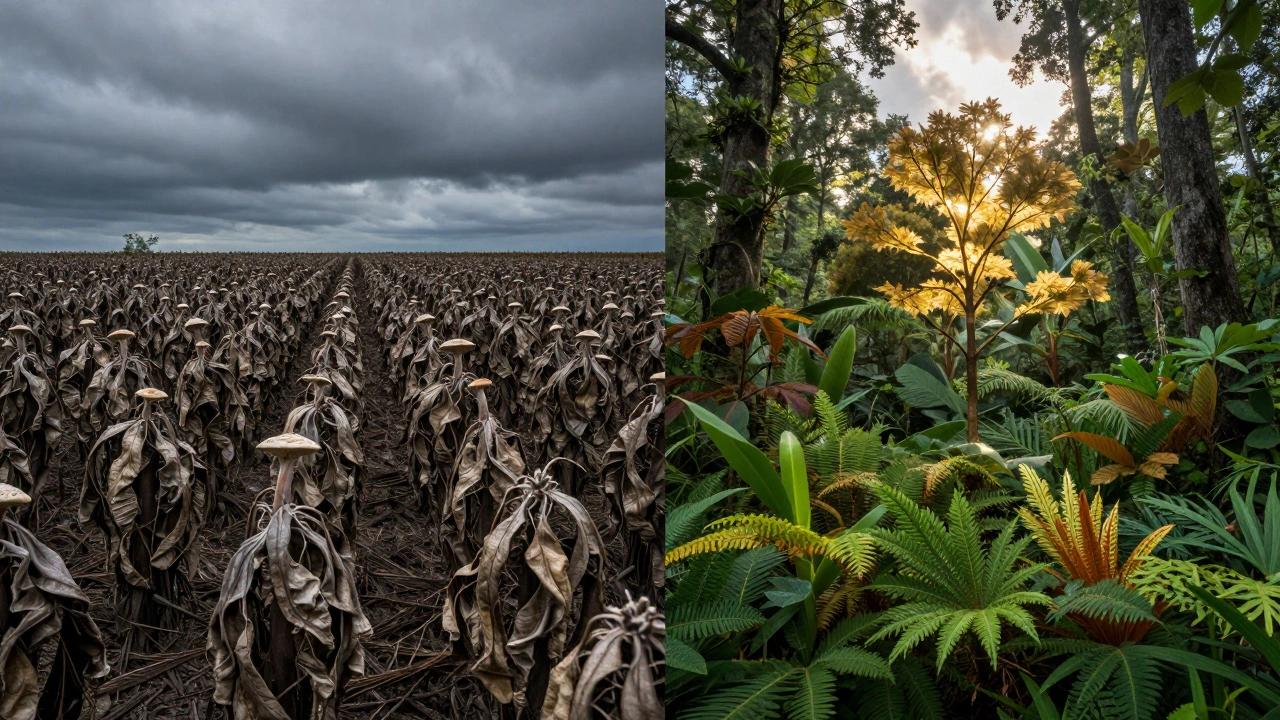
The answer lies in what happens after the first few generations. Asexual reproduction produces clones. Identical copies. If one clone is good at resisting a fungus, they all are. If one clone is vulnerable to a new virus, they all die. A single environmental shift can wipe out an entire asexual lineage. Sexual reproduction, by contrast, mixes genes. Each offspring is a new combination. Some will be worse off. Some will be better. And in a changing world, the better ones survive-and pass on the genes that made them survive.
Genetic shuffling: nature’s insurance policy
Sex doesn’t just create variation. It creates new variation every single generation. During meiosis, chromosomes swap pieces in a process called recombination. Genes that were once on separate parents end up together in one child. A mutation that helps resist disease in one parent can combine with a mutation that improves heat tolerance in the other. In asexual reproduction, those two mutations would have to happen one after the other in the same line-something that takes far longer.
Think of it like building a car. Asexual reproduction is like copying the same model over and over. If the engine design is flawed, every copy has the same flaw. Sexual reproduction is like taking parts from two different models and building a new one. Sometimes it’s worse. Sometimes it’s better. But when the road changes-from dirt to ice to desert-you’re more likely to have built something that can handle it.
Experiments with yeast, algae, and rotifers have shown this directly. In controlled environments where conditions shift-like temperature spikes or new toxins-sexual populations adapt 20% to 40% faster than asexual ones. One 2020 study in Nature Ecology & Evolution found yeast populations under fluctuating conditions increased their rate of sexual reproduction by 400% in just 100 generations. They didn’t choose sex because they wanted to. They were forced into it-because the asexual lines kept dying.
The Red Queen and the endless race
One of the most powerful explanations for sex is the Red Queen hypothesis. Named after Lewis Carroll’s character who says, “It takes all the running you can do, to keep in the same place,” this idea suggests that organisms must constantly evolve just to survive against their enemies-especially pathogens.
Viruses, bacteria, and fungi evolve fast. They reproduce in hours, not years. They mutate constantly. If a host population is genetically identical, a single pathogen strain can wipe it out. But if that population is genetically diverse-because of sex-some individuals will have immune defenses the pathogen hasn’t seen yet. Those individuals survive. They reproduce. Their genes spread.
One landmark study in 2010 on the roundworm Caenorhabditis elegans proved this. When exposed to a deadly bacterium, the worms-normally self-fertilizing-shifted to outcrossing (sex with another individual) within just 30 generations. When the pathogen was removed, they went back to cloning themselves. Sex wasn’t their default. It was their emergency response.
This isn’t just about worms. It’s true for humans, trees, fish, and insects. The more pathogen pressure a species faces, the more likely it is to rely on sex. Asexual lineages often survive only in isolated, stable places-like deep caves or frozen tundra-where diseases don’t spread easily. Everywhere else, sex dominates.
Clearing out genetic trash
There’s another hidden cost to asexual reproduction: the buildup of harmful mutations. This is called Muller’s ratchet. In asexual populations, every generation inherits the same genome as the parent-mutations and all. If a bad mutation pops up, it sticks. There’s no way to “reset” the genome. Over time, these bad mutations pile up, like rust on a car that never gets washed. Eventually, the population becomes so burdened it can’t survive.
Sex breaks that cycle. By mixing genes, it can produce offspring that don’t inherit the worst mutations from either parent. Some kids get lucky. They get the good versions of both genes. Others get the bad ones-and die off. Natural selection then removes those weak lines. In asexual populations, there’s no such cleanup crew. Every generation carries the same genetic baggage.
Studies on fungi and insects show that asexual lineages accumulate harmful mutations at twice the rate of sexual ones. In the wild, this means asexual species often have shorter evolutionary lifespans. They thrive for a while-then vanish.
Why some species still go asexual
If sex is so superior, why do some plants and animals still reproduce asexually? Because sometimes, speed beats perfection.
Dandelions, for example, spread across lawns by cloning themselves through runners. They don’t need pollinators. They don’t need to wait for spring. They just grow, spread, and dominate. In a stable, open field, that’s the best strategy. But if a new herbicide comes along, or a new insect arrives, the entire patch is at risk. That’s why dandelions still produce flowers and seeds-they keep sex in their toolkit, just in case.
Same with some lizards, fish, and insects. They can switch between asexual and sexual reproduction depending on conditions. When times are good, clone away. When things get rough-crowding, disease, cold snaps-they switch to sex. This flexibility is rare, but it shows that evolution doesn’t pick one strategy and stick with it. It picks the one that works right now.
The bottom line: sex is about survival, not efficiency
Sexual reproduction didn’t win because it’s faster. It didn’t win because it’s easier. It won because it’s smarter in the long run. It trades short-term efficiency for long-term resilience. It sacrifices immediate numbers for future adaptability.
That’s why nearly every complex organism on Earth-every bird, every tree, every human-uses it. Asexual reproduction still exists. But it’s mostly a side note in evolution’s grand story. It works in quiet corners. But when the world changes-and it always does-sex is the one that keeps life going.
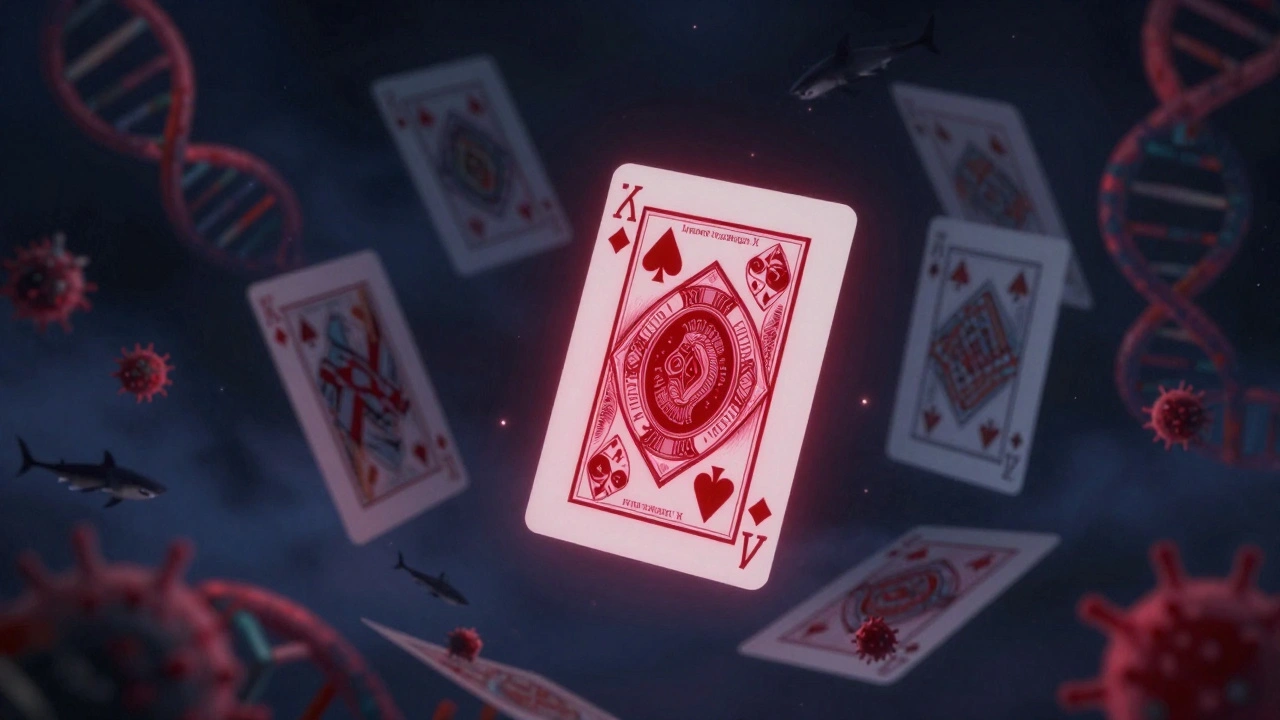
It’s not about romance. It’s about randomness. It’s about mixing the deck so that, when the next storm hits, someone in the population has the right cards to survive.
What’s left to understand?
Scientists still don’t know exactly how recombination triggers faster adaptation at the molecular level. We don’t fully understand why some genes benefit more from being shuffled than others. And we’re still figuring out how epistasis-how genes interact with each other-makes sex so powerful.
But one thing is clear: evolution doesn’t care about fairness. It doesn’t care about cost. It only cares about what works when the pressure is on. And for the last 1 billion years, sex has been the answer.
Why didn’t evolution favor asexual reproduction if it’s more efficient?
Asexual reproduction is more efficient in the short term-it’s faster and doesn’t require a mate. But in changing environments, clones are vulnerable. If one individual can’t survive a disease or climate shift, none can. Sexual reproduction creates genetic diversity, so some offspring are likely to survive unexpected threats. Over time, that survival advantage outweighs the initial cost.
Do any animals reproduce only sexually?
Most mammals, birds, reptiles, and amphibians reproduce exclusively sexually. There are very few known cases of obligate asexual vertebrates. Even some species once thought to be purely asexual, like certain lizards, have been found to retain the genetic machinery for sex, even if they rarely use it. Sexual reproduction is the default for complex multicellular life.
How does sex help fight diseases?
Pathogens evolve quickly. If a population is genetically identical, a single strain can wipe it out. Sexual reproduction mixes genes each generation, creating new immune combinations. Some offspring inherit defenses the pathogen hasn’t seen before. This keeps the population one step ahead-a dynamic known as the Red Queen hypothesis. Experiments with worms and insects show they increase sex rates when exposed to pathogens.
Is sexual reproduction the reason humans have so much genetic variation?
Yes. Sexual reproduction is the main driver of human genetic diversity. Every person inherits a unique mix of DNA from both parents, reshuffled during meiosis. This is why siblings can look so different. This variation is what allows populations to adapt to new environments, resist diseases, and survive environmental shocks. Without sex, humans would be far more genetically uniform-and far more vulnerable.
Can a species switch from asexual to sexual reproduction?
Yes, some species can. Many plants and invertebrates, like aphids and rotifers, are facultatively sexual-they reproduce asexually when conditions are stable and switch to sex when stress increases, such as overcrowding or disease. This flexibility shows that sex isn’t a fixed trait-it’s a tool that evolution keeps available for emergencies.
What’s the role of males in sexual reproduction?
Males don’t produce offspring directly, but they’re essential for genetic mixing. Their sperm carries half the DNA that combines with the egg, creating new combinations. In many species, males also compete or court females, which helps select for stronger genes. Even in species where males seem unnecessary-like in some fish that reproduce by cloning-they still contribute genetic diversity. Without them, the population loses its ability to adapt.