Women Farmers Impact Calculator
Research shows that when women have equal access to resources as men, farm yields increase significantly. Use this calculator to estimate the potential impact of empowering women farmers in your community or region.
Potential Impact Analysis
Additional Food Production
If women had equal access to resources, their yields would increase by 20-30% according to FAO studies.
People Fed Additionaly
Based on average daily consumption of 0.5kg of grain equivalents per person
Climate Resilience Score
Diversified farming led by women enhances ecosystem services and adaptation capacity
Key Insight
When women farmers receive equal support, entire communities benefit from increased food security, better nutrition, and enhanced climate resilience.
Women maintain diverse seed varieties adapted to local conditions, preserving biodiversity crucial for climate adaptation.
- Seed diversity maintained
- Community knowledge networks
- Sustainable practices preserved
Supporting women farmers creates multiplier effects throughout local economies.
- Increased household income
- Better education outcomes
- Improved health & nutrition
Think about the last time you ate a potato or a handful of quinoa. You probably didn’t think about who first decided those wild plants were worth saving. We often picture early agriculture as men plowing fields with heavy oxen, but that image misses half the story. The real discovery of farming started long before the plow, in the hands of women gathering seeds. Seed gatherers are the primary agents of early plant domestication who selected, saved, and cultivated wild crops into reliable food sources. This wasn't just labor; it was science, art, and survival combined.
For thousands of years, women held the keys to our food systems. They knew which berries ripened first, which roots survived drought, and how to store grains for winter. Today, that legacy is still alive, though often hidden behind modern statistics that ignore their contributions. Understanding this history isn't just about correcting the record-it’s essential for solving today’s climate and food security crises.
The Original Scientists: Women in Foraging Societies
Before cities existed, human groups lived as hunter-gatherers. Contrary to the old idea that men did all the hunting while women waited at camp, research shows these societies were remarkably egalitarian. Among the BaYaka people of the Republic of Congo and the Agta people of the Philippines, men and women shared decision-making power and leisure time fairly evenly.
But here’s the twist: women provided a massive share of the calories through gathering. They spent hours walking through forests, observing plant cycles, soil types, and weather patterns. This daily interaction gave them deep ecological knowledge. When they found a wild grain that tasted good or stored well, they didn’t just eat it-they planted it. Over generations, this selective planting turned wild weeds into staple crops. Women weren’t just collecting food; they were engineering biology.
- Ecological Observation: Women tracked plant life cycles and distributions more closely than hunters tracking animals.
- Selective Breeding: By saving seeds from the best-tasting or hardiest plants, they initiated domestication.
- Knowledge Transmission: Mothers taught daughters how to identify useful plants, creating an intergenerational library of botanical data.
This cognitive foundation laid the groundwork for civilization. Without women’s detailed understanding of plant properties, the transition to farming would have been impossible.
From Equality to Hierarchy: How Farming Changed Gender Roles
If foraging societies were relatively equal, why do we see such strict gender roles in many traditional farming cultures? Anthropologists like Angarika Deb argue that the shift from mobile foraging to settled agriculture brought rigid hierarchies. As communities stopped moving, land became valuable property. Men increasingly controlled tasks involving animal traction, plowing, and warfare-activities tied to land ownership and defense.
Women remained central to crop work, especially seed selection and small-scale cultivation, but their public authority declined. In many regions, as property regimes hardened, women lost control over the very resources they had helped create. Their role shifted from recognized experts to invisible laborers. This historical pivot explains why, even today, women’s contributions to agriculture are often undervalued or ignored in official records.
The rise of patriarchy wasn’t inevitable; it was linked to specific economic changes. When farming intensified, so did the need to defend territory and accumulate wealth. These pressures favored male-dominated structures, sidelining the collaborative models of earlier times.
Andean Seeds: A Living Legacy of Female Expertise
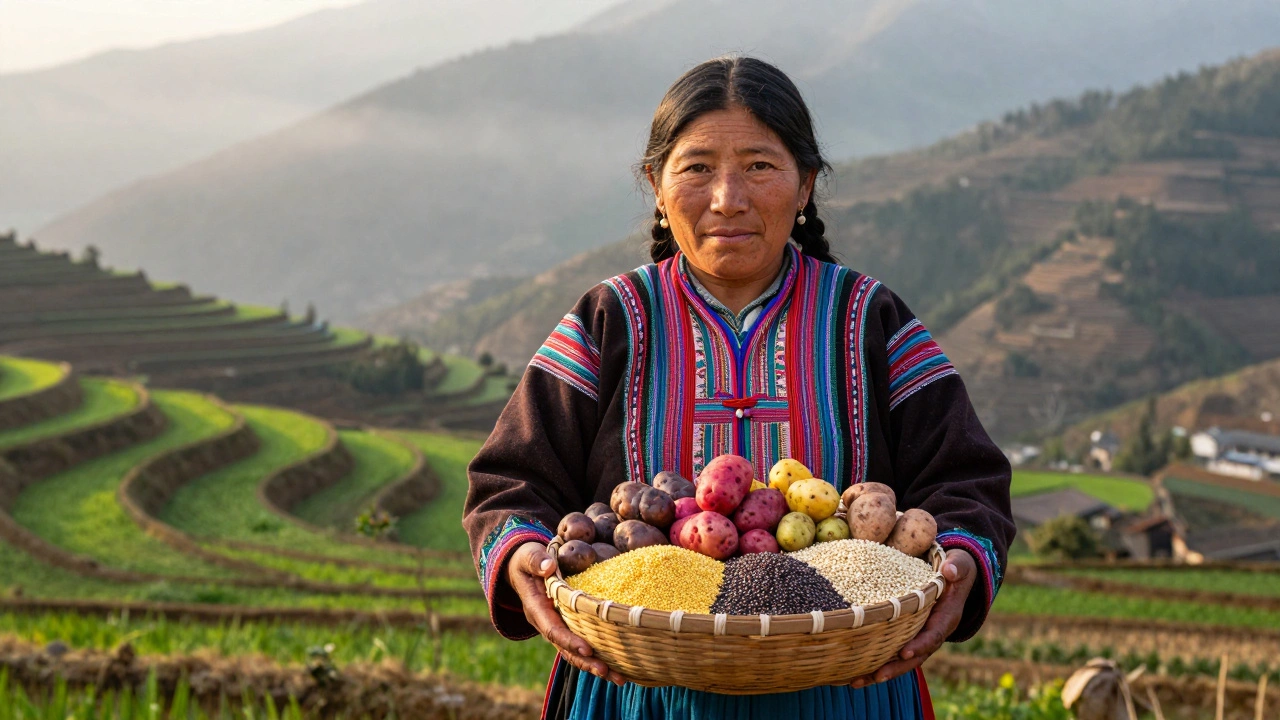
Somewhere in the high Andes, women continue to practice what their ancestors started. Studies on Andean agriculture reveal that women farmers are not just workers-they are knowledge holders. They manage seed banks, select planting materials, and maintain diversity across fields to ensure food security.
In this region, crops like potatoes (Solanum spp.) and quinoa (Chenopodium quinoa) owe their existence to women’s careful stewardship. Women coordinate seed exchanges with neighbors and kin, deciding which varieties survive shocks like droughts or pests. This isn’t random; it’s a sophisticated system of risk management embedded in cultural practices and ritual calendars.
| Feature | Traditional (Women-Led) | Modern Industrial |
|---|---|---|
| Seed Source | Local exchange networks | Commercial suppliers |
| Diversity | High (many varieties) | Low (monocultures) |
| Adaptation | Tailored to microclimates | Standardized for broad regions |
| Knowledge Holder | Community elders/women | Corporations/research labs |
By selecting seeds for taste, storage capacity, and resilience, Andean women shape the evolutionary trajectory of crops. Their work proves that biodiversity isn’t just a scientific concept-it’s a social practice maintained by women’s daily choices.
The Rise of Women Farmers in Sustainable Agriculture
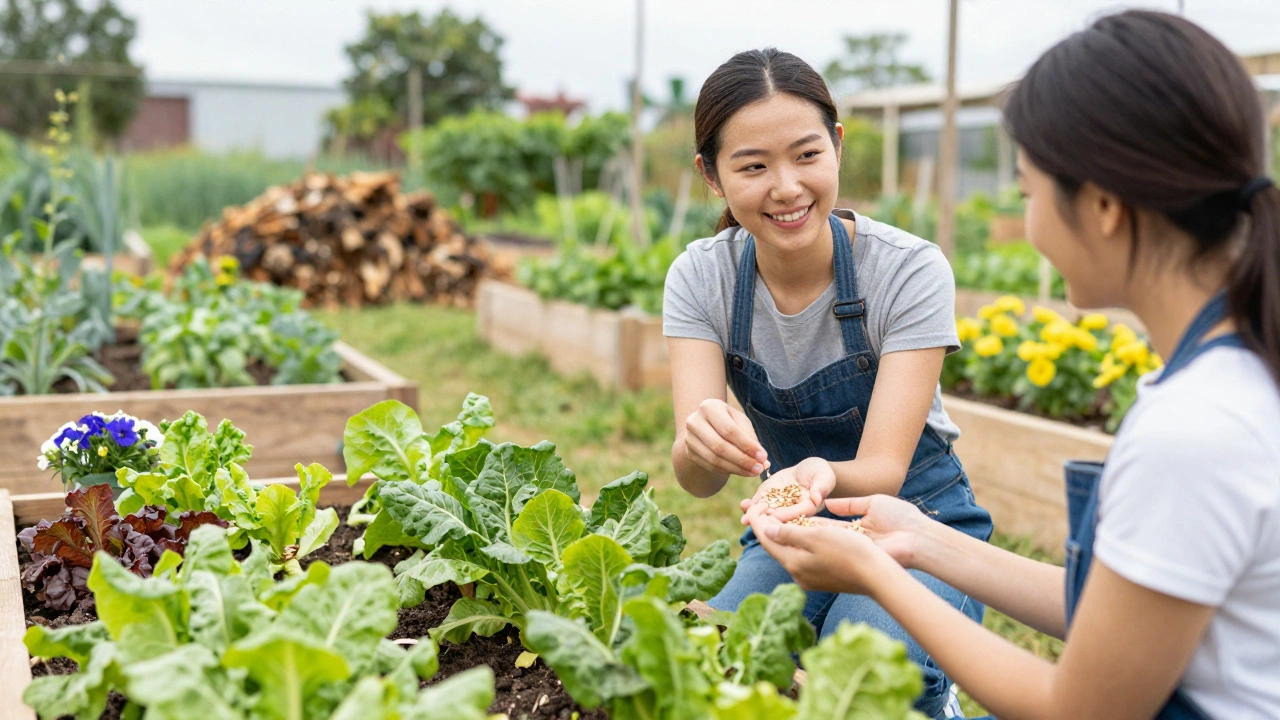
Fast forward to today. In the United States and beyond, women are reclaiming the identity of “farmer.” Books like The Rise of Women Farmers and Sustainable Agriculture, co-authored by researchers from Penn State and Ohio University, document an unprecedented influx of women into farming, particularly in organic and direct-market sectors.
Why now? Social movements, changing norms, and new market niches have created spaces where women can thrive. Unlike industrial farming, which relies on heavy machinery and large capital, sustainable farming often depends on labor-intensive practices like mixed cropping and on-farm seed saving. These methods align with women’s historical strengths and current constraints.
Women farmers are redefining agriculture toward more socially and ecologically oriented models. They innovate because they must, often excluded from traditional resource channels. Instead of relying on big agribusiness, they build alternative pathways: community-supported agriculture (CSA), farmer-to-farmer learning networks, and local food systems.
Persistent Barriers: Land, Credit, and Knowledge Gaps
Despite their growing visibility, women face significant hurdles. Research by the American Farmland Trust highlights key disparities in the U.S.: women farmers are less likely to receive farm loans, access technical assistance, or connect to influential agricultural networks. Institutional support systems-from lenders to extension services-were historically designed for male “primary operators,” leaving women at a disadvantage.
Internationally, the problem is even starker. Legal frameworks, inheritance rules, and customary practices often favor male landholders. Without land titles, women struggle to secure credit or invest in their farms. A peer-reviewed study on race and place in US Agriculture adds another layer: women of color navigate intersecting racial and spatial inequities, making their path even harder.
Yet, women persist. They carve out spaces as cooperative members, leaders in local food systems, and stewards of climate-resilient practices. Their resilience is not just personal; it’s structural, challenging the very foundations of unequal agricultural policy.
Why Supporting Women Farmers Matters for Climate Resilience
Supporting women isn’t just about fairness-it’s smart policy. Both sustainable farming and gender equality generate public benefits: improved ecosystem services, biodiversity conservation, and community well-being. Women farmers are often at the forefront of climate adaptation, using diversified planting schemes and water management techniques passed down through generations.
In March 2026, the Global Greengrants Fund highlighted how targeted investment in women-led environmental projects helps them claim leadership in shaping agricultural futures. When women control resources and project design, they implement context-appropriate solutions that benefit entire communities.
To move forward, governments and funders must:
- Design technical assistance tailored to women’s farm types and time constraints.
- Provide climate information that acknowledges women’s existing expertise.
- Reform land tenure laws to ensure equitable ownership.
- Recognize women as primary operators in all agricultural programs.
The future of food security depends on recognizing women not as helpers, but as the original architects of agriculture. From the wild seeds gathered millennia ago to the organic farms thriving today, women’s hands have always been in the soil. It’s time our policies reflected that reality.
Did women really start agriculture?
Yes. Evidence from foraging societies shows women gathered most plant calories and possessed detailed knowledge of plant cycles. Their selective saving and planting of seeds led to the domestication of major crops like wheat, rice, and maize.
Why do women face barriers in modern farming?
Historical shifts toward patriarchal land ownership created institutional biases. Today, women still struggle with access to credit, land titles, and technical networks due to laws and customs favoring men.
How do Andean women contribute to food security?
They maintain agrobiodiversity by selecting and exchanging diverse seed varieties adapted to local conditions. This practice ensures resilience against climate shocks and preserves nutritional diversity.
What is the link between women farmers and sustainability?
Women often lead in organic and diversified farming systems, which rely less on chemicals and more on ecological balance. Their methods enhance soil health, conserve water, and protect biodiversity.
Can policy changes help women farmers?
Absolutely. Reforms in land tenure, access to credit, and targeted technical assistance can empower women to fully utilize their expertise, boosting both livelihoods and climate resilience.