
ACT UP Direct Action Timeline & Impact
March 24, 1987
Wall Street, NY
Raid and Blockade of Financial District
The Tactical Approach
Instead of silent vigils, activists staged a chaotic "raiding" of Wall Street offices to confront bankers who owned failing companies tied to drug pricing.
Primary Outcome
Highlighting drug access issues to financial leaders and exposing corporate complicity.
August 1988
CDC HQ, Georgia
Occupy Campaign for Case Definition
The Strategic Goal
Changing the definition of AIDS cases to include women and IV drug users who were dying from opportunistic infections but lacked insurance coverage.
Primary Outcome
The CDC expanded guidelines, ensuring federal resources reached previously ignored populations.
October 11, 1989
FDA HQ, Maryland
Massive Sit-In & Shutdown
The Action
Over 1,000 protesters gathered inside the agency. The operation was shut down completely to force immediate rule changes.
Primary Outcome
New FDA regulations within 8 days sped up drug approval timelines significantly.
The Core Principles
Civil disobedience without physical aggression.
Identify exactly who holds power (e.g., Commissioner).
Uniting patients, doctors, and diverse communities.
In the middle of a deadly epidemic, governments often stay quiet. But in 1987, a group called ACT UP, also known as the AIDS Coalition to Unleash Power, refused to let that silence stand. They were not politicians in suits or lobbyists behind closed doors. They were neighbors, patients, and artists who had watched friends die because bureaucratic delays treated lives like paperwork. When we talk about ACT UP today, we aren’t just discussing a political chapter; we are looking at a movement that forced the world to change how it handles public health emergencies.
This organization was founded to demand immediate action on the HIV/AIDS crisis, using non-violent direct action tactics to force changes in drug approval, medical research, and government policy.
What made them different was simple: they didn’t ask for permission. They took up space, literally and figuratively, until decision-makers had no choice but to listen.
The Spark Behind the Fire
To understand why this movement exploded so quickly, you have to feel the tension of New York City in the late 1980s. The city was losing thousands of young men to AIDS, yet the Food and Drug Administration (FDA) and the Centers for Disease Control (CDC) moved at a glacial pace. People were dying of treatable conditions simply because drugs couldn’t get approved fast enough.
Enter Larry Kramer. He wasn’t your typical activist. He was a playwright who had already written powerful works about gay life, like The Normal Heart. In March 1987, he stood up at a meeting at the Lesbian and Gay Community Services Center in Manhattan. His speech was blunt. He argued that waiting for the system to fix itself meant death for everyone involved. That meeting became the birthplace of ACT UP. Their mission statement wasn’t vague hope; it was specific, aggressive, and demanding.
Kramer envisioned a group that could bypass traditional politics. He wanted to force elected officials, pharmaceutical companies, and religious institutions to act. By the end of that year, the idea spread beyond New York. Suddenly, chapters popped up in Chicago, San Francisco, London, and Paris. It wasn’t just a local club anymore; it was a global network united by anger and survival.
Defining Direct Action
Most people hear the word “protest” and think of holding signs on a sidewalk. That isn’t what ACT UP did. They practiced direct action. In their handbook, they defined it as protests that creatively represented particular issues while providing solutions. This distinction changed everything.
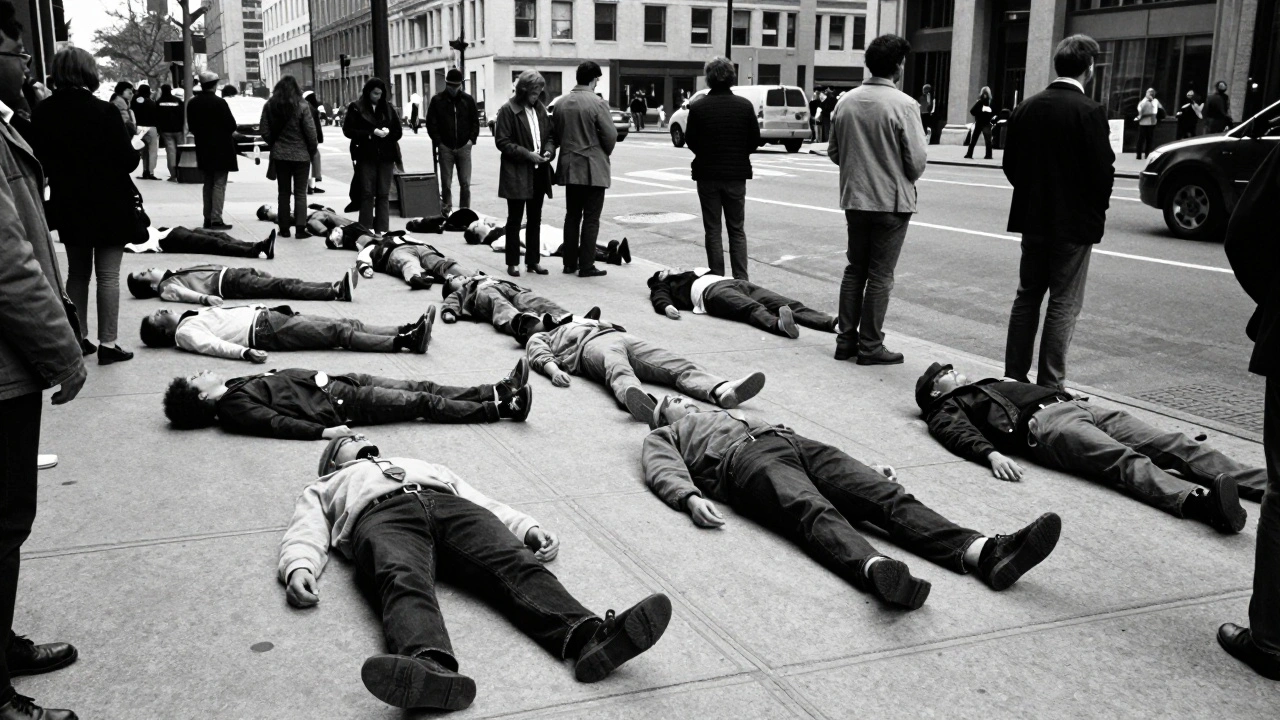
- Performative Protests: Instead of silent vigils, they staged dramatic scenes. One famous tactic was the “die-in,” where hundreds of people would lie motionless on the floor of a busy street, simulating a mass funeral right before the eyes of commuters.
- Specific Demands: Every demonstration came with concrete requests. They didn’t just yell for “justice.” They asked for immediate FDA release of investigational drugs and an end to double-blind studies where control groups received placebos instead of real medicine.
- Targeting Authority: They identified exactly who held the power. Whether it was the Commissioner of the FDA or the Director of the NIH, they made sure those individuals knew they were being watched.
This approach drew heavy inspiration from the Black Civil Rights Movement. Leaders like Bayard Rustin showed earlier generations how civil disobedience could work. ACT UP took those lessons and adapted them for a modern urban battlefield. They learned that disrupting daily operations was the only way to get results when normal channels failed.
The Day the FDA Shut Down
Perhaps the most iconic moment in this history happened on October 11, 1989. More than 1,000 members and supporters gathered at the FDA offices in Rockville, Maryland. It was a massive sit-in designed to stop the agency’s entire operation.
The police arrested 176 people that day. But this wasn’t a failure; it was a calculated risk. The goal was to prove that the drug-approval process was a barrier to life-saving interventions. Within eight days, the FDA announced new regulations. These rules sped up the time it took to approve treatments for HIV and other serious illnesses.
| Date | Action Location | Tactic Used | Primary Outcome |
|---|---|---|---|
| March 24, 1987 | Wall Street, New York | Raid and Blockade | Highlighted drug access issues to financial leaders |
| October 11, 1989 | FDA Headquarters, Maryland | Sit-in Protest | Changed FDA drug approval regulations |
| August 1988 | CDC Headquarters, Georgia | Occupy Campaign | Prompted redefinition of AIDS cases |
Changing Medical Definitions
While the FDA victory was loud and visible, another battle fought quietly saved millions of lives globally. For years, the official definition of AIDS was narrow. It largely excluded certain opportunistic infections that affected women and people who injected drugs. Because these groups didn’t fit the technical definition, insurance policies often wouldn’t cover their treatment.
ACT UP launched a four-year campaign to change the CDC guidelines. They brought scientists, doctors, and affected patients into the conversation. They proved that the disease was evolving and hurting more populations than the initial data suggested. Eventually, the CDC expanded the definition.
This shift meant that women, children, and intravenous drug users could finally access federal resources. It was a massive win for equity. It showed that scientific language isn’t neutral; it directly impacts who gets help and who dies ignored.
The Lasting Legacy for Patients
Thirty-eight years later, the spirit of this activism is still alive in healthcare. When you hear about a “patient advocate” pushing for faster clinical trial results today, you are seeing the ripple effect of those protests. The doctor-patient relationship changed permanently. Doctors no longer held all the information while patients waited passively.
Modern movements fighting for mental health care or vaccine access often cite these strategies. The concept that “time equals life” became a foundational rule for emergency health responses. We see echoes of this in how countries handled rapid response systems during later pandemics.
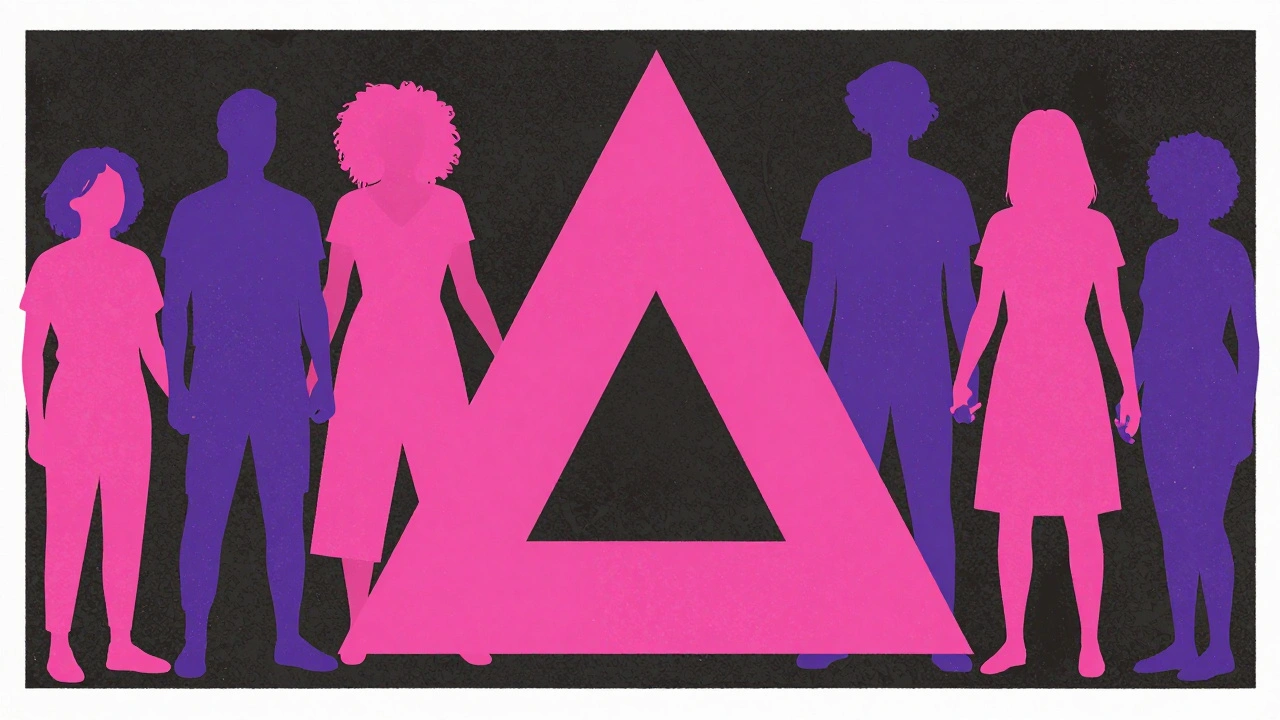
The graphics created during this era, particularly the pink triangle symbol reclaiming Nazi persecution imagery to represent pride and resistance, remain powerful tools. They turned symbols of oppression into shields of solidarity. That visual language taught future generations how to communicate complex political ideas instantly.
Lessons for Future Activists
If there is a takeaway for anyone organizing today, it is specificity. Vague goals produce vague results. You must know exactly which regulation blocks progress and exactly who signs the paper to fix it. The organizers didn’t scatter their energy. They focused their pressure points strategically.
Another lesson is the power of coalition. They included diverse voices early on-people living with HIV, gay rights advocates, women, and racial minorities. A siloed approach would have failed. Solidarity across identities made the pressure too great for institutions to ignore. It proved that when marginalized groups unite around a shared threat, they can reshape the laws that govern our bodies.
Ultimately, the story is about taking responsibility. Waiting for a savior is often a death sentence. The members of this coalition decided that their own anger and creativity were better tools than any government bureaucracy. They turned grief into fuel and built a machine that worked even when the powers-that-be weren’t watching.
Frequently Asked Questions
Who founded the AIDS Coalition to Unleash Power?
The organization was founded in March 1987 primarily through the efforts of Larry Kramer, a playwright and gay activist, along with a group of concerned citizens at the Lesbian and Gay Community Services Center in Manhattan.
What is considered the biggest victory for the movement?
Shutting down the FDA headquarters in 1989 is often cited as a major tactical win, but changing the CDC definition of AIDS to include women and drug users is considered one of the most significant long-term policy achievements that saved millions of lives.
Did the group ever use violence during protests?
No, the organization maintained a strict commitment to non-violent civil disobedience. Their actions involved dramatic performances, blockades, and occupations, but never physical aggression toward individuals.
How does their work affect healthcare today?
Their advocacy established the modern model for patient participation in clinical trials and accelerated pathways for emergency drug approvals, influencing how agencies like the FDA handle crises decades later.
Is the organization still active in 2026?
While the peak era was the 1980s and 90s, various ACT UP chapters continue to exist globally, often shifting focus to broader issues of healthcare inequality and continuing advocacy for LGBTQ+ rights.