Moral Majority History Quiz
Loading question...
Quiz Completed!
Your final score:
The cultural landscape of America changed drastically between 1960 and 1980. For two decades, liberal reforms swept through society, challenging traditional norms around gender, sexuality, and government. But by the late 1970s, a powerful reaction emerged. This wasn't just grumbling in living rooms; it was an organized political force known as the Moral Majority is a conservative Christian political organization founded in 1979 to mobilize evangelicals against perceived moral decline. It marked the beginning of the modern "culture wars," setting the stage for American politics as we know them today.
To understand why this movement exploded, you have to look at what it was reacting against. The 1960s and 1970s brought the sexual revolution, second-wave feminism, and landmark legal changes like Roe v. Wade (1973) is the Supreme Court decision that legalized abortion nationwide, sparking intense conservative opposition.. Many conservative Christians felt their values were being erased by secularism and big government. They saw public schools teaching evolution instead of creation, welfare programs expanding, and pornography becoming more visible. This sense of crisis created a fertile ground for a countermovement.
The Rise of Jerry Falwell and the Moral Majority
The face of this backlash was Jerry Falwell is a Baptist televangelist who founded the Moral Majority in 1979 after believing Christians had retreated from political influence.. Before 1979, Falwell was primarily known for leading Thomas Road Baptist Church in Lynchburg, Virginia, which he had founded in 1956. He used television to reach millions, but he believed preaching alone wasn't enough. He argued that Christians needed to enter the political arena to protect their way of life.
In 1979, Falwell launched the Moral Majority. Its goal was simple but ambitious: unite pro-family, pro-moral, and pro-America citizens into a voting bloc. On national TV shows like the MacNeil/Lehrer Report in 1980, Falwell explained that the group would coordinate letter-writing campaigns, voter registration drives, and rallies. This wasn't elite lobbying; it was mass participation. The organization targeted specific issues: opposing abortion, pornography, homosexual rights, and the Equal Rights Amendment (ERA). Simultaneously, it supported school prayer, traditional gender roles, and a strong national defense against communism.
Ideological Pillars of the Backlash
The Moral Majority didn't operate in a vacuum. It was part of a broader New Right coalition that included economic conservatives and foreign policy hawks. However, its unique contribution was framing social issues as existential threats. Here’s how they connected the dots:
- Abortion as Symbol: While Catholics had opposed abortion for years, conservative Protestants largely hadn’t been mobilized on the issue until after Roe v. Wade. The Moral Majority reframed abortion not just as a medical or personal choice, but as an attack on traditional Christian values and a symbol of overall moral decay.
- Education Crisis: They accused the federal government of turning public schools into "socialization institutions" that undermined parental authority. By criticizing sex education and evolutionary theory in classrooms, they appealed directly to parents’ fears about losing control over their children’s upbringing.
- Anti-Feminism: The movement strongly opposed the ERA, which sought constitutional equality for women. They argued that feminism destroyed the traditional family structure, promoting career-oriented lifestyles over domestic roles.
- Anticommunism: Linking domestic moral decline to external communist threats helped unify diverse conservative groups under a single patriotic banner.
This ideological package directly countered the achievements of the civil rights movement, gay liberation efforts post-1969, and feminist victories throughout the 1970s. It positioned the Moral Majority not merely as a religious group, but as a defender of American heritage against radical change.
Electoral Impact and Political Realignment
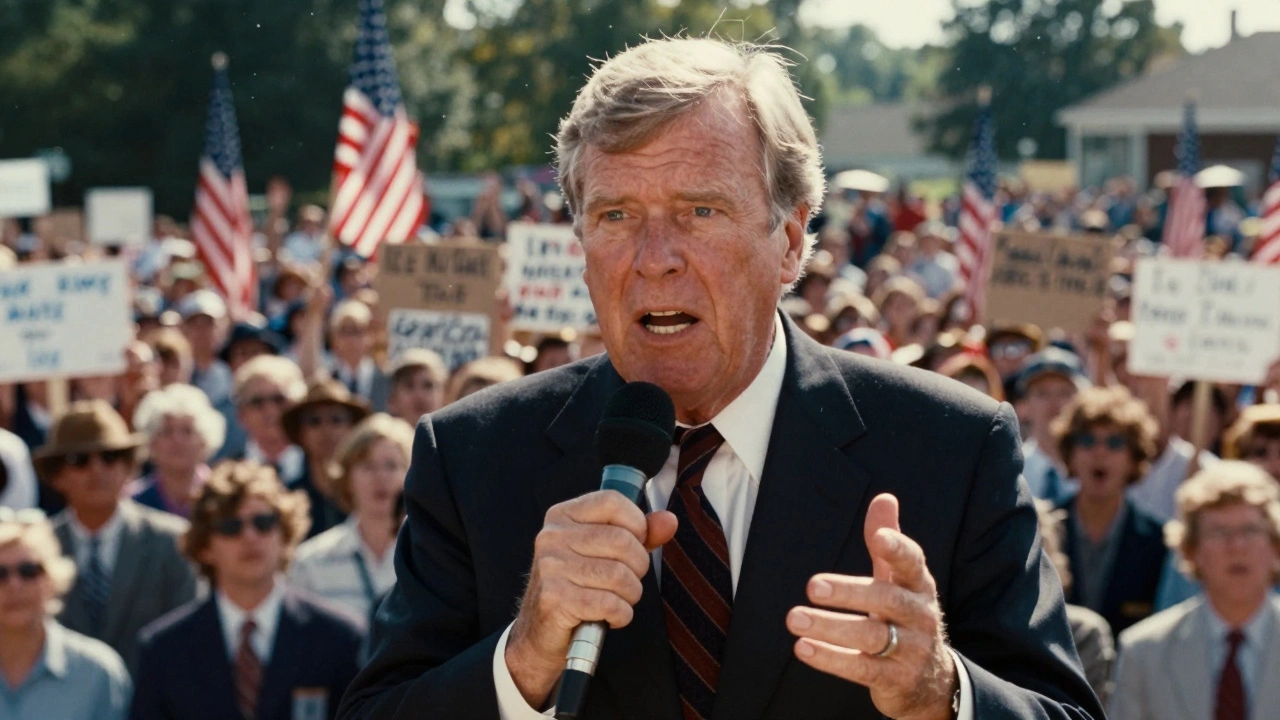
The true power of the Moral Majority lay in its ability to translate moral outrage into votes. Prior to 1980, many white evangelical Protestants voted Democratic, notably supporting Jimmy Carter in 1976. However, the landscape shifted dramatically within four years. An NBER working paper (No. 32551, 2024) analyzed county-level data and found that a 10-percentage-point increase in the share of "Born Again" Christians in a state correlated with a 1.1 percentage point reduction in Carter’s vote share between 1976 and 1980. At the individual level, Born Again respondents were 4 percentage points less likely to support Carter in 1980 compared to non-Born Again voters.
| Issue Area | Liberal Reform (1960s-70s) | Moral Majority Stance (1980s) |
|---|---|---|
| Reproductive Rights | Roe v. Wade (1973) legalized abortion | Pro-life agenda; framed abortion as moral crisis |
| Gender Equality | Equal Rights Amendment (ERA) campaign | Opposed ERA; promoted traditional gender roles |
| Education | Secular curriculum, sex ed, evolution | Supported school prayer, parental rights, anti-evolution |
| LGBTQ+ Rights | Emerging gay liberation movement | Opposed "homosexual rights" and permissive policies |
| Government Role | Expansion of Great Society welfare programs | Anti-big government; criticized welfare dependency |
This shift was crucial for Ronald Reagan’s victory in 1980 and his landslide win in 1984. Internal documents from the Reagan Presidential Library show that advisers viewed the Moral Majority as essential to their "Decade of Destiny" strategy. They aimed to reverse what they called four crises: loss of freedom, moral decline, economic stagnation, and national insecurity. By integrating evangelical voters into the Republican Party, the Moral Majority helped create a durable conservative base that persists today.
Organization and Strategy
How did a church-based movement become a political powerhouse? The answer lies in infrastructure. The Moral Majority leveraged existing networks: churches, direct mail lists, and television ministries. Unlike previous activist groups that relied on protests or litigation, the Moral Majority focused on elections. They endorsed candidates at local, state, and national levels, particularly those who aligned with their pro-family platform.
Falwell emphasized grassroots engagement. Members were encouraged to register voters, attend town halls, and write letters to representatives. This approach democratized political participation for many evangelicals who previously felt disconnected from Washington. The organization also raised significant funds through direct-mail appeals, creating a financial model that later groups would emulate.
However, this integration came with trade-offs. Critics argued that the Moral Majority blurred the separation of church and state. They claimed it promoted policies that discriminated against women, LGBTQ+ individuals, and religious minorities. Supporters, however, saw themselves as defending religious liberty and parental rights against an intrusive, secular government. This tension defined much of the public discourse during the 1980s.
Decline and Legacy
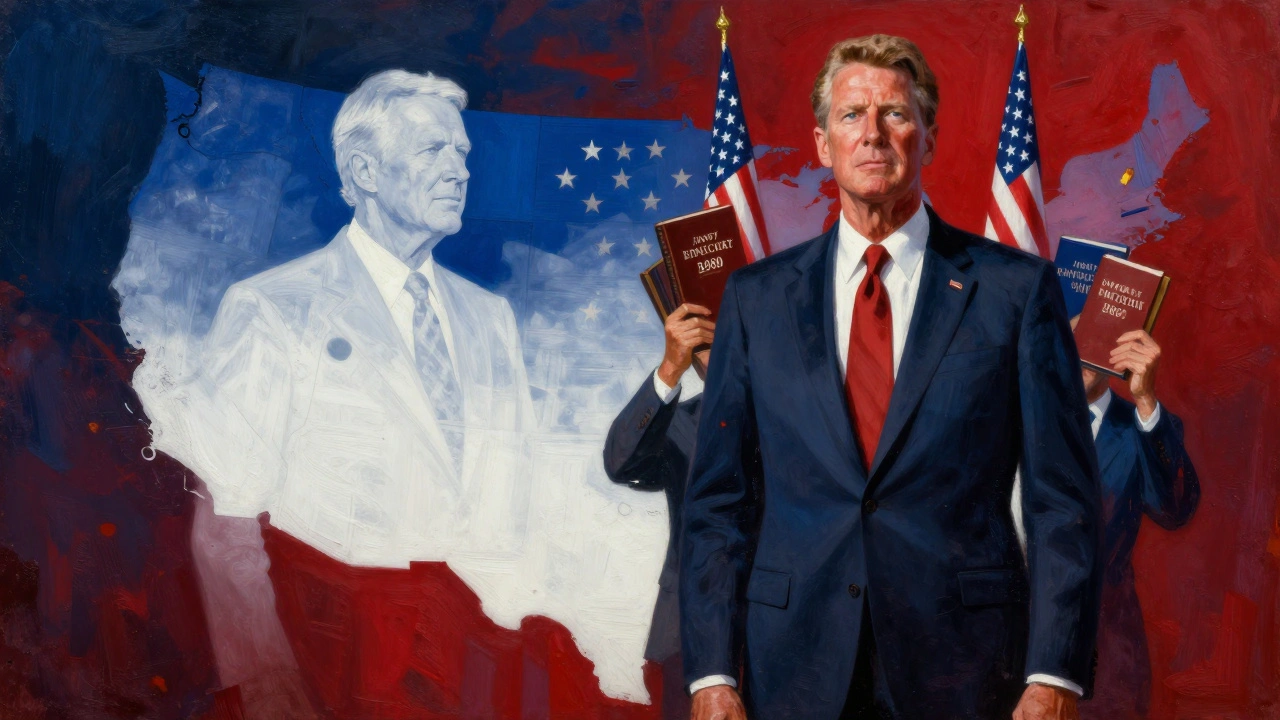
Despite its early success, the Moral Majority dissolved in 1989, just ten years after its founding. Several factors contributed to its end. Financial difficulties plagued the organization, partly due to mismanagement and negative publicity. Additionally, the political context changed. The Cold War wound down, reducing the urgency of anticommunist rhetoric. Reagan left office in 1989, removing a key ally. Internally, Falwell faced criticism for authoritarian leadership styles.
Yet, the dissolution of the Moral Majority did not mean the end of the movement. Instead, it paved the way for successors like Pat Robertson’s Christian Coalition, founded in 1989. The Christian Coalition inherited the Moral Majority’s donor lists, organizational strategies, and issue priorities. It continued to push conservative causes into the 1990s and beyond, focusing heavily on school vouchers, abortion restrictions, and opposition to same-sex marriage.
The legacy of the Moral Majority extends far beyond its decade of existence. It demonstrated that a religiously motivated countermovement could capture a major political party. It institutionalized the Christian Right as a permanent fixture in American politics. Scholars note that the "culture wars" framework-conflicts over gender, sexuality, race, and religion-became a default mode of political conflict in the US, influencing debates up to the present day.
Understanding the Backlash Dynamic
Sociologists often describe movements like the Moral Majority using the concept of "backlash." A backlash occurs when a dominant group perceives its status or values are threatened by social change. In this case, the rapid liberalization of the 1960s and 1970s triggered a defensive response from conservative Christians. They didn't just want to stop new reforms; they wanted to roll back existing ones. This dynamic explains why the Moral Majority focused so intensely on reversing Roe v. Wade and blocking the ERA.
It’s important to recognize that this wasn’t monolithic. Not all evangelicals joined the Moral Majority, and some remained politically independent or leaned liberal. However, the organization successfully identified and activated a core segment of the electorate that had previously been politically dormant. By linking social conservatism with patriotism and religious duty, Falwell created a compelling narrative that resonated with millions.
The impact of this realignment is still visible today. White evangelical Protestants remain one of the most consistently conservative demographic groups in American politics. Their voting patterns, shaped significantly by the Mobil Majority era, continue to influence presidential elections, congressional races, and judicial appointments. Understanding this history helps explain why certain cultural issues remain so polarizing in contemporary discourse.
When was the Moral Majority founded and by whom?
The Moral Majority was founded in 1979 by Baptist televangelist Jerry Falwell. He established the organization to mobilize conservative Christians as a political voting bloc in response to the social changes of the 1960s and 1970s.
What were the main goals of the Moral Majority?
The Moral Majority aimed to promote Christian conservative values in politics. Key goals included opposing abortion, pornography, and the Equal Rights Amendment (ERA), while supporting school prayer, traditional family structures, and a strong national defense against communism.
How did the Moral Majority influence the 1980 election?
The Moral Majority played a crucial role in shifting evangelical support from Democrat Jimmy Carter to Republican Ronald Reagan. Studies show a significant realignment among "Born Again" Christians, contributing to Reagan's victory in 1980 and helping establish a conservative base within the Republican Party.
Why did the Moral Majority dissolve in 1989?
The Moral Majority dissolved in 1989 due to financial difficulties, internal conflicts, negative publicity, and changing political circumstances such as the end of the Reagan presidency and the winding down of the Cold War. However, its strategies and networks were adopted by successor groups like the Christian Coalition.
What is the connection between the Moral Majority and the sexual revolution?
The Moral Majority emerged as a direct countermovement to the sexual revolution and other liberal reforms of the 1960s and 1970s. It opposed changes in gender roles, reproductive rights (like Roe v. Wade), and LGBTQ+ visibility, framing these shifts as threats to traditional Christian morality and family values.
Who succeeded the Moral Majority after its dissolution?
Pat Robertson’s Christian Coalition, founded in 1989, became the primary successor to the Moral Majority. It inherited much of the Moral Majority’s donor base, organizational model, and focus on conservative social issues, continuing the work of the Religious Right into the 1990s and beyond.