Wedding Color Symbolism Reference
Color Meaning Explorer
Search for a wedding color to learn its historical and cultural significance. This tool references traditions from around the world.
Color Meanings for
Long before brides wore white, they wore red, blue, black, and even gold. The idea that a wedding dress must be white is not ancient - it’s barely two centuries old. Before Queen Victoria made white fashionable in 1840, brides across the world chose colors that told stories about their families, their faith, their wealth, and their future. These weren’t random choices. Every shade carried meaning, and every fabric whispered a truth about who the bride was - and what her community valued.
Color Wasn’t Just Fashion - It Was a Statement
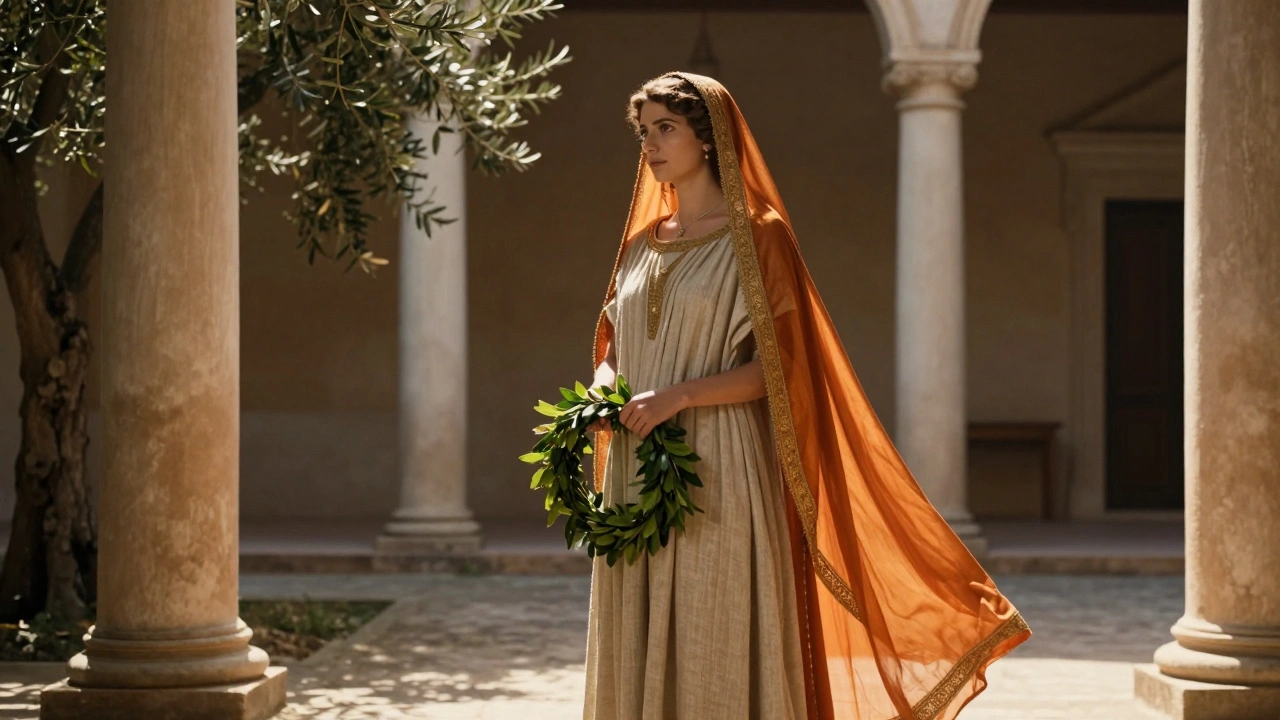
In ancient Rome, brides didn’t wear white to symbolize purity. They wore long tunics with bright orange or yellow veils called flammeum. That color wasn’t chosen because it looked pretty. It was chosen because it meant fire - the kind that lights a home, warms a family, and carries life forward. The bride was seen as a torch, not a virgin. In ancient Greece, saffron-yellow tunics were common, paired with myrtle wreaths. Myrtle was sacred to Aphrodite, the goddess of love. The color wasn’t about innocence. It was about blessing.
Meanwhile, in China during the Zhou Dynasty, around 1000 BCE, brides and grooms both wore black robes with red trim. Black wasn’t somber - it was dignified. Red stood for luck, prosperity, and protection. This wasn’t borrowed from Europe. It was a tradition born from Chinese cosmology, where balance mattered more than brightness.
Medieval Europe: Wealth Worn on the Body
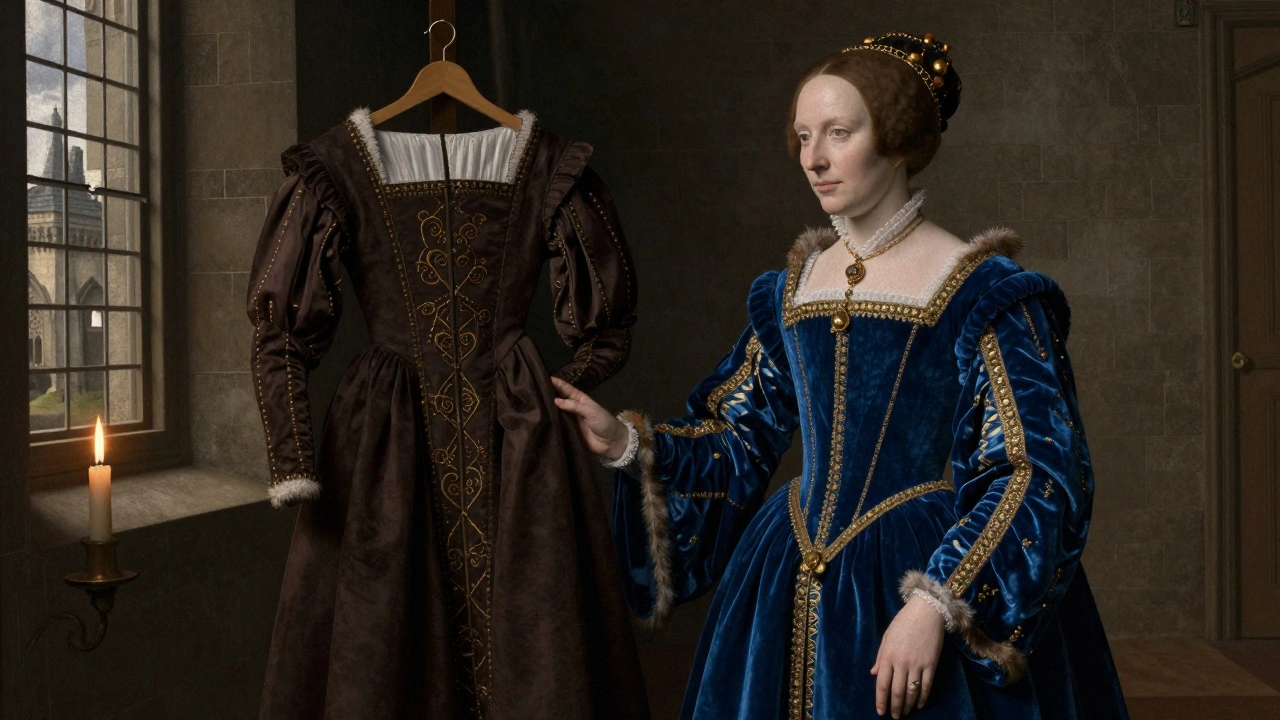
If you were rich in medieval Europe, your wedding dress screamed it. Velvet, silk, fur-lined cloaks - all in bold reds, deep blues, and shimmering golds. These weren’t just pretty fabrics. They were expensive. A bolt of imported silk could cost more than a year’s wages for a laborer. Embroidery with gold thread? That wasn’t decoration - it was proof your family had money to burn. Brides wore their finest because they knew: this dress might be worn again at christenings, coronations, or funerals. It was an investment.
Poor brides didn’t get new dresses. They wore their best existing clothes - often dark brown, navy, or charcoal. These colors hid dirt. They lasted. They could be washed, patched, and worn again. A wedding dress wasn’t a one-day costume. It was part of your wardrobe. And if you were lucky enough to have a dress passed down from your mother or grandmother, you wore it with pride.
The Royal Shift: How One Queen Changed Everything
Queen Victoria didn’t invent the white wedding dress. She just made it stick. In 1840, she wore a white silk-satin gown with Honiton lace - not because it was traditional, but because it was expensive. White fabric was hard to keep clean. Only the wealthy could afford to ruin one dress on a single day. Her choice was a power move: she was saying, I’m so rich, I can afford to wear something fragile.
But here’s the twist: Godey’s Lady’s Book, a hugely popular women’s magazine in America, turned her choice into a moral one. They claimed white had always meant purity and innocence. That wasn’t true. For centuries, white had meant status. But Victorian society was obsessed with controlling female behavior. So they rewrote history. They told women: if you want to be respectable, wear white. And they believed it.
By the 1880s, white was becoming the norm - but even then, exceptions held on. Harriett Joyce, a 35-year-old maid in Middlesex, married in a sharp purple dress. Why? Because she felt white was for girls. She was a woman. She chose color because it matched who she was, not what society expected.
Color Still Had Meaning - Even as White Took Over
While white spread across Europe and America, immigrant communities held tight to their own traditions. In Chicago, Polish brides wore blue - not because it was trendy, but because blue meant loyalty. German brides often chose the same. Italian brides stuck with red - a color of joy, passion, and protection against evil. In Scandinavia, black was still common. Why? Because a black dress could be worn again. It was practical. It was smart.
Irish brides often wore blue too, but for a different reason: it was tied to the Virgin Mary. Blue was sacred. Green? Avoided. Many believed it brought bad luck - it was the color of fairies and ghosts. Brown and gray? Common among farmers and laborers. No one expected them to wear silk. They wore what worked.
Why Did Color Fade? It Wasn’t Just Fashion - It Was Economics
Industrialization changed everything. By the late 1800s, mass-produced fabrics made white dresses cheaper. Steam-powered washing machines made cleaning them easier. Suddenly, middle-class families could afford a white dress - not because it was symbolic, but because it was now possible.
But here’s what most people miss: white didn’t win because it was beautiful. It won because it was marketed as the ideal. Advertisers, magazines, and department stores pushed white as the only proper choice. They made brides feel guilty if they chose anything else. Are you not pure? Are you not modern? Are you not good enough? The pressure worked.
Patterned dresses? Floral embroidery? These were once common. But as white became standard, color was pushed to the margins - seen as old-fashioned, unrefined, or even improper. Yet in rural villages, in immigrant neighborhoods, and among working families, color never fully disappeared.
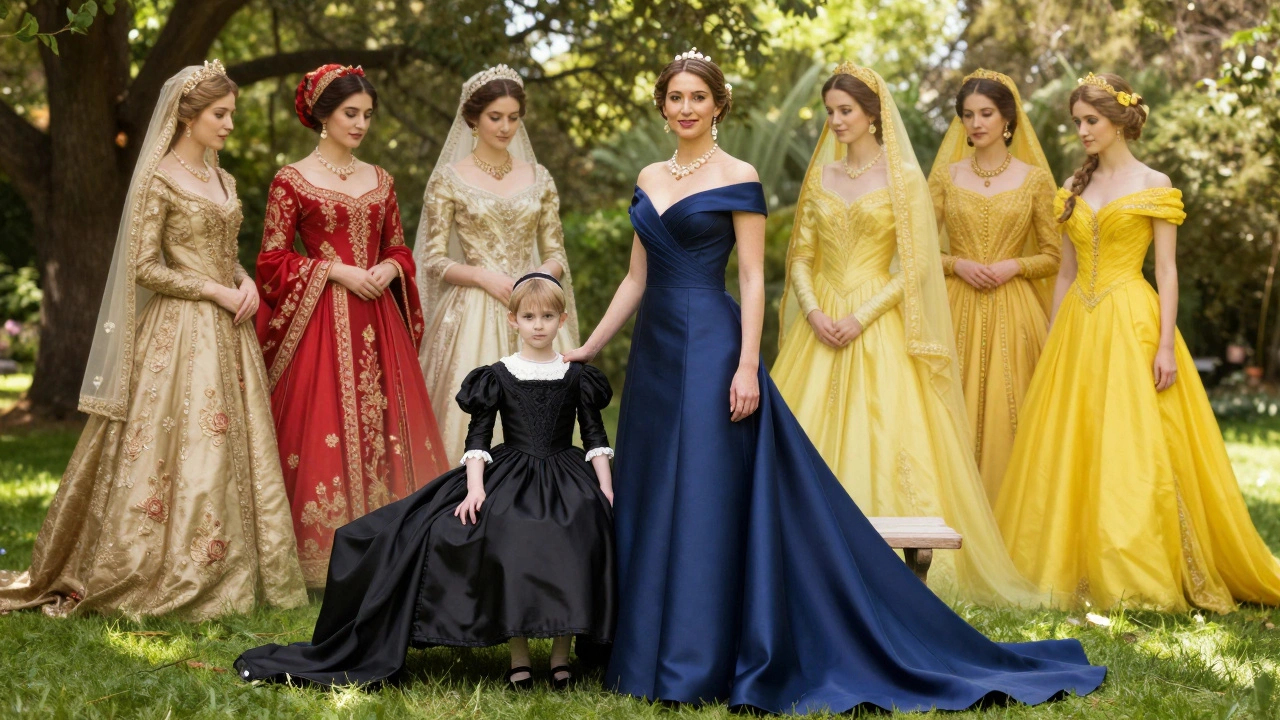
Today, Color Is Coming Back - And It’s Not Just a Trend
More brides today are choosing blush, sage, wine, even midnight blue. Why? Not because they’re rebelling. Because they’re returning to something older: meaning.
When a bride chooses red, she might be honoring her Chinese grandmother. When she picks blue, she might be remembering her Irish roots. When she wears black, she’s saying: this isn’t about virginity. It’s about strength. About dignity. About wearing something that lasts.
Colorful wedding dresses aren’t a fad. They’re a reclamation. They’re a reminder that before white was a rule, it was just one option among many. And for thousands of years, brides chose colors that told their own stories - not someone else’s.
What Colors Meant - And Still Mean
- Red: Joy, passion, prosperity. Popular in Italy, China, and parts of Eastern Europe.
- Blue: Loyalty, faith, protection. Worn by Irish, Polish, and German brides for centuries.
- Black: Dignity, practicality, endurance. Common in Scandinavia and among working-class families.
- Gold: Wealth, divine blessing. Worn by nobility and royalty in medieval Europe.
- Green: Fertility, growth - but often avoided as unlucky.
- Yellow: Light, warmth, life. Worn in ancient Rome and Greece - not purity, but presence.
- White: Originally a sign of wealth. Later twisted into a symbol of purity by Victorian marketers.
Why did brides wear colors other than white before the 1800s?
Brides wore colors based on cultural traditions, economic means, and symbolic meanings. Red meant prosperity in Italy, blue stood for loyalty in Ireland, and black was worn in Scandinavia because it was durable and could be reused. White was rare because it was expensive and hard to clean - it wasn’t about purity, but about having enough money to ruin a dress.
Was Queen Victoria the first bride to wear white?
No. English Princess Philippa wore white in 1406, and Mary Queen of Scots wore white in 1558. But Victoria’s wedding in 1840 was the first to be widely publicized and copied. Her choice was less about tradition and more about showing off wealth - and then Victorian media turned it into a moral symbol.
Do any cultures still wear colorful wedding dresses today?
Absolutely. In China, brides often wear red. In India, brides wear red, gold, or green saris. In Nigeria, brides wear vibrant Ankara fabrics. In Scandinavia, some still wear black. These aren’t just fashion choices - they’re connections to heritage, belief, and identity.
Why was green considered unlucky in some cultures?
In parts of Europe, green was linked to fairies, spirits, and the supernatural. Wearing green at a wedding was thought to invite bad luck - or even attract fairy interference. Some believed fairies would steal the bride. These superstitions were strong enough to keep green out of bridal wardrobes for centuries.
Is wearing white today still about purity?
For many, no. Today, white is often worn because it’s expected - not because of any moral meaning. But more brides are choosing color precisely to reject that outdated idea. Color is becoming a way to say: my marriage is about love, not virginity.