Greek Sex Work Stratification Explorer
Side-by-Side Comparison
| Attribute |
|---|
Price Converter: Drachmas & Obols
A drachma = 6 obols. Hetaerai charged several drachmas per evening; pornai charged fractions of a drachma. Convert between units to feel the scale of the price gap.
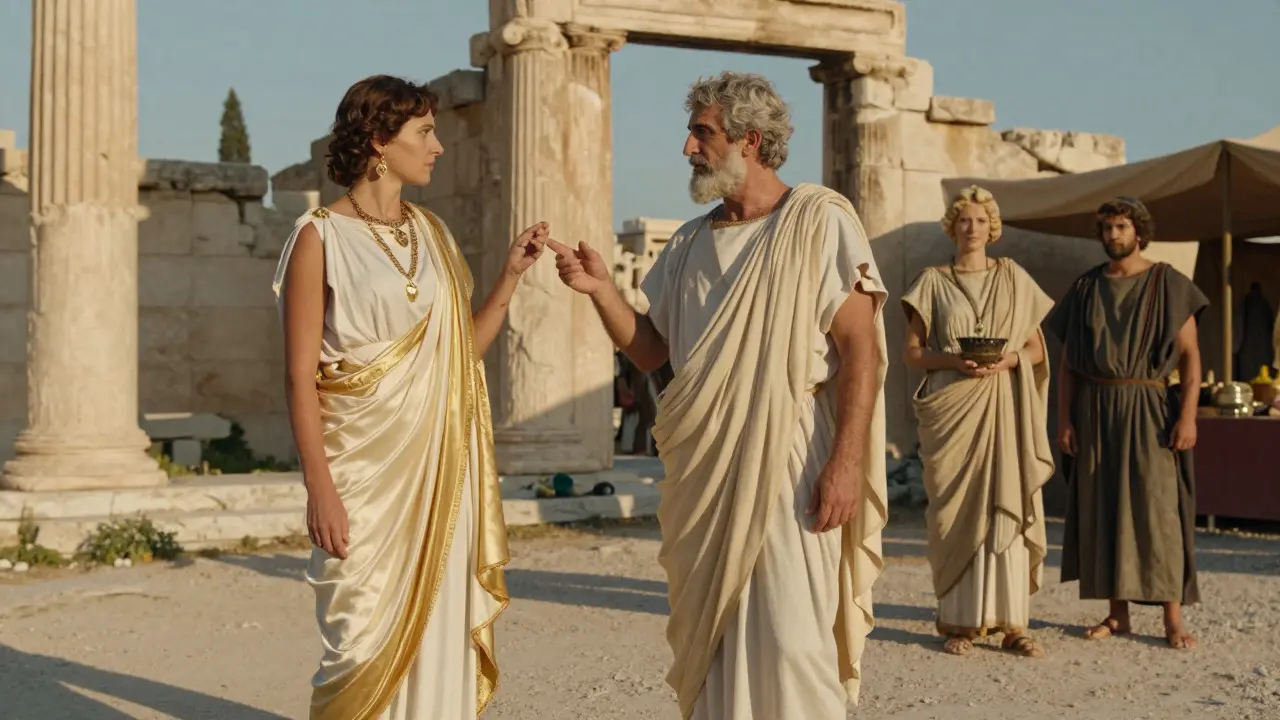
Imagine walking through the Agora in Athens around 400 BCE. You see a woman in fine silk talking politics with a statesman, while another stands near a temple gate collecting coins for a ritual dance. These weren't just different jobs; they were two entirely different social worlds. Ancient Greece didn't have a single category for "sex worker." Instead, it had a rigid hierarchy that separated high-status companions from low-status laborers, with religious figures sitting somewhere in between. Understanding this stratification is key to understanding how Greek society viewed gender, class, and morality.
The Three Tiers of Ancient Greek Sex Work
To grasp the system, you need to look at the three main categories: Hetaera, Porne, and Hierodule. Each term carried specific legal, social, and economic weight that dictated who could interact with whom and what rights those women held.
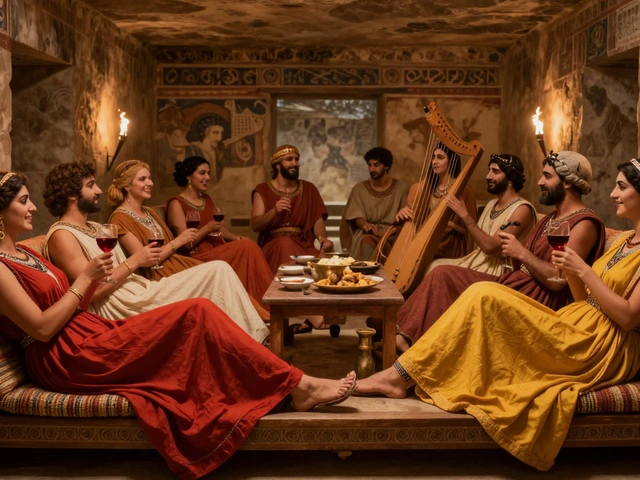
- Hetaera: Literally meaning "companion," these were elite courtesans. They were often freeborn or freedwomen who received education in music, poetry, and conversation. Their clients were usually wealthy men seeking intellectual stimulation as much as physical intimacy. Think of them as the influencers of their time-highly visible, controversial, and powerful within their niche.
- Porne: This word refers to common prostitutes or street workers. Unlike hetaerai, many pornai were slaves or foreign metics (non-citizen residents). They worked in brothels or on the streets. Their role was primarily transactional and sexual, with little expectation of social engagement. They occupied the bottom rung of the social ladder.
- Hierodule: Translating to "sacred slave" or "temple prostitute," these women served in temples dedicated to goddesses like Aphrodite or Hera. While popular culture often paints them as purely sexual servants, historical evidence suggests their role was more complex, involving ritual duties, hospitality, and sometimes regulated sexual rites, though this is still debated among historians.
Hetaera: The Elite Companion
The Hetaera was not a stereotype of a "loose woman" in the modern sense. She was a professional. A famous example is Phryne, a celebrated hetaera from Thessaly. Phryne was so admired for her beauty and intellect that she reportedly funded the statue of Athena Parthenos by Apollodorus. Her relationship with the painter Praxiteles and later the philosopher Aristotle’s student Theophrastus shows that hetaerai moved in the highest circles of Athenian society.
Why did wealthy men pay such high fees? It wasn't just about sex. In a society where citizen women were largely confined to the home, hetaerai offered a rare space for public discourse. A dinner party hosted by a hetaera like Aspasia, the partner of Pericles, attracted some of the brightest minds in Athens. Aspasia is credited with influencing Socrates and other philosophers, proving that these women held significant soft power. However, this status came with risk. Hetaerai were constantly under scrutiny. If they behaved "improperly" or offended the wrong person, they could be exiled or fined. Their freedom was conditional on their reputation.
Porne: The Economic Reality of Street Work
In stark contrast, the Porne operated in a completely different economic sphere. Most pornai were enslaved women owned by pimps or brothel keepers. Their earnings went directly to their masters. They had no legal standing to sue for debt or contract violations because they were property. This lack of autonomy made their lives precarious. If a client failed to pay, the recourse was limited to the owner's discretion, not the law.
Historical records, including comedies by Aristophanes, depict pornai as figures of mockery. They were associated with lower-class humor, crude behavior, and physical comedy. Yet, despite the stigma, they were an essential part of the urban economy. Brothels provided affordable access to sexual services for the average male citizen, helping to manage population dynamics and social tensions. The price difference between a hetaera and a porne was massive. A hetaera might charge several drachmas for an evening, while a porne charged fractions of a drachma, making the latter accessible to the working poor.
Hierodule: The Sacred Dimension
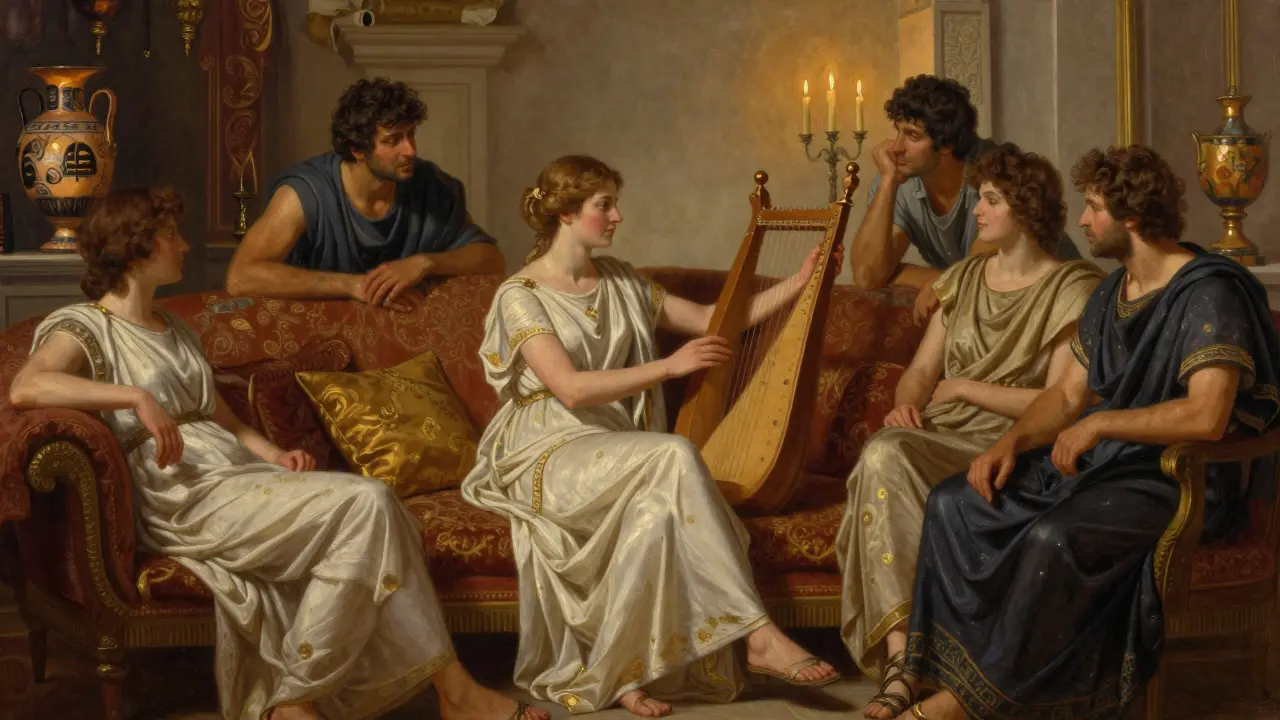
The most misunderstood group is the Hierodule. For centuries, European scholars assumed that all temple women in places like Corinth or Samos were forced into daily sexual service as a form of worship. Modern archaeology and textual analysis suggest a more nuanced picture. Hierodules were often dedicated to the temple for life, serving as caretakers, musicians, or hosts for pilgrims. Sexual rituals, if they existed, were likely ceremonial rather than commercial. The term "prostitute" was applied to them by later Christian writers who sought to condemn pagan practices, adding a layer of bias to our understanding.
Unlike hetaerai and pornai, hierodules had a protected status. To harm a hierodule was to offend the god or goddess. This divine protection gave them a unique security that neither other group possessed. However, it also meant they had less personal freedom. They were bound to the temple and its rules. Their income came from offerings and donations, not direct client payments, which placed them in a middle ground economically and socially.
Comparing the Three Groups
Looking at the differences side-by-side clarifies the stratification. The table below highlights the key distinctions in status, clientele, and legal rights.
| Attribute | Hetaera | Porne | Hierodule |
|---|---|---|---|
| Social Status | High / Elite | Low / Marginalized | Middle / Protected |
| Legal Freedom | Free or Freedwoman | Often Slave | Temple Slave / Dedicatee |
| Primary Service | Companionship, Intellect, Sex | Sexual Services | Ritual Duties, Hospitality |
| Clientele | Wealthy Citizens, Politicians | General Public, Soldiers | Pilgrims, Devotees |
| Economic Control | Self-Employed / Independent | Owned by Pimp/Brothel Keeper | Controlled by Temple Authority |

Why Did This Stratification Exist?
This rigid hierarchy wasn't accidental. It reflected the broader Greek values of arete (excellence) and social order. By separating women into distinct roles, society could manage the tension between the desire for female company and the fear of female influence over citizen families. Hetaerai allowed men to enjoy female intellect without threatening the domestic authority of citizen wives. Pornai provided a safe outlet for sexual urges away from the household. Hierodules channeled sexuality into religious duty, removing it from the political sphere.
It also served an economic function. The high cost of hetaerai ensured that only the elite could afford them, reinforcing class boundaries. The low cost of pornai kept the workforce employed and the streets relatively orderly. The temple system absorbed resources into religious institutions. Each tier played a specific role in maintaining the social equilibrium of the polis.
Common Misconceptions
One major misconception is that all Greek sex workers were slaves. While many pornai were, hetaerai were almost always free. Another myth is that hetaerai were simply "whores with better PR." In reality, their value lay in their education and conversational skills. A man would pay for a hetaera's wit as much as her body. Finally, the idea that hierodules were victims of forced prostitution is an oversimplification. Many may have chosen this path for stability, protection, or genuine devotion, even if their options were limited compared to citizen women.
Legacy and Modern Relevance
Understanding this stratification helps us see that sex work has never been a monolith. Even in ancient times, there were niches, statuses, and power dynamics. The hetaera model influenced later concepts of the "courtesan" in Rome and eventually Europe. The distinction between high-end companionship and low-end labor persists in many modern industries, not just sex work. Recognizing these historical layers prevents us from projecting modern moral judgments onto ancient societies. It allows us to appreciate the complexity of how humans organize social interactions around intimacy, economics, and status.
What is the difference between a hetaera and a porne?
A hetaera was a high-status companion, often educated and free, catering to wealthy clients who valued conversation and intellect. A porne was a common prostitute, often enslaved, providing primarily sexual services to the general public at a lower cost.
Were hierodules actually prostitutes?
The term is debated. While they served in temples and may have performed sexual rites, their primary role was likely religious maintenance and hospitality. They were not commercial sex workers in the same way as hetaerai or pornai.
Could a hetaera become a citizen?
No. Hetaerai were never full citizens. They were either free non-citizens (metics) or freed slaves. Their status was higher than that of a slave but lower than that of a citizen woman, and they lacked voting rights and full legal protections.
How much did a hetaera charge compared to a porne?
Prices varied by city and era, but hetaerai charged significantly more. A hetaera might charge 1-5 drachmas per visit, while a porne might charge 1 obol (one sixth of a drachma). This made hetaerai a luxury good for the rich.
Did all Greek cities have this stratification?
Most major poleis like Athens, Corinth, and Sparta had forms of this hierarchy, though the specifics varied. Athens is best documented due to its extensive literary record. Other cities may have had different terms or structures, but the distinction between elite companions and common workers was widespread.