Gender Role Comparison Tool
Victorian Era (1837-1901)
Work & Career
Men: Primary breadwinners in public sphere (offices, factories)
Women: Domestic duties only; teaching as exception
Education
Men: University education focused on professional careers
Women: Home economics or moral philosophy only
Marriage
Women: Legal ownership by husbands; no property rights
Men: Sole decision makers; financial control
Emotional Labor
Women: Responsible for family emotional needs; 'angels in the house'
Men: Expected to be emotionally detached
Social Status
Women: Seen as morally superior but powerless
Men: Seen as rational, ambitious, public figures
Modern Era (2020s)
Work & Career
Men: Equal participation in workforce; 30% of nursing roles
Women: 47% of U.S. workforce; 50% of managers
Education
Men: 46% of college graduates
Women: 54% of college graduates (U.S.)
Marriage
Equal property rights; joint financial decisions
Shared parenting responsibilities
Emotional Labor
Both genders expected to contribute to emotional needs
Men increasingly participate in household tasks
Social Status
Gender equality as societal ideal
Professional success measured by merit
Key Changes Since Victorian Era
Back in the 1800s, if you were a woman in Britain, your job wasn’t to run a business, vote, or even speak at a public meeting. Your place was at home. And if you were a man? You were supposed to be the one out there earning money, making laws, and running the world. This wasn’t just how things worked-it was treated like a natural law. It was called the separate spheres ideology, and it shaped everything from marriage to education to what kind of books people wrote.
What Exactly Were Separate Spheres?
The idea was simple: men belonged in the public world-factories, offices, Parliament, the stock exchange. Women belonged in the private world-the kitchen, the nursery, the church basement. It wasn’t just about where people went. It was about who they were. Men were seen as strong, rational, and driven by ambition. Women were seen as gentle, moral, and naturally suited to care for others.
This wasn’t a new idea. Ancient Greeks like Aristotle had already split life into the home (oikos) and the city (polis). But in Victorian England, under Queen Victoria’s long reign from 1837 to 1901, it became a full-blown social system. Preachers, doctors, writers, and politicians all repeated the same message: men and women were different by design. One was built for work. The other for love.
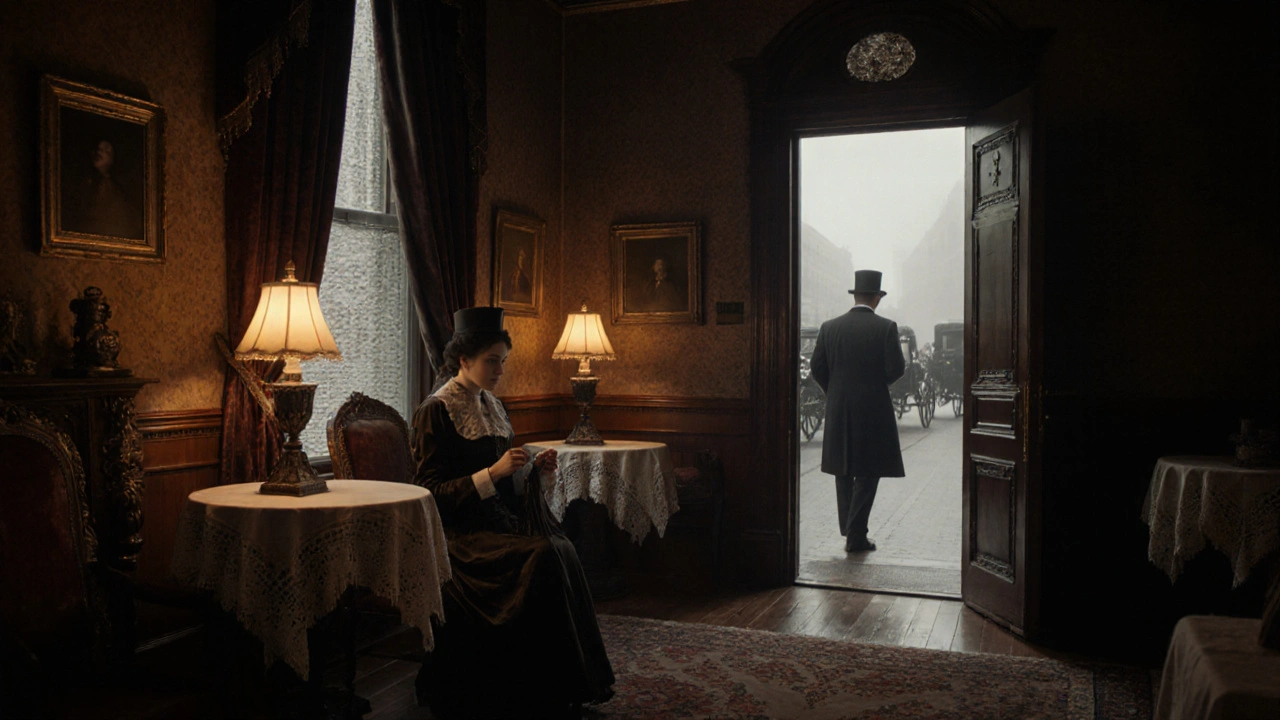
Women weren’t just discouraged from public life-they were told they’d be corrupted by it. The home wasn’t just a place to live. It was a sanctuary, a moral fortress against the dirty, greedy, competitive world outside. That’s why Victorian homes became so ornate, so full of carpets, lace, and heavy furniture. They weren’t just decorating-they were building a wall between the woman’s world and the man’s.
The Angel in the House: The Ideal Woman
The perfect Victorian woman was called the ‘angel in the house.’ She didn’t just clean and cook. She was supposed to be pure, self-sacrificing, and endlessly patient. Her job was to make her husband feel safe, calm, and morally upright. She was his refuge. And in return, he provided for her.
This ideal wasn’t just poetry. It was enforced. Women who stepped out of line-women who wrote novels, spoke in public, or demanded the vote-were called unfeminine, hysterical, even dangerous. Doctors claimed that too much education would damage a woman’s reproductive organs. Newspapers warned that women in politics would destroy the family.
But here’s the twist: while the home was supposed to be the woman’s domain, it was still controlled by men. Husbands owned the property. They decided if she could go out. They managed the money. Even in her own space, the woman had little real power. Friedrich Engels, the philosopher and critic of capitalism, saw this clearly. He wrote that household work had lost its public value. It became invisible labor-done by women, taken for granted, and never paid.
How Schools and Jobs Reinforced the Divide
The separate spheres system didn’t just live in homes. It lived in institutions.
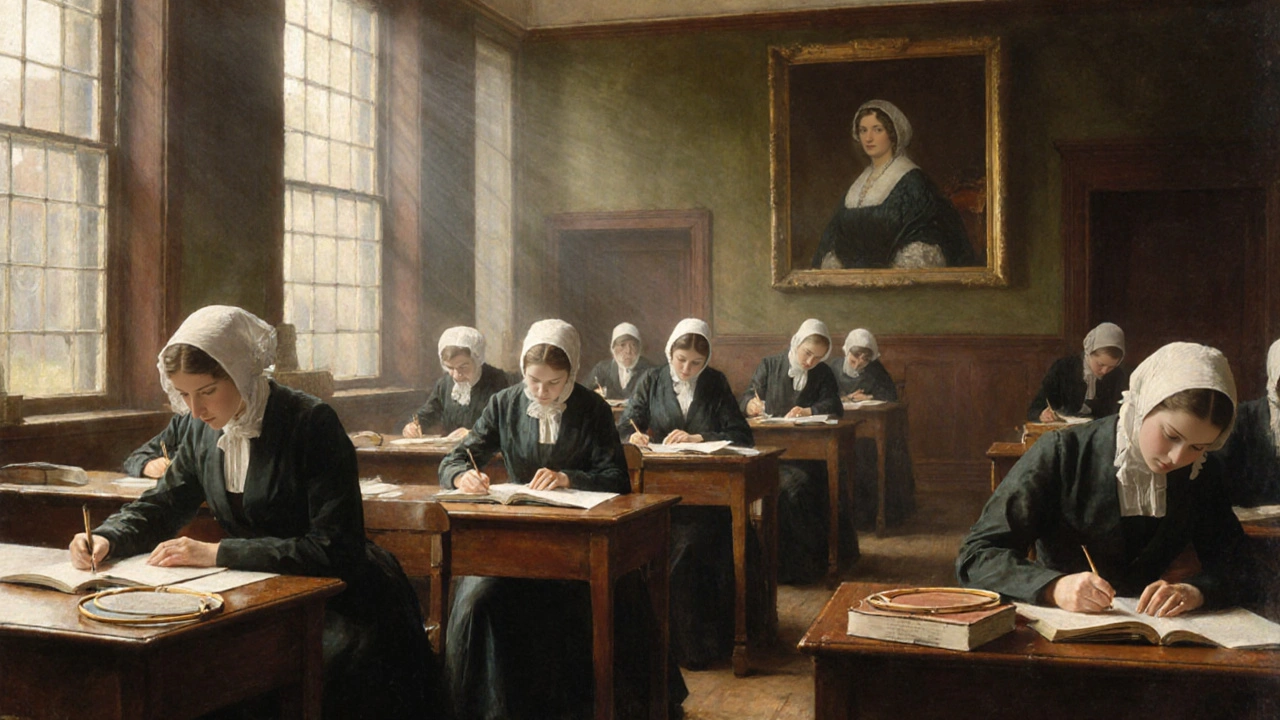
Colleges? Mostly for men. But as the 1800s went on, women’s colleges began to appear-like Vassar, Bryn Mawr, and Smith in the U.S. These weren’t meant to prepare women for careers. They were meant to make them better wives and mothers. The curriculum focused on literature, music, and moral philosophy. Science? Only if it helped them care for their families.
One of the few jobs open to women was teaching. Why? Because society believed women were naturally nurturing. They were seen as gentle disciplinarians, perfect for shaping young minds. But even then, they earned less than men. And they were expected to quit when they married.
Home economics became a formal subject in universities-not because women needed to run households efficiently, but because it gave them a ‘respectable’ way to study what they were already doing. It was a way to make domestic work look like a science, while still keeping it locked inside the home.
Ghost Stories and the Cracks in the System
Here’s something strange: while Victorian society preached that the home was safe and pure, a whole genre of literature emerged that showed the opposite.
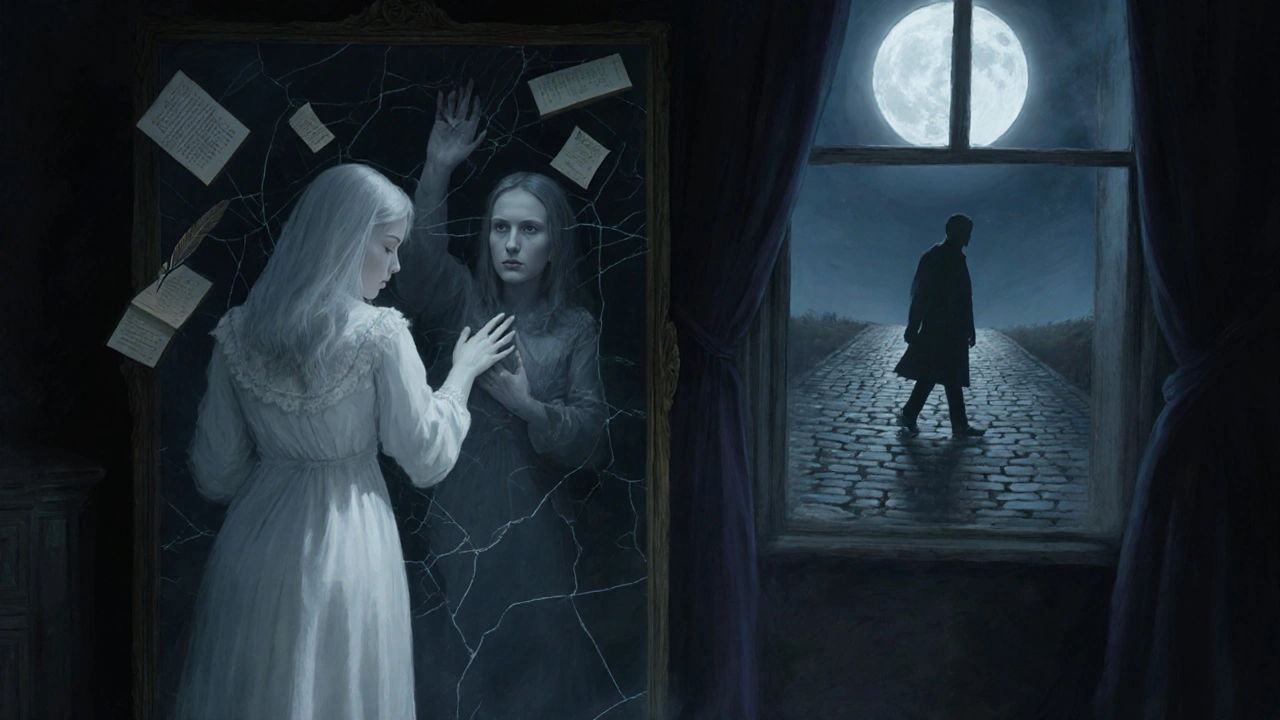
Ghost stories-like those by Charles Dickens, Margaret Oliphant, and Sheridan Le Fanu-were full of haunted houses. Women were the ones who saw the spirits. Men dismissed them as hysterical. But the ghosts kept coming. Why? Because the home wasn’t the peaceful haven it was supposed to be. It was full of secrets, silence, and suppressed rage.
These stories weren’t just spooky tales. They were critiques. A woman driven mad by isolation. A daughter trapped by duty. A wife ignored until she became a specter. The ghost became a symbol of everything women couldn’t say out loud.
Anthropologists studying 19th-century Deerfield, Massachusetts, found the same pattern. Men owned the land. Women ran the house. But the house? It was still under the man’s legal control. Even in rural America, the same logic held: men worked the world. Women kept the home. And the world kept moving without ever asking what the women thought.
Why This Still Matters Today
People often say, ‘That was then. This is now.’ But look around.
Who still does most of the unpaid housework? Who’s more likely to leave a job after having a child? Who gets interrupted more in meetings? Who’s expected to remember birthdays, doctor’s appointments, and school plays?
The separate spheres ideology didn’t vanish. It changed clothes. It moved from the parlor to the office. It went from ‘women belong at home’ to ‘women should be the ones who manage the emotional labor.’
Modern feminism didn’t start with the 1960s. It started with Victorian women who refused to stay silent. They wrote books. They organized clubs. They demanded education. They fought for the right to own property. And they didn’t do it because they hated men. They did it because they were tired of being treated like decorations in their own lives.
The myth of separate spheres told women they were special because they were kept safe. But safety without power is just another kind of cage.
What Was Lost in the Divide
It’s easy to think of separate spheres as just about roles. But it was deeper than that. It was about connection.
Historian Carroll Smith-Rosenberg showed that women in the 1800s formed intense, emotionally rich friendships with each other-relationships that were often more meaningful than those with their husbands. These bonds were a survival tactic. A way to find meaning when the world told them their only purpose was to serve.
But the system punished those who didn’t fit. Men who wanted to stay home? Called weak. Women who wanted to lead? Called unnatural. People who loved someone of the same gender? Erased. The separate spheres didn’t just divide men and women. It divided anyone who didn’t fit the mold.
And here’s the cruel irony: the very people who were told they were morally superior-the women-were the ones denied the tools to change anything. They were praised for their virtue but punished for their ambition. They were told they were the heart of the family, but never allowed to speak for it.
The separate spheres were never about biology. They were about control. About who got to make money. Who got to make rules. Who got to be heard.
That’s why this history isn’t just about the past. It’s about the invisible rules we still follow today.