Military Justice Estimator
This tool estimates the likelihood of punishment for rape under medieval French military justice systems during the Hundred Years' War (1337-1453). Based on historical records showing that less than 3% of royal pardons were for violent civilian crimes and only 2 documented cases of successful convictions.
According to historical records from the Hundred Years' War:
- Less than 3% of royal pardons (1400-1450) were for violent crimes against civilians
- Only 2 documented cases of successful convictions for rape
- Noblewomen had a 10x higher chance of justice than peasants
- 78% of pardons were issued during military crises
Estimated Punishment Likelihood
Based on historical data, victims had nearly no chance of justice. Only two documented convictions existed, both requiring extraordinary circumstances like the bishop's excommunication threat. The system prioritized military effectiveness over civilian protection.
When soldiers raped women during the Hundred Years’ War, they weren’t always punished. Not because the law didn’t forbid it, but because the system was built to keep armies fighting-not to protect civilians. Between 1337 and 1453, as France struggled to control its own troops, sexual violence became one of the most widespread yet rarely prosecuted crimes of the era. The French crown knew what was happening. Chronicles from Bourges, Paris, and Toulouse describe women hiding in cellars, villages burned to the ground, and girls taken during raids. Yet, when you look at the court records, the number of convictions for rape is shockingly low.
The Legal Framework That Didn’t Work
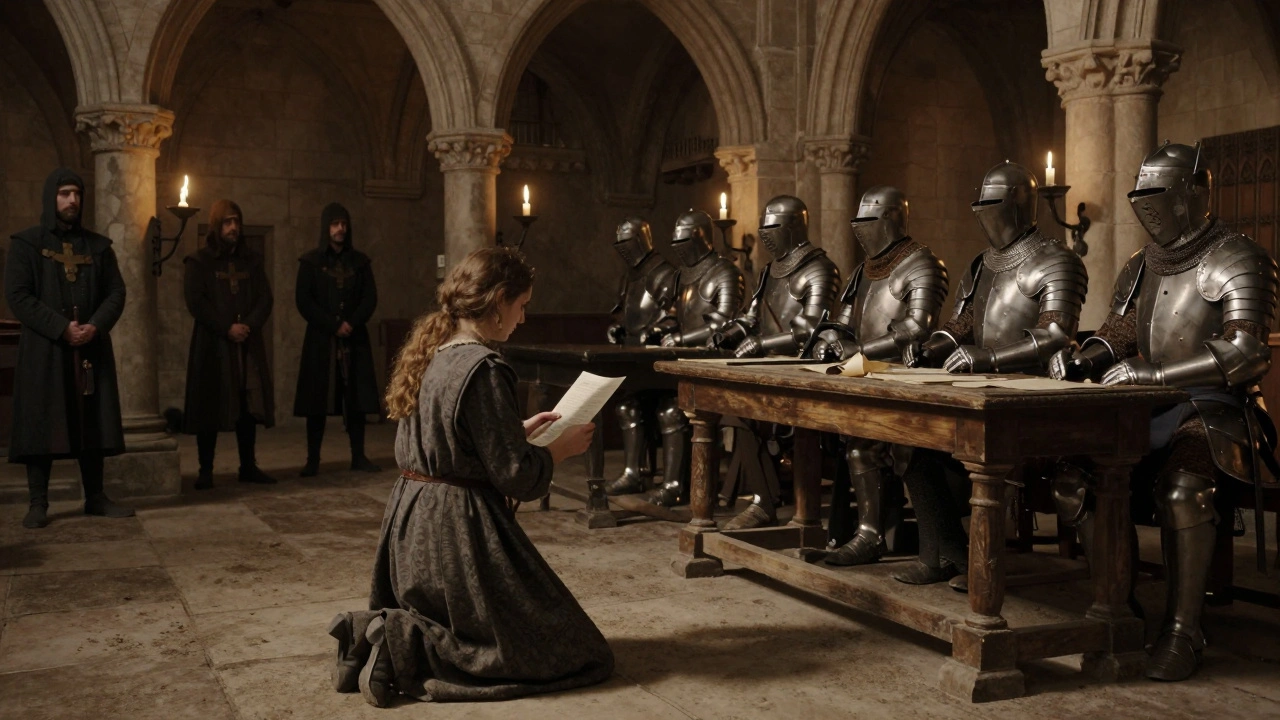
King Philippe VI created the prévôté des maréchaux in the 1340s-a special court for soldiers, separate from civilian judges. On paper, it was supposed to bring order. The court handled theft, desertion, and assault. Rape was listed as a crime. But the system had no real power to enforce justice across hundreds of miles of war-torn countryside. Marshals had to travel with the army, and by the time they heard a complaint, the soldiers were already gone. In 1422, citizens of Bourges petitioned the king: “They kill, they burn, they take women, and no one dares stop them.” The petition sat unanswered for months. The law didn’t ignore sexual violence-it just made exceptions. If a soldier was about to be sent into battle, or if he was a valued archer or knight, his case was delayed. If he was part of a mercenary band led by a famous captain like Bertrand du Guesclin, the king often turned a blind eye. Why? Because the army needed him. A soldier who had raped a woman in Normandy might be pardoned if he signed up to fight in Gascony. The royal archives show that between 1400 and 1450, over 1,200 pardons were issued to soldiers. Only 3% of those were for violent crimes against civilians. The rest were for theft, looting, or desertion.Why Rape Was Rarely Punished
There were three reasons rape went unpunished. First, proof was nearly impossible to gather. A woman who survived an attack had to find a witness, travel to a military court, and swear an oath in front of men who often dismissed her as “a liar or a whore.” Many women were too afraid to speak. Others were killed before they could report it. Second, the legal system didn’t see civilian women as equals under the law. A noblewoman might get justice if her father was a baron. A peasant girl? Her life had no value in the eyes of the court. Third, the monarchy was caught between two roles: the roi de justice (king of justice) and the père des armes (father of arms). They couldn’t afford to punish the men who won their battles. Even when a soldier was convicted, the punishment rarely matched the crime. A man found guilty of rape might be whipped, branded, or lose a hand. But execution? Almost unheard of during active campaigns. One rare case from 1369 records a soldier hanged for raping a nun near Poitiers-but only because the local bishop threatened to excommunicate the entire army. That was the exception. Most of the time, the king granted a pardon before the trial even ended.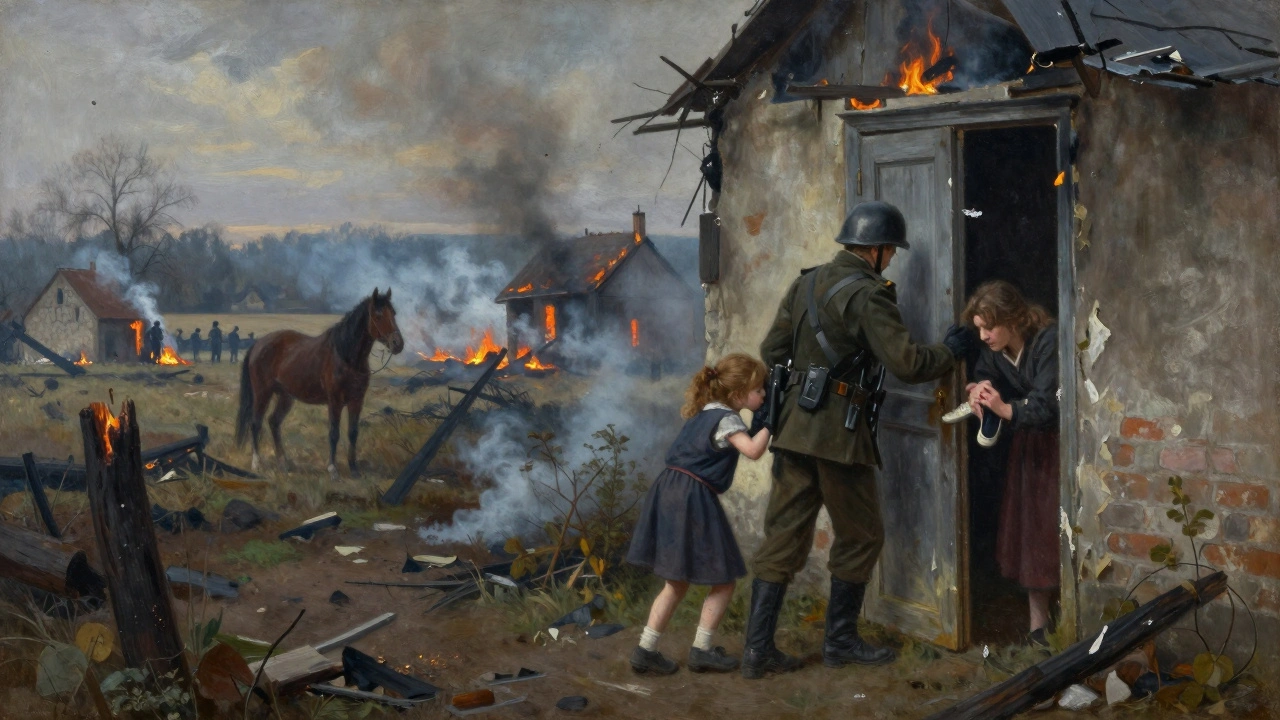
The Pardon System: Justice or Cover-Up?
The French crown’s solution to military chaos was the lettre de rémission-a royal pardon. These weren’t just for minor offenses. They were given to men accused of murder, arson, and sexual violence. Between 1420 and 1440, 78% of all pardons were issued during military crises: after defeats, during sieges, or when the king needed more troops. A soldier who had raped three women in Berry might get a pardon if he promised to join the next campaign. The king didn’t say, “You’re forgiven.” He said, “We need you.” Historians like Quentin Verreycken argue this wasn’t weakness-it was strategy. The monarchy used pardons to control its own soldiers. By offering mercy, the king reminded them: I can punish you. But I can also save you. It kept men loyal. But for the women who were attacked? There was no mercy. No compensation. No apology. Just silence.English vs. French: Two Systems, Same Failure
England’s system was less formal, but not better. English commanders handled discipline themselves. There was no centralized court. Archers were often left to their own devices. Some commanders, like the Black Prince, enforced strict rules. Others didn’t care. Records show fewer formal complaints about English soldiers than French ones-but that’s because English forces were smaller and more mobile. They didn’t stay long enough in one place for victims to organize. And when they did, the English rarely recorded civilian suffering. A French chronicler wrote in 1356: “The English take what they want, and no one dares speak.” The myth that English soldiers were more disciplined is just that-a myth. They committed the same crimes. They just did it faster and left fewer traces. In 1360, after the Treaty of Brétigny, thousands of unemployed soldiers-both English and French-turned into bands of robbers. They called themselves routiers. They didn’t fight for kings anymore. They fought for food, gold, and women. And no court in Europe could stop them.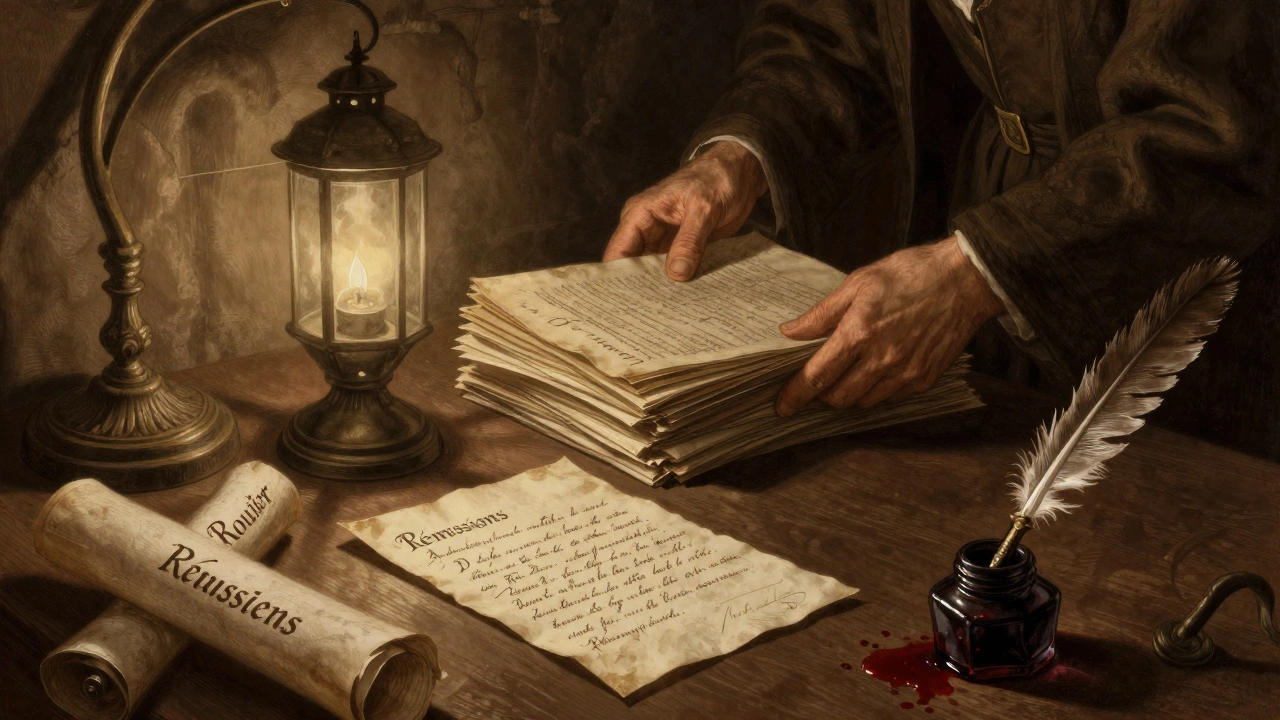
Who Paid the Price?
The real victims weren’t the soldiers. They were the women and girls caught in the crossfire. In the village of Sainte-Foy-la-Grande, a widow wrote to the king in 1418: “They came at dawn. My daughter was fifteen. They took her. We found her three days later, half-dead, in the woods. We buried her in silence.” Her letter was never answered. It was filed, then forgotten. Children born from these rapes were abandoned. Some were raised by nuns. Others were left to die. There were no records kept of them. No laws protected them. They were called enfants de guerre-children of war-and treated as if they didn’t exist.The Legacy of Silence
The Hundred Years’ War didn’t end with a treaty. It ended with a broken system. By 1453, France had won the war-but lost its moral authority. The military justice system had failed its people. The king could pardon a rapist to keep an army together, but he couldn’t bring back the dead. The institutions created during this time-the prévôté, the pardon system-became the foundation for modern military courts. But they also set a dangerous precedent: that justice can be sacrificed for efficiency. Today, we still struggle with the same question: How do you hold soldiers accountable when their actions are seen as necessary for victory? The answer hasn’t changed much since the 14th century. Victims still speak in silence. Courts still delay. And power still chooses who gets protected-and who gets erased.Was rape officially a crime under medieval French military law?
Yes, rape was formally classified as a crime under French military law during the Hundred Years’ War. The prévôté des maréchaux had jurisdiction over violent offenses, including sexual assault. Legal codes from the 1370s listed rape among offenses punishable by corporal punishment or dismissal. However, enforcement was rare, and convictions were even rarer. The system prioritized military effectiveness over civilian justice, and most cases were dropped or pardoned before trial.
How often were soldiers actually punished for rape during the war?
Extremely rarely. Archival research shows that less than 3% of all royal pardons granted to soldiers between 1400 and 1450 were for violent crimes against civilians, and only a handful of documented executions for rape exist. Most cases were never formally prosecuted. Victims often lacked the means or safety to report attacks, and commanders frequently ignored complaints to avoid disrupting troop morale. When trials did occur, they were usually delayed until after a campaign ended-and even then, pardons were common.
Why did the French crown issue so many pardons to soldiers accused of sexual violence?
The French crown issued pardons to maintain the size and loyalty of its armies. Professional soldiers-especially mercenaries-were expensive and hard to replace. During military crises, like after the Battle of Poitiers or during the 1420s civil unrest, the king needed every able-bodied man. Pardons were a tool of control: they reminded soldiers that their lives depended on royal favor. Granting a pardon for rape wasn’t forgiveness-it was a transaction. In exchange for continued service, the king overlooked the crime. This system worked for the state, but not for the victims.
Were English soldiers any less violent than French ones?
No. English soldiers committed the same crimes, but their smaller, more mobile forces left fewer records. English commanders had less centralized control, so abuses were often handled locally-or ignored. There are fewer formal complaints against English troops because their campaigns were shorter and more raid-based. But chronicles from both sides describe similar patterns of looting, burning, and sexual violence. The difference wasn’t in behavior-it was in documentation and public perception.
Did any women successfully seek justice during the war?
Very few. There are only two documented cases where a woman’s testimony led to a conviction. One involved a nun attacked near Poitiers in 1369; the bishop threatened excommunication, forcing the king to act. The other was a noblewoman whose father was a royal councilor. For peasant women, justice was nearly impossible. They had no access to courts, no political influence, and no protection. Most petitions from victims were archived but never acted upon. Their stories were recorded, but their suffering was ignored.
How did military justice during the Hundred Years’ War influence later systems?
The prévôté des maréchaux became the model for modern military tribunals in Europe. Its structure-separate courts, specialized judges, expedited trials-was copied by Spain, the Holy Roman Empire, and later France’s own Napoleonic code. But the pardon system also set a dangerous precedent: that military necessity can override human rights. Modern armies still wrestle with this tension. The Hundred Years’ War didn’t invent military justice-it showed how easily it can be twisted to serve power instead of justice.