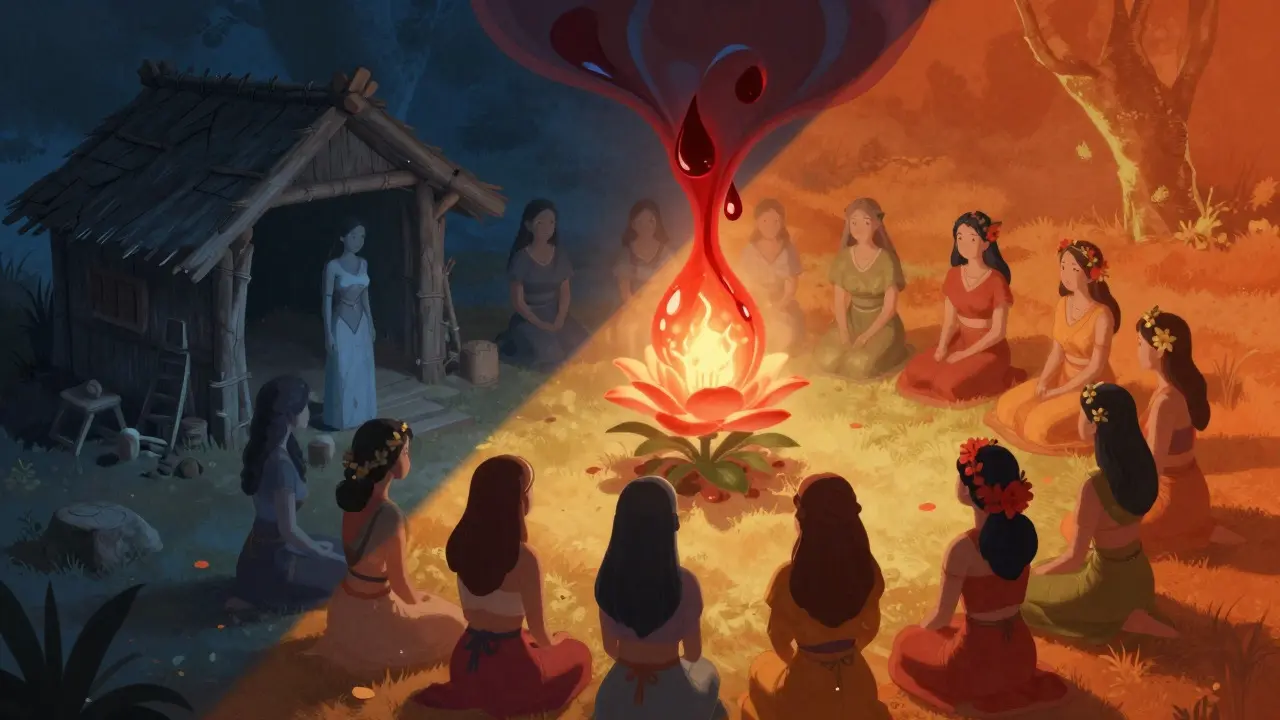
Global Menstrual Beliefs Explorer
Select a region below to explore how local traditions shape the experience of menstruation. This tool highlights the contrast between isolation-based practices and celebratory or medicalized approaches.
For centuries, women have been told that their periods are dirty, dangerous, or even supernatural. In some parts of the world, a menstruating woman is barred from touching food, entering a temple, or sleeping in the same room as her husband. In others, she is celebrated with festivals, given special powers, or treated with quiet respect. These stark differences raise a simple but profound question: why do humans react so differently to one of the most basic biological processes?
The answer lies not in biology, but in culture. Cross-cultural menstrual beliefs are a collection of societal norms, religious doctrines, and folk traditions that dictate how menstruation is perceived, managed, and discussed across different societies. These beliefs range from strict isolation practices to open celebration, and they shape everything from daily hygiene habits to legal rights and mental health outcomes.
The Roots of Menstrual Stigma
To understand why these taboos exist, we have to look at history and religion. Many ancient cultures viewed blood as a powerful force-either sacred or impure. In Hinduism, for instance, menstruation was historically linked to the concept of rajas, a quality associated with passion and impurity. This theological framework led to practices where women were kept away from kitchens and temples during their cycles.
Similarly, in many Indigenous Australian communities, menstruating women were sometimes secluded in specific huts. This wasn’t always about punishment; it was often about protecting the community’s spiritual balance. The idea was that the woman’s energy was too potent to be mixed with everyday life. Over time, however, these protective measures were misinterpreted by colonizers as signs of inferiority or dirtiness, cementing a stigma that persists today.
Isolation vs. Celebration: A Global Comparison
Not every culture views menstruation through a lens of fear. Some traditions emphasize protection and power rather than pollution. Here is a quick look at how different regions handle this natural cycle:
| Region/Culture | Common Belief/Practice | Social Impact |
|---|---|---|
| India (Traditional) | Exclusion from temples and kitchens; use of firewood instead of cloth. | Reinforces gender roles; limits public participation. |
| Japan | Use of chuxu (special paper); discreet management. | High social pressure to hide periods; strong product market. |
| Nepal | Chhaupadi: Seclusion in separate huts until bleeding stops. | Risk of disease; social ostracization if rules broken. |
| Western Europe/North America | Medicalized view; focus on pain management and hygiene products. | Less social taboo, but high commercialization and silence in schools. |
| Some African Communities | Celebratory rites marking transition to adulthood. | Positive social integration; emphasis on mentorship. |
Notice the pattern? Where menstruation is seen as "impure," the response is usually exclusion. Where it is seen as a rite of passage or a neutral biological event, the response is either celebration or practical management. The key difference isn't the biology-it's the narrative surrounding it.
How Modern Science Meets Old Myths
Today, we know that menstruation is simply the shedding of the uterine lining. It doesn't make you sick, it doesn't poison water, and it doesn't ruin crops. Yet, myths persist because they are deeply embedded in social structures. For example, the belief that touching food while menstruating makes it spoil has no scientific basis, yet it remains a common rule in many households.
This disconnect between science and culture creates a unique challenge for public health officials. You can distribute free pads, but if the local belief system says the pads are "unclean" or if girls are ashamed to ask for them, the distribution fails. This is why Menstrual Health Management programs now include education components that address cultural beliefs, not just physical needs.
The Role of Media and Education
Change is happening, but slowly. Social media has played a huge role in breaking the silence. Hashtags like #PeriodPoverty and #EndTheTaboo have allowed women from all over the world to share their stories, normalizing conversations that used to happen only in whispers.
In schools, however, progress is uneven. In many countries, sex education still avoids discussing periods in detail. When girls aren't taught what to expect, they arrive at their first period confused and scared, reinforcing the idea that something is "wrong" with them. Countries that integrate comprehensive reproductive health education into primary curricula tend to see lower rates of school absenteeism due to periods.

Practical Implications for Daily Life
If you are traveling, working abroad, or simply trying to be more culturally aware, understanding these differences can prevent awkward situations. Here are a few practical tips:
- Ask before assuming: If you're staying with a host family in a region with strong traditional beliefs, politely ask if there are any specific customs regarding menstruation. They will likely appreciate your respect.
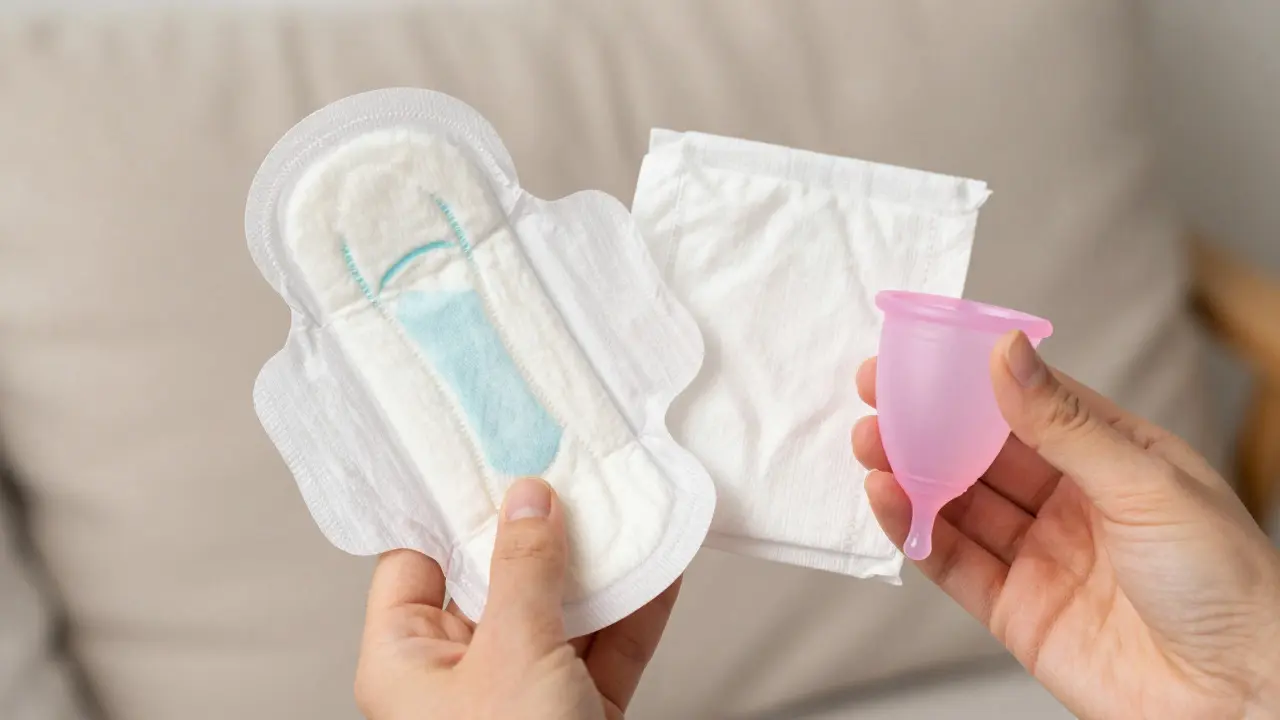
- Carry versatile supplies: In areas where disposable pads might be frowned upon or unavailable, reusable cloth pads or menstrual cups can be practical alternatives that also reduce waste.
- Watch the language: In some cultures, saying "period" out loud is considered vulgar. Using terms like "that time of the month" or "flow" can show cultural sensitivity.
- Respect private spaces: If a colleague or friend mentions they are unwell, give them space. Don't assume they need help unless they ask, especially in cultures where privacy is paramount.
Breaking the Cycle: What Can Be Done?
Eliminating menstrual taboos requires a multi-pronged approach. It’s not just about changing minds; it’s about changing systems. Governments need to ensure access to affordable products. Schools need to teach accurate biology. And families need to start honest conversations early.
When we strip away the fear and the mystique, we find that menstruation is just another part of being human. By comparing these global beliefs, we don't judge one as "better" than another. Instead, we recognize that every society is trying to manage a powerful biological reality in its own way. Understanding those ways helps us build a world where no woman has to hide a fundamental part of her body.
Are menstrual taboos disappearing globally?
In urban centers and among younger generations, yes. However, in rural areas and conservative communities, traditional beliefs remain strong. The shift is gradual and often driven by economic independence and better access to education rather than top-down mandates.
Why do some cultures ban menstruating women from cooking?
This practice stems from the belief that the woman's "impure" state could contaminate food or anger household spirits. While scientifically baseless, it serves a social function by reinforcing the separation of domestic labor and spiritual purity.
What is Chhaupadi?
Chhaupadi is a traditional practice in Nepal where menstruating women are required to stay in separate huts until their period ends. During this time, they are forbidden from touching men, cows, or food. It poses health risks and limits mobility but remains prevalent in certain remote villages.
Does menstruation affect mood scientifically?
Yes, hormonal fluctuations can influence mood, leading to symptoms like irritability or fatigue in some women. This is known as Premenstrual Syndrome (PMS). However, the cultural amplification of these symptoms into "mystical" behavior is a social construct, not a biological fact.
How can travelers prepare for different menstrual customs?
Research local customs before arriving. Pack discreet, universal products like tampons or pads that can be disposed of easily. Be mindful of noise when using restroom facilities in shared spaces, and respect local etiquette regarding bathroom usage.