Dionysian Ritual Element Explorer
Click on any element from the festival to reveal its function and social impact.
Select an Element
Choose an option from the left to learn about its role in ancient Greek society.
Imagine a world where the strict rules of daily life vanish. Women leave their homes to dance on mountain tops at night. Men wear masks and act out stories that blur the lines between human and beast. Wine flows freely, not just as a drink, but as a sacred connection to the divine. This wasn't a modern rave or a chaotic party gone wrong. It was the Dionysian festival, a central pillar of ancient Mediterranean religion dedicated to Dionysus (or Bacchus), characterized by ecstatic worship, ritualized sexual liberation, and the temporary suspension of social hierarchies. These events were not mere distractions; they were essential mechanisms for maintaining social balance in a rigidly structured society.
To understand why these festivals mattered, we have to look past the marble statues and polite temple rituals often associated with ancient Greece. The core of this tradition was wild, visceral, and deeply subversive. It challenged the very foundations of gender roles, public behavior, and personal identity. For many participants, especially women, these rituals offered a rare space for autonomy and self-expression that was otherwise impossible in their daily lives.
The God Who Drove People Mad
Dionysus is the Greek god of wine, fertility, theatre, and ecstatic frenzy, often depicted as a youthful, effeminate figure carrying a thyrsus staff and ivy wreath. Unlike Zeus or Athena, who represented order, law, and civic duty, Dionysus embodied chaos, nature, and the irrational. He was known as gynaimanes, meaning "he who drives women insane." This title wasn't an insult; it described his power to liberate people from their normal constraints through altered states of consciousness.
In early art, Dionysus appeared as a bearded man, emphasizing authority. Over time, he became youthful and androgynous, reflecting his role as a boundary-crosser. His attributes-the thyrsus (a staff topped with pine cone) and the kantharos (a large goblet)-were tools of transformation. Drinking wine was not just consumption; it was ingestion of the god’s blood. Eating meat, sometimes symbolically linked to the bull, mirrored later Christian Eucharistic practices. By consuming these elements, worshippers believed they merged with Dionysus, allowing the divine energy to flow through them.
Maenads and the Wilderness Rites
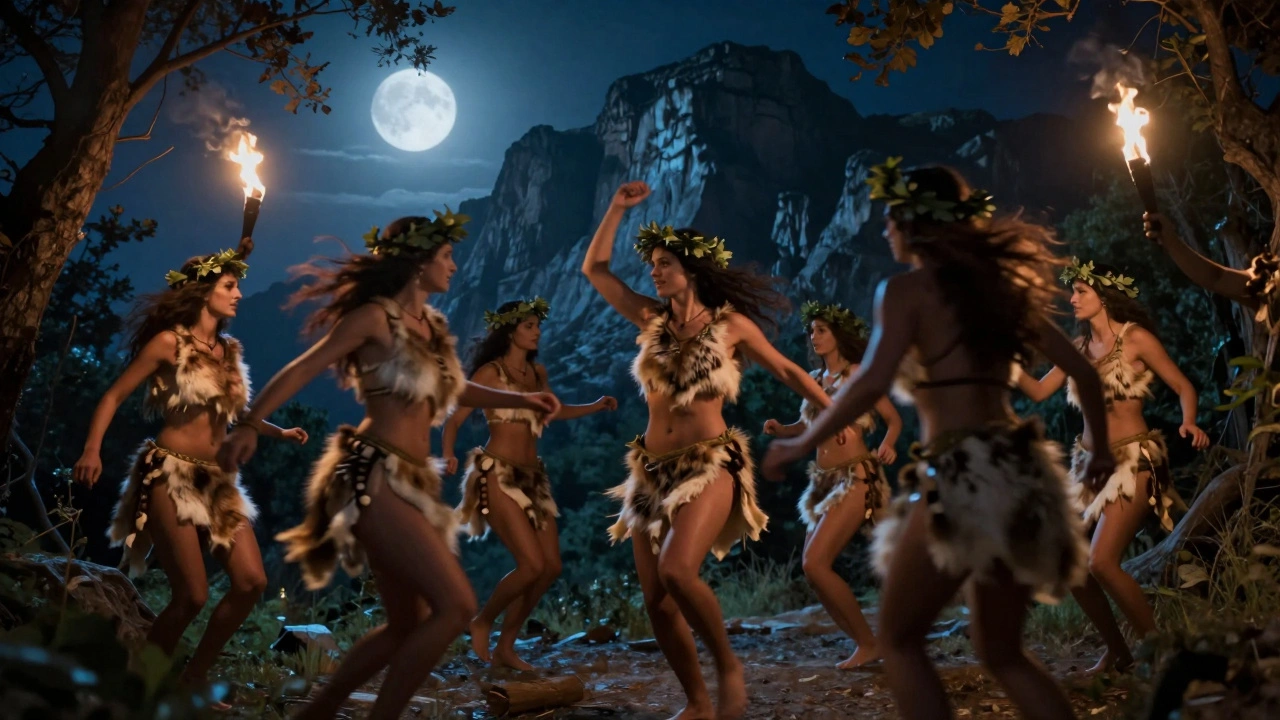
The most striking feature of Dionysian worship was the participation of women. In Athens, women were largely confined to the domestic sphere. They couldn’t vote, own property independently, or participate in public political life. Their world was the home, the loom, and the children. But during the orgeia, wilderness rites involving ecstatic dance, music, and trance states performed by female followers known as maenads, everything changed.
Women known as maenads, female devotees of Dionysus who engaged in frenzied dancing, wore fawn skins and ivy crowns, and ventured into mountains to perform ecstatic rituals outside male supervision would leave their cities. They climbed mountains, dressed in animal skins, and shouted the ritual cry "Euoi!" There, under the cover of night, they danced until they reached a state of trance. This wasn’t random chaos. It was a structured form of shamanic practice. Through rhythm, movement, and sensory overload, they accessed altered states of mind that allowed them to experience unity with the god and each other.
This autonomy was radical. Husbands often resisted, fearing loss of control. Yet women kept going. Why? Because these rites gave them something no other institution did: community, voice, and bodily agency. They weren’t just wives or mothers here. They were priests, dancers, and leaders of their own spiritual journey.
Festivals That Flipped Society Upside Down
Athens hosted two major festivals dedicated to Dionysus: the Lenaia, an Athenian winter festival held after the solstice, featuring phallic processions and dramatic competitions to welcome Dionysus back from the wilds and the Dionysia, a major spring festival in Athens celebrating Dionysus with theatrical performances, choral contests, and public rituals that reinforced civic identity through shared ecstatic experience. Both served different purposes but shared a common theme: reversal.
The Lenaia, held after the winter solstice, marked the return of Dionysus from the wilderness. Maenads would go into the woods to call him back. The climax came months later at the Anthesteria, when the god was welcomed into the city. This cycle mirrored the natural world-winter retreat followed by spring renewal-but also reflected a deeper psychological truth. Civilization needs both order and chaos. Too much structure leads to stagnation. Too much freedom leads to collapse. Dionysian festivals provided a safe outlet for the chaotic energies that could otherwise destroy society.
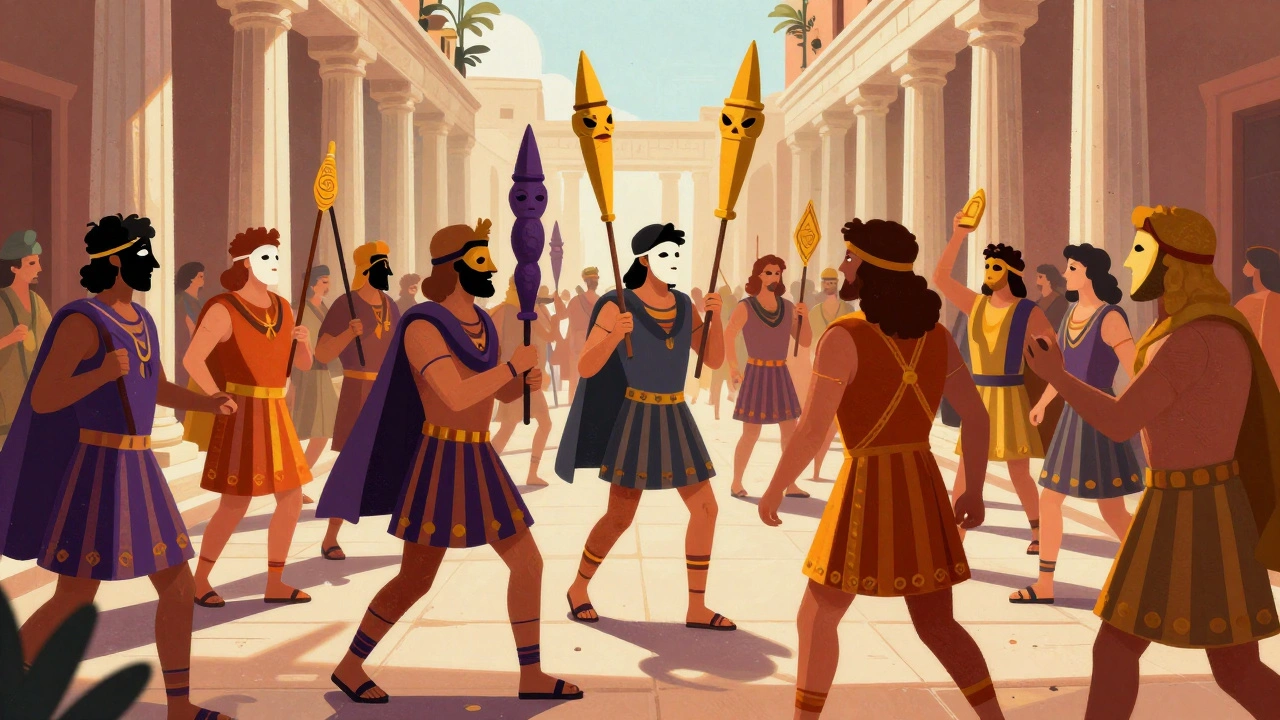
During these events, social norms were inverted. Slaves might mock masters. Men wore women’s clothes. Phalluses were carried in parades-not as crude jokes, but as symbols of fertility and life force. This wasn’t indecency. It was theology. The phallus represented creation, growth, and the raw power of nature. By embracing it publicly, participants acknowledged the vital forces that sustained their communities.
Sexual Liberation as Sacred Practice
Modern readers often assume that "sexual liberation" in ancient contexts meant promiscuity or lack of morality. That’s a misunderstanding. In Dionysian culture, sexuality was sacred. It was tied to fertility, creativity, and the continuity of life. The festivals didn’t promote casual sex for pleasure alone. They celebrated the full spectrum of human desire as part of the divine order.
For women, this was particularly significant. In everyday life, their sexuality was controlled by men-fathers, husbands, brothers. Marriage was about producing heirs, not personal fulfillment. But in the Dionysian context, women’s bodies were temples of the goddess Ariadne or Semele, lovers of Dionysus. Initiatory rites, like those depicted in Pompeii frescoes, showed young women undergoing transformations that prepared them for marriage-but also empowered them with inner strength and spiritual insight. These weren’t passive victims. They were active participants in a mystery cult that promised union with the divine.
Even more importantly, these rituals allowed women to express emotion openly. Crying, laughing, screaming-all were acceptable. In a society that valued stoicism and restraint, this emotional release was revolutionary. It taught women how to harness intense feelings without being overwhelmed by them. As one scholar noted, Dionysian practice wasn’t about losing control. It was about learning to manage ecstasy so it could serve vitality and creativity.
Theatrical Roots and Social Integration
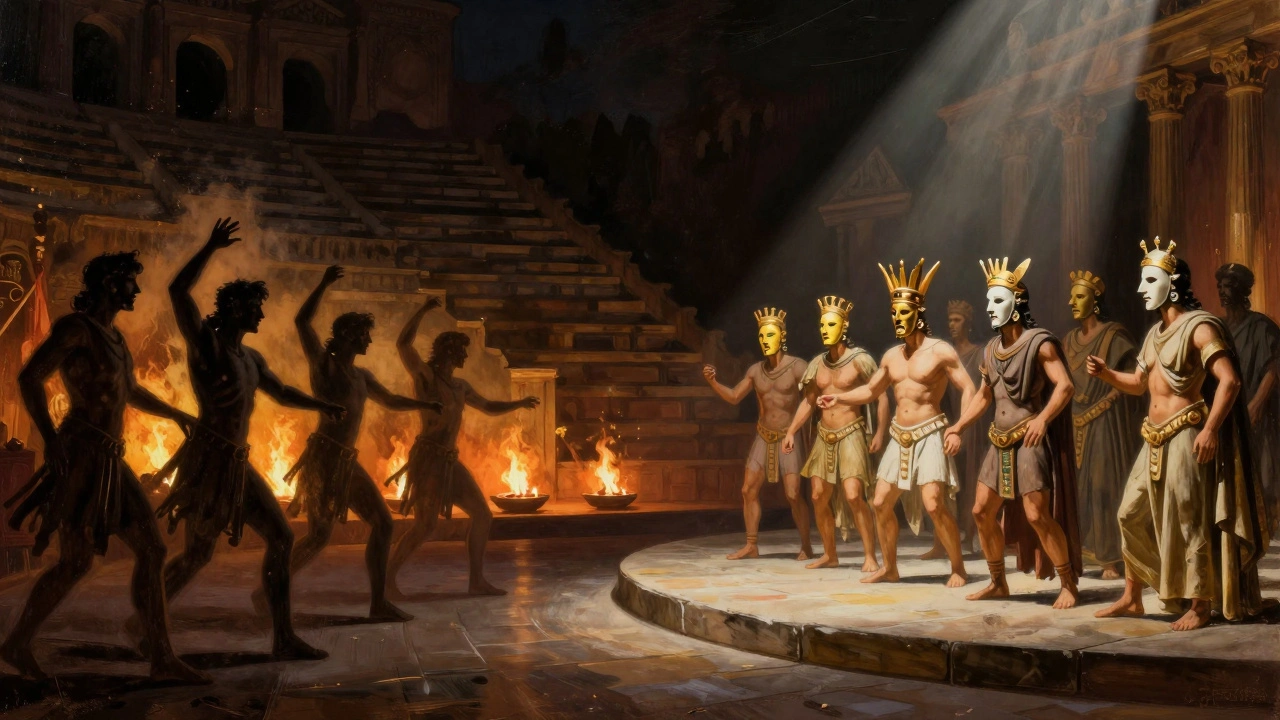
You might wonder: how did such wild rituals connect to theater? The answer lies in the origins of Greek drama. Tragedy and comedy emerged directly from Dionysian choruses. Early performers wore masks, sang hymns, and enacted myths related to Dionysus. Over time, these performances evolved into sophisticated plays staged at the City Dionysia.
This evolution shows how Dionysian energy was integrated into civic life. What began as ecstatic mountain dancing became structured storytelling. The same impulses that drove maenads to frenzy now fueled actors to portray heroes, gods, and fools. Theater became a way for citizens to process collective trauma, explore moral dilemmas, and imagine alternative realities-all within a sanctioned framework.
Consider Sophocles’ Oedipus Rex or Euripides’ Bacchae. These plays aren’t just entertainment. They’re theological inquiries. Bacchae, in particular, dramatizes the conflict between King Pentheus, who rejects Dionysus, and the maenads, who embrace him. Pentheus tries to suppress the rites, believing they threaten social order. Instead, he is torn apart by the very forces he denies. The play suggests that denying ecstasy doesn’t eliminate it-it only makes it more destructive.
Why It Still Matters Today
We don’t hold Dionysian festivals anymore. But the questions they raised remain relevant. How do we balance individual freedom with social responsibility? Where do we find spaces for authentic expression in highly regulated societies? How can we integrate our emotions, desires, and instincts without letting them consume us?
Dionysian culture offers a model. It didn’t reject civilization. It complemented it. By creating designated times and places for ecstasy, inversion, and release, ancient Greeks prevented societal breakdown. They understood that repression breeds explosion. Better to channel the wild energy than deny it entirely.
Today, we see echoes of this in art, music, protest movements, and even therapy practices that emphasize embodiment and emotional processing. We may not wear fawn skins or shout "Euoi!", but we still seek moments where we feel truly alive, connected, and free. Whether through dance, meditation, or creative expression, we continue to search for the same integration that Dionysus offered.
| Element | Function in Ritual | Social Impact |
|---|---|---|
| Wine Consumption | Sacred ingestion of divine essence | Altered consciousness enabling communal bonding |
| Ecstatic Dance | Physical manifestation of divine possession | Temporary suspension of gender roles and hierarchy |
| Masks & Costumes | Identity transformation and role reversal | Safe exploration of forbidden behaviors |
| Phallic Processions | Celebration of fertility and life force | Public acknowledgment of sexual vitality |
| Theatrical Performance | Narrative processing of myth and emotion | Civic education through catharsis |
Common Misconceptions About Dionysian Worship
Many people picture Dionysian festivals as orgiastic debauchery. That’s a distortion. While sensual and intense, these rites were highly structured. They required training, discipline, and initiation. Not everyone could join. Only those properly prepared could access the deeper mysteries.
Another myth is that Dionysus encouraged violence. True, some myths describe maenads tearing animals apart. But these acts were symbolic, representing the breaking down of ego and societal boundaries. They weren’t literal calls to harm others. In fact, participating in these rites often led to greater empathy and social cohesion afterward.
Finally, some believe Dionysian worship was purely feminine. While women played prominent roles, men participated too-especially in theatrical and civic aspects. The key difference was that women found unique opportunities for leadership and autonomy in these spaces, which were rarely available elsewhere.
Were Dionysian festivals really about sexual freedom?
Not exactly. Sexuality was viewed as sacred and tied to fertility and cosmic order. The festivals allowed open expression of desire within a religious framework, challenging restrictive norms rather than promoting unrestrained promiscuity. For women, this meant accessing bodily autonomy and emotional honesty previously denied to them.
Who were the maenads, and what did they do?
Maenads were female devotees of Dionysus who performed ecstatic dances in wilderness settings. They wore animal skins, carried thyrsus staffs, and entered trance states through rhythmic movement and chanting. Their activities included calling the god from the wilds, engaging in initiatory rites, and experiencing mystical union with the divine.
How did Dionysian rituals affect women’s status in ancient Greece?
They provided a rare space for female autonomy, leadership, and intellectual engagement. Outside the home, women had little power. In Dionysian rites, they led ceremonies, spoke publicly, and accessed knowledge reserved for men. This temporary empowerment helped sustain their mental health and social resilience despite patriarchal constraints.
What is the connection between Dionysus and Greek theater?
Greek tragedy and comedy originated from Dionysian choruses. Early performers wore masks and sang hymns to the god. Over time, these evolved into scripted plays exploring human suffering, morality, and destiny. Theater became a civic tool for processing collective emotions and reinforcing cultural values through cathartic experiences.
Why did men resist Dionysian worship initially?
Men feared loss of control over women and disruption of social order. Dionysian rites challenged traditional gender roles and allowed women to operate outside male supervision. However, resistance faded as festivals proved beneficial for social stability, providing outlets for stress and fostering community cohesion.