
Intersex Surgeries vs. Gender-Affirming Care Comparison
This comparison tool clearly shows the critical distinctions between historical non-consensual intersex surgeries and modern consent-based gender-affirming care. Understanding this difference is essential to addressing medical ethics and human rights issues.
Non-Consensual Intersex Surgeries
Surgeries performed on infants and children with intersex traits without their consent or understanding.
Lifelong Impact Statistics
- 68% experience chronic pain
- 42% have urinary incontinence
- 55% struggle with sexual function
- 78% show signs of PTSD
Current Status:
Still performed in 36 U.S. states without consent
Gender-Affirming Care
Medical care for transgender people based on informed consent and medical standards.
Positive Outcomes Statistics
- 60% less likely to attempt suicide with access
- 93% report improved well-being after transition
- 0.9% regret rate for surgeries
- 1% regret rate for patients with family support
Current Status:
Required in 14 U.S. states; banned in 14 countries
Key Differences That Matter
Who Decides
- Doctors and parents
- Children cannot consent
Timing
- Performed on infants and young children
- Often before the child can communicate
Purpose
- Force conformity to binary norms
- Medically unnecessary
Consent Requirements
- None
- Often performed without parental knowledge
Current Medical Standards
- Banned in 14 countries
- Not recommended by medical associations
Outcomes
- Lifelong physical and psychological harm
- Loss of bodily autonomy
Important Distinction
There is no overlap between non-consensual intersex surgeries and modern transgender care. The article repeatedly emphasizes this crucial difference:
Intersex surgeries on infants are a violation of bodily autonomy. Gender-affirming care for transgender people requires informed consent at every step.
Modern transgender care follows strict protocols including multiple evaluations, waiting periods, and documented understanding of risks. There are no documented cases of forced gender-affirming surgeries on transgender individuals in modern medical practice.
The medical community recognizes that non-consensual intersex surgeries cause significant harm. As the article states, "This is not about science. It's about power. Who gets to decide what a body should look like? For too long, the answer was doctors. Now, the answer should be: the person who lives in it."
For decades, doctors performed surgeries on babies-babies who couldn’t speak, couldn’t say no-just to make their bodies fit a binary mold. These weren’t life-saving procedures. They were cosmetic fixes done without consent, often based on outdated ideas about what a boy or girl should look like. Today, we know better. But the damage remains. Thousands of people alive right now live with chronic pain, infertility, and trauma from surgeries they never agreed to. And the confusion? It’s still out there. People mix up these forced intersex surgeries with modern transgender care. They’re not the same. One is a violation. The other is a right.
What Actually Happened to Intersex Babies
Between the 1950s and early 2000s, it was standard practice in U.S. hospitals to surgically alter the genitals of infants born with intersex traits. These kids weren’t sick. They were healthy. But doctors, following the advice of psychologist John Money, believed that if you assigned a gender early and surgically reinforced it, the child would grow up ‘normal.’ So they cut, stitched, and reconstructed. Clitorises were reduced. Testes were removed. Vaginas were created. All without asking the child. Or the parents. Often, parents were told the child was ‘too damaged’ to live as they were, and surgery was the only option.
By the time the practice began to be questioned, over 1.7% of people-roughly 1 in 60-had been subjected to these interventions. That’s not rare. That’s common. And the results? A 2017 survey by the Accord Alliance found that 68% of intersex adults who had childhood surgeries suffered chronic pain. 42% had urinary incontinence. 55% struggled with sexual function. Many didn’t even know what had been done to them until they were adults. Some found out when they tried to have sex for the first time. Others found out when they couldn’t get pregnant. The trauma wasn’t just physical. 78% of those surveyed by Human Rights Watch showed signs of PTSD.
Why This Was Never About Transgender People
There’s a dangerous myth floating around: that transgender people were once forced into surgeries against their will. That’s not true. Modern gender-affirming care didn’t exist in its current form until the 1970s. Even then, it was voluntary. The World Professional Association for Transgender Health (WPATH) has required informed consent since its founding. Today, under Standards of Care Version 8 (2022), patients must undergo mental health evaluations, live in their affirmed gender for at least 6 months, and sign multiple consent forms. For minors, the process is even stricter. Denmark’s 2022 policy requires doctors to assess whether a young person has the cognitive and emotional stability to understand what’s being done. Not every minor qualifies.
What people confuse are two separate things: intersex surgeries on infants and transgender care for adults and older teens. The first is a violation of bodily autonomy. The second is a deeply personal, consent-based medical decision. When someone says ‘sex reassignment without consent,’ they’re usually talking about intersex babies-not transgender adults. Mixing them up isn’t just inaccurate. It’s harmful. It distracts from the real victims and gives cover to those who want to ban all gender-affirming care.
The Lifelong Cost of Forced Surgery
Think about this: You’re born with a body that doesn’t fit neatly into a box. Then, when you’re a baby, strangers cut you open and change you. No one asks you. No one tells you why. You grow up wondering why your body feels wrong, why you can’t feel pleasure, why you’re always in pain. That’s not a medical outcome. That’s a human rights crisis.
Research from the Center for Intersex Advocacy (2021) shows intersex adults who had non-consensual surgeries are 2.9 times more likely to suffer from depression and 3.2 times more likely to have anxiety than those who didn’t. Their suicide risk is higher. Their trust in doctors is shattered. Many avoid medical care entirely. One woman in California told researchers she hadn’t seen a gynecologist in 30 years because she was terrified of being cut again.
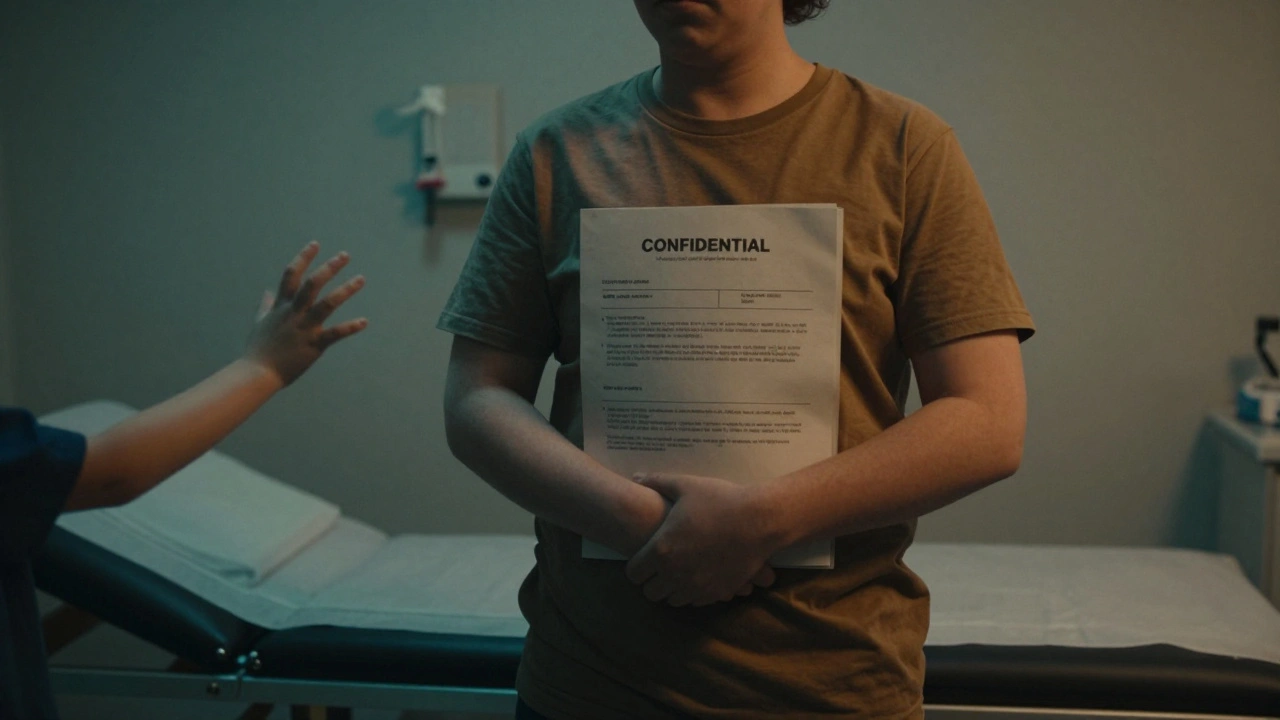
And the damage isn’t just personal. It’s systemic. Hospitals that performed these surgeries often kept records sealed. Patients couldn’t get their own medical files. Some were told they’d been operated on for ‘hygiene’ or ‘infection.’ Others were lied to about their diagnosis. In 2021, California passed SCR-100, formally apologizing to intersex people for these practices. It was the first state to do so. But apologies don’t heal. They don’t restore sensation. They don’t reverse infertility.
Redress Is Slow, But It’s Coming
Change didn’t happen overnight. It took activists. It took lawsuits. It took people speaking out when no one would listen.
Malta became the first country to ban non-consensual intersex surgeries in 2015. Germany, Portugal, and Greece followed. In the U.S., 14 states now have laws or resolutions protecting intersex children from unnecessary surgeries. California has paid out $4.7 million in settlements to victims since 2010. The European Court of Human Rights ruled in 2015 that denying gender-affirming care to adults is inhuman treatment. That case, Y.Y. v. Turkey, didn’t involve intersex people-but it set a precedent: your body belongs to you.
But redress is still uneven. Most victims never get compensation. Most never get an apology. And in places like Texas and Florida, lawmakers are now banning gender-affirming care for minors-even though the American Academy of Pediatrics says those bans increase suicide risk by 120%. Meanwhile, intersex advocates are still fighting for legal recognition that their bodies were wrongfully altered. There’s no statute of limitations on trauma.
What Modern Care Actually Looks Like
Let’s be clear: today’s gender-affirming care is nothing like what happened to intersex infants. It’s not rushed. It’s not forced. It’s not done on babies.
According to a 2022 University of Washington study of over 12,800 gender-affirming surgeries in the U.S., every single case followed WPATH protocols. That means: at least one mental health evaluation, six months of living in the affirmed gender, documented understanding of risks, and parental consent for minors. For surgeries, patients must have been on hormones for at least a year. Regret rates? Just 0.9%. A 2021 study in Plastic and Reconstructive Surgery Global Open reviewed 7,928 patients and found only 1% regretted their decision. Most of those who did regret it cited lack of family support-not the surgery itself.
And the outcomes? The Trevor Project’s 2022 survey of 34,000 LGBTQ+ youth found that transgender young people who had access to gender-affirming care were 60% less likely to attempt suicide. A Cornell University meta-analysis of 55 studies showed 93% reported improved well-being after transition. These aren’t abstract numbers. These are lives saved.
The Big Lie: That Consent Doesn’t Matter
Some critics point to a 2011 Swedish study that claimed higher suicide rates among transgender people after transition. But that study didn’t measure consent. It didn’t separate those who had support from those who didn’t. It didn’t account for discrimination, violence, or poverty. The researchers themselves said the elevated risk came from societal rejection-not medical transition.
Meanwhile, the American Medical Association, the American Psychological Association, and the Endocrine Society all agree: gender-affirming care saves lives. And consent isn’t a formality. It’s the foundation.
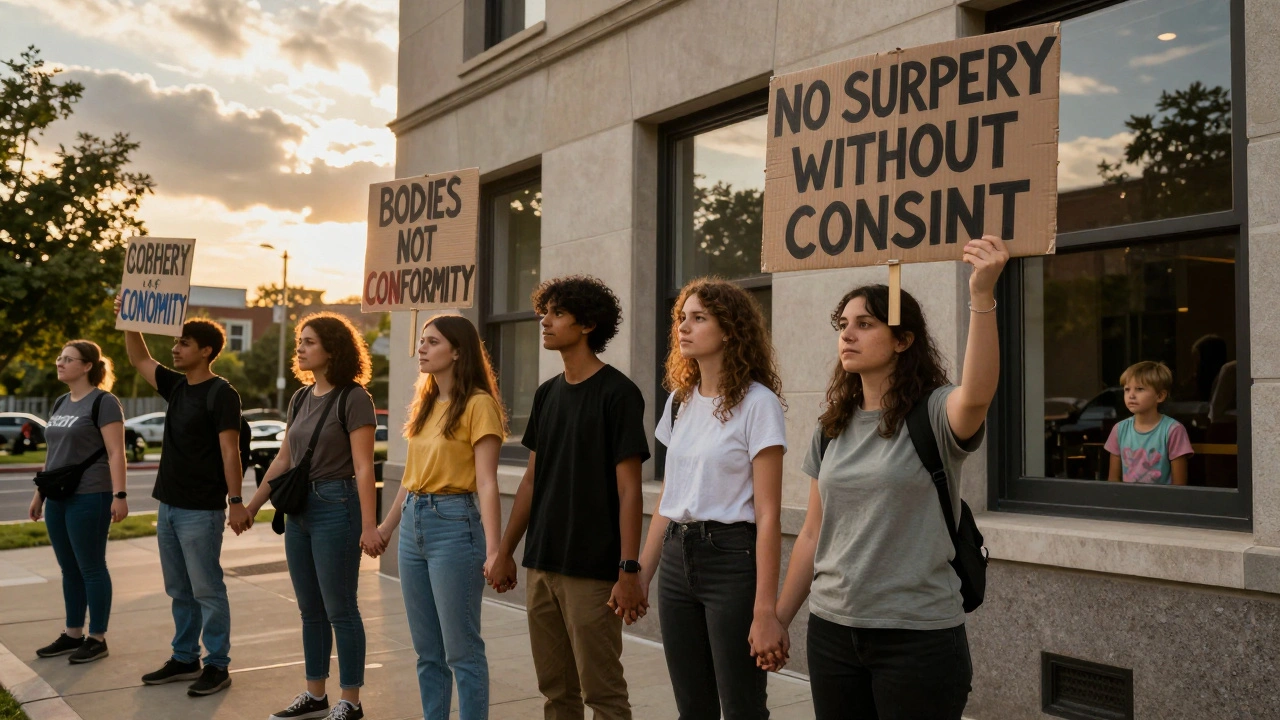
When someone says ‘sex reassignment without consent,’ they’re not talking about modern transgender care. They’re talking about a dark chapter in medical history-one we’re still cleaning up. The real question isn’t whether we should stop gender-affirming care. It’s whether we’ll finally stop harming children in the name of conformity.
What Needs to Change Now
Here’s what’s still broken:
- 14 U.S. states still allow non-consensual intersex surgeries on infants.
- Only 14 countries have banned them outright.
- Most hospitals still don’t have clear policies on intersex care.
- Victims often can’t access their own medical records.
- There’s no national compensation fund for survivors.
What needs to happen? First, every state should pass a law banning non-consensual surgeries on intersex children. Second, hospitals must open their records and offer counseling to survivors. Third, we need public education to stop confusing intersex rights with transgender care. They’re both about bodily autonomy-but they’re not the same fight.
And finally, we need to stop pretending this is a debate about science. It’s not. It’s about power. Who gets to decide what a body should look like? For too long, the answer was doctors. Now, the answer should be: the person who lives in it.
Were transgender people ever forced into surgery without consent?
No. Modern gender-affirming care has always required informed consent. The confusion comes from mixing up two different things: non-consensual surgeries on intersex infants (which happened) and voluntary transition care for transgender people (which never did). WPATH has required consent since the 1980s. Today, protocols include multiple evaluations, waiting periods, and documented understanding of risks. There are no documented cases of forced gender-affirming surgeries on transgender individuals in modern medical practice.
What’s the difference between intersex surgeries and transgender care?
Intersex surgeries are performed on infants who can’t consent, often to make their genitals look ‘normal’ according to outdated standards. These are medically unnecessary and cause lifelong harm. Transgender care is chosen by the individual-usually as a teen or adult-after years of evaluation, counseling, and consent. It’s about aligning the body with the person’s identity, not forcing them into a binary mold. One is a violation. The other is a right.
How common are non-consensual intersex surgeries today?
They’re still happening in the U.S., but less often. As of 2025, 14 states have laws or resolutions banning them. However, 36 states still allow doctors to perform these surgeries on infants without consent. Hospitals in those states may still follow outdated protocols. The practice is banned in 14 countries, including Malta, Germany, and Portugal, but enforcement varies. Advocacy groups estimate 1,000-2,000 intersex infants still undergo unnecessary surgeries each year in the U.S. alone.
What are the long-term effects of these surgeries?
Lifelong physical and psychological harm. Common effects include chronic pain (68% of survivors), urinary incontinence (42%), sexual dysfunction (55%), and loss of sensation. Psychologically, 78% report PTSD symptoms. Many suffer depression, anxiety, and severe trust issues with medical professionals. Some never learn what was done to them until adulthood. The trauma is compounded by secrecy-hospitals often destroyed records or lied to families.
Is there any compensation for survivors?
Very little. California has paid out $4.7 million in settlements since 2010. A 2021 settlement with Johns Hopkins Hospital created a $5 million fund for victims of conversion therapy, which included some intersex cases. But most survivors get nothing. There’s no national compensation program. Legal challenges are expensive, and statutes of limitations often expire before victims even realize what happened to them. Advocacy groups are pushing for a federal redress fund, but progress is slow.
Why do some people still support these surgeries?
Some doctors and parents still believe ‘normalizing’ a child’s body prevents stigma. Others fear social rejection or think surgery will make life easier. But research shows the opposite: children who grow up with intersex traits, without surgery, and with support, have better mental health outcomes. The real issue isn’t the body-it’s society’s intolerance of difference. Surgery doesn’t fix that. It just hides it.